Fitness
15 high-protein and low-carb vegan foods you need daily, not tofu
We've always wondered whether it’s possible to eat a high-protein diet and still keep it plant-based (at least sorta). This wondering thing is just a little hobby of ours. Well, … Read more
We've always wondered whether it’s possible to eat a high-protein diet and still keep it plant-based (at least sorta). This wondering thing is just a little hobby of ours. Well, spoiler – it is possible, when you prioritize these high-protein low-carb vegan foods in your diet!
 idth=”1000″ height=”2000″ />
As someone who cannot keep her hands off of carbs (mmmhhhmhhhs CARBS, how you doin’) and tries to eat plant-based the majority of time, we always thought a future of no diabetes and less belly fat is just not for us.
But we found hope.
Because we researched and made a list of high-protein foods that are low (or lower) in carbs.
You know how “they” say eat lentils, quinoa, chickpeas, oats and so on for more protein?
Oh, yes you do, you’re smart.
But, last year, when our sister was pregnant, she got gestational diabetes. And she had to measure her blood sugar like it was the goal of her life. Well, to our surprise foods like chickpeas, whole grains and lentils (the main things we ate) made her blood sugar fly to the moon and play among the stars.
Her blood sugar was so high, that we had to walk for an hour every time after she had those not-guilt-free chickpeas, to make it go down.
This was due to something we never, ever considered before.
Glycemic load. This is the amount of carbohydrates multiplied by the glycemic index of a food. So unlike the glycemic index – it’s not only about the quality of carbs, but also about the amount of carbs you take in. So you might be avoiding added sugar, even fruit, and focusing on only eating real food. But, you still could be eating too many carbs if your diet is grain- and bean-heavy.
And too many carbohydrates, good or bad, well, they might be causing you some trouble. In fact if you’re not losing fat or weight, it could be that you’re eating too many healthy carbs. And if you have diabetes or insulin resistance, then that’s one more thing you need to watch out for.
Therefore – this list.
What you’ll find here are one ingredient foods that don’t need brands, don’t need marketing and you can find outside the grocery store. Or McDonald’s.
Okay, so it’s basically nuts, seeds and vegetables, but ordered by carb to protein ratio. Mmkay?
Carb to protein ratio
So usually beans have a carb:protein ratio of 3:1 and grains go as high as 10:1 (quinoa has 5:1 and we know it’s a seed).
For this list we chose foods with a carb:protein ratio of 2.5/1. And we also calculated the protein in 100kcal, because we got excited and insane.
Note: soy products are a good source of protein and don’t contain many carbs, but we didn’t include them on this list. The one time when we were trying to be fancy, we ordered a soy latte & we almost threw up, chocked and died, so that’s the reason you won’t find soy and its monster babies (tofu and whatnot) on this high-protein low-carb vegan foods list. But if you like tofu – good for you, it’s got a reliable carb/protein ratio. It’s basically a protein.
Who’s this list for?
This list is for anyone
- eating a plant-based, but lower-carb diet who wants to get more protein
- keeping a high-protein low-carb (or lower-carb) diet to lose weight, manage diabetes, support their fitness goals (just kill us now for saying that last one) and wants to eat more plants
- who wants to improve their overall health
Because when you mix the benefits of a high-protein lower-carb diet and the plant based diet, which is rich in antioxidants and fiber – you get everything you want in a healthy diet.
Important note: This doesn’t mean don’t eat ANY lentils, chickpeas, whole grains or other sources of protein. They’re an important part of a healthy diet. All this means is to not go overboard with those foods (especially if you have insulin resistance) and to make the foods on this list a part of your daily diet. This is a great way to add more protein and antioxidants all in one.
Now, finally on to the list of high-protein low-carb vegan foods.
***For reference here’s how much protein some popular vegan and non-vegan protein sources have per 100kcal:
- Lentils (cooked): 7.86g protein, 17.54g carbs, carb/protein ratio: 2.23/1
- Chickpeas (cooked): 5.52g protein, 17.09g carbs, carb/protein ratio: 3.09/1
- Quinoa (cooked): 3.74g protein, 18.13g carbs, carb/protein ratio:4.85/1
- Chicken breast (cooked): 20.33g protein, 0.0g carbs, carb/protein ratio: 0
- Egg (cooked): 8.76g protein, 0.50g carbs, carb/protein ratio: 0.06/1
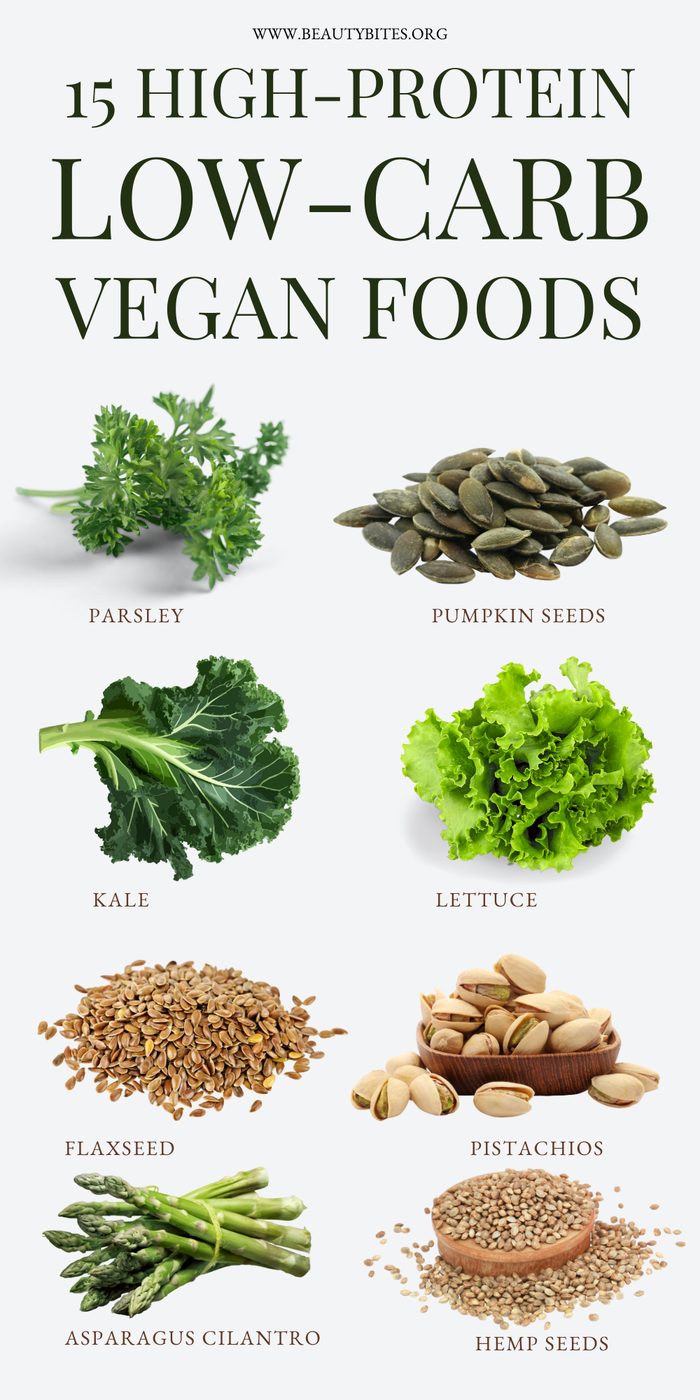
15 High-Protein and Low-Carb Vegan Foods You Need In Your Diet
(even if you’re not vegan)
in descending order for carb to protein ratio:
1.
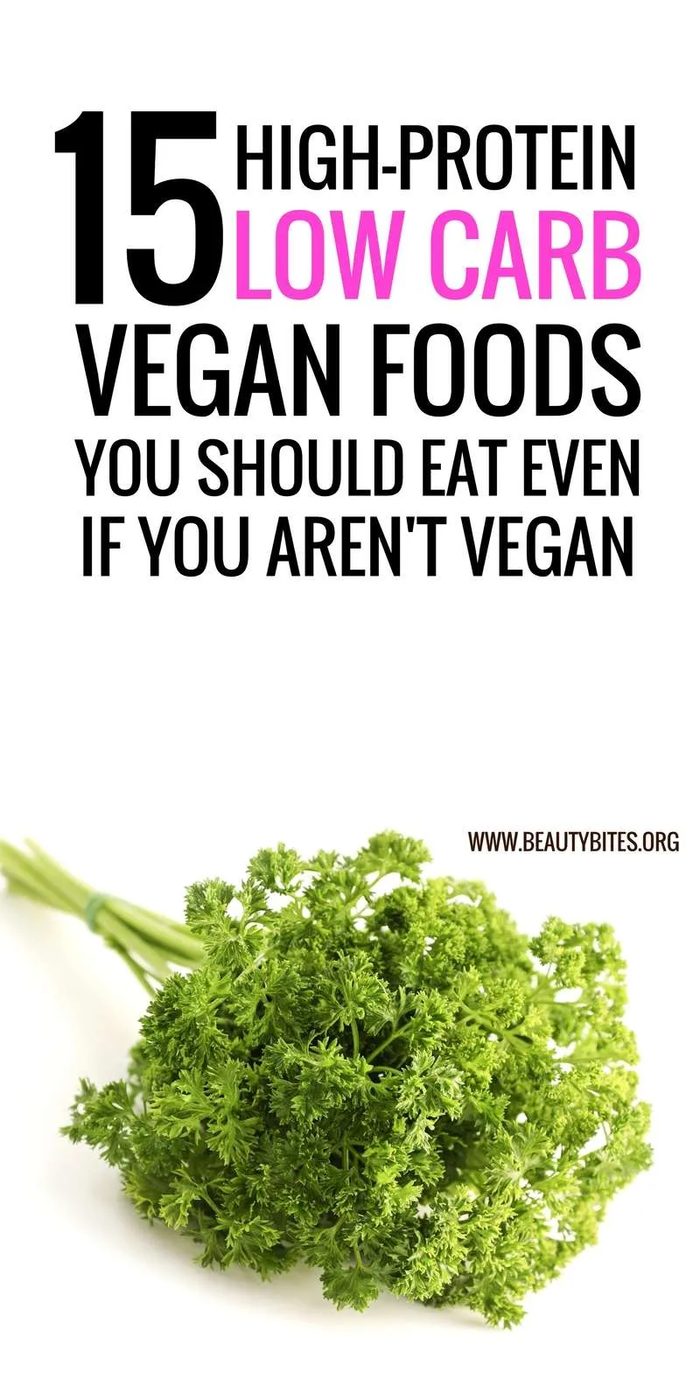
Parsley
Parsley is first up on the list of high-protein low carb vegan foods! It is a good source of minerals, vitamin C, iron and is loaded with antioxidants. Per 100kcal worth of parsley you get 8.24g of protein, with a carb/protein ratio of 2.13.
Yes, it has almost as much protein per calorie as an egg, but 100kcal worth of parsley is also a ton of parsley.
However, doesn’t hurt to use it in your favorite dishes, falafels, dips or salads. Great, now that we said it, we crave falafel.
2.
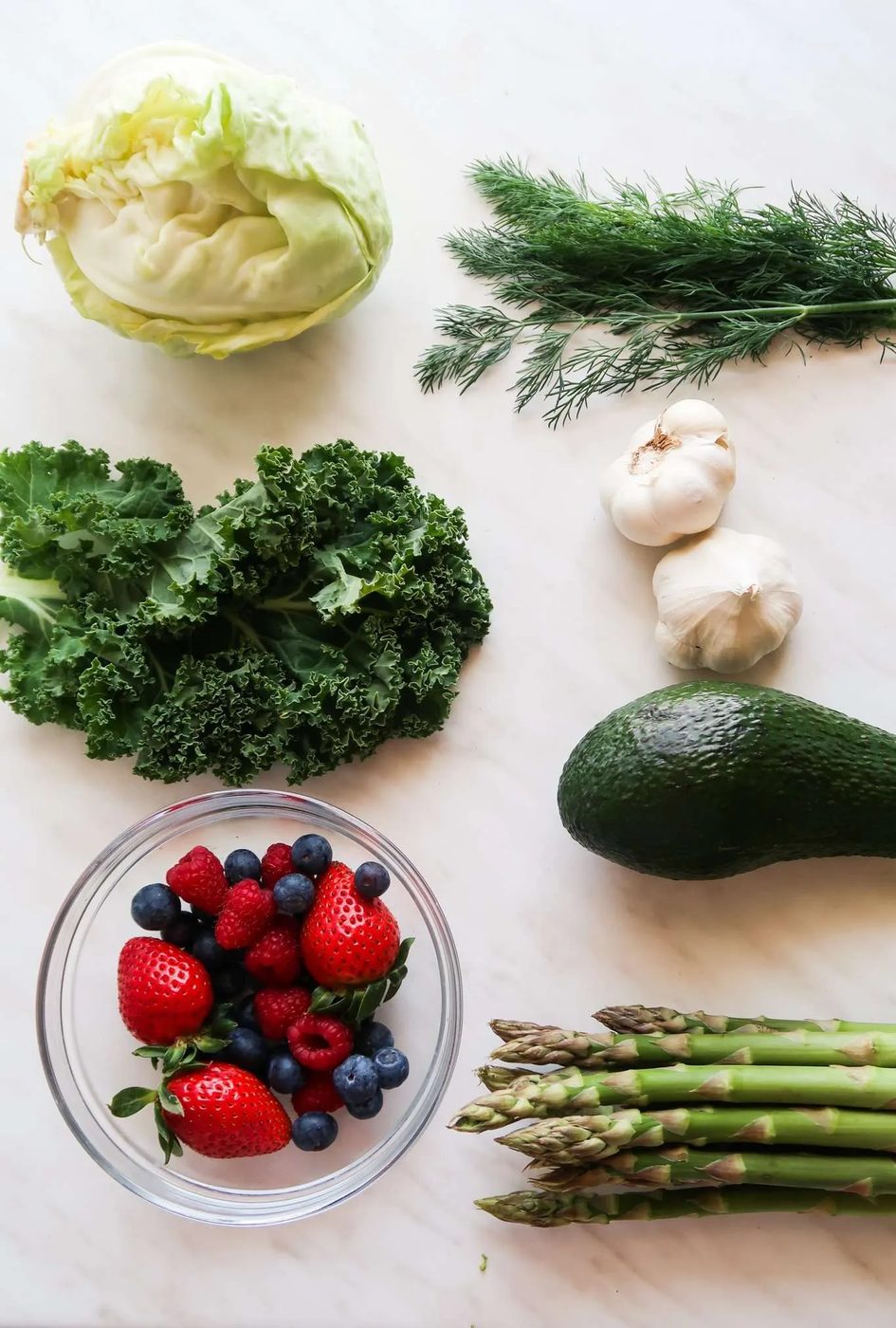
Lettuce
Did you know that lettuce has absolutely no nutrients? Well, apparently, as underwhelming and poor as lettuce seems to be, it managed to have 9.06g of protein per 100kcal and a carb/protein ratio of 2.1 and make it onto the list of high-protein low-carb vegan foods.
Show them lettuce, show them. Additionally, it’s a great source of fiber and potassium.
Our favorite way to use lettuce is of course chopped in a salad, OR to make lettuce wraps like these.
3.
Kale
Kale is full of 2 things: himself and nutrients. As egocentric, as kale seems to be, it’s a great source of EVERYTHING. Like EVERYTHING. Antioxidants, fiber, vitamins, minerals and Mr. Protein.
Protein per 100kcal = 8.77g
Carb/protein ratio: 2.044
You can use kale in salads (make sure to massage it with some lemon juice, yes someone needs special treatment), smoothies or chop into stews, soups…everywhere. It’s a great way to add some nutrients for almost no calories.
4.
Cilantro
Yes, it’s another herb and it’s green like the ones before. Cilantro is a great source of vitamins (especially A & C) and minerals (esp. iron and potassium) and again – great for your health. Plus it’s a good way to add some extra protein to your diet without eating too many calories.
Protein per 100kcal = 9.28g
Carb/protein ratio: 1.72
We use cilantro just like parsley: in wraps, salads or in curries.
5.
Flaxseed
One of the healthiest foods on Earth. First of all, they win the competition when it comes to omega-3/omega-6 ratio among the plants. That ratio is of huge importance for reducing chronic inflammation (common denominator in most diseases). It’s one of the things that makes flaxseeds so special.
Second, flaxseed got other nutrients as well (shocking we know). Among others: fiber, B-vitamins (esp. B1 & 6), magnesium, iron and zinc. The health benefits of flaxseed include lowering cholesterol (study), preventing cancer (study) and weight loss (study).
And now, out of nowhere, it turns out flaxseed also has a good amount of protein. That’s why it’s also on the list of high-protein low-carb vegan foods!
Protein per 100kcal = 3.41g
Carb/protein ratio: 1.56
To make the most out of flaxseeds, grind them and use in smoothies, oatmeal/overnight oats, salads – we also like to use them in dips and in snacks like this one as a thickening agent.
6.
Arugula
It’s not as famous as kale, but arugula is one of the healthiest foods around. It can help activate detox liver enzymes and it has anti-cancer & anti-inflammatory properties. And it’s one of our favorite foods. Arugula is also rich in antioxidants, minerals and anti-aging carotenoids. The point is, arugula is on this list, because it also has A LOT of protein, how much?
Protein per 100kcal = 10.32g
Carb/protein ratio: 1.41
Okay, like the other foods until now, it’s not simple to eat the 100kcal of arugula (we mean 1 cup has 5kcal), BUT you can use the green stuff in salads, in pesto, in sandwiches, as a side, in pasta, over pizza… every and anywhere you want. Can eat it raw or cooked. Our preferred way is raw and chopped. Here’s our favorite side dish salad with arugula.
7.
Pistachios
Who needs chips, when you can eat pistachios and get some extra vitamins and minerals instead of simple carbs and trans fats? Well, apparently us 2 days ago, but that’s a different story. Still, on most days we choose pistachios. And that’s good, because they’re a good source of vitamin B-6, magnesium, fiber, potassium and PROTEIN. Who screamed that?
Protein per 100kcal = 3.6 g
Carb/protein ratio: 1.35
Now it seems like pistachios don’t have that much protein, but, let us tell you, it’s easier to eat 100kcal of pistachios than arugula. If you eat 300kcal worth of pistachios (which is about half a cup) you get an extra of 10.8g protein just like that.
8.
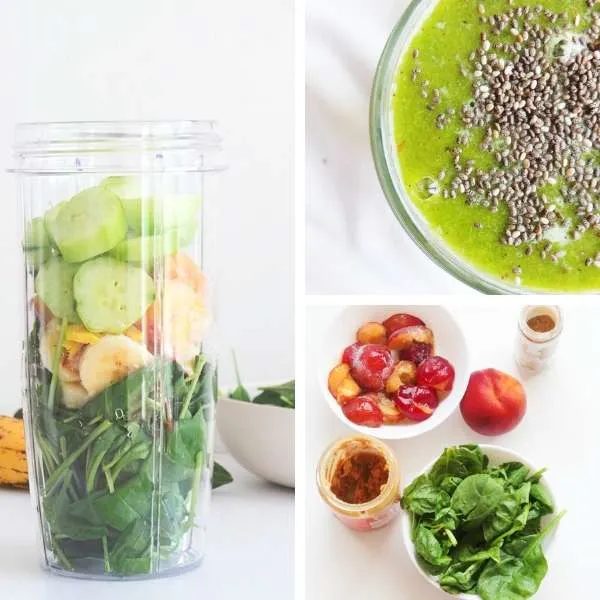
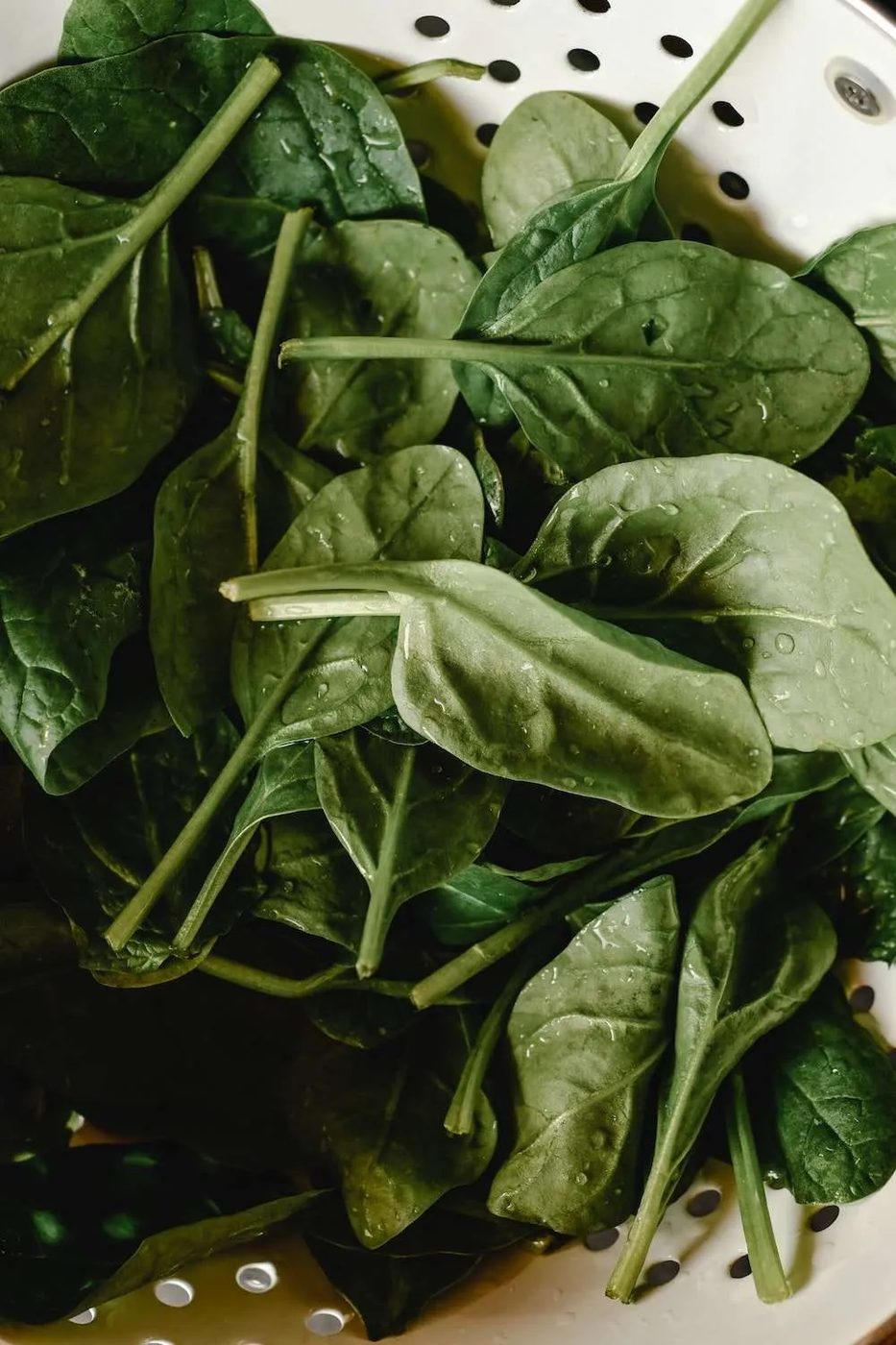
Spinach
A great source of provitamin A, folate, vitamin K and a good source of magnesium and iron, just to mention a few. Pair that spinach with some fats to actually absorb the vitamin A and you’ve got an anti-aging superhero. But that’s not all. Spinach is also a GREAT source of plant-based protein. How much exactly?
Protein per 100kcal = 12.3 g
Carb/protein ratio: 1.27
What are you going to say about that, egg? Nothing, because you’re embarrassed. Spinach has more protein than an egg/100kcal and it has a great carb-to-protein ratio. Which means – yes, eat as much spinach as you please – we love it in soups, salads or even smoothies. Cooked or raw – it’s always a win.
9.
Mushrooms
Mushrooms are one of those foods that just keep us guessing. Are they good for you, are they bad for you? Well, according to this article they’re great for you. Boost your immune system, fight cancer, reduce inflammation & hormonal imbalances, plus BAM – get a ton of protein for almost no calories. And just like that, they made it on the list of high-protein low-carb vegan foods as well. Those mysterious mushrooms. The nutritional information we used is for those boring white mushrooms that look like buttons and here’s what it says:
Protein per 100kcal =13.92 g
Carb/protein ratio: 1.13
That protein content is a reliable until now. So, to add some more protein to your diet – definitely add some mushrooms to your favorite dishes.
10.
Sunflower seeds
Eat these raw and you’ll get a good amount of iron, magnesium + a ton of vitamin E (an important fat-soluble antioxidant we need). Sunflower seeds are fat, but also contain a lot of protein. Like they so deserve to be in this collection of high-protein low-carb vegan foods, even when they’re underrated!
Protein per 100kcal = 3.54 g
Carb/protein ratio: 0.96
Sprinkle over salads, eat as a snack, blend with some dates and cacao to make raw chocolate bites or if you want to experiment use in raw tacos like this one.
11.
Basil
As if we didn’t love basil enough already and needed an extra reason to overuse it everywhere. This healthy herb has many health benefits (anti-inflammatory, anti-cancer, antioxidant, antibacterial), but what we didn’t know until this post is that it’s such a great source of protein.
Protein per 100kcal =13.68g
Carb/protein ratio: 0.84
BOOM. 13.68g of protein/100kcal, okay? That’s almost as much protein as in 100kcal of chicken breast (well, on a bad day). It’s definitely more than ground beef (9.9g/100kcal).
12.
Asparagus
It might make your pee smell, but asparagus is also a great source of the vitamins C, A, B, E. And its protein content? Well, why else will it be on this list, asparagus is an notable source of plant protein.
For cooked asparagus:
Protein per 100kcal = 16.42g
Carb/protein ratio: 0.65
With 18kcal/100g, that makes a lot of roasted asparagus, but it’s definitely worth to use this vegetable as a side to your favorite dishes.
13.
Peanuts
A lot of people would say, “You know what, don’t eat peanuts. They’re bad for you. They’ve got toxins because they’re covered in mold and are high in inflammatory fatty acids. “
Well, it might be true for some types of peanuts and especially for most sorts of our beloved peanut butter.
If you do buy peanut butter, please buy organic that is made only from peanuts. We used to buy chunky peanut butter that contained peanuts, but also hydrogenated oils (we think it was cottonseed oil) and actually sugar. The taste is definitely different, not that intense, BUT you get used to it. Plus our goal is not to eat half a jar of peanut butter (happens often with the chunky one).
Wow, where did we just go… The point is, peanuts are not pure evil if you get quality ones. Peanuts contain great amounts of vitamin E, fiber, zinc and magnesium and you can get A LOT of protein by snacking on peanuts.
Protein per 100kcal = 4.53g
Carb/protein ratio: 0.63
14.
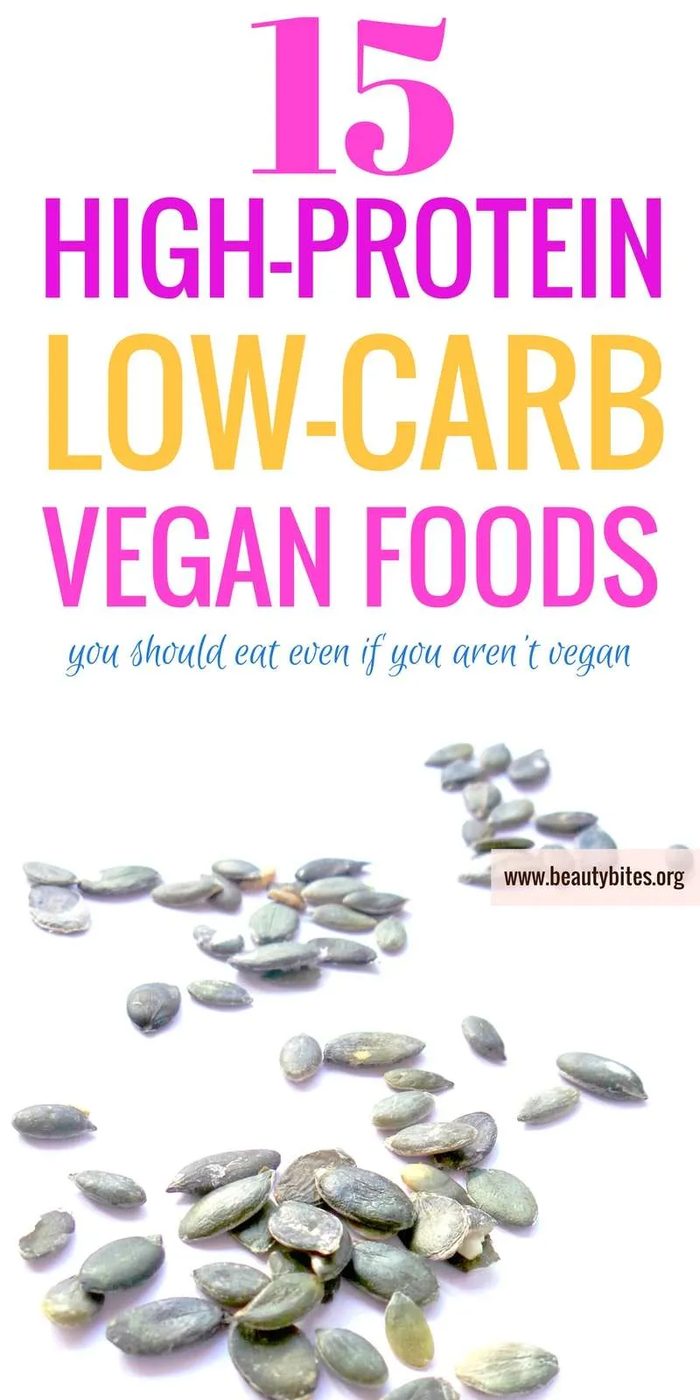
Pumpkin seeds
Often overlooked, pumpkin seeds are so healthy they should be on every single healthy food list out there. 1st of all iron, zinc and magnesium. Things we all struggle to get from a “normal” diet. Pumpkin seeds got them all. Tons of those. Second, B vitamins and essential fatty acids. Pumpkin seeds to the rescue. And then that protein.
Protein per 100kcal = 5.48g
Carb/protein ratio: 0.35
Oh, yes. While pumpkin seeds might be high in fat, they’re also a great source of plant protein and have one of a reliable carb/protein ratio among the plants. Don’t hesitate to add these satisfying seeds to salads, breads or have them as a snack.
15.
Hemp seeds
The proud winner of the carb/protein ratio competition. Hemp seeds have the full thing – a complete set of all the essential amino acids. Yep, hemp seeds not only have a good amount, but also contain COMPLETE protein.
But protein is not the only nutrient hemp seeds brag about. They’ve got: omega-3’s, B vitamins (B1,2,3,6 &9), iron, zinc and magnesium.
Protein per 100kcal = 5.68g
Carb/protein ratio: 0.27
Now that we think about it, if there’s one thing we regret in this life it’s letting those hemp seeds go rancid the one time we actually bought them 2 years ago. To avoid that, keep your hemp seeds in the fridge and actually use them. You can do this in salads (like this salad looks DELICIOUS), smoothies – get creative with it.
And that is it. It’s over.
Winners:
Best protein/carb ratio: hemp seeds
Highest protein content per 100kcal: cooked asparagus with 16.42g protein (beats eggs hard and is so close to chicken breast).
Now, we know plant protein is not “as good” as animal protein, but it’s still protein. And when you diversify your diet and eat different sources of protein – you’ll get the complete set of essential amino acids + some extra stuff that will help you live longer. FIY the extra stuff is phytonutrients and those exist ONLY in plants.
PS: If you’re wondering, we used the USDA Food Composition Database to make these genius calculations.
- 51 low carb dinner recipes you need to try
- 10 superfoods to eat if you have diabetes
- 8 foods to eat for great skin
- 3-day anti-inflammatory detox to make you feel notable
- 6 foods that actually detox your body and prevent cancer