

The season for spaghetti squash is finally here, and it’s a vegetable we enthusiastically anticipate all year round! This remarkable squash is a true family favorite, not just for its ease of preparation but also for its incredible versatility in the kitchen. Whether you’re looking for a low-carb alternative to pasta or simply a delicious and nutritious side dish, spaghetti squash offers a delightful culinary experience that’s both satisfying and healthy.
If you’re searching for simple and delicious spaghetti squash recipes, you’ve come to the right place. Our recipe focuses on the purest method of preparation, requiring just a few staple ingredients: a fresh spaghetti squash, a touch of olive oil, and basic salt and pepper. Of course, a reliable oven is also essential for achieving that perfectly roasted texture.

For a long time, I was indifferent about spaghetti squash, but mastering the art of cooking it transformed my perspective entirely. My absolute favorite way to prepare this fantastic vegetable is by roasting it in the oven. While cooking it in an Instant Pot or microwave can be quicker, roasting truly brings out its best flavor and texture, creating those distinct, tender, spaghetti-like strands that make it so special.
Indeed, many people incorporate spaghetti squash into their diets as a superb gluten-free and low-carb substitute for traditional pasta noodles. However, beyond its dietary benefits, we genuinely enjoy it simply because it’s incredibly delicious on its own! Its subtle flavor and unique texture make it a standout ingredient that can be enjoyed in countless ways.
What Does Spaghetti Squash Taste Like?
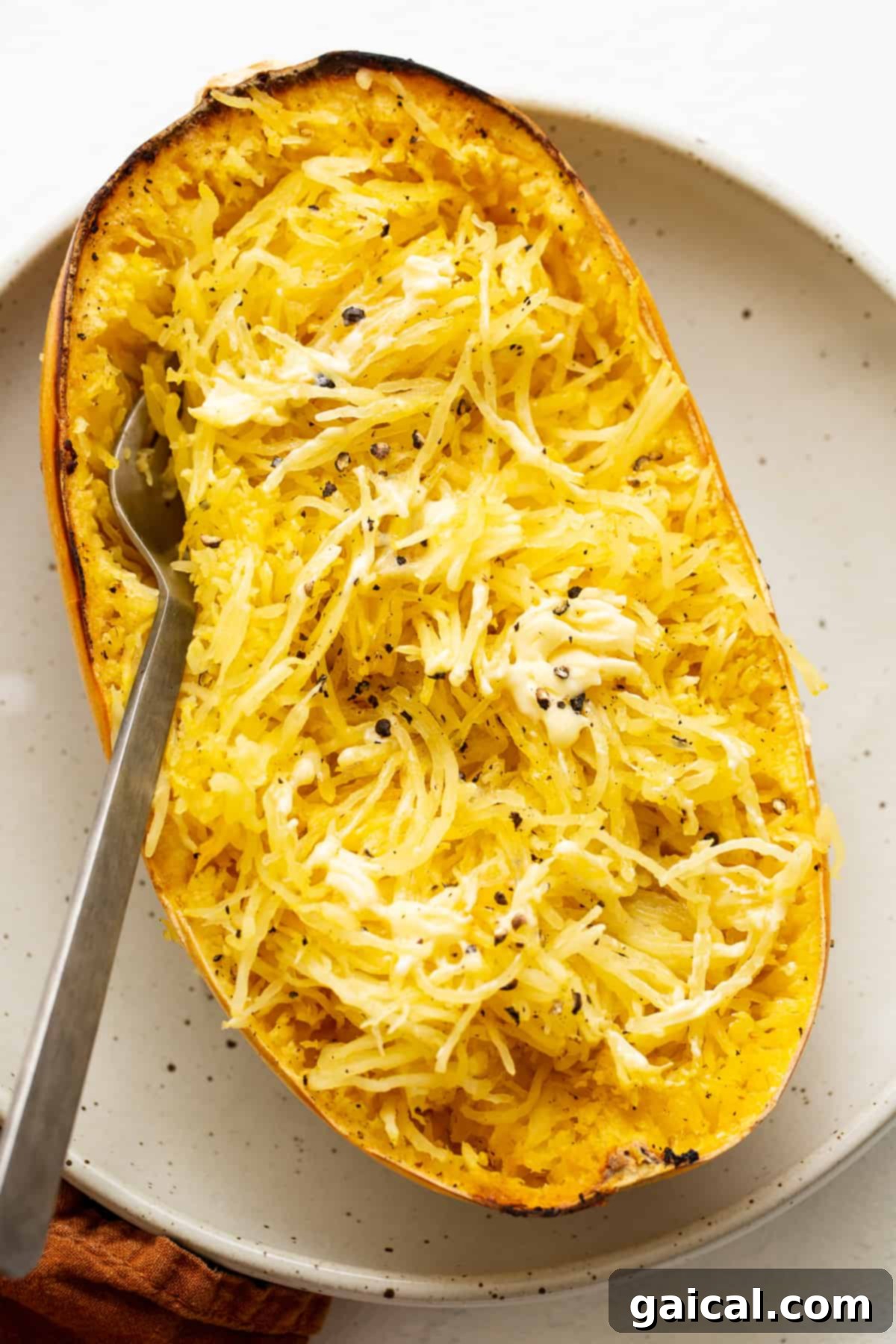
Spaghetti squash possesses a mild and subtly sweet flavor profile, making it a wonderful canvas for various seasonings and sauces. It’s less sweet than its cousin, butternut squash, but offers a pleasant sweetness that distinguishes it from more savory options like a russet potato. The flavor is delicate enough not to overpower other ingredients, yet distinct enough to be enjoyable on its own. Its texture, once cooked, transforms into unique, tender, pasta-like strands, which is precisely where it gets its name and culinary appeal.
Why Roasting is the Best Way to Cook Spaghetti Squash
While there are several methods to cook spaghetti squash, roasting consistently stands out as the superior choice for enhancing its flavor and achieving the ideal texture. Baking in the oven allows the squash to caramelize slightly, developing a richer, more complex taste that steaming or microwaving simply can’t replicate. The dry heat of the oven also helps the strands to separate more easily and retain a pleasant al dente bite, rather than becoming watery or mushy. It’s a hands-off approach that yields consistently delicious results, making it our go-to method for preparing this wonderful vegetable.
Essential Ingredients for Simple Roasted Spaghetti Squash
Preparing a perfect roasted spaghetti squash requires minimal ingredients, allowing the natural flavors of the squash to shine. Here’s what you’ll need for this straightforward yet incredibly satisfying recipe:
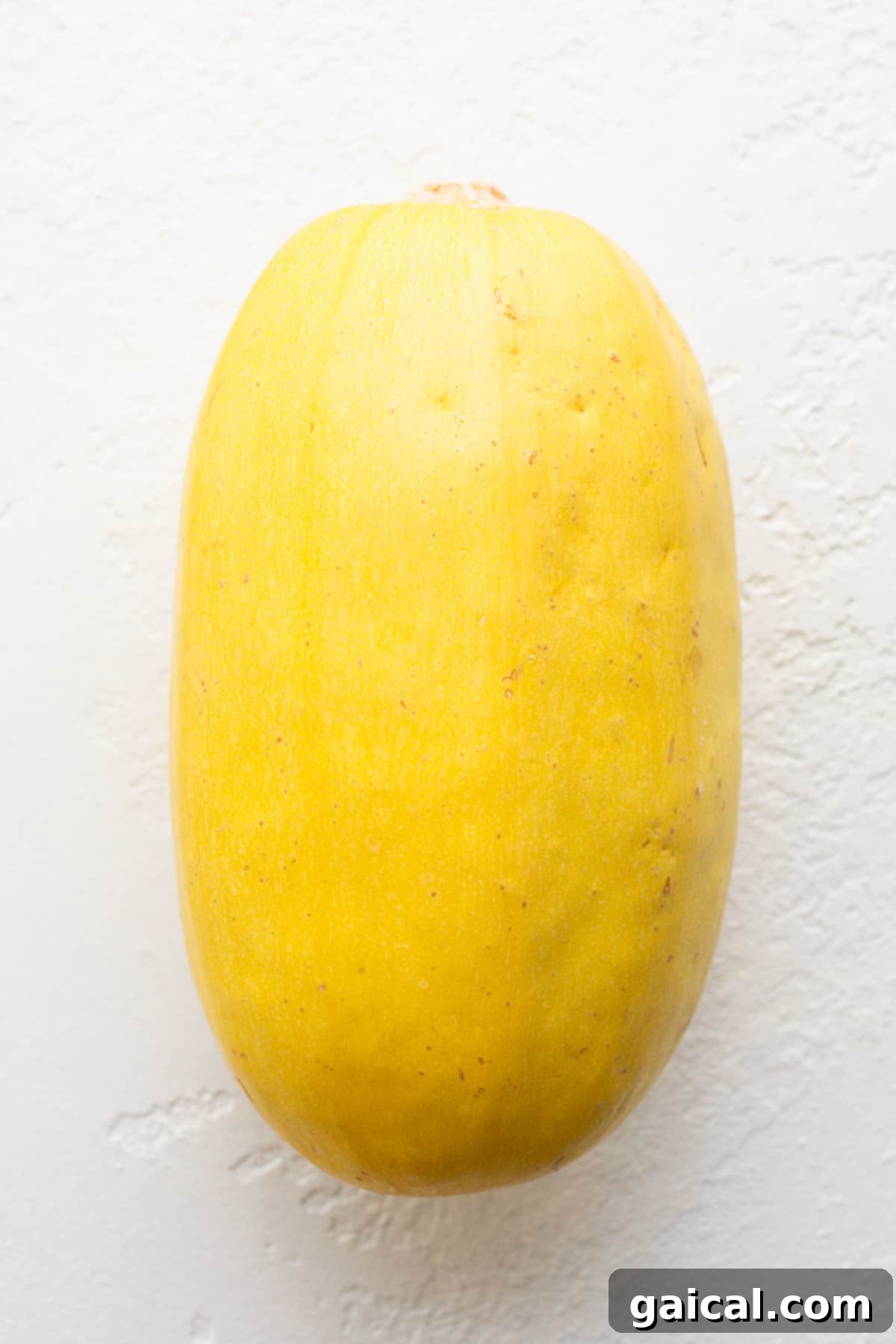
- Spaghetti Squash: For this recipe, we typically use a spaghetti squash weighing around 2 pounds. However, any size will work. Keep in mind that larger squashes will require a longer roasting time to become fork-tender. When selecting your squash, look for one that feels heavy for its size, has a firm rind, and is free of soft spots or blemishes.
- Olive Oil: Extra virgin olive oil is our preferred choice for roasting squash. Its fruity notes complement the mild sweetness of the spaghetti squash beautifully, and it helps the squash achieve a lovely golden-brown exterior. Avocado oil is another excellent alternative if you prefer a more neutral-tasting oil with a high smoke point.
- Salt and Pepper: These fundamental seasonings are all you truly need to bring out the best in your roasted spaghetti squash. High-quality sea salt and freshly ground black pepper enhance the natural flavors without overwhelming them. Feel free to adjust the amounts to your personal preference.
- An Oven and Baking Sheet: A reliable oven is key for consistent roasting. A baking sheet lined with parchment paper will ensure easy cleanup and prevent sticking.
How Long to Roast Spaghetti Squash for Perfect Tenderness
The ideal roasting time for spaghetti squash largely depends on its size and your oven’s specific characteristics. As a general guideline, we recommend baking your spaghetti squash at 400ºF (200ºC) for approximately 40 minutes. It’s crucial to flip the squash halfway through the cooking process to ensure even cooking and a beautifully tender result. For larger squashes, you may need to extend the baking time, so always check for doneness with a fork.
Step-by-Step Guide: How to Bake Spaghetti Squash
Achieving perfectly baked spaghetti squash is a surprisingly simple process. Follow these detailed steps for a flawless outcome:
- Prepare Your Oven and Baking Sheet: Begin by preheating your oven to 400ºF (200ºC). Line a sturdy baking sheet with parchment paper to prevent sticking and make cleanup a breeze.
- Slice the Spaghetti Squash Safely: This is arguably the trickiest part, so always prioritize safety. Place the squash on a stable cutting board. Using an extremely sharp, large chef’s knife, carefully slice the spaghetti squash in half lengthwise (often referred to as “hot dog-style”). If you find it too hard to cut raw, you can microwave it for 5-7 minutes first to soften the rind.
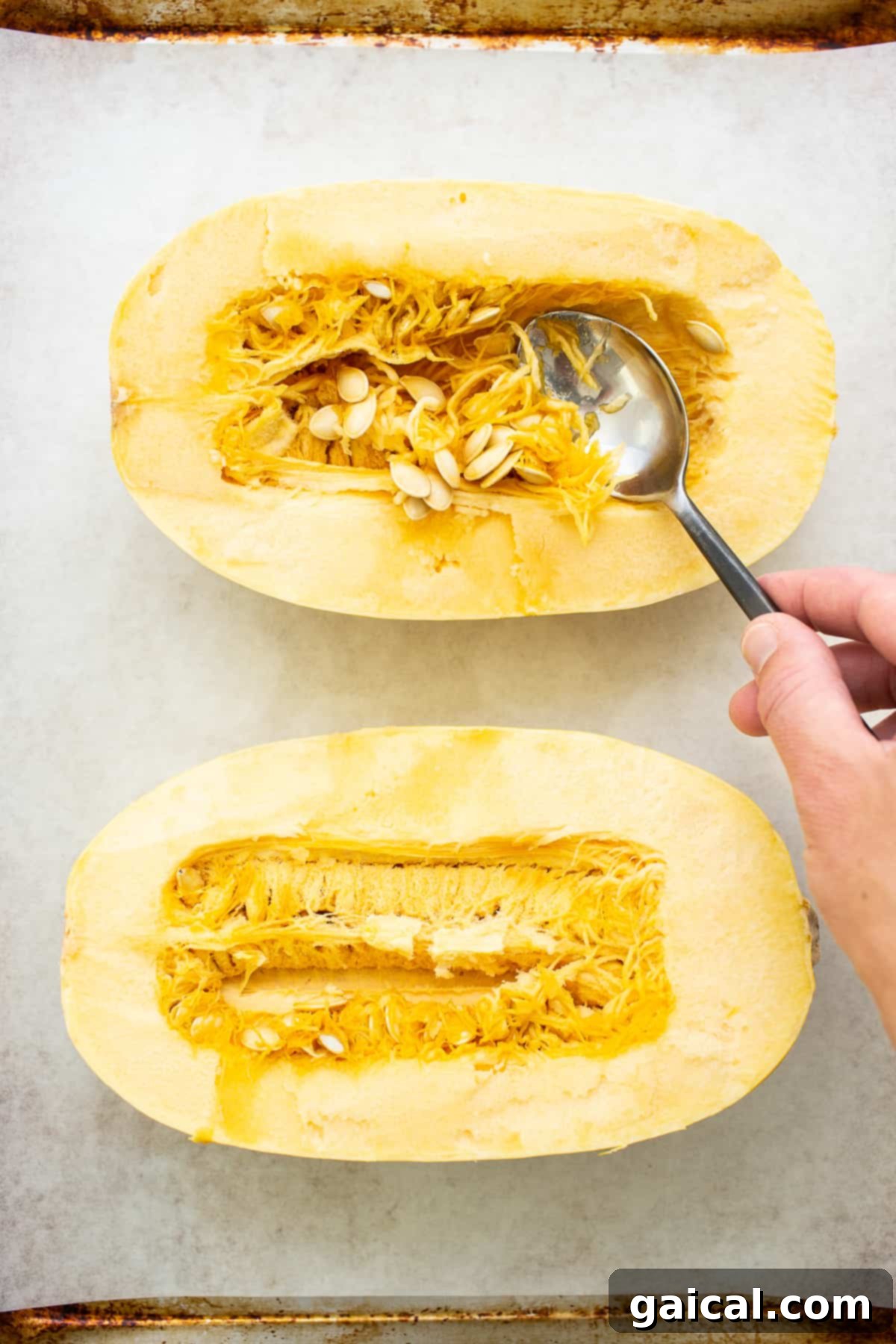
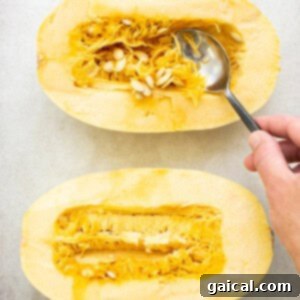
- Scoop Out the Innards: Once sliced, use a sturdy spoon to scoop out all the seeds and stringy fibrous flesh from the center of both squash halves. Aim to get them as clean as possible, leaving only the firm flesh.
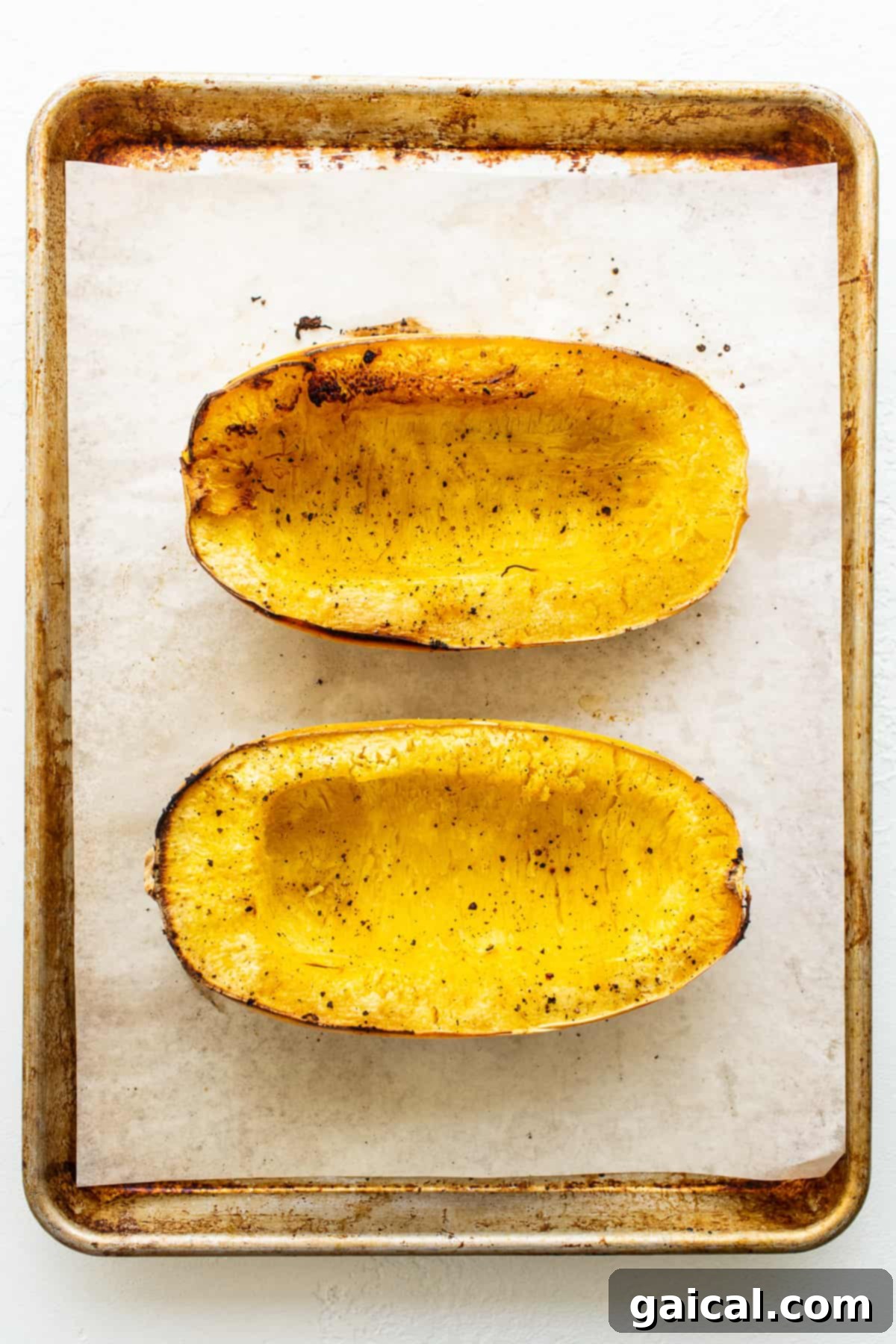
- Oil and Season Liberally: Place the spaghetti squash halves on the prepared baking sheet, flat-side up. Drizzle about 1 tablespoon of olive oil evenly over the cut surfaces of both halves. Then, season generously with salt and freshly ground black pepper. Don’t be shy with the seasoning, as spaghetti squash benefits from it.
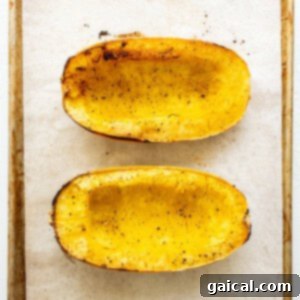
- First Roast: Flip the squash halves so they are now cut-side down on the baking sheet. This allows the steam to cook the flesh and the bottom to caramelize. Roast in the preheated oven for 20 minutes.
- Second Roast and Check for Doneness: After 20 minutes, carefully flip the squash halves over so they are cut-side up. Continue roasting for another 20 minutes. Around the 30-minute mark (after the first flip), gently prick the flesh with a fork. It should feel tender, but still offer a slight resistance. If it’s too firm, continue baking in 5-10 minute increments until it reaches your desired tenderness. Overcooking can lead to mushy strands, so watch it closely!
- Allow to Rest: Once perfectly cooked, remove the spaghetti squash from the oven. Let it rest on the baking sheet for about 5 minutes. This crucial step allows the squash to cool slightly, making it easier and safer to handle, and helps the strands firm up.
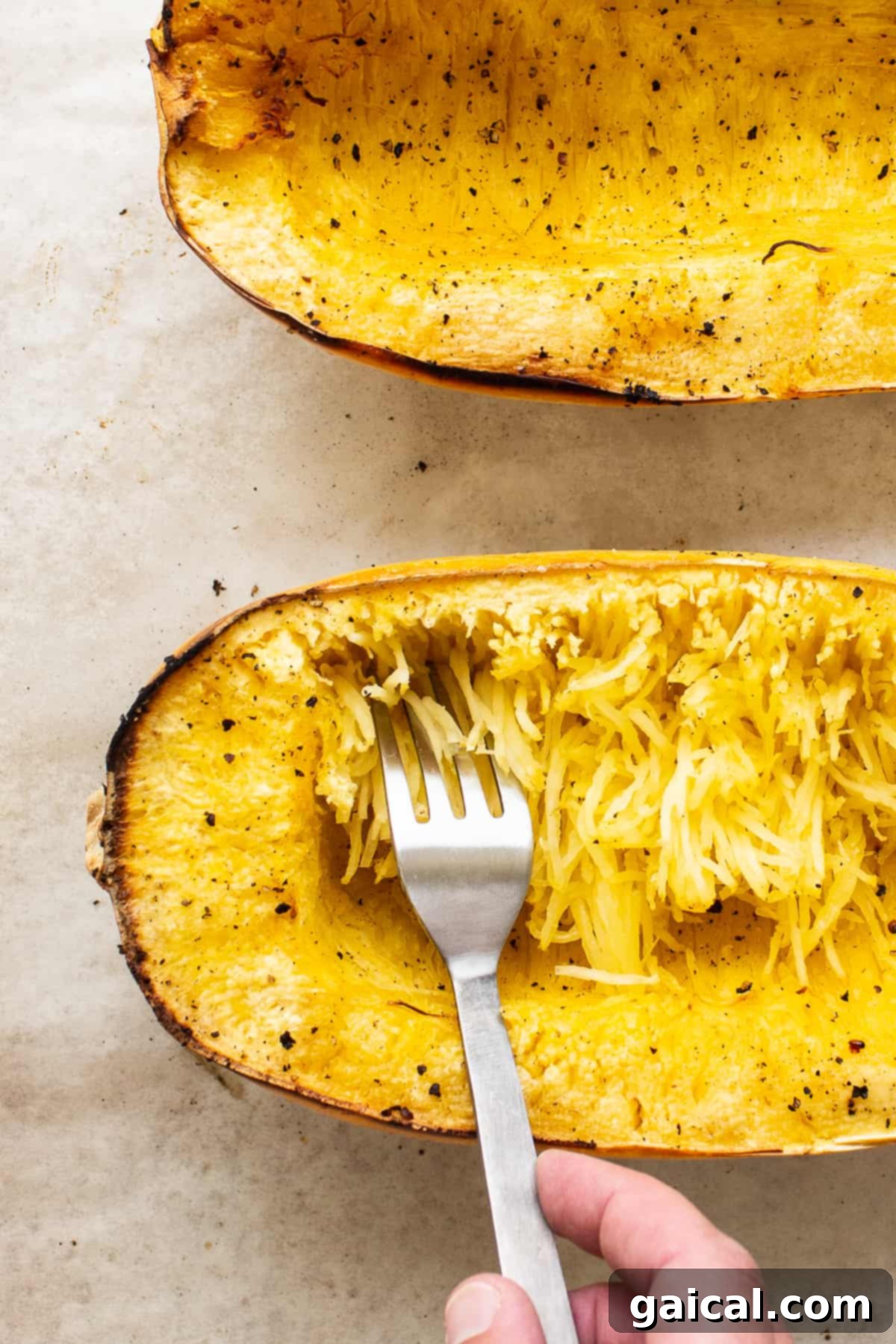
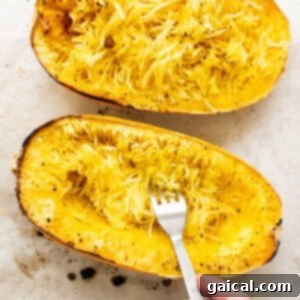
- Fluff into Spaghetti-like Strands: With a fork, gently scrape the cooked flesh of each squash half, moving from the edges towards the center. The cooked flesh will naturally separate into beautiful, spaghetti-like strands. Continue until all the flesh is removed from the rind.
Pro Tip: Squash Size Matters! We found that a 2-pound spaghetti squash cooks perfectly in about 40 minutes using this method. However, if you’re using a larger squash, be prepared to extend your baking time. Always rely on the fork-tenderness test to determine when your squash is truly ready.
Can You Cook a Whole Spaghetti Squash?
While it is technically possible to bake a spaghetti squash in its whole form, we strongly recommend slicing it in half lengthwise before cooking. There are several good reasons for this. First, cutting it in half allows you to easily scoop out the seeds and stringy bits before cooking, which can be messy and more difficult to do after it’s hot. Second, cooking it in halves significantly reduces the overall baking time, ensuring a more efficient cooking process. Lastly, exposing the flesh directly to the heat allows for better caramelization and more even cooking, leading to a superior texture and flavor in the final dish.
Explore More Delicious Vegetarian Recipes
Autumn Couscous Salad
Homemade Steak Taco Seasoning (Savory & Smoky)
Crispy Tofu Stir Fry (Better Than Takeout!)
Roasted Gnocchi Kale Salad with Garlic Parmesan Dressing
Brown Butter Chai Rice Krispie Treats
Is Spaghetti Squash a Healthy Choice?
Absolutely! Spaghetti squash is a fantastic addition to any healthy diet. While it is often considered a starchy vegetable, it offers a wealth of nutritional benefits. It’s an excellent source of vitamins A and C, crucial for immune function and vision. Furthermore, a single serving typically contains about 2 grams of fiber, which aids in digestion and promotes satiety, and 1 gram of protein. Its naturally low calorie count and mild flavor make it an ideal choice for a nutrient-dense meal, especially for those looking to reduce their carbohydrate intake or increase their vegetable consumption.
When is Spaghetti Squash in Season? How to Choose the Best One
Spaghetti squash is a classic autumn and winter vegetable, typically in season from early fall all the way through the colder months. During this peak season, you’ll find them fresh and abundant at farmers’ markets and grocery stores. However, due to its good storage properties, it’s increasingly common to find spaghetti squash available year-round in many larger supermarkets, especially in the US.
When selecting a spaghetti squash, look for a squash that has a firm, hard rind without any soft spots, cuts, or blemishes. The color should be a uniform pale yellow or ivory, indicating ripeness. A good spaghetti squash will also feel heavy for its size, which is a sign of good moisture content. Avoid any squash that looks dull, shriveled, or has green patches, as these may not be fully ripe or are past their prime.
Spaghetti Squash Nutrition Highlights (Per 1 Cup Cubed)
- Calories: Approximately 31 kcal
- Fat: Less than 1g
- Carbohydrates: Approximately 7g
- Fiber: 2g
- Sugar: 3g
- Protein: 1g
(Note: These are approximate values and can vary based on squash size and preparation.)
Creative Ways to Serve Baked Spaghetti Squash
Baked spaghetti squash is incredibly versatile and can be enjoyed in a myriad of ways. Its noodle-like strands make it a fantastic, healthful alternative to traditional pasta, but its uses extend far beyond that. Here are some of our favorite creative and delicious ideas for serving your perfectly baked spaghetti squash:
- Classic Pasta Alternative: Serve it simply with your favorite homemade marinara sauce or hearty Italian meatballs for a lighter take on a classic Italian meal.
- Stuffed Squash Bowls: Transform the squash halves into edible bowls! Fill them with a mixture of ground meat (turkey, beef, or sausage), vegetables, cheese, and herbs, then bake until heated through. Try our Instant Pot Stuffed Spaghetti Squash recipe for inspiration.
- Cheesy Delight: A simple sprinkle of your favorite cheese – Parmesan, mozzarella, or a blend – over warm spaghetti squash can elevate it into a comforting dish. For extra decadence, broil it briefly until the cheese is bubbly and golden.
- Savory Toppings: Top your spaghetti squash with savory options like healthy sloppy joe meat, chili, or a rich bolognese sauce.
- Asian-Inspired Stir-Fry Base: Use the strands as a base for your favorite stir-fry. Sauté with soy sauce, ginger, garlic, and an array of colorful vegetables and protein for a quick and healthy meal.
- Salad Component: Allow the cooked squash to cool, then add it to green salads for added texture and nutrients. It pairs wonderfully with a light vinaigrette.
- Simple & Flavorful: For a minimalist approach, toss the warm strands with a knob of butter, a drizzle of pesto, a squeeze of lemon juice, or a sprinkle of fresh herbs like parsley or chives.
Top Tips for Spaghetti Squash Success
To ensure your baked spaghetti squash turns out perfectly every time, keep these essential tips in mind:
Always Use a Sharp Knife: Spaghetti squash can be quite tough to cut, especially when raw. A very sharp, large chef’s knife is crucial for safety and ease. If you struggle, carefully pierce the squash a few times and microwave it for 3-5 minutes to soften the rind slightly before cutting.
Let it Rest After Baking: Once your squash comes out of the hot oven, resist the urge to immediately start flaking it. Allowing it to rest for at least 5 minutes helps it cool down enough to handle safely and also allows the strands to firm up slightly, making them easier to separate.
Check for Doneness: Don’t rely solely on timing. The best way to tell if your spaghetti squash is cooked through is by gently pricking the flesh with a fork. It should be tender enough to easily pull away into strands, but not so soft that it becomes mushy. Cooking times can vary based on oven calibration and squash size.
Storage and Reheating Baked Spaghetti Squash
Cooked spaghetti squash is excellent for meal prepping and stores well, allowing you to enjoy its deliciousness over several days. Here’s how to properly store and reheat your leftovers:
Storage: Once cooled, transfer any leftover roasted spaghetti squash strands to an airtight container. Store it in the refrigerator for up to 3-5 days. Ensure it’s fully cooled before sealing to prevent condensation and maintain freshness.
To Reheat: For quick reheating, place the desired amount of spaghetti squash in a microwave-safe bowl. Heat on high for 60-90 seconds, or until warmed through. Alternatively, you can reheat it in a skillet over medium heat with a tiny bit of olive oil or water to prevent drying, stirring occasionally until hot.
Discover More of Our Favorite…
Delicious Squash Recipes
- Perfectly Roasted Butternut Squash
- Creamy Spaghetti Squash Mac and Cheese
- Easy Roasted Delicata Squash
- Delightful Summer Squash Pasta
- Hearty Instant Pot Stuffed Spaghetti Squash
- Comforting Roasted Butternut Squash Soup
Simple Baked Spaghetti Squash Recipe
Learn how to cook spaghetti squash in the oven with this simple baked spaghetti squash recipe for a versatile and healthy meal option.

Ingredients
- 1 – 2 lb. spaghetti squash
- 1 tablespoon olive oil, separated
- ½ teaspoon salt, separated
- ½ teaspoon ground black pepper, separated
Instructions
- Preheat the oven to 400ºF (200ºC) and line a baking sheet with parchment paper.
- Next, use a large sharp knife to carefully slice the spaghetti squash in half lengthwise (hotdog style). Remove all the seeds and fibrous innards from the spaghetti squash using a spoon.

- Drizzle about 2 teaspoons of olive oil evenly over the cut surface of each spaghetti squash half. Then, season each half with ¼ teaspoon of salt and ¼ teaspoon of ground pepper.
- Place the spaghetti squash halves open side-down on the lined baking sheet and bake for 20 minutes in the preheated oven at 400ºF (200ºC).
- After the initial 20 minutes, carefully flip each half of the spaghetti squash over (cut-side up) and continue to bake for another 20 minutes. We highly recommend checking the squash for tenderness with a fork after about 10-15 minutes into this second phase to ensure it doesn’t become mushy. Cooking times can vary based on your oven and the squash’s size.
- Remove the spaghetti squash from the oven and let it rest for 5 minutes. This allows it to cool slightly and makes the strands easier to separate. Then, use a fork to carefully “fluff” and scrape the edges of the squash, loosening the spaghetti-like strands from the skin.
- Serve immediately while warm. You can enjoy it with a pat of butter, an extra drizzle of olive oil, a scoop of your favorite pesto, or your preferred sauce and toppings. Enjoy!
Tips & Notes for Best Results
- The size of your spaghetti squash directly impacts baking time. For a 1.75-lb squash, 40 minutes is typically perfect. Larger squashes will need more time, so always check for tenderness with a fork.
- If the squash is too hard to cut initially, carefully pierce it a few times with a knife and microwave it for 3-5 minutes to soften the rind slightly before cutting in half.
- For richer flavor, consider adding a pinch of garlic powder or onion powder to your salt and pepper seasoning mix before roasting.
Nutrition Information (per serving)
Carbohydrates: 32 g,
Protein: 3 g,
Fat: 10 g,
Fiber: 7 g,
Sugar: 13 g
Nutrition information is automatically calculated and should be used as an approximation. Actual values may vary based on ingredients and preparation methods.
Photography: All photos featured in this post were expertly taken by Ashley McGlaughlin from The Edible Perspective.