
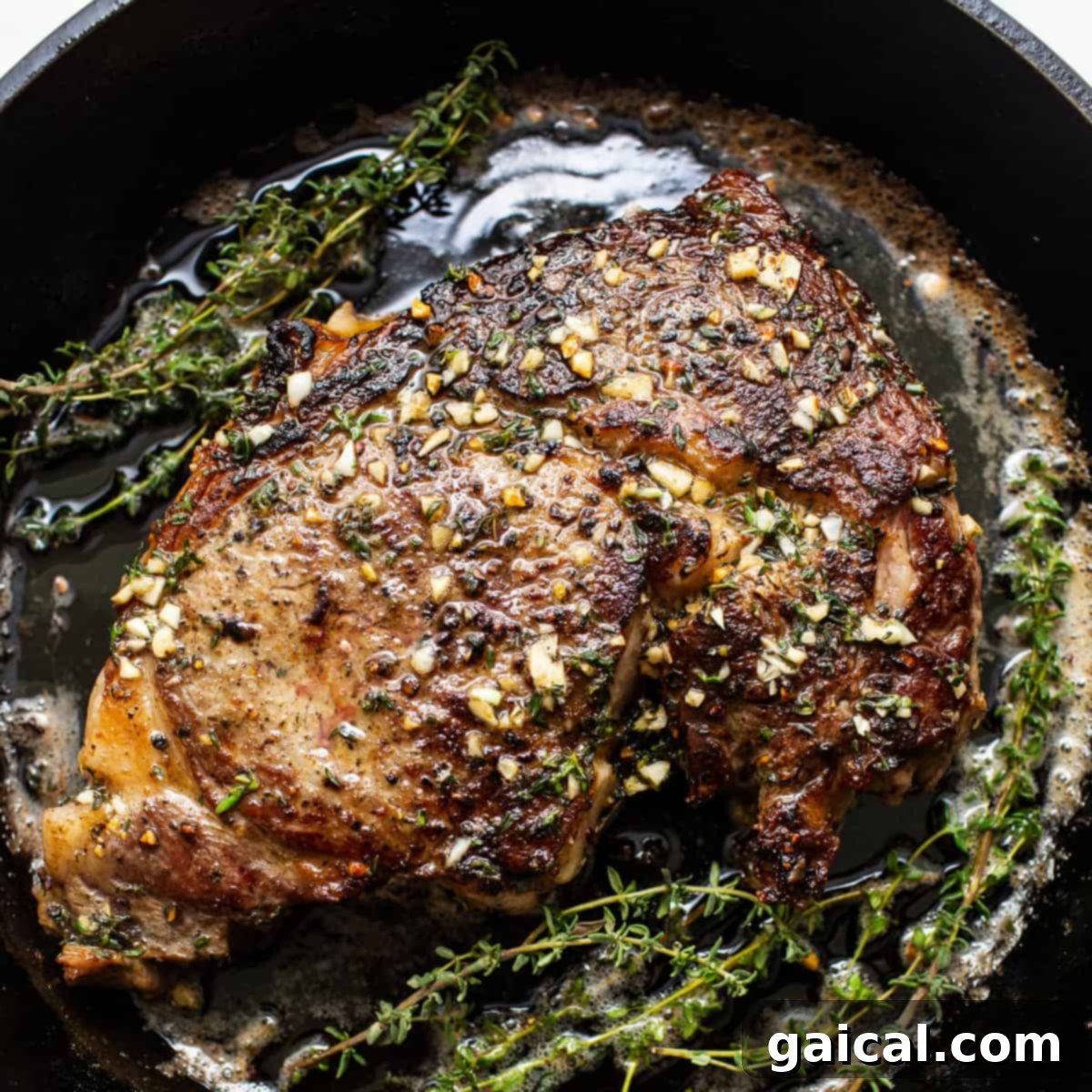
Perfect Cast Iron Steak Recipe: Achieve Restaurant-Quality Results at Home
Prepare to transform your steak-cooking game with our definitive guide to crafting a phenomenal cast iron steak. This method is a true game-changer, especially for achieving that coveted thick, juicy steak with an incredible, restaurant-quality crust. Our meticulously developed cast iron steak recipe focuses on the superior ribeye steak, generously seasoned with a flavorful homemade steak seasoning. The magic happens as it’s expertly seared to perfection in a scorching hot cast iron skillet, then bathed in aromatic garlic butter and fresh herbs. Get ready to impress your taste buds and elevate your home cooking!
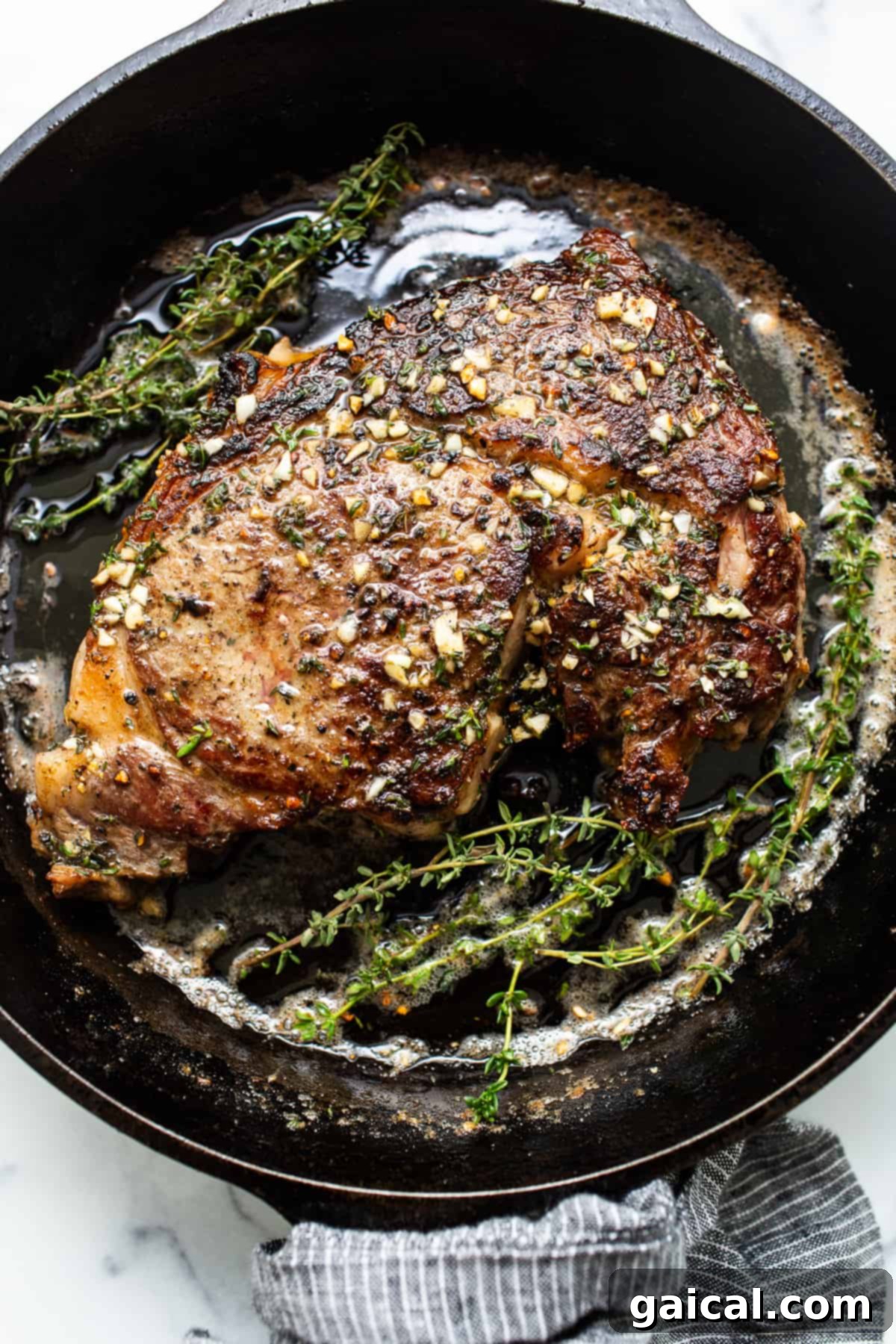
Hello, fellow steak enthusiasts! If you haven’t yet discovered the unparalleled joy of cooking your steaks in a cast iron skillet, you are truly missing out on a culinary revelation. This time-honored technique consistently delivers a steak that boasts a thick, savory brown crust on the outside, while retaining an incredibly juicy and tender interior. It’s a method that promises perfection every single time.
Why a Cast Iron Skillet is Your Steak’s Best Friend
The secret weapon behind a truly exceptional steak is often an everyday item found in many kitchens: a cast iron pan. There are several compelling reasons why we wholeheartedly endorse this method for cooking steak, setting it apart from other techniques like grilling or pan-frying in conventional cookware.
- Unrivaled Heat Retention and Evenness: Unlike many modern pans or even grills which can have hot and cold spots, cast iron skillets heat very evenly across their entire surface once properly preheated. This consistent heat distribution is crucial for uniform cooking and prevents one part of your steak from being overcooked while another remains undercooked.
- Achieving Intense High Heat: Cast iron pans can get VERY hot and retain that heat exceptionally well. This is absolutely essential for creating the perfect sear, also known as the Maillard reaction. This chemical reaction occurs at high temperatures, browning the surface of the meat and developing hundreds of new, complex flavor compounds that make a steak truly delicious. Without sufficient heat, you simply won’t get that desirable, deeply browned crust.
- Durability and Longevity: A well-maintained cast iron skillet can last for generations, becoming a cherished heirloom. Its robust construction can withstand extremely high temperatures without warping or degrading.
- Versatility: From stovetop to oven, cast iron skillets are incredibly versatile. This allows you to achieve a perfect sear on the stovetop and then finish the steak in the oven, if desired, for thicker cuts to ensure even cooking through the center.
Beyond the pan itself, our recipe elevates the flavor profile by recommending you cook your steak in a luscious herbed butter. This simple addition infuses the steak with incredible depth and richness, making every bite an unforgettable experience.
Choosing the Right Steak Cut for Cast Iron Searing
The type of steak you choose can significantly impact the final result. While many cuts can benefit from cast iron cooking, some are particularly well-suited due to their fat content, thickness, and tenderness. Our top recommendation for this recipe is a premium ribeye steak.
Ribeye steaks are celebrated for their rich marbling – those fine streaks of fat woven throughout the meat. This intramuscular fat melts during cooking, basting the steak from the inside out, which contributes immensely to its flavor, moisture, and tenderness. We also prefer a thicker cut of beef, typically between 1 to 1.5 inches, as it allows for a robust sear on the exterior without overcooking the interior.
Our second excellent choice for this recipe would be a New York Strip steak, known for its balance of tenderness and flavor, often with a nice fat cap on one side that renders beautifully.
If you’re exploring other fantastic steak options for the cast iron method, consider these recommendations:
- Ribeye Steak: Our top pick for its marbling and rich flavor.
- New York Strip: A well-balanced cut, tender with good flavor.
- Sirloin Steak: A lean yet flavorful option, often more budget-friendly.
- Flank Steak: Excellent for slicing against the grain, great for marinades (check out our Grilled Flank Steak recipe for inspiration).
- Skirt Steak: Similar to flank, highly flavorful and takes well to high-heat searing.
- T-bone Steaks: Offers two different cuts (tenderloin and strip) on one bone.
- Tri-tip Steak: A versatile cut, often roasted or grilled, but also sears well in cast iron.
- Filet Mignon: The most tender cut, perfect for a quick sear to develop a crust.
- Porterhouse: A larger version of the T-bone, offering a generous portion of both tenderloin and strip.
Mastering the Art of Cast Iron Steak: Essential Tips
Achieving that perfect cast iron steak involves more than just a hot pan. These critical tips will help you avoid common pitfalls and ensure your steak is consistently delicious.
- Bring Your Steak to Room Temperature: This is a crucial step often overlooked. Never sear a cold steak straight from the refrigerator. Remove your steak from the fridge at least 20-30 minutes (and up to an hour for thicker cuts) before you plan to cook it. Allowing the steak to come closer to room temperature ensures more even cooking from edge to center, preventing a cold, raw middle and an overcooked exterior.
- Don’t Overcook Your Steak: Overcooking is the cardinal sin of steak preparation. The best way to prevent this is to keep a close eye on the internal temperature. We highly recommend having a reliable meat thermometer on hand at all times when cooking steak. This allows you to monitor its progress accurately and remove it from the heat at precisely the right moment for your preferred doneness.
- The Importance of Resting: Once your steak is done cooking, no matter the method, always let it rest. Transfer it to a cutting board and allow it to rest for 10-15 minutes (longer for very thick cuts). During this resting period, the steak will continue to cook slightly (its internal temperature can rise by an additional 5-10ºF, known as carryover cooking). More importantly, the muscle fibers relax, allowing the juices that have migrated to the center during cooking to redistribute throughout the entire cut, resulting in a significantly juicier and more tender steak. Skipping this step means all those precious juices will flood your cutting board instead of remaining in the meat.
- Pat Your Steak Dry: Before seasoning, thoroughly pat your steak dry with paper towels. Excess surface moisture prevents effective searing, as the moisture must evaporate before browning can begin. A dry surface is key to achieving that beautiful, crispy crust.
- Use Plenty of Seasoning: Don’t be shy with your seasoning! A generous application of salt and pepper, or a robust homemade steak seasoning, forms a flavorful crust and enhances the meat’s natural taste.
Understanding Steak Doneness: A Guide to Internal Temperatures
Everyone has a personal preference when it comes to steak doneness. Our team generally favors a perfectly executed medium-rare steak for its optimal balance of tenderness and flavor. To help you achieve your desired level of doneness, here’s a reliable guide to internal temperatures. Remember to always measure the temperature in the thickest part of the steak, avoiding the bone.
Rare: 130ºF (54°C) – A cool red center, very juicy.
Medium Rare: 140ºF (60°C) – A warm red center, tender and juicy.
Medium: 155ºF (68°C) – A warm pink center, slightly firmer.
Well Done: 165ºF (74°C) – Little to no pink, firm texture.
It’s vital to remember the principle of carryover cooking: as your steak rests after being removed from the heat, its internal temperature will continue to rise by approximately 5-10ºF. Therefore, remove your steak from the skillet a few degrees below your target temperature to account for this increase.

Pro Tool Alert!
Our Recommended Meat Thermometer: Thermoworks Thermapen
We cannot stress enough the importance of using a reliable meat thermometer for cooking any cut of meat, especially steak. Guessing doneness by touch is inconsistent. The Thermapen is our absolute go-to instant-read meat thermometer. Its lightning-fast and accurate readings ensure you hit your target temperature every single time, guaranteeing perfectly cooked steaks without fail.
Why Butter vs. Oil for Searing Steak?
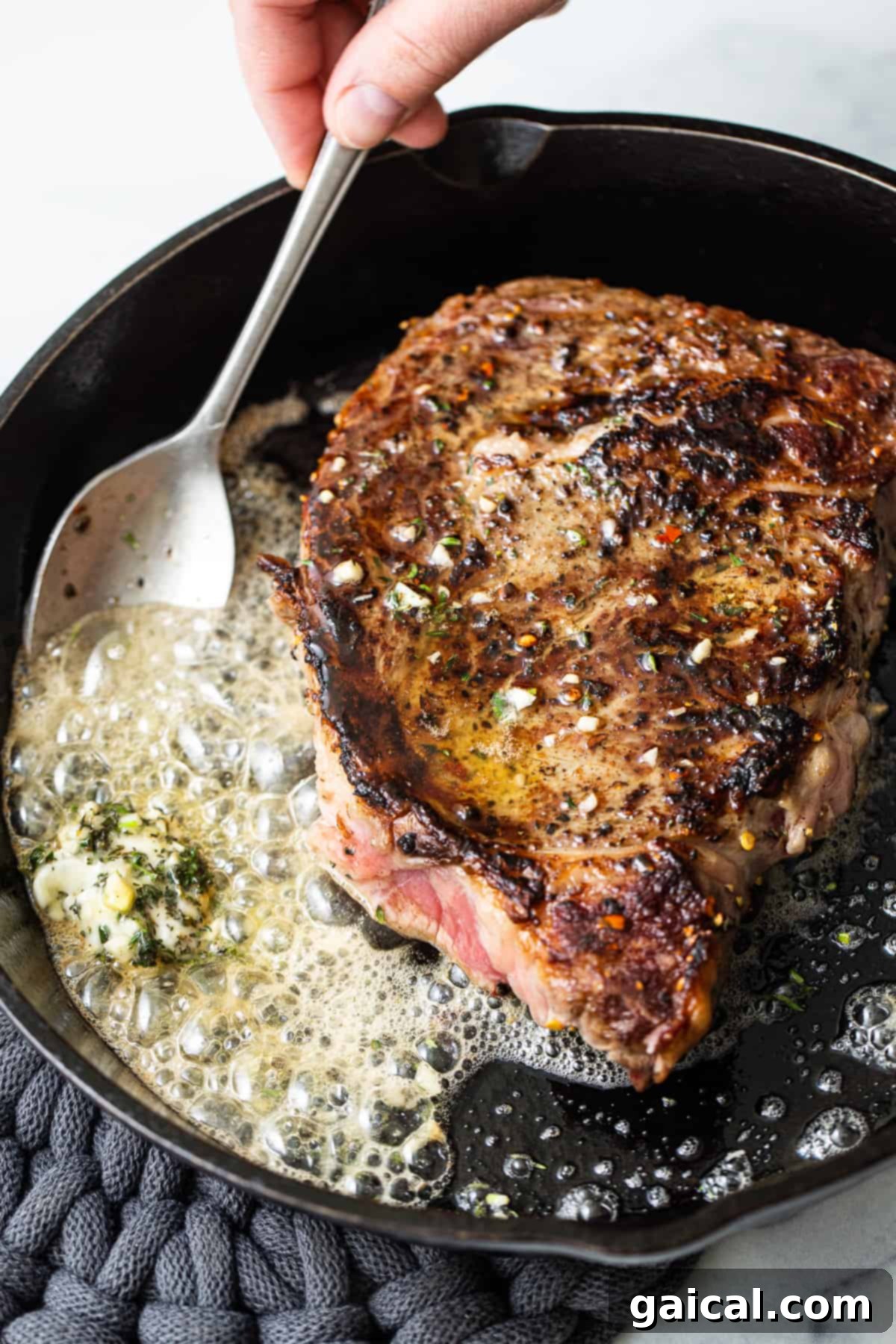
When it comes to searing steak, the fat you choose plays a significant role in both the crust development and the final flavor. We rigorously tested this recipe using both butter and various oils, and butter consistently won our hearts over. Here’s why:
- Unmatched Flavor: The rich, dairy notes of butter infuse the steak with a depth of flavor that oil simply cannot replicate. As the butter browns, it develops nutty, caramelized notes that are incredibly appealing and contribute to a more complex taste profile in the final dish.
- Browning and Maillard Reaction: While butter has a lower smoke point than some oils, its milk solids are key to achieving an exquisite brown crust. When butter melts and browns, it undergoes a transformation that adds layers of savory, sweet, and nutty nuances to the steak’s exterior. This is why we often recommend starting with a high smoke point oil (like olive oil, as in our recipe) to get the initial sear, and then adding butter towards the middle or end of the cooking process for basting. This combines the best of both worlds: high-heat searing capabilities of oil and the superior flavor of browned butter.
- Aromatic Infusion: Butter acts as an excellent vehicle for infusing additional aromatics like garlic and fresh herbs into the steak as you baste it. This creates an irresistible aroma and flavor layer that truly elevates the dish.
Our appreciation for browned butter is boundless, and you’ll quickly understand why it’s a non-negotiable component of our cast iron steak recipe.
More of our Favorite…
Explore More Steak Recipes
If you loved this cast iron steak, dive deeper into the world of steak with our other fantastic recipes:
- How to Grill Steak: Master the art of outdoor steak cooking.
- Sous Vide Steak: Achieve unparalleled precision and tenderness.
- Ultimate Steak Marinade: Elevate any cut with our flavorful marinade.
- Grilled Flank Steak: A perfect recipe for this versatile cut.
- Steak Tacos: A fun and flavorful way to enjoy steak.
- Steak Fajitas: Sizzling and savory, perfect for a weeknight meal.
- Steak Salad: A light yet satisfying meal featuring tender steak.
Serve Your Cast Iron Skillet Steak with…
A perfectly cooked cast iron steak deserves equally delicious accompaniments. Here are some of our favorite side dishes that beautifully complement the richness of the steak:
- Baked Potatoes in Foil: A classic and comforting pairing.
- Strawberry Broccoli Salad: A refreshing and vibrant side to cut through the richness.
- Roasted Fingerling Potatoes: Crispy on the outside, fluffy on the inside, and incredibly flavorful.
Pro Tip: Don’t let any delicious leftovers go to waste! We absolutely love using any remaining steak from this recipe to create our delightful steak salad for a quick and satisfying lunch the next day.
★★★★★ 5 from 3 votes
Cast Iron Steak Recipe
Cooking steak in a cast iron skillet is a foolproof way to achieve a perfectly juicy steak with a beautiful medium-rare interior and a delicious, crusty exterior. Simply season your steak generously, then sear it on high heat in your cast iron for 6-8 minutes, basting often with melted herbed butter for maximum flavor.
By: Linley Hanson
Prep Time: 2 hours
Cook Time: 6 minutes
Total Time: 2 hours 6 minutes
Servings: 4
Ingredients
Steak Seasoning
- 1 tablespoon kosher salt
- 1 tablespoon freshly cracked ground black pepper
- 1 teaspoon garlic powder
- 1 teaspoon light brown sugar
- ½ teaspoon red pepper flakes
Other Ingredients
- 1 tablespoon prepared steak seasoning (from above recipe)
- 2 ribeye steaks, ~1.5 lbs. each (approximately 1 to 1.5 inches thick)
- 4 tablespoons unsalted butter, softened to room temperature
- 1 tablespoon chopped fresh thyme
- 2 garlic cloves, minced
- 2 tablespoons olive oil
Instructions
- Prepare Steak Seasoning: In a small jar or bowl, combine all ingredients for the steak seasoning (kosher salt, black pepper, garlic powder, brown sugar, and red pepper flakes). Mix thoroughly until well combined. This can be stored for future use.
- Season the Steaks: Generously season both sides of the ribeye steaks with 1 tablespoon of the prepared steak seasoning. Use your hands to massage the seasoning evenly into the meat, ensuring a complete coating. Allow the seasoned steaks to rest at room temperature for 30 minutes to 1 hour before cooking. This ensures even cooking and allows the flavors to meld.
- Prepare Herbed Butter: While the steaks are resting, combine the softened unsalted butter, chopped fresh thyme, and minced garlic in a small bowl. Mix thoroughly with a fork or spoon until all ingredients are well incorporated. Set aside at room temperature.
- Preheat Skillet: Place a large cast iron skillet over high heat on your stovetop. Allow the skillet to preheat for about 5 minutes until it is extremely hot and just barely smoking. This high heat is crucial for a perfect sear. Add the olive oil to the hot skillet, swirling to coat the bottom.
- Sear and Baste the First Steak: Once the skillet is smoking hot, carefully place one seasoned steak into the skillet. Sear the steak undisturbed for 3 minutes to develop a deep brown crust. Flip the steak to the other side, then immediately add half of the prepared herbed butter mixture into the skillet alongside the steak. The butter should melt rapidly. Using a spoon, carefully and continuously baste the melted butter over the searing steak for an additional 3-5 minutes, depending on your desired level of doneness (refer to the internal temperature guide above).
- Rest the Steak: Once the steak reaches your desired internal temperature (remembering carryover cooking), remove it from the skillet and place it on a clean cutting board. Tent loosely with foil and let it rest for a full 15 minutes before slicing. This allows the juices to redistribute, ensuring a tender and juicy steak.
- Repeat for Second Steak: Carefully wipe out any excess butter or fond from the cast iron skillet using paper towels (be cautious, the pan is very hot). Repeat steps 1-5 for the second steak, ensuring the skillet is properly reheated before adding the second steak.
Tips & Notes for Success
- Steak Thickness Matters: Our recipe is designed for ribeye steaks around 1 to 1.5 inches thick. If your steak is significantly thicker or thinner, you will need to adjust your cooking times accordingly to achieve the desired doneness.
- Freshly Cracked Pepper: For the best flavor in your steak seasoning, we highly recommend using freshly cracked black pepper. You can achieve this with a pepper grinder or a mortar and pestle.
- Alternate Cuts: While ribeye is our favorite, feel free to replace it with a New York Strip steak for similar excellent results.
- Room Temperature is Key: Reiterating this crucial tip: always bring your steak to room temperature before searing. This ensures even cooking and a more tender result.
- Internal Steak Temperatures (Post-Resting):
- 135ºF (57°C) – Rare (cool red center)
- 140ºF (60°C) – Medium Rare (warm red center)
- 150ºF (66°C) – Medium (warm pink center)
- 165ºF (74°C) – Well-Done (little to no pink)
Remember to remove the steak from the heat 5-10 degrees *before* your target temperature to account for resting.
Nutrition
Calories: 415 kcal
Carbohydrates: 4 g
Protein: 23 g
Fat: 35 g
Fiber: 1 g
Sugar: 1 g
Nutrition information is automatically calculated and should be used as an approximation only. Actual values may vary.
Photography Credit: All stunning photos in this post were expertly captured by Ashley McGlaughlin from The Edible Perspective, beautifully illustrating the art of cast iron steak.
Love this recipe? Share your thoughts below!
We absolutely love seeing your culinary creations! Don’t forget to tag your posts on social media with the hashtag #fitfoodiefinds. We’d be thrilled to see how your perfect cast iron steak turns out!