

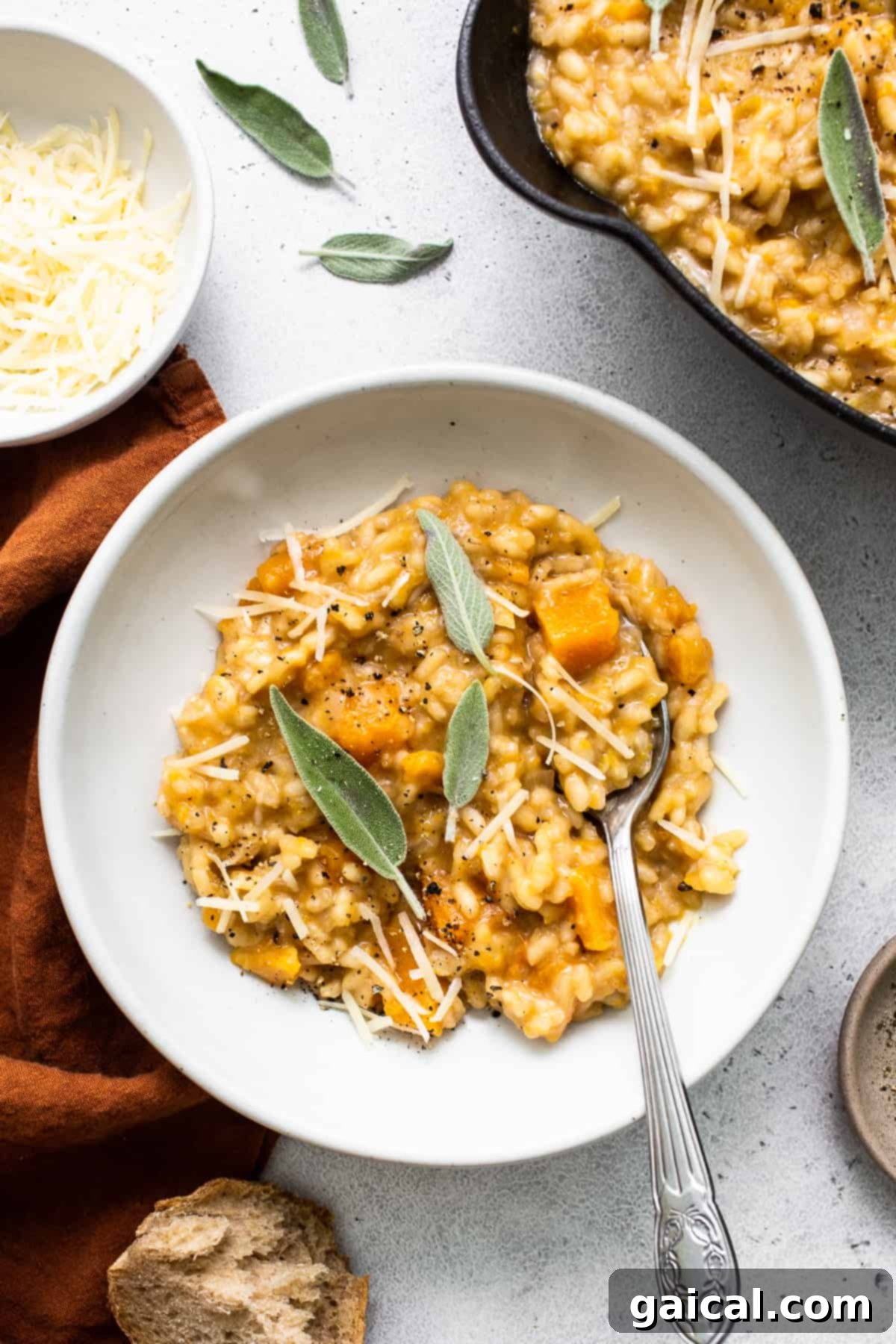
Embrace the quintessential flavors of autumn with this incredibly rich, savory, and wonderfully creamy butternut squash risotto. More than just a meal, this dish offers a comforting culinary experience, harmoniously blending the natural sweetness of butternut squash with fragrant herbs and the luxurious indulgence of perfectly cooked Arborio rice. While the art of making risotto might appear daunting, we’re here to guide you through a simplified process, empowering you to create a restaurant-quality dish right in your own kitchen. Prepare to be captivated by its velvety texture and profound depth of seasonal flavor, securing its place as a cherished fall favorite in your recipe repertoire!

Mastering Delicious Butternut Squash Risotto: Your Ultimate Fall Comfort Food
Dinner is indeed served, and tonight’s special features a delightful butternut squash risotto that promises unparalleled creaminess and an explosion of delicious flavor. If the thought of making risotto has ever felt intimidating, put those worries aside! This comprehensive guide is designed to demystify the process, transforming what many perceive as a complex culinary challenge into an achievable and enjoyable cooking triumph. After following our easy-to-understand tutorial, you’ll not only master the technique but also gain the confidence to prepare this impressive meal with effortless grace, making you a true risotto pro in no time!
Why You’ll Absolutely Love This Butternut Squash Risotto!
Vegetarian Delight: In search of a profoundly satisfying, meat-free meal that is robust in flavor and incredibly fulfilling? You’ve found it! This butternut squash risotto is a naturally vegetarian option, packed with wholesome ingredients that cater beautifully to a variety of dietary preferences without compromising on taste or texture.
Effortless Yet Elegant Dinner Idea: Don’t let its sophisticated appearance fool you. While this dish tastes and looks like it belongs on a fine dining menu, its preparation involves just a few simple, sequential steps. With a little patience and our clear instructions, an elegant and impressive dinner will be ready to grace your table, making it perfect for both busy weeknights and special gatherings.
Simple to Make, Gourmet to Taste: What we truly mean by “simple, yet elevated” is that this risotto delivers an exquisitely “fancy schmancy” taste experience through a cooking process that is surprisingly straightforward and approachable. You’ll impress your family and friends with its gourmet appeal, all while enjoying the ease of its creation.
Wholesome and Nutritious: Butternut squash is a nutritional powerhouse, brimming with vitamins, fiber, and antioxidants, particularly rich in Vitamin A. When combined with other fresh ingredients, this risotto becomes a truly nourishing meal that supports a healthy lifestyle while tantalizing your taste buds.
Perfect Seasonal Comfort: There’s nothing quite like a warm, creamy bowl of risotto to chase away the chill of a crisp autumn evening. This butternut squash variant perfectly embodies the spirit of fall, making it the ideal comfort food for cozy nights in, holiday meals, or simply whenever you crave warmth and flavor.
Key Ingredients for an Unforgettable Butternut Squash Risotto
The secret to a truly outstanding butternut squash risotto lies in the quality and synergy of its ingredients. Each component plays a specific role in creating the rich, layered flavors and the signature velvety texture. Here’s a detailed breakdown of what you’ll need and why each element is essential:
- Butternut Squash: The Heart of Autumnal Flavor: This sweet, nutty winter squash is the undeniable star. You have two convenient options: purchase a whole butternut squash and enjoy the process of peeling and chopping it into perfect 1-inch cubes, or opt for pre-chopped butternut squash from the grocery store to significantly reduce your prep time. Its natural sweetness and vibrant color are crucial to the dish’s character.
- Aromatic Spice Blend: A Symphony of Fall: Our carefully curated mix of coarse sea salt, freshly ground black pepper, a hint of warming cayenne pepper, earthy coriander, and a whisper of fragrant nutmeg creates a quintessential “fall flavor blast.” These spices are expertly chosen to enhance the squash’s inherent sweetness and introduce a comforting warmth and depth that truly defines autumn cuisine.
- Light Brown Sugar: A Sweet Counterpoint: A small, judicious amount of light brown sugar is utilized not to make the dish sweet, but rather to beautifully amplify and draw out the inherent sweet notes of the butternut squash, aiding in its caramelization and balancing the savory components without overpowering them.
- Onion and Garlic: The Unsung Heroes of Flavor: These two foundational aromatics are absolutely essential for building an incredible flavor base. Sautéing finely diced onion and minced garlic until fragrant lays the groundwork for the rich, savory layers that will unfold throughout the risotto-making process. They infuse the entire dish with a depth that cannot be achieved otherwise.
- Broth: The Foundation of Creaminess: The choice of broth significantly impacts the final flavor profile. Vegetable broth ensures the dish remains fully vegetarian, while chicken broth lends a slightly richer, more savory depth (our preferred choice, but remember it won’t be vegetarian). For adventurous cooks, even a homemade parmesan broth could be used for an extra layer of umami. The gradual addition of warm broth is the cornerstone of risotto, allowing the Arborio rice to slowly absorb liquid and release its starches, which is paramount for its characteristic creamy texture.
- Fresh Sage Leaves: The Aromatic Whisper: Fresh sage is truly a must-have ingredient! Its distinct, earthy, and slightly peppery aroma pairs exquisitely with butternut squash and Parmesan cheese. It infuses the risotto with a vibrant, herbaceous freshness that elevates every single bite, adding an authentic touch of autumnal elegance.
- Dry White Wine: Depth and Deglazing: We recommend using a dry white wine such as Sauvignon Blanc for this recipe. The wine serves a dual purpose: it deglazes the pan, lifting all the flavorful browned bits from the sautéed squash, and contributes a subtle acidity and complexity that are hallmarks of authentic Italian risotto. If you prefer to avoid alcohol, an equal amount of additional warm broth or a splash of white grape juice with a tiny bit of vinegar can be used as a substitute.
- Arborio Rice: The Essential Risotto Grain: This is not your average rice! Make sure to use Arborio rice, a specific short-grain variety renowned for its high starch content. When cooked slowly and stirred continuously, Arborio rice releases its starches, creating the signature creamy, velvety texture while maintaining a delightful “al dente” bite, which is crucial for perfect risotto.
- Freshly Grated Parmesan Cheese: The Creamy Finisher: The key to truly creamy and intensely flavorful butternut squash risotto is freshly grated Parmesan cheese. Avoid pre-grated varieties, as they often contain anti-caking agents that can prevent smooth melting and result in a less luxurious texture. Freshly grated Parmesan melts beautifully, enriching the risotto with its salty, umami notes and contributing significantly to its luscious finish.
- Olive Oil & Unsalted Butter: For Sautéing and Richness: These fats are fundamental. Olive oil is used for sautéing the aromatics and squash, while butter adds a luxurious richness and is critical in the final “mantecatura” step (creaming), giving the risotto its iconic glossy, velvety sheen.
Mastering Butternut Squash Risotto: A Detailed Step-by-Step Guide
Crafting the perfect creamy risotto is more an exercise in technique and patience than it is in difficulty. Follow these comprehensive instructions to achieve a butternut squash risotto that is both deeply comforting and impressively elegant:
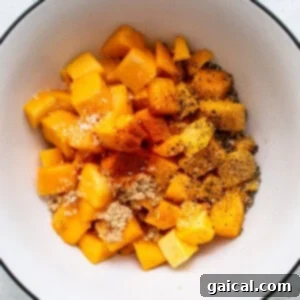
- Prepare and Season the Butternut Squash. Begin by placing approximately 2.5 cups (about half) of your 1-inch cubed butternut squash into a large mixing bowl. Drizzle it with 1 tablespoon of olive oil, then season generously with 1 teaspoon of coarse sea salt, 1 teaspoon of light brown sugar, ½ teaspoon of freshly ground black pepper, and a tiny pinch of cayenne pepper if you desire a subtle warmth. Using your hands, thoroughly massage the oil and seasonings into every piece of squash, ensuring an even coat. Let this mixture rest and marinate for at least 15 minutes while you proceed with preparing the other ingredients. Set the remaining butternut squash aside for later.
- Craft a Flavorful Broth Base. In a separate small bowl, combine the remaining coarse salt and black pepper; this will be your seasoning blend to layer into the risotto as it cooks. Next, in a large stockpot or Dutch oven, heat ½ tablespoon of olive oil over medium heat. Add half of your diced white onion and sauté for about 2 minutes until it becomes translucent and softens. Season this with a pinch of your prepared salt and pepper mixture. Stir in 3 cloves of minced garlic and continue to sauté for another minute until fragrant, being vigilant not to burn the garlic. Pour in the 8 cups of vegetable or chicken broth, then stir in the ground coriander, ground nutmeg, and the 6 fresh sage leaves. Bring this mixture to a gentle boil over high heat, then immediately reduce the heat to low and allow it to simmer gently. Keeping the broth warm throughout the process is crucial for even cooking of the rice.
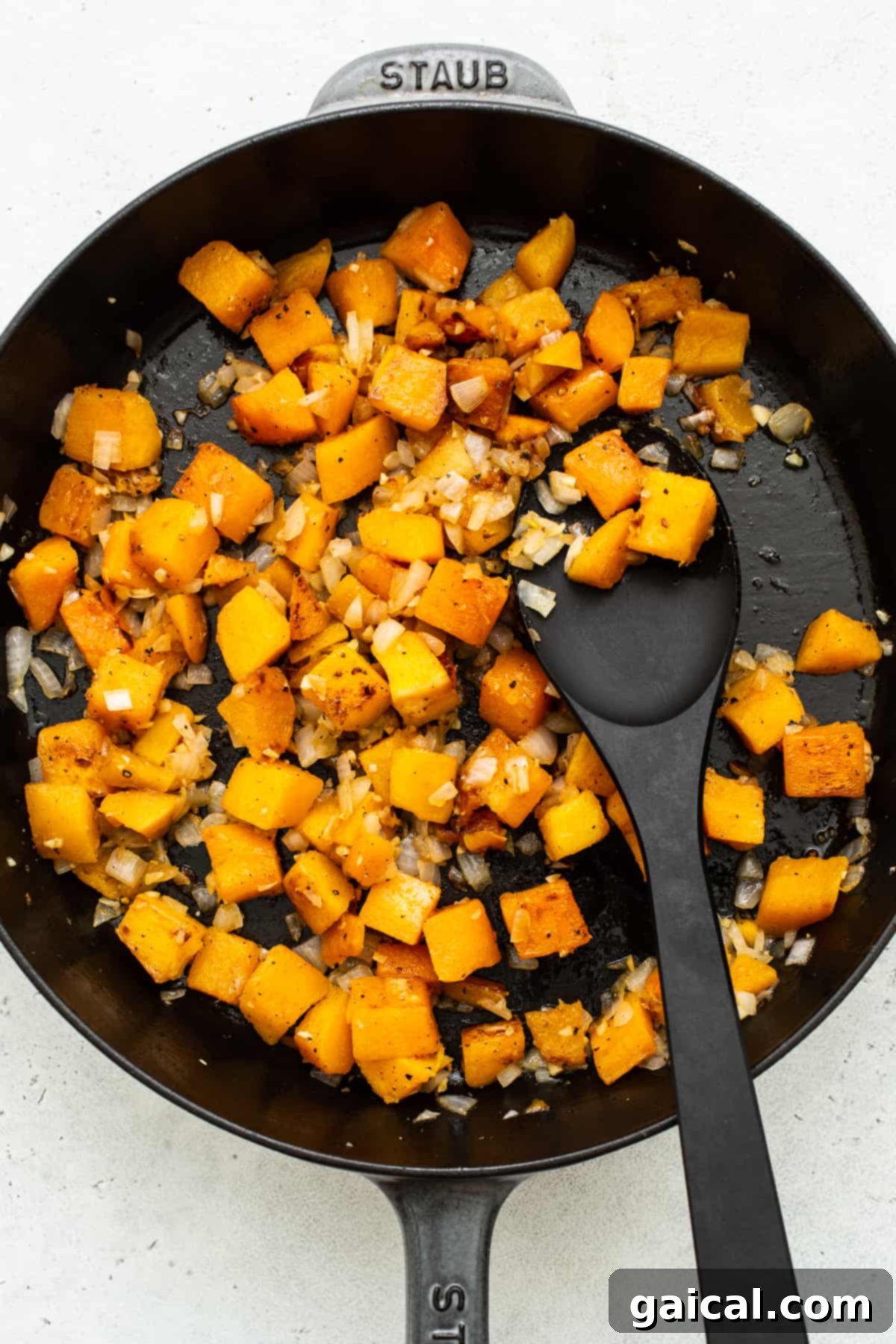
- Sauté and Smash the Butternut Squash for Creaminess. While your seasoned broth maintains a gentle simmer, heat a large, deep skillet (preferably one with high sides) over medium-high heat. Add the remaining 1 tablespoon of olive oil. Once the oil is shimmering, add the marinated butternut squash (from Step 1) to the pan and toss to coat. Cover the skillet and let the squash cook undisturbed for 3-4 minutes, encouraging caramelization and softening. Uncover, toss the squash again, then add the remaining diced onion and minced garlic to the skillet. Cover and cook for another 3-4 minutes, or until the squash is very tender and easily mashed. The aim is to achieve lovely caramelization and a wonderfully soft texture.
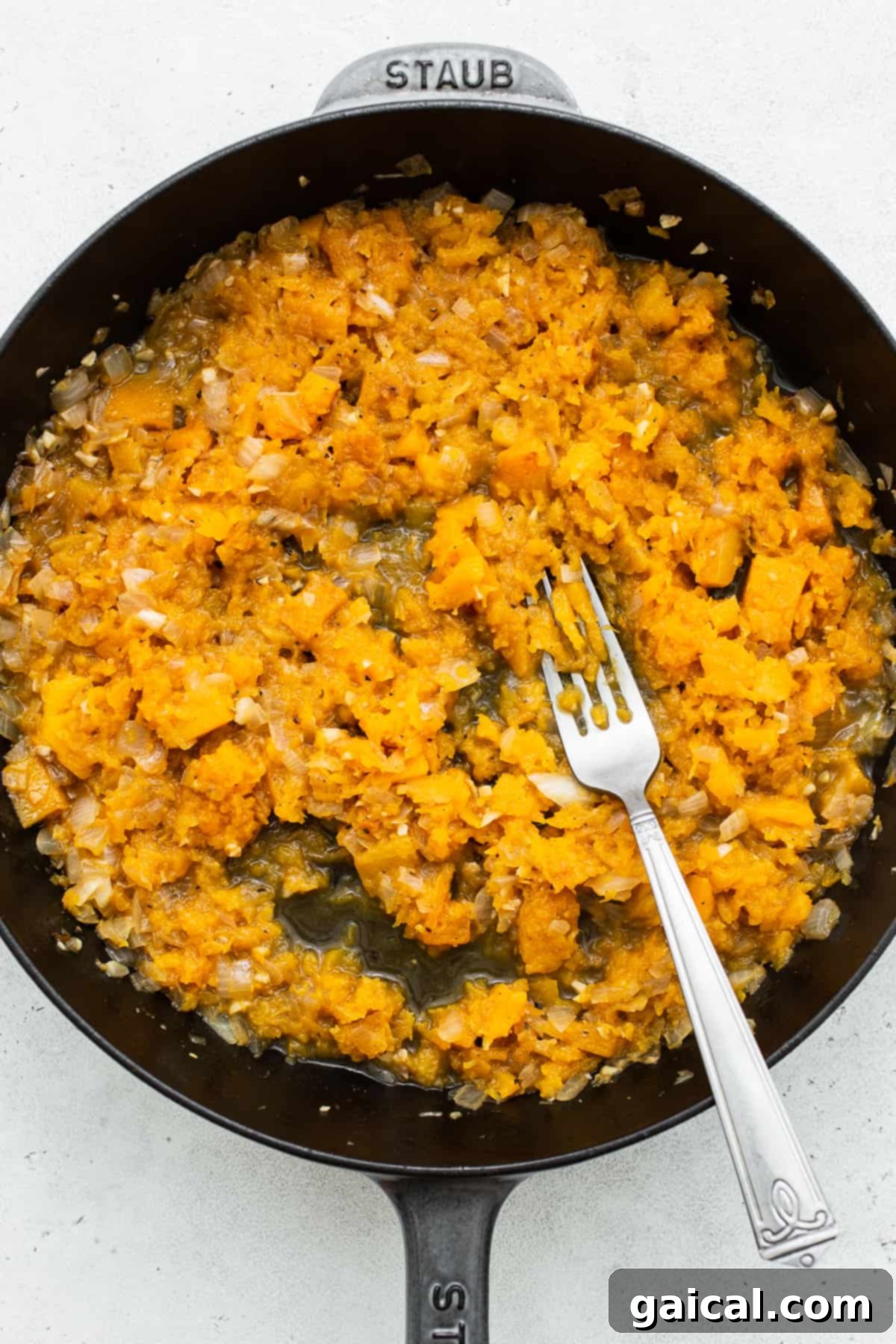
- Deglaze the Pan and Create a Velvety Squash Puree. Once the butternut squash is perfectly tender and slightly caramelized, pour in the 1 cup of dry white wine (or your chosen alcohol-free alternative) to deglaze the pan. Use a wooden spoon to scrape up any browned bits from the bottom of the skillet, incorporating all that concentrated flavor into the mixture. Allow the squash to cook in the wine for 2-3 minutes until most of the liquid has evaporated. Now, using the back of a sturdy fork or a potato masher, gently mash about two-thirds of the softened butternut squash directly in the skillet to create a smooth, creamy puree. Leave the remaining squash pieces intact to provide delightful textural variation in the final dish. This mashed squash will slowly melt into the risotto, imparting incredible natural sweetness and an extra layer of creaminess.
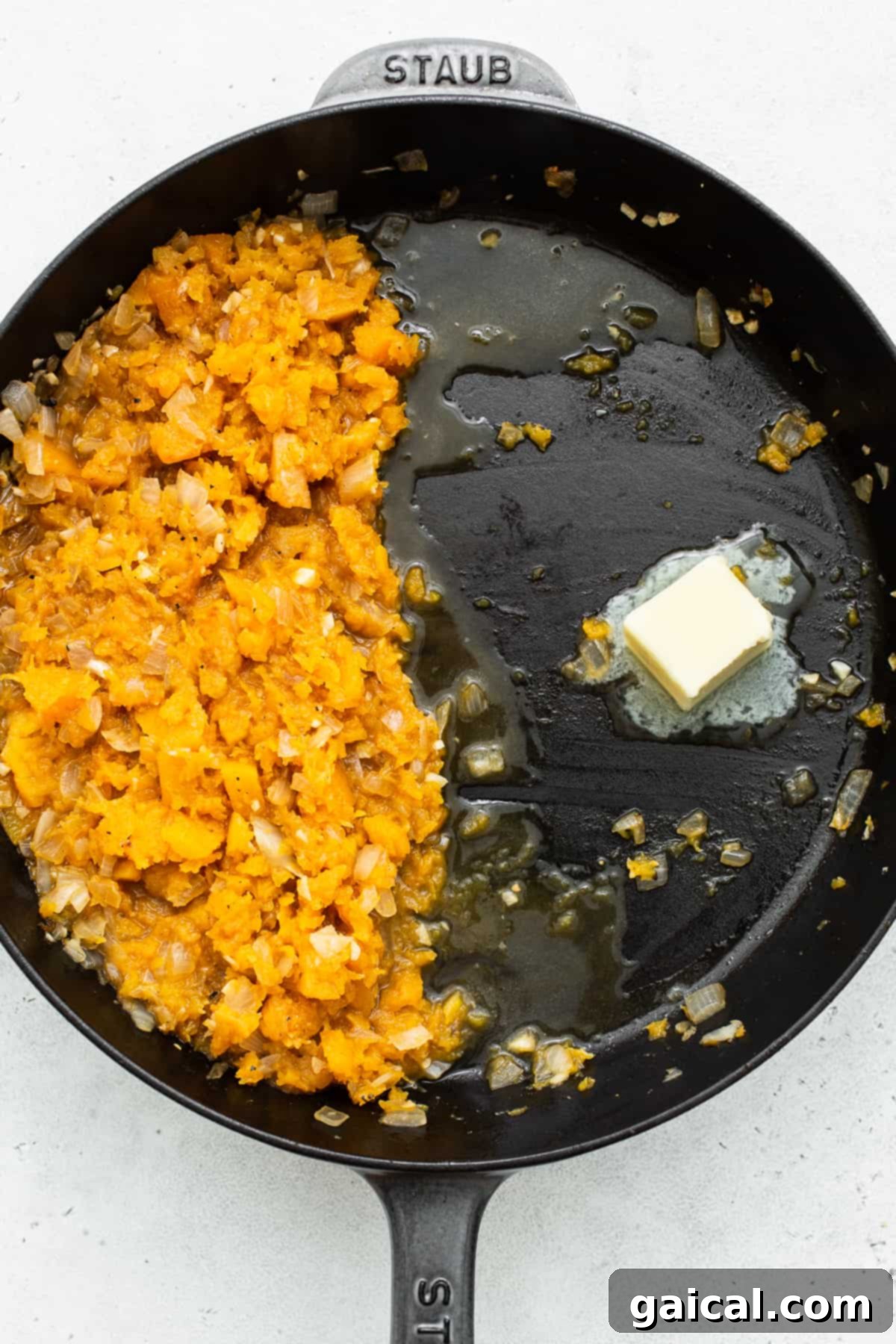
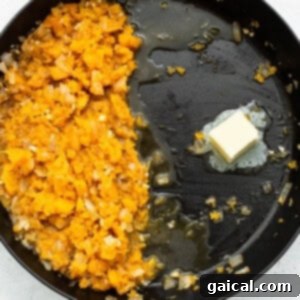
- Toast the Rice and Initiate Liquid Absorption. Push the butternut squash mash and any remaining pieces to one side of the skillet, clearing a space. Add the 2 tablespoons of unsalted butter to this empty side. Once the butter is completely melted and lightly sizzling, add the 2 cups of uncooked Arborio rice to the butter and toast it for 1-2 minutes, stirring continuously. This “toasting” (known as ‘tostatura’) helps to seal the individual rice grains, allowing them to absorb liquid more slowly and retain their desirable al dente texture. Now, thoroughly combine the toasted rice with the butternut squash mixture in the pan. Add the first ladleful (approximately ¾ cup) of your warm simmering broth to the skillet. Stir constantly until the broth is almost completely absorbed by the rice. Season with a tiny pinch of your prepared salt and pepper mixture.
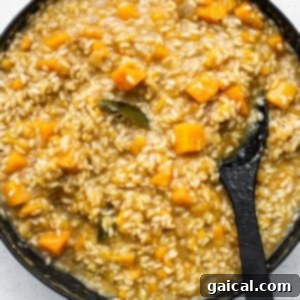
- Continue Gradual Broth Addition (The Risotto Dance). This is the meditative, rhythmic heart of risotto making. Continue to add the warm broth, one ladleful (¾ cup) at a time, stirring consistently after each addition. It is crucial to wait until each ladle of broth is almost fully absorbed by the rice before adding the next. This slow and steady process, which typically takes between 30-45 minutes, encourages the Arborio rice grains to gradually release their starches, which is fundamental to achieving that coveted creamy, velvety consistency. Do not rush this step; it’s a labor of love that is richly rewarded with a magnificent texture. Continue this incremental process until you have approximately ½ cup of broth remaining. At this point, the rice should be mostly cooked, with a pleasant, slight bite (al dente). Taste a grain to check for doneness – it should be tender but still firm in the center. If it’s still too hard, continue with the remaining broth.
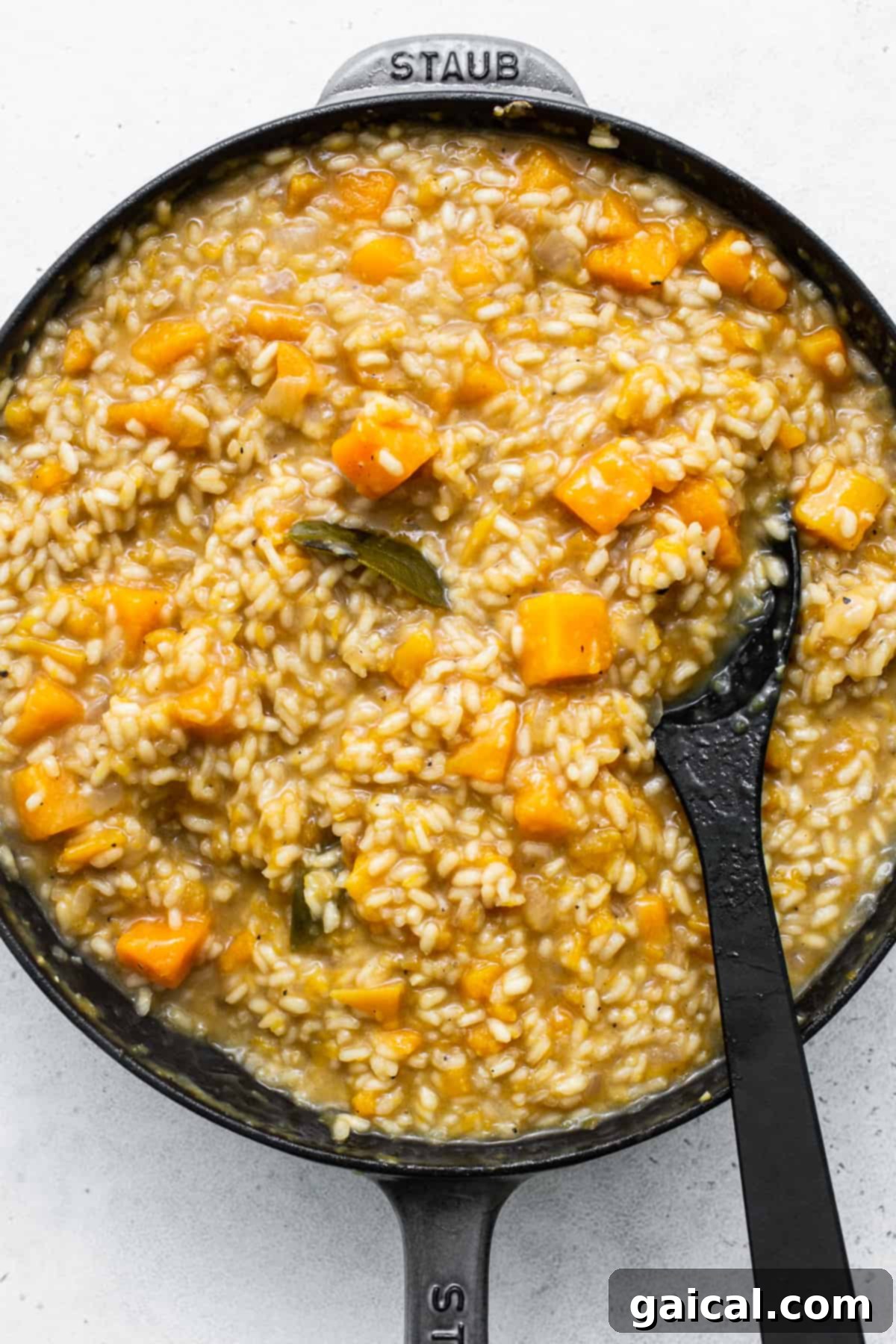
- Finish with Cheese and Butter (Mantecatura). Once the rice has reached its perfect al dente stage, add the final ½ cup of warm broth to the skillet. Allow it to absorb about halfway, then stir in the 1 cup of freshly grated Parmesan cheese. Continue stirring until the cheese has completely melted into the risotto, creating a luxurious, glossy, and intensely flavorful finish. This crucial final step is known as “mantecatura” and is essential for maximum creaminess and an unparalleled texture.
- Serve Immediately and Garnish. Remove the skillet from the heat. Give the risotto one last enthusiastic stir and taste to adjust any final seasonings – a little extra salt or pepper can make all the difference. Serve your magnificent butternut squash risotto immediately, garnished generously with a crack of fresh black pepper, additional freshly grated Parmesan cheese, and a few fresh sage leaves for an aromatic and visually appealing flourish. Savor this masterpiece of fall comfort!
The Golden Rule of Risotto: Embrace the Patience!
Crafting risotto is, without a doubt, a slow and deliberate process. The gradual, incremental addition of warm liquid to the rice, coupled with continuous stirring, is the magical alchemy that transforms humble Arborio grains into a luscious, velvety, and deeply satisfying dish. This critical step alone, where the broth is slowly absorbed, should take a mindful 30-45 minutes. Rather than seeing it as a chore, embrace this as an opportunity for mindful cooking. Pour yourself a glass of your favorite wine or a soothing cup of tea, put on some calming music, and truly enjoy the rhythmic process of stirring and watching your risotto slowly transform. Attempting to rush this step will inevitably compromise the final texture, leading to a less creamy and less enjoyable result. Let patience be your secret ingredient, and it will be richly rewarded with culinary perfection!
More Delightful Dinner Inspirations
Juicy Thanksgiving Meatballs (With Raspberry Sauce!)
Autumn Couscous Salad
Creamy Chicken Mushroom Pasta (Ready in 30 Minutes!)
Flaky Oven-Baked Salmon (Cooked in Foil!)
Creamy Marry Me Chicken Soup (With Ground Chicken)
Pro Tips for Risotto Perfection
Achieving that exquisitely creamy texture and perfectly balanced flavor in your butternut squash risotto is simpler than you think with a few expert insights. Keep these professional tips in mind to consistently create a dish that’s both deeply comforting and impressively delicious:
Running Short on Time? Opt for Pre-Chopped Squash! If your schedule is tight or if you simply prefer to bypass the peeling and chopping, don’t hesitate to purchase pre-chopped butternut squash from your local grocery store. Many high-quality markets, like Fresh Thyme, offer this convenient option, which significantly cuts down on preparation time without compromising the fresh flavor or nutritional value of the squash. Whether fresh or pre-cut, ensure your cubes are uniform (about 1-inch) for even cooking.
Customize Your Spice Level: Our recipe includes a touch of cayenne pepper to introduce a subtle warmth that beautifully complements the natural sweetness of the squash. However, if you or your family prefer a milder dish, feel entirely free to omit the cayenne pepper. For those who enjoy a tiny hint of heat without too much intensity, a small pinch of red pepper flakes can serve as an excellent alternative, adding a pleasant warmth to the palate.
Embrace the Art of Patience: This is perhaps the most crucial rule for any risotto! This recipe is truly a labor of love, and its unparalleled creaminess is a direct result of the slow, deliberate process of gradually adding warm broth and stirring consistently. Resist the powerful urge to rush! This gentle, continuous cooking allows the Arborio rice grains to slowly release their starches, which is absolutely essential for developing that signature, luxurious creamy texture. Patience is not just a virtue in risotto making; it’s the secret ingredient that guarantees magnificent results.
Always Use Warm Broth: A vital tip often overlooked for risotto success is to ensure your broth is consistently warm and simmering gently in a separate pot throughout the entire cooking process. Adding cold broth to your hot rice will inevitably shock the grains, significantly slowing down the cooking and potentially resulting in a less creamy, less desirable texture. Keeping the broth warm ensures a continuous cooking process and optimal starch release.
Master the Stirring Technique: While constant stirring is key for risotto, it doesn’t need to be overly vigorous. Gentle, consistent stirring is sufficient to prevent the rice from sticking to the bottom of the pan and helps facilitate the even release of starches, contributing to that desired creamy texture. However, be cautious not to over-stir, as this can break down the rice grains too much, leading to a gluey or pasty consistency.
Achieve the Perfect “Al Dente” Bite: The hallmark of an ideal risotto is a creamy, flowing consistency (often described as “all’onda,” meaning “wavy”) with rice grains that are tender to the bite but still retain a slight, pleasant firmness in the center. Begin tasting the rice grains around the 20-minute mark after you start adding the broth. Adjust the amount of liquid you add based on your preferred level of doneness, aiming for tenderness without any mushiness or excessive firmness.
Don’t Skip the “Mantecatura”: The final, crucial stage of risotto preparation, where you stir in the unsalted butter and freshly grated Parmesan cheese off the heat, is known as “mantecatura.” This step is absolutely fundamental for achieving the risotto’s signature glossy sheen, luxurious richness, and its characteristic velvety finish. Do not omit this step – it’s where the magic truly happens!
Frequently Asked Questions About Butternut Squash Risotto
Butternut squash risotto is a rich and satisfying meal on its own, making it a star dish. However, it can be beautifully complemented by lighter sides to create a well-rounded meal. A crisp, fresh fall kale salad with a bright vinaigrette provides a wonderful textural and flavor contrast. For those seeking to add protein, a simple grilled or pan-seared chicken breast, or even a light white fish, would pair excellently without overpowering the risotto’s robust flavors.
The fundamental ingredients for an authentic butternut squash risotto typically include specialized Arborio rice for its high starch content, a flavorful and warm broth (vegetable or chicken), the star ingredient butternut squash, freshly grated Parmesan cheese for ultimate creaminess, aromatic foundations like onion and garlic, and often a splash of dry white wine to add depth and acidity. A blend of warming fall spices and fresh sage completes the aromatic profile.
Butternut squash risotto is wonderfully versatile and harmonizes with a range of proteins. For poultry lovers, tender chicken (whether grilled, roasted, or pan-seared) is an excellent choice. If you prefer red meat, thinly sliced, seared beef or a succulent pork tenderloin would create a heartier, more robust meal. For a plant-based protein boost, consider topping your risotto with toasted nuts, sautéed wild mushrooms, or even roasted chickpeas for added texture and umami.
Absolutely! Transforming this recipe into a delicious vegan version is quite simple. Ensure you use only vegetable broth, replace the unsalted butter with olive oil or a plant-based butter alternative, and substitute the Parmesan cheese with a high-quality vegan Parmesan cheese alternative or a generous sprinkle of nutritional yeast for that cheesy flavor. The inherent creaminess of the risotto will still be perfectly achieved through the starch release of the Arborio rice and the mashed butternut squash.
No need to worry if you don’t have white wine or choose to avoid alcohol! The dry white wine in this recipe primarily serves to deglaze the pan and contribute a subtle layer of acidity and depth. You can easily substitute it with an equal amount of additional warm vegetable broth. For a hint of that characteristic acidity, you could also add a small splash of white grape juice mixed with about a teaspoon of apple cider vinegar, which works beautifully.
For its absolute best creamy consistency and optimal al dente texture, risotto is truly best enjoyed fresh, directly off the stove. While it can certainly be stored and reheated (please see our storage section below), the texture will inevitably change slightly as the rice grains continue to absorb liquid and starches set upon cooling. For the most sublime risotto experience, we highly recommend preparing it just before you plan to serve it.

Our Recommended Kitchen Essential
The Indispensable Cast Iron Pan
To achieve that desirable perfect caramelization on your butternut squash and ensure even, consistent cooking throughout your risotto, a high-quality cast iron pan is truly an indispensable kitchen tool. The Great Jones King Sear is our absolute favorite for its superior heat retention and durability. It’s an investment that is definitely worth the splurge, guaranteed to elevate your kitchen collection and significantly enhance your cooking results!

Storage and Reheating Tips for Butternut Squash Risotto
While risotto is truly at its peak when served fresh, you can certainly store and reheat any delicious leftovers. Proper storage techniques will help ensure your butternut squash risotto remains enjoyable for subsequent meals:
Storage Instructions: Once your butternut squash risotto has cooled completely to room temperature (this is important to prevent bacterial growth), transfer it promptly to an airtight container. It can be safely stored in the refrigerator for up to 3 to 5 days. For optimal texture and flavor, we recommend consuming it within 3 days.
To Reheat: Reheating risotto requires a little gentle care to help revive its creamy texture. Transfer the desired portion of cold risotto to a saucepan or a skillet. Heat it slowly over medium-low heat, stirring frequently. You will notice that the rice has likely absorbed more liquid and may appear dry or stiff. To restore its luscious consistency, gradually add about ¼ to ½ cup of extra warm broth (vegetable or chicken) or even a splash of water or milk. Stir gently and continuously until the risotto loosens up and reaches your desired creamy, flowing consistency. Continue cooking just until it is warmed through, being careful to avoid overheating, which can cause the rice to become mushy. If desired, finish with an extra sprinkle of fresh Parmesan cheese before serving.
Discover More of Our Favorite…
Hearty & Delicious Dinner Recipes
- Effortless Instant Pot Whole Chicken
- Comforting Beef and Barley Soup
- Perfectly Baked Pork Tenderloin
- Quick Instant Pot Pork Tenderloin
Butternut Squash Risotto
Prep: 30
Cook: 35
Total: 1 5

Print Recipe
Ingredients
- 4.5 cups 1-inch cubes butternut squash, separated (2.5 cups for initial seasoning, 2 cups for later addition)
- 2 tablespoons olive oil, divided
- 2 teaspoons coarse sea salt, separated
- 1 teaspoon light brown sugar
- 1.5 teaspoons freshly ground black pepper, separated
- ⅛ teaspoon cayenne pepper, optional, for a hint of warmth
- 1 large white onion, diced and divided
- 6 cloves garlic, minced and divided
- 8 cups warm vegetable or chicken broth
- 1 teaspoon ground coriander
- ⅛ teaspoon ground nutmeg
- 6 fresh sage leaves, plus more for garnish
- 1 cup dry white wine (e.g., Sauvignon Blanc), or additional broth for alcohol-free option
- 2 tablespoons unsalted butter
- 2 cups uncooked Arborio rice
- 1 cup freshly grated Parmesan cheese, plus extra for topping
Instructions
-
1. Season the Butternut Squash: Place 2.5 cups of the 1-inch butternut squash cubes in a large bowl. Drizzle with 1 tablespoon of olive oil and season with 1 teaspoon of coarse salt, 1 teaspoon of light brown sugar, ½ teaspoon of black pepper, and ⅛ teaspoon of cayenne pepper. Massage the oil and seasonings thoroughly into the squash with your hands. Let the squash sit and marinate for 15 minutes.

-
2. Prepare Layered Seasoning: In a small bowl, combine the remaining 1 teaspoon of coarse salt and 1 teaspoon of black pepper. This mixture will be used in small pinches to season the risotto in layers as it cooks.
-
3. Start the Broth Base: Heat ½ tablespoon of olive oil in a large stockpot over medium heat. Add half of the diced white onion and sauté for 2 minutes until it begins to soften. Season with a pinch of your reserved salt and pepper blend. Stir in 3 cloves of minced garlic and sauté for another minute until fragrant, taking care not to burn it.
-
4. Simmer the Broth: Pour the 8 cups of broth into the stockpot. Add 1 teaspoon of ground coriander, ⅛ teaspoon of ground nutmeg, and 6 fresh sage leaves. Bring the mixture to a boil over high heat, then immediately reduce the heat to low and let it simmer gently. Keep it warm throughout the risotto cooking process.
-
5. Caramelize Butternut Squash: Heat a large skillet with sides over medium-high heat. Add the remaining 1 tablespoon of olive oil. Once shimmering, add the marinated butternut squash (from Step 1) to the pan and toss. Cover the skillet and let the squash cook for 3-4 minutes. Uncover, toss the squash again, then add the remaining diced onion and minced garlic. Cover and cook for another 3-4 minutes, or until the squash is caramelized and very soft, easily mashed.
-
6. Deglaze and Mash Squash: Deglaze the pan with the 1 cup of dry white wine (or broth substitute), scraping up any browned bits from the bottom of the skillet. Allow the squash to cook in the wine for 2-3 minutes until most of the liquid has evaporated. Using the back of a fork or potato masher, mash about two-thirds of the softened butternut squash directly in the skillet to create a creamy puree, leaving some chunks for texture.
-
7. Toast the Rice: Push the mashed squash mixture to one side of the skillet, creating an empty space. Add the 2 tablespoons of unsalted butter to this empty side. Once the butter is melted, add the 2 cups of uncooked Arborio rice to the butter and toast for 1-2 minutes, stirring constantly. Then, mix the toasted rice thoroughly with the butternut squash mixture in the pan.
-
8. Gradually Add Broth: Turn the heat to medium. Add ¾ cup of the warm broth mixture to the skillet and stir continuously until the broth is almost completely absorbed by the rice. Season with a pinch of your prepared salt and pepper blend. Repeat this step (adding ¾ cup of broth and stirring until absorbed) for approximately 30-45 minutes. Continue this process until about ½ cup of broth remains and the Arborio rice is al dente (tender with a slight bite in the center). Taste to ensure proper doneness; if still too firm, continue adding broth until desired texture is reached.
-
9. Finish with Parmesan: Add the final ½ cup of warm broth to the rice, allowing it to absorb about halfway. Then, stir in the 1 cup of freshly grated Parmesan cheese. Continue stirring until the cheese is completely melted and fully incorporated, creating a rich, creamy, and glossy risotto.
-
10. Garnish and Serve: Remove the skillet from the heat. Give the risotto one last stir and taste for any final seasoning adjustments. Serve immediately, garnished with a generous crack of fresh black pepper and additional fresh sage leaves for an aromatic flourish. Enjoy this perfect fall comfort food!


Tips & Notes for Success
- Time-Saving Squash: If you are looking to shorten your prep time or simply don’t enjoy chopping butternut squash, opting for pre-chopped squash from the grocery store is a fantastic and convenient alternative. We often find excellent pre-chopped options at stores like Fresh Thyme.
- Adjusting Spice Preferences: The recipe includes cayenne pepper for a subtle warming kick. If you or your family are sensitive to spice, feel free to skip the cayenne pepper entirely. Alternatively, for a milder warmth, you can use a small pinch of red pepper flakes instead.
- Patience Yields Perfection: Remember that making risotto is a deliberate and gradual process that rewards patience. Do not rush the incremental addition of broth or the continuous stirring. This methodical approach is absolutely critical for developing the signature creamy, luxurious texture of a perfect risotto.
- Maintain Warm Broth: A crucial tip for successful risotto is to always keep your broth simmering gently in a separate pot throughout the entire cooking process. Adding cold broth to the hot rice will shock the grains, slowing down cooking and potentially resulting in a less creamy final product.
- Achieve “Al Dente”: Aim for rice that is tender but still has a slight, pleasant bite in the center. Overcooked risotto can become mushy, losing its desirable texture. Taste frequently towards the end of the cooking process to hit that perfect al dente sweet spot.
Watch The Recipe Video
Nutrition Facts (per serving)
Carbohydrates: 57 g,
Protein: 9 g,
Fat: 10 g,
Fiber: 4 g,
Sugar: 4 g
Nutrition information is automatically calculated and should be used as an approximation. Individual results may vary based on exact ingredients and preparation methods.
Loved this recipe? Leave a comment below!
We absolutely adore seeing your culinary creations! Don’t forget to tag your posts on social media with the hashtag #fitfoodiefinds – we’d love to see what you’re cooking up!
Photography Credit: All beautiful photos featured in this post were expertly captured by Ashley McGlaughlin from The Edible Perspective.