
How to Freeze Strawberries: Your Ultimate Guide to Year-Round Berry Bliss
Never let another luscious strawberry go to waste! Discover the simple, effective method to freeze fresh strawberries and lock in their vibrant flavor, perfect for smoothies, cakes, ice cream, cocktails, and countless other delightful creations. This comprehensive guide will transform your approach to seasonal fruit, ensuring you can enjoy the taste of summer sunshine whenever the craving strikes.
Why Freezing Strawberries is a Game-Changer for Your Kitchen
Are you one of many who fall victim to the irresistible allure of strawberries during peak season, only to find a punnet starting to turn soft just a few days later? You’re not alone! Overbuying this beloved berry is a common sweet indulgence. But there’s no need for any of your precious strawberries to go to waste. Freezing them is not just a practical solution; it’s a culinary superpower that extends their delicious potential far beyond their short shelf life.
We absolutely adore freezing fresh strawberries because it ingeniously captures and preserves their peak flavor and nutritional value precisely when they are at their absolute best! Imagine having access to that delightful, summery sweetness in the dead of winter, ready to elevate your morning smoothie, brighten a baked good, or create a refreshing dessert. Freezing allows you to:
- Prevent Food Waste: Extend the life of ripe berries that you can’t consume immediately, significantly reducing waste.
- Save Money: Stock up when strawberries are abundant and inexpensive during their prime season, avoiding higher off-season prices.
- Lock in Peak Flavor & Nutrition: Enjoy strawberries at their most flavorful and nutrient-dense, as freezing halts the degradation process.
- Ultimate Convenience: Have pre-prepped strawberries ready to go for any recipe, saving you precious time on busy days.
- Incredible Versatility: Frozen strawberries are an incredibly versatile ingredient suitable for a vast array of cooking, baking, and blending applications.
- Enjoy Seasonal Produce Year-Round: Savor the taste of summer sunshine long after the strawberry season has passed.
Delicious Recipes You Can Make with Frozen Strawberries
Unsure what magical creations await you with a generous stash of frozen strawberries? The possibilities are truly endless! From invigorating strawberry smoothies to comforting strawberry banana bread, frozen strawberries are a stellar ingredient in both sweet and savory dishes. They offer a vibrant burst of flavor and a lovely texture that works beautifully once thawed or blended directly from frozen.
Here’s a glimpse of the incredible recipes you can whip up with frozen strawberries, straight from your freezer:
- Strawberry Daiquiri: Craft your very own irresistibly refreshing strawberry daiquiri at home. This classic frozen cocktail, made with frozen strawberries, rum, and a simple syrup, delivers the perfect blend of sweet and tangy for any festive occasion.
- Strawberry Margarita: Ready to elevate your margarita game? This incredible frozen strawberry margarita recipe combines the vibrant taste of frozen strawberries with zesty lime juice, tequila, and triple sec for a truly unforgettable drink.
- Strawberry Oatmeal Bars: Gently thaw your frozen strawberries and transform them into a batch of wholesome and delicious strawberry oatmeal bars. They’re perfect for breakfast, a satisfying snack, or a light, fruity dessert.
- Strawberry Protein Nice Cream: Craving a healthy, protein-packed dessert that’s quick to make? Simply combine some of your frozen strawberries with a few other ingredients in a food processor, and you’ll have a creamy, guilt-free treat in under 20 minutes!
- Strawberry Protein Shake: Fuel your day with this super simple yet satisfying protein powder smoothie. It’s made with just a handful of ingredients: frozen strawberries, bananas, vanilla protein powder, creamy Greek yogurt, and almond milk.
- Baking & Desserts: Use thawed frozen strawberries in a variety of baked goods like muffins, pies, tarts, cobblers, crumbles, or as a vibrant topping for pancakes and waffles. Their softer texture after thawing is ideal for incorporating into batters and fillings.
- Sauces & Jams: Easily cook down frozen strawberries into homemade strawberry sauce for ice cream, cheesecake, or yogurt. They’re also perfect for making quick and simple strawberry jams for spreading on toast or pastries.
- Yogurt & Cereal Toppings: A handful of frozen strawberries can instantly cool down and add a burst of fruity flavor to your morning yogurt or oatmeal, making breakfast more exciting.
The Smart Way to Freeze Strawberries: A Step-by-Step Guide
While the idea of freezing strawberries might seem straightforward, there’s a specific, proven method that ensures your berries don’t clump together, prevents dreaded freezer burn, and maintains their quality for a much longer period. Following these simple yet crucial steps will guarantee you perfectly preserved strawberries every single time, ready for any culinary adventure.
Step 1: Prepare Your Strawberries for Freezing
Proper preparation is the cornerstone of successful freezing. These initial steps are vital for ensuring your strawberries are clean, dry, and perfectly ready for long-term storage, effectively preventing common issues like sticking, ice crystal formation, and freezer burn.
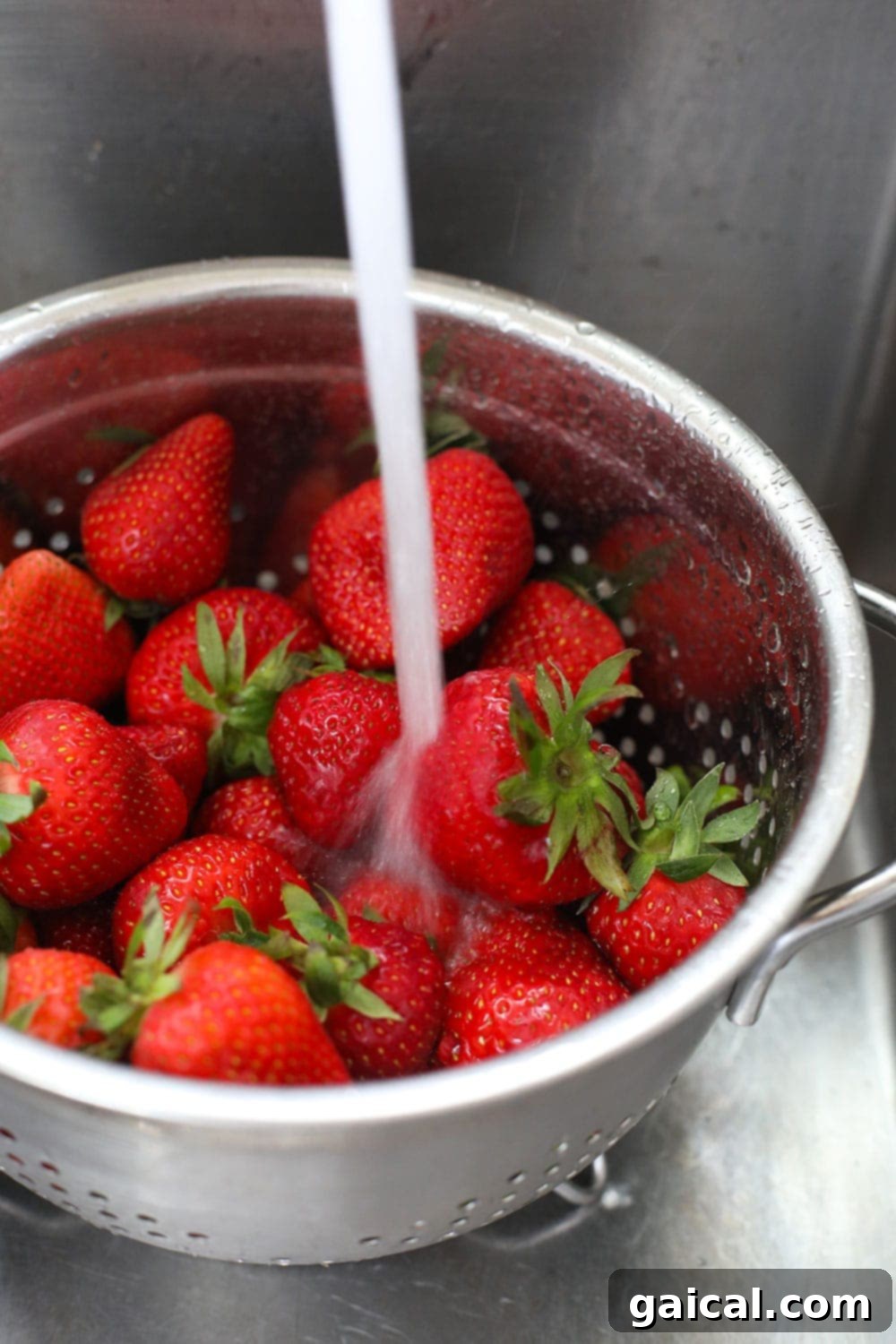
Rinse Thoroughly: Begin by placing your fresh strawberries in a colander. Rinse them gently but thoroughly under cool, running water. This crucial step washes away any lingering dirt, potential pesticides, or other debris. It’s important to avoid soaking the berries, as this can make them waterlogged and potentially diminish their delicate flavor and texture.
Dry Completely: This step is arguably the most critical for preventing the formation of ice crystals and subsequent freezer burn. Gently pat each strawberry dry with a clean kitchen towel or allow them to air dry completely on a paper towel-lined baking sheet. Any residual moisture will turn into ice when frozen, causing the strawberries to stick together and leading to a significant degradation in quality over time.
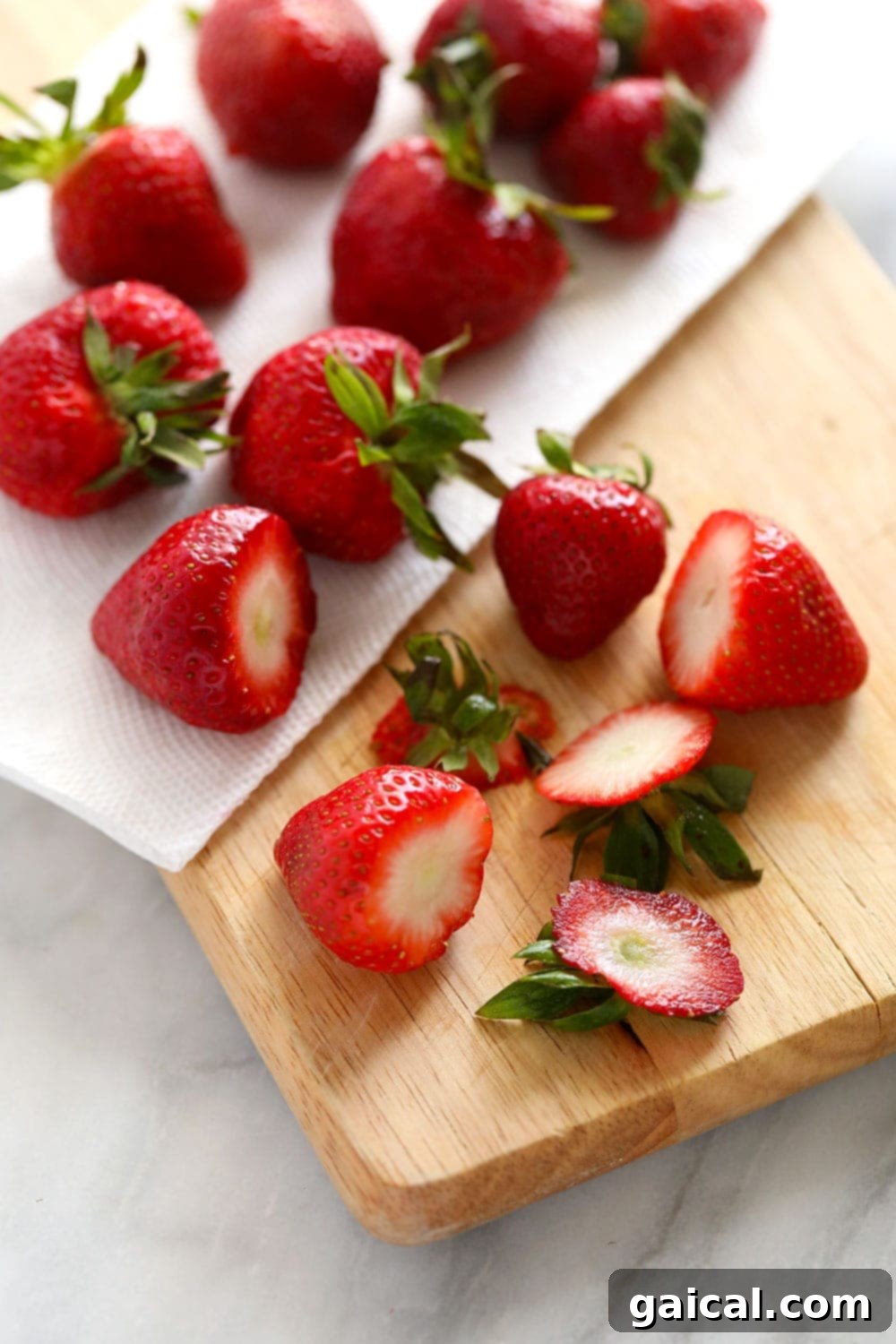
Hull and Trim: Carefully remove the green stems (a process known as hulling) from each strawberry. You can accomplish this efficiently with a small paring knife or a specialized strawberry huller. This step ensures your strawberries are entirely ready to use straight out of the freezer, eliminating any need for further preparation and saving you precious time when you’re ready to cook.
Step 2: Flash Freeze on a Baking Sheet
Once your strawberries are meticulously prepped, it’s time for the “flash freezing” step. This technique is absolutely essential for preventing the berries from clumping together into a solid, unmanageable block. Flash freezing allows them to freeze individually, which means you can easily grab just the amount you need later without having to chip away at a large frozen mass.
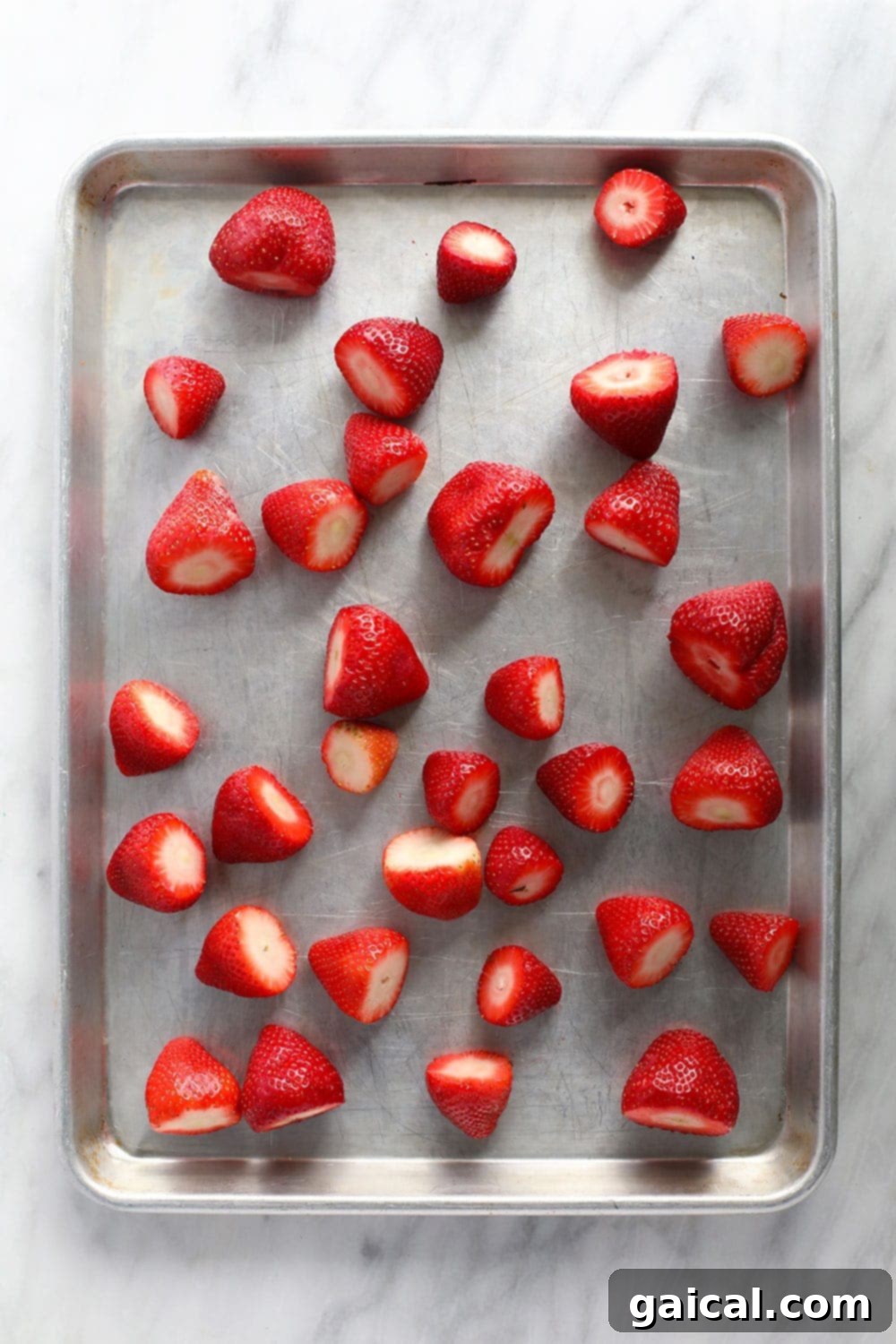
Arrange in a Single Layer: Place the prepared, dry strawberries in a single layer on a half-sheet baking pan or a large plate. Crucially, ensure that they are spread out and not touching each other. For the best results and incredibly easy removal, we highly recommend lining your baking sheet with parchment paper or a silicone baking mat.
Freeze Until Firm: Carefully transfer the baking sheet with the individually arranged strawberries to your freezer. Allow them to freeze for approximately 1 to 2 hours, or until each strawberry is completely solid and hard to the touch. This initial, rapid freeze ensures that each berry is individually frozen before being consolidated and stored together, thus preventing any sticking.
Step 3: Transfer to Freezer-Safe Storage
After the vital flash-freezing stage, your strawberries are perfectly prepared for their long-term home in the freezer. Proper storage techniques are paramount for maintaining their quality, preventing freezer burn, and ensuring they taste as good as the day you froze them.
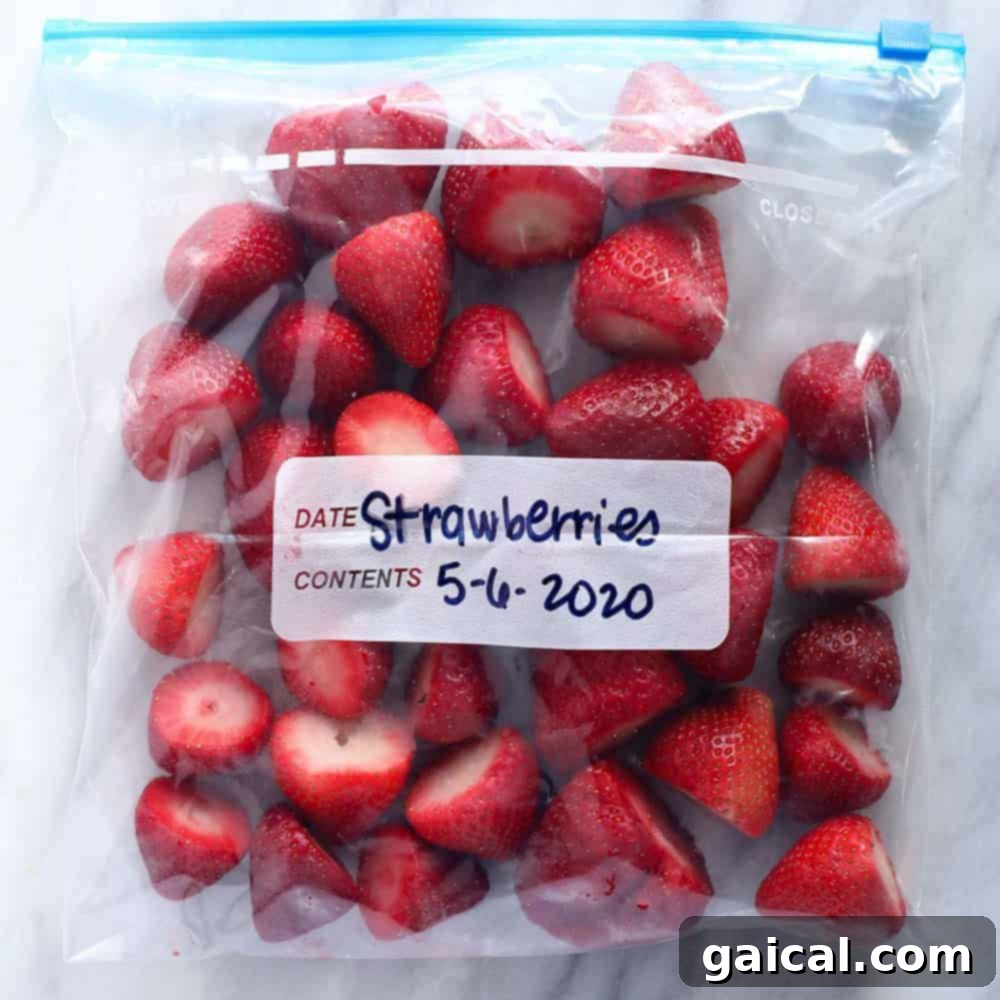
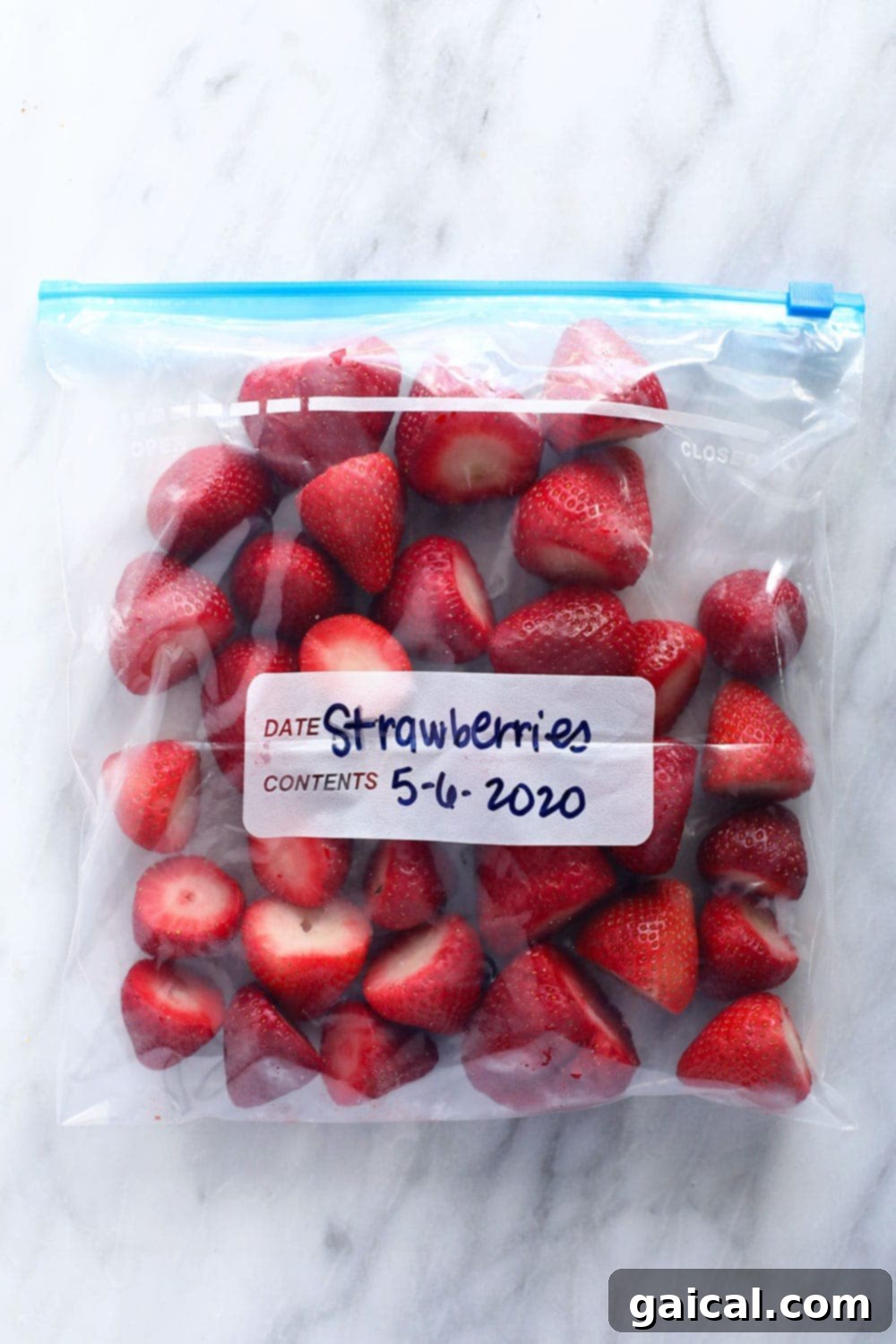
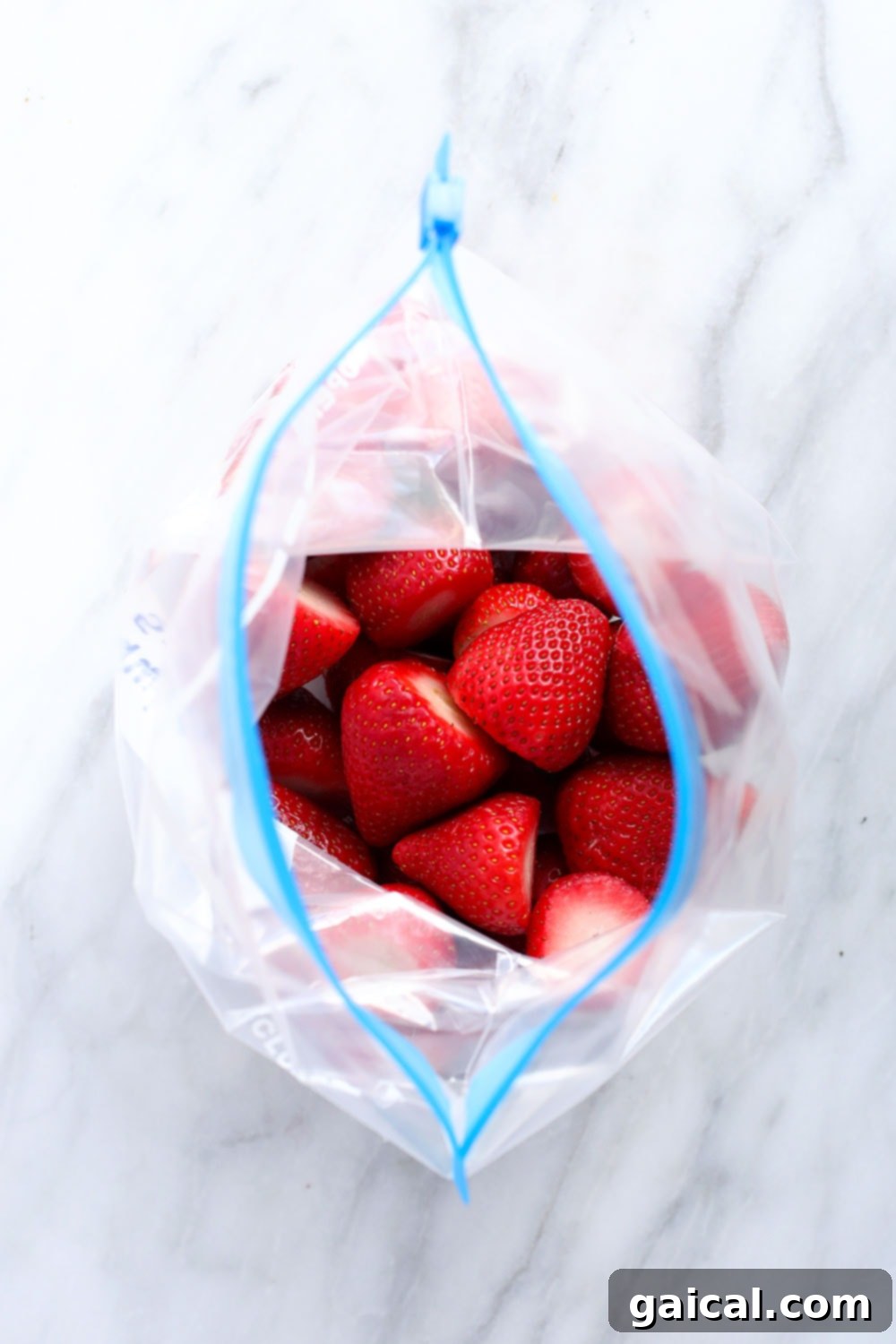
Pack Them Up: Once the strawberries are completely frozen and no longer sticking to the baking sheet, quickly transfer them into a high-quality, freezer-safe bag or an airtight container. If you are using a freezer bag, try to remove as much air as possible – a straw can be used to suck out excess air, or consider investing in a vacuum sealer to minimize exposure to air, which is the primary contributor to freezer burn.
Label and Store: A crucial final step is to clearly label your bag or container with the date of freezing. This simple practice helps you keep accurate track of how long they’ve been stored and ensures you use them within their optimal freshness window. Place the labeled container or bag back into the freezer, where they’ll be readily available for all your culinary adventures throughout the entire year.
How Long Do Frozen Strawberries Last? Maximizing Shelf Life
When properly frozen and stored using the techniques outlined above, strawberries can maintain their superior quality for an impressive duration. You can realistically expect frozen strawberries to last exceptionally well for up to 8-12 months in a standard freezer. For optimal freshness, vibrant flavor, and best texture, it’s generally recommended to use them within this timeframe. However, they can remain safe to eat beyond 12 months, though their quality (particularly texture and subtle flavor notes) might gradually diminish.
To maximize their shelf life and robustly prevent the occurrence of freezer burn, keep these additional tips in mind:
- Minimize Air Exposure: Air is undoubtedly the greatest enemy of frozen foods. Always use freezer-safe bags or containers and ensure you press out as much air as humanly possible before sealing. Vacuum-sealed bags offer the best protection against air exposure.
- Maintain Consistent Temperature: Avoid frequent opening of the freezer door, which can cause significant temperature fluctuations. These temperature swings can lead to partial thawing and refreezing, accelerating the onset of freezer burn and compromising quality.
- Freeze When Fresh: The ultimate quality of your frozen strawberries will directly reflect the quality of the fresh ones you start with. Always aim to freeze them when they are at their peak ripeness – firm, vibrantly colored, and full of natural sweetness.
Tips for Thawing and Using Your Frozen Strawberries
Frozen strawberries are incredibly versatile, but knowing how to best prepare them for your specific recipes can make all the difference in achieving optimal results. Here are some expert tips for thawing and using your frozen berry bounty:
- For Smoothies & Drinks: The best way to use frozen strawberries in smoothies, milkshakes, or frozen cocktails is directly from frozen! They add a wonderful, natural chill and a desirable thick texture without diluting the flavor with ice.
- For Baking (Muffins, Breads, Scones): When incorporating frozen strawberries into batters for muffins, quick breads, or scones, it’s often best to keep them frozen. Lightly tossing them with a tablespoon or two of flour before adding them to the batter helps prevent them from sinking to the bottom and minimizes the amount of color “bleeding” into your baked goods.
- For Sauces & Jams: You can cook them directly from frozen. As they heat, they will naturally release their liquid, which is perfect for simmering down into a delicious, vibrant strawberry sauce or a quick homemade jam.
- For Thawing Methods:
- Refrigerator: The ideal method for preserving texture. Place the desired amount of frozen strawberries in a bowl and allow them to thaw slowly overnight in the refrigerator.
- Countertop: For quicker thawing, spread them in a single layer on a plate at room temperature for 1-2 hours. Use immediately once thawed.
- Microwave: Use the defrost setting for short intervals (e.g., 30 seconds to 1 minute), stirring occasionally. Be very careful not to accidentally cook them.
- Understand Texture Changes: It’s important to be aware that thawed frozen strawberries will naturally be softer and sometimes a bit mushier than their fresh counterparts. This change in texture makes them exceptionally ideal for purees, sauces, jams, and baked goods, but generally less suitable for recipes where a firm, pristine fresh texture is absolutely essential (like fresh fruit salads).
Frequently Asked Questions About Freezing Strawberries
- Can I freeze strawberries without hulling them?
- While you technically can, it is highly recommended to hull them (remove the green tops) first. Removing the stems before freezing makes them much easier and more convenient to use directly from the freezer, saving you significant time and effort when you’re ready to cook or blend them.
- Do I need to wash strawberries before freezing?
- Yes, absolutely! Washing your strawberries thoroughly under cool running water is crucial to help remove any dirt, potential pesticides, or other residues. However, remember that drying them completely afterward is just as important to prevent the formation of ice crystals and unsightly freezer burn.
- Can I freeze overripe strawberries?
- You can freeze slightly overripe strawberries, but remember that the ultimate quality of your frozen fruit will only be as good as the fresh ones you start with. Overripe strawberries might become mushier and lose some of their vibrant flavor. For optimal results in terms of taste and texture, it’s always best to freeze strawberries when they are perfectly ripe and firm.
- How do I prevent freezer burn on my strawberries?
- The primary key to preventing freezer burn is minimizing air exposure. Ensure your strawberries are completely dry before freezing, flash freeze them in a single layer to prevent clumping, and then store them in airtight freezer bags or containers, pressing out as much air as possible. Labeling with the date also helps ensure you use them within their optimal quality timeframe.
- What’s the best way to thaw frozen strawberries?
- The most effective thawing method depends entirely on how you plan to use them. For recipes requiring a softer texture, thawing them overnight in the refrigerator is best. For quick use in smoothies or frozen drinks, use them directly from frozen. For cooking into sauces or jams, they can often be added to the pot straight from the freezer.
Discover More of Our Favorite Freezing Guides…
Master the Art of Freezing Everything!
Once you’ve mastered the art of freezing strawberries, why stop there? Unlock the full potential of your freezer as a powerful tool for food preservation with these other helpful guides:
- How to Freeze Bananas
- How to Freeze Avocados
- How to Freeze Mixed Berries
- Delicious Freeze-Ahead Breakfast Recipes
Recipe Card: How to Freeze Strawberries
Rating: 5 out of 5 stars (from 1 vote)
How to Freeze Strawberries
Freeze fresh strawberries at home for easy access to delicious strawberries all year round!
By: Linley Hanson
Prep Time: 10 mins
Cook Time: 0 mins
Total Time: 10 mins
Servings: 4
Print Recipe
Ingredients
- 1 lb. fresh whole strawberries
Instructions
- Prepare a baking sheet by laying a piece of parchment paper flat onto it.
- Next, remove the green top (hull) from each strawberry and rinse the strawberries thoroughly under cold water.
- Pat the strawberries completely dry with a clean cloth. This is crucial to prevent them from sticking together and developing freezer burn. Then, place them on the parchment paper, ensuring all strawberries are in a single layer and not touching each other.
- Place the baking sheet into the freezer for at least 1-2 hours, or until the strawberries are hard and completely frozen. This “flash freezing” step prevents them from clumping.
- Remove from the freezer and use a spatula to gently scrape the frozen strawberries off of the baking sheet. They should easily detach.
- Place the individually frozen strawberries into a freezer-safe bag or an airtight container. Remove as much air as possible from the bag before sealing it tightly.
- Finally, store the labeled strawberries in your freezer for easy access to delicious, frozen berries throughout the year.
Nutrition
Nutrition information is an approximation per serving (based on 4 servings for 1 lb of strawberries):
- Calories: 36 kcal
- Carbohydrates: 9 g
- Protein: 1 g
- Fat: 0 g
- Fiber: 2 g
- Sugar: 6 g
Disclaimer: Nutrition information is automatically calculated and should be used as an approximation only.