
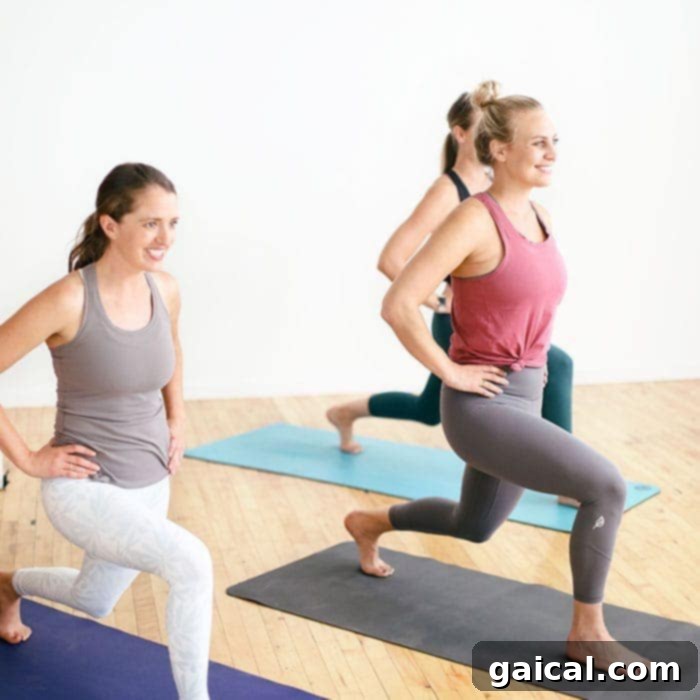
Ultimate Plyo HIIT Cardio Workout: Torch Calories & Boost Metabolism Anywhere
Are you searching for an incredibly effective, equipment-free cardio workout that you can do anytime, anywhere? Look no further! This ultimate Plyo HIIT Cardio Workout is meticulously designed to skyrocket your heart rate, maximize calorie expenditure, and incinerate fat through the powerful combination of high-intensity interval training (HIIT) and dynamic plyometrics. Get ready to challenge your body, boost your endurance, and achieve remarkable fitness results with this comprehensive Tabata-style routine!
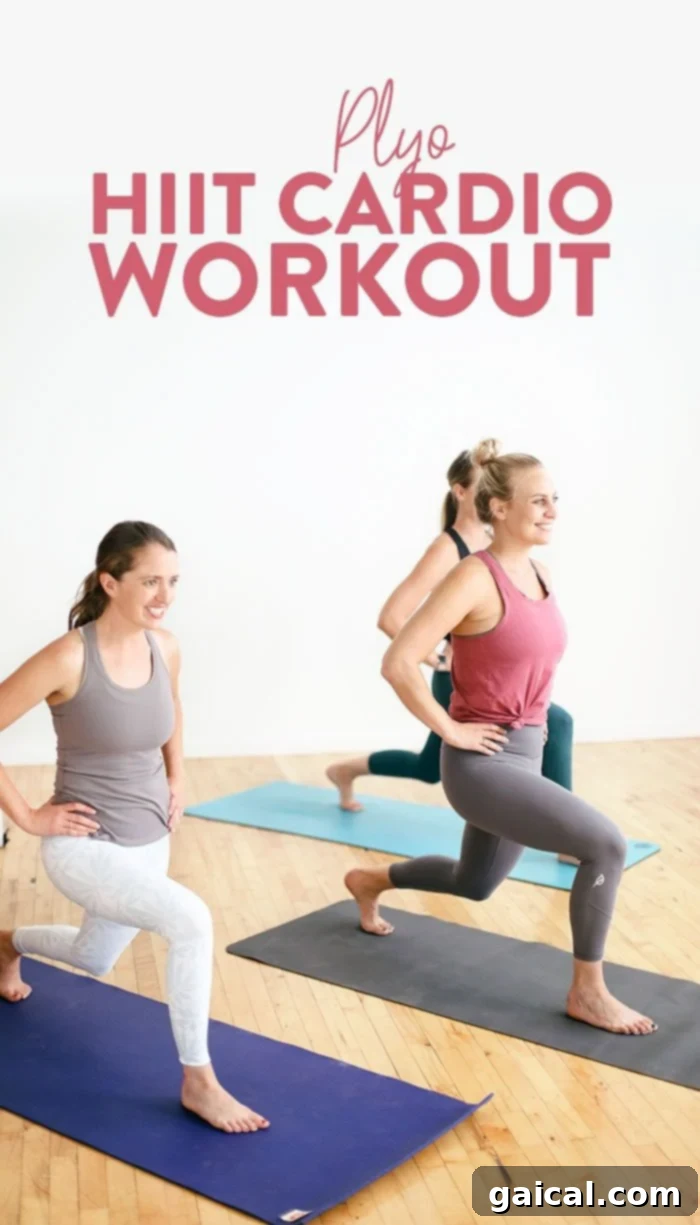
Watch the Plyo HIIT Cardio Workout in Action!
It’s an exciting day to kickstart or re-energize your fitness journey! We’re thrilled to present this powerful Plyo HIIT workout, a favorite method for achieving serious sweat and significant results. High-Intensity Interval Training is renowned for its efficiency, making it the perfect choice for individuals with packed schedules who still want to achieve substantial calorie burn and fitness gains. The fundamental concept of HIIT revolves around pushing your heart rate to its peak during short, intense bursts of exercise, followed by brief periods of active recovery or rest, creating a dynamic metabolic boost.
Understanding High-Intensity Interval Training (HIIT) and Its Benefits
HIIT, or High-Intensity Interval Training, is a training protocol characterized by alternating short periods of maximal effort exercise with even shorter periods of rest or low-intensity recovery. During the high-intensity phases, the goal is to reach 80-95% of your maximum heart rate, pushing your body to its anaerobic threshold. The recovery periods allow for partial recuperation before the next intense burst.
This “on-and-off” approach provides numerous benefits. It dramatically improves cardiovascular fitness, boosts endurance, and is exceptionally effective for fat loss. The primary reason for its effectiveness in burning fat is the “afterburn effect,” scientifically known as EPOC (Excess Post-exercise Oxygen Consumption). After a HIIT session, your body continues to consume oxygen at a higher rate to restore itself to its pre-exercise state, leading to elevated calorie burning for hours post-workout. This makes HIIT a super-efficient strategy for anyone focused on weight management and body recomposition.
How Many Days a Week Should You Do HIIT?
Given the demanding nature of HIIT, proper recovery is crucial. For optimal results and to prevent overtraining, we recommend incorporating HIIT workouts into your weekly exercise routine 2 to 3 times per week. This allows your body sufficient time to recover, repair muscle tissue, and adapt to the intense stimulus, leading to sustained progress and reduced risk of injury. On other days, consider lower-intensity cardio, strength training, or active recovery.
Are HIIT Workouts Effective for Weight Loss?
Absolutely! HIIT workouts are among the most effective forms of exercise for weight loss and fat reduction. The rapid fluctuation between high and low heart rates triggers your body to burn a significant amount of calories during the workout itself. More importantly, as mentioned with EPOC, this calorie-burning continues for an extended period after your workout has finished. This elevated metabolic rate helps you burn fat more efficiently, making HIIT a powerful ally in your weight loss journey when combined with a healthy diet.
Can I Do HIIT on a Treadmill or with Other Equipment?
Yes, the principles of HIIT are highly versatile and can be applied to almost any exercise modality, including treadmills, stationary bikes, ellipticals, rowing machines, or even with weights. The core idea remains: intense bursts followed by recovery. While today’s workout is bodyweight-focused for maximum accessibility, you can certainly explore equipment-based HIIT. For instance, if you’re interested in incorporating a treadmill, you can find excellent resources like a Cardio Strength Interval HIIT Workout that integrates both cardio and strength on equipment.
Unleashing the Power of Plyometrics: Boost Your Athleticism
This particular workout integrates plyometrics, a specialized form of exercise designed to improve power, speed, and agility. Plyometric movements, often referred to as “jump training,” involve explosive actions where muscles are stretched (eccentric phase) and then rapidly contracted (concentric phase). This stretch-shortening cycle significantly enhances muscle elasticity and reactive strength.
When plyometrics are combined with HIIT, the result is an incredibly potent workout that not only burns a massive amount of calories but also improves athletic performance. You’ll develop stronger, more powerful muscles, better coordination, and a greater capacity for quick, dynamic movements. Incorporating plyo elevates your cardio workout from simply burning calories to building a more robust, agile, and athletic physique. These explosive movements are fantastic for challenging your cardiovascular system in new ways, ensuring a comprehensive full-body conditioning experience. Always remember to prioritize proper form and warm up thoroughly before engaging in plyometric exercises to prevent injury.
Mastering the Tabata Training Protocol: Maximum Impact in Minimal Time
Today’s Plyo HIIT Cardio Workout utilizes the renowned Tabata protocol, a highly effective form of High-Intensity Interval Training. A standard Tabata circuit follows a very specific structure: 20 seconds of maximum effort exercise, followed by 10 seconds of complete rest, repeated for 8 rounds. This entire sequence totals just 4 minutes per circuit, yet delivers profound metabolic benefits.
The genius of Tabata lies in its intense yet manageable structure. The 20-second work intervals are short enough that you can truly push your limits, giving every ounce of effort knowing that a quick 10-second recovery is imminent. This focused approach helps you maintain a high level of intensity throughout the entire 4-minute circuit. It’s a fantastic way to segment your workout, making longer sessions feel more achievable and mentally less daunting. Moreover, the bodyweight nature of this Tabata-style workout makes it incredibly versatile – perfect for maintaining your fitness routine while traveling or when gym access is limited, offering a genuinely “anywhere, anytime” fitness solution.
Your Ultimate Plyo HIIT Cardio Workout Breakdown
This comprehensive workout features four distinct Tabata circuits. Each Tabata is 4 minutes long and comprises two specific exercises. You will perform the first exercise for 20 seconds, rest for 10 seconds, then perform the second exercise for 20 seconds, followed by another 10-second rest. This completes one “round” of the superset. You will repeat this sequence four times to complete one full 4-minute Tabata. After each Tabata circuit, you’ll take a well-deserved 1-minute break before moving to the next. For an advanced challenge and to maximize your calorie burn, repeat the entire workout, cycling through all four Tabatas a second time!
Equipment Needed: Absolutely none! This is a pure bodyweight workout, designed for ultimate accessibility and convenience.
Pre-Workout Warm-Up: Prepare Your Body (5-7 Minutes)
A thorough warm-up is non-negotiable before diving into this high-intensity workout. It prepares your muscles, elevates your core body temperature, increases blood flow, and significantly reduces the risk of injury. Aim for 5-7 minutes of dynamic movements.
- Light Cardio (2-3 minutes): Start with gentle movements like marching in place, light jogging, arm circles, or jumping jacks to gradually increase your heart rate and warm your muscles.
- Dynamic Stretches (3-4 minutes): Incorporate movements that mimic the exercises to come. Examples include leg swings (forward/backward and side-to-side), torso twists, cat-cow stretches, hip circles, and walking lunges without the jump. Focus on fluidity and range of motion.
Tabata 1: Explosive Lower Body Blast
This circuit targets your lower body with powerful, plyometric movements, building explosive strength and cardiovascular endurance.
- Jump Lunges:
How to: Begin in a lunge position with one leg forward, both knees bent at 90 degrees, and your back knee hovering above the ground. Explode vertically, pushing off the floor and switching your leg positions in mid-air. Land softly into a lunge with the opposite leg forward, immediately descending into the next repetition. Keep your core tight and chest upright.
Benefits: Dramatically improves lower body power, agility, and balance. Engages glutes, quads, and hamstrings while providing a significant cardiovascular challenge.
Form Tips: Ensure your front knee stays behind your toes and your back knee points towards the floor. Land quietly by absorbing impact through your joints. For a modification, perform alternating reverse lunges without the jump, focusing on controlled movement.
- Jump and Touch (Explosive Squat Jumps):
How to: Stand with feet shoulder-width apart. Lower into a deep squat, pushing your hips back as if sitting in a chair, and reach your fingertips towards the floor between your feet. Explode upwards powerfully, jumping as high as possible and reaching your arms towards the ceiling. Land softly with bent knees, immediately flowing into the next squat.
Benefits: Builds explosive leg power, strengthens glutes, quads, and calves. Highly effective for burning calories and boosting anaerobic capacity.
Form Tips: Maintain a straight back and engaged core throughout the squat. Land gently by bending knees and hips to absorb the shock. If jumping is too intense, perform regular bodyweight squats with an emphasis on a powerful push upwards.
Tabata 2: Full-Body Strength and Endurance Challenge
This Tabata combines a notorious full-body calorie-burner with an isometric core strengthener, challenging both your muscular and cardiovascular systems.
- Burpees:
How to: Start standing. Drop into a squat, place your hands on the floor. Kick or step your feet back into a high plank position. Perform a push-up (optional). Jump or step your feet back towards your hands, then explosively jump upwards, reaching your arms overhead. Land softly and flow into the next repetition. This is a full-body sequential movement.
Benefits: A powerhouse exercise that works every major muscle group, significantly boosting cardiovascular fitness, strength, and endurance. Unrivaled for metabolic conditioning and calorie burn.
Form Tips: Keep your core tight to protect your lower back. Modify by stepping back and forth into the plank, and skip the push-up or jump if needed, focusing on fluid transitions.
- Tall Plank (High Plank Hold):
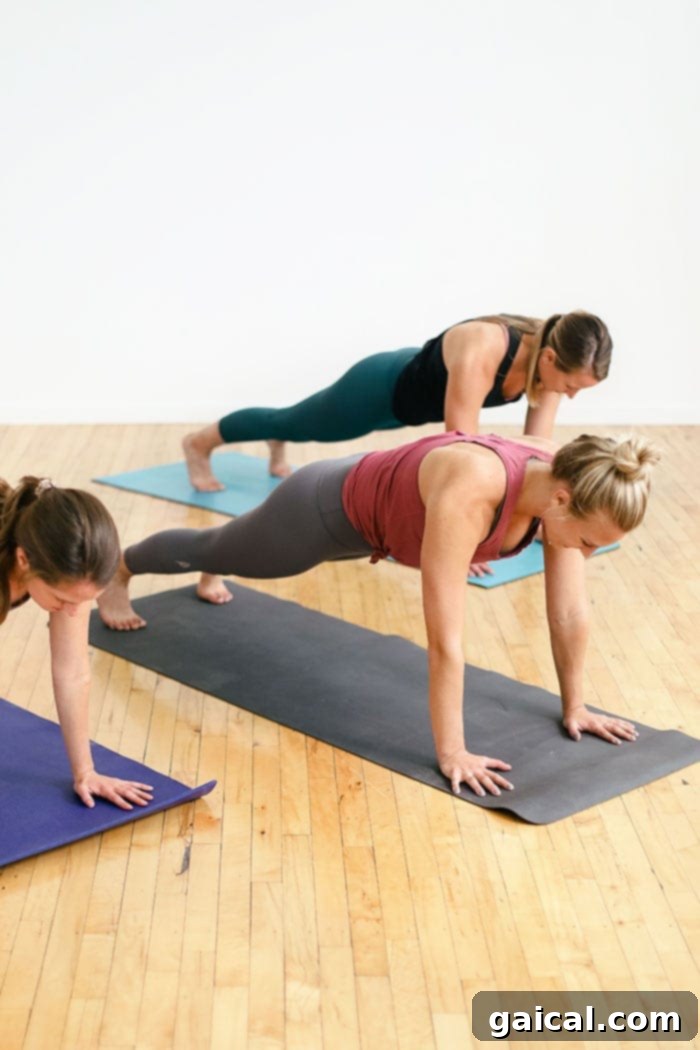
How to: Assume a push-up position with your hands directly under your shoulders, fingers pointing forward. Your body should form a perfectly straight line from the crown of your head to your heels. Engage your core, squeeze your glutes, and actively push the floor away with your hands. Avoid letting your hips sag or pike upwards.
Benefits: An exceptional isometric exercise that strengthens the entire core (abdominals, obliques, lower back), shoulders, and improves overall body stability and posture. Builds endurance in foundational muscle groups.
Form Tips: Keep your gaze slightly forward or down to maintain a neutral neck. Ensure your shoulders are directly over your wrists. For a modification, perform on your forearms (forearm plank) or drop to your knees while maintaining a straight line from shoulders to knees.
Tabata 3: Agility and Functional Leg Strength
This circuit enhances your lateral movement and foundational leg strength, improving coordination and targeting often-neglected muscle groups for balanced development.
- Lateral Shuffle:
How to: Adopt a low, athletic stance with knees slightly bent, chest up, and core engaged. Take rapid, short steps sideways, maintaining your low position. Shuffle for approximately half the interval in one direction, then immediately reverse and shuffle back for the remaining time. Focus on quick, light footwork.
Benefits: Improves lateral speed, agility, and strengthens the often-underutilized inner and outer thigh muscles (adductors and abductors). Excellent for cardiovascular conditioning and dynamic stability.
Form Tips: Stay low throughout the movement; avoid standing up tall. Do not let your feet cross over each other. Use your arms to help generate momentum and maintain balance. Focus on fast, controlled steps.
- Backward Lunges (Reverse Lunges):
How to: Stand tall with your feet hip-width apart. Step one leg straight back, landing on the ball of your foot. Lower your hips until both knees are bent at roughly a 90-degree angle, with your front knee aligned over your ankle and your back knee hovering just above the ground. Push off your back foot to return to the starting position. Alternate legs with each repetition.
Benefits: Builds strength in the glutes, hamstrings, and quads, while significantly improving balance and core stability. Often considered gentler on the knees compared to forward lunges for some individuals.
Form Tips: Keep your torso upright and core engaged throughout the movement. Ensure your front knee tracks in line with your toes. Maintain a steady, controlled descent and ascent, avoiding jerky movements.
Tabata 4: Power and Core Finisher
The final Tabata delivers a powerful combination of explosive lower body work and dedicated core strengthening, ensuring you finish your workout feeling strong and accomplished.
- Jump Squats:
How to: Stand with your feet shoulder-width apart. Lower into a deep squat, ensuring your chest stays up and your back remains straight. Explode upwards, driving through your heels and jumping as high as you can off the ground. Land softly with bent knees, immediately absorbing the impact by returning to a squat position, then repeat.
Benefits: Builds immense power in your legs and glutes, elevates your heart rate rapidly, and improves overall explosive strength and muscular endurance. A fantastic calorie-burning exercise.
Form Tips: Ensure your knees track in line with your toes during the squat and landing. Land as softly and quietly as possible to protect your joints. For a lower-impact alternative, perform regular bodyweight squats with a powerful, fast stand-up.
- Full Sit-Ups:
How to: Lie on your back with your knees bent, feet flat on the floor about hip-width apart. You can place your hands gently behind your head (avoid pulling your neck) or crossed over your chest. Engage your abdominal muscles to lift your upper body completely off the floor, bringing your chest towards your knees. Control the movement as you slowly lower your body back down to the starting position, maintaining tension in your core.
Benefits: Primarily strengthens the rectus abdominis (the “six-pack” muscles) and engages the hip flexors. Improves core stability, abdominal endurance, and contributes to overall trunk strength.
Form Tips: Focus on using your core to lift, not momentum or pulling with your arms/neck. Keep your lower back pressed into the floor as you initiate the movement. A controlled descent is just as important as the upward phase for maximizing muscle engagement. If full sit-ups are too challenging, opt for crunches or reverse crunches.
Post-Workout Cool-Down & Stretching: Facilitate Recovery (5-10 Minutes)
An effective cool-down is crucial after such an intense workout. It helps gradually bring your heart rate down, improves flexibility, and can help prevent muscle soreness (DOMS). Dedicate 5-10 minutes to light movement and static stretching.
- Light Cardio (1-2 minutes): Gently walk around or march in place to slowly decrease your heart rate and breathing.
- Static Stretches (4-8 minutes): Hold each stretch for 20-30 seconds, focusing on deep, relaxed breathing. Target the major muscle groups worked during the workout:
- Quad Stretch: Standing or lying on your side, gently pull your heel towards your glutes.
- Hamstring Stretch: Seated with one leg extended, reach towards your toes, or standing with one heel on an elevated surface.
- Calf Stretch: Lean against a wall with one foot back, pressing your heel down.
- Glute/Figure-Four Stretch: Lying on your back, cross one ankle over the opposite knee and gently pull the thigh towards your chest.
- Hip Flexor Stretch: In a kneeling lunge position, gently push your hips forward.
- Chest Stretch: Stand in a doorway and place your forearms on the frame, gently leaning forward.
- Triceps Stretch: Reach one arm overhead, bend the elbow, and gently pull the elbow with your other hand.
- Shoulder Stretch: Cross one arm across your chest and gently pull it closer with your opposite hand.
Maximize Your Results: Essential Tips for Success
To truly unlock the full potential of this Plyo HIIT Cardio Workout and achieve your fitness goals, consider these key strategies:
- Prioritize Proper Form: While intensity is important, maintaining correct form is paramount to prevent injuries and ensure muscle activation. If your form falters, reduce intensity or modify the exercise.
- Listen to Your Body: Pay attention to signals from your body. If you experience sharp pain, stop immediately. Rest when needed, and don’t be afraid to take an extra recovery day.
- Stay Hydrated: Water is essential for every bodily function, especially during intense exercise. Drink plenty of water throughout the day, before, during, and after your workout.
- Fuel Wisely: Complement your hard work with a balanced, nutrient-dense diet. Proper nutrition provides the energy for your workouts and supports muscle repair and growth, accelerating your fat loss and fitness gains.
- Consistency is Crucial: Regularity is far more effective than sporadic bursts of extreme effort. Aim for consistent workouts each week to build momentum and see lasting results.
- Track Your Progress: Keep a workout journal. Note how many reps you complete, how you feel, or if you can increase your intensity over time. This can be a powerful motivator and help you recognize your improvements.
- Don’t Skip Recovery: Active recovery (light walks, stretching) and adequate sleep are just as important as the workouts themselves for muscle repair, energy restoration, and overall well-being.
Disclaimer: This content is provided for informational purposes only and is not intended as medical advice or a substitute for professional consultation. I am an AI language model and not a certified personal trainer or healthcare professional. Before starting any new fitness regimen, especially if you have pre-existing health conditions, injuries, or concerns, please consult with your doctor or a qualified healthcare provider. Perform all exercises at your own risk and listen carefully to your body. Discontinue any exercise that causes pain or discomfort.