
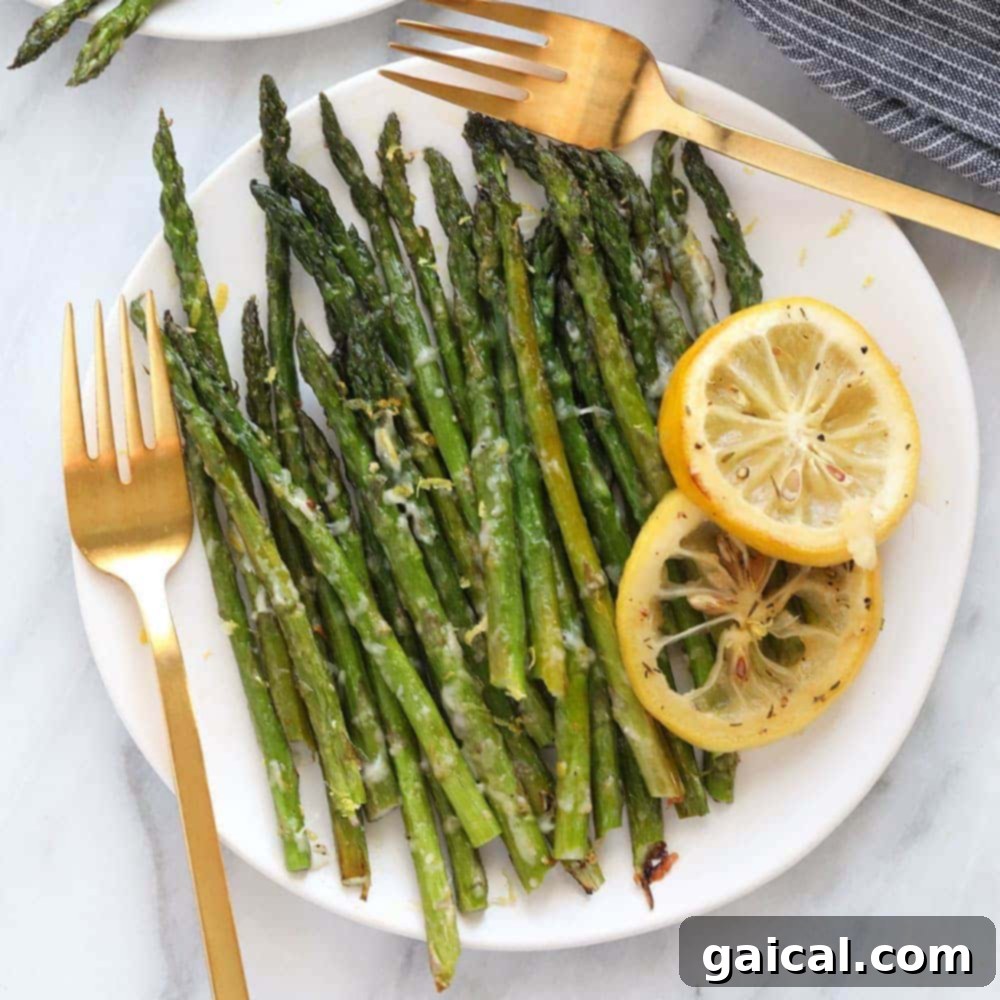
Perfect Oven Roasted Asparagus: Your Ultimate Guide to a Healthy & Delicious Side
Elevate your mealtime with a side that’s both incredibly simple to prepare and bursting with flavor. Oven roasted asparagus is undeniably the best way to enjoy this vibrant green vegetable. It’s a healthy, satisfying, and effortlessly elegant side dish that promises perfectly cooked spears with just the right amount of crispness.
Say goodbye to mushy, overcooked asparagus and welcome a world of vibrant taste and tender-crisp texture. In this comprehensive post, we’re excited to share all our tried-and-true tips and clever tricks to ensure you achieve perfectly roasted asparagus every single time. Moreover, we’ll inspire you with a variety of delicious ways to incorporate this versatile roasted delight into your weekly menu, making it a staple you’ll reach for again and again.
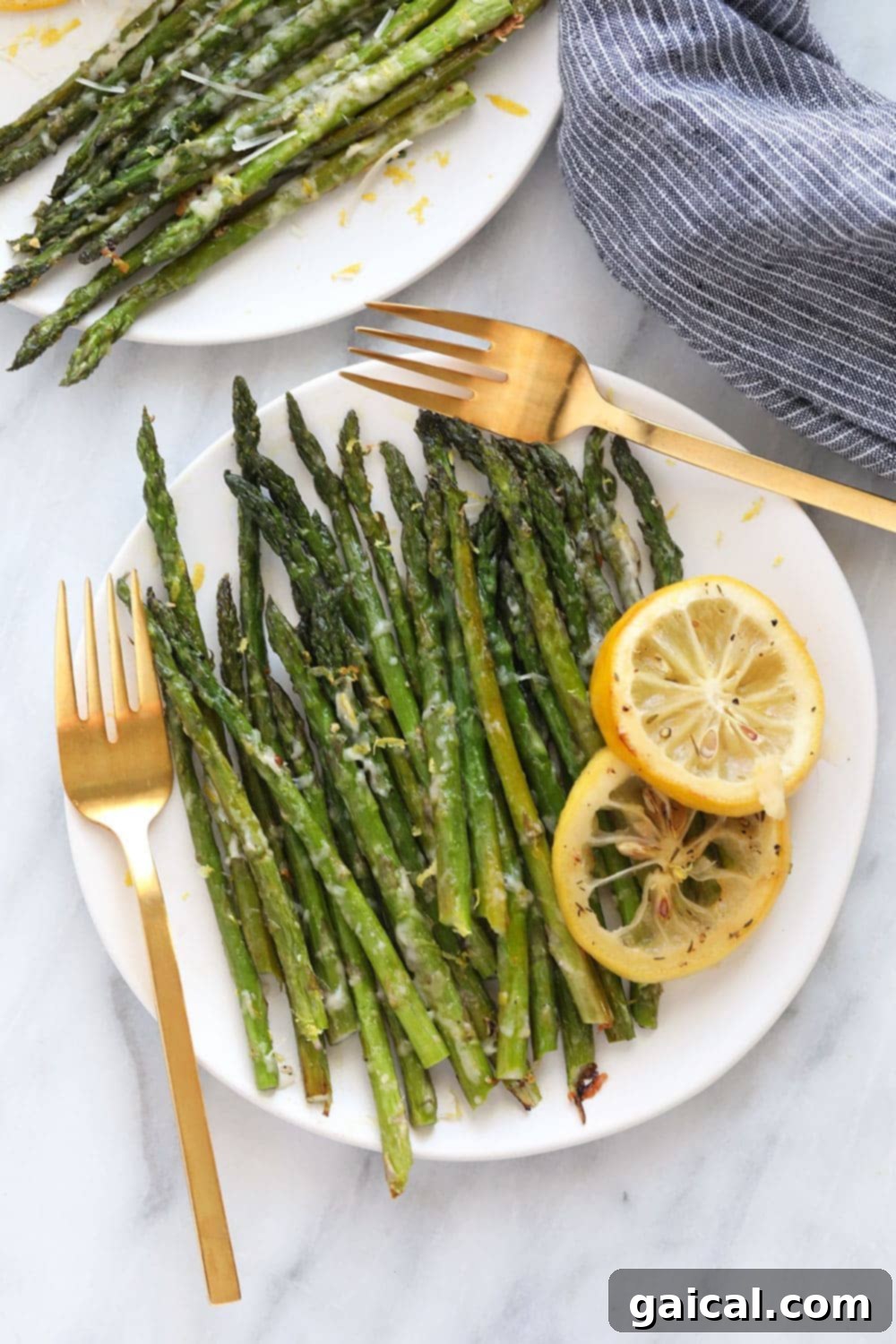
Is Oven Roasted Asparagus a Healthy Addition to Your Diet? Absolutely!
These healthy green spears, which can vary in thickness and are famously known for causing a peculiar smell in urine (a completely harmless genetic trait!), are a truly remarkable vegetable. Asparagus is a hardy plant capable of thriving in diverse environments, making it widely accessible in most supermarkets throughout the year. Beyond its availability, its nutritional profile is where it truly shines, making oven-roasted asparagus an excellent choice for a health-conscious diet.
Incorporating asparagus into your meals offers a multitude of health benefits:
- Low in Calories: A generous 1-cup serving of asparagus contains approximately 40 calories, making it a fantastic, guilt-free option for those monitoring their calorie intake or looking to maintain a healthy weight.
- Rich in Protein and Fiber: Each serving provides about 4g of protein and 4g of dietary fiber. Fiber is essential for promoting digestive regularity, contributing to a feeling of fullness, and helping to manage blood sugar levels.
- Abundant in Essential Vitamins: Asparagus is a powerhouse of vital nutrients, including:
- Vitamin A: Crucial for maintaining healthy vision, robust immune function, and glowing skin.
- Vitamin C: A potent antioxidant that bolsters the immune system and aids in collagen production, vital for skin and connective tissues.
- Vitamin K: Plays a critical role in blood clotting and is indispensable for bone health, contributing to bone density.
- Folate (Vitamin B9): Essential for cell growth and the formation of DNA, particularly significant during periods of rapid growth like pregnancy.
- High in Antioxidants: This vibrant vegetable is packed with various antioxidants, such as flavonoids and polyphenols. These compounds actively combat free radicals in the body, which helps reduce oxidative stress and may lower the risk of chronic diseases.
- Source of Important Minerals: Asparagus also delivers key minerals like potassium, which supports healthy blood pressure, and iron, vital for oxygen transport throughout the body.
Given its impressive nutritional content and ease of preparation, asparagus stands out as a supremely healthy vegetable, perfect for an effortless and delicious side dish that enhances any meal while boosting your nutrient intake.
Mastering Asparagus Preparation for Perfect Roasting
Oven roasting is celebrated as one of the simplest and most flavorful methods for cooking asparagus. The beauty of this technique lies in its ability to impart incredible depth of flavor while ensuring the spears remain delightfully crunchy on the outside and tender within. The ultimate goal is to avoid the common pitfall of soggy, lackluster asparagus.
To set yourself up for roasting success, precise preparation is key. Here are the fundamental tools and steps required:
Essential Kitchen Tools:
- Large Baking Sheet: Opt for a standard-sized baking sheet. This ensures you can spread your asparagus spears in a single layer without overcrowding them. Overlapping spears will trap steam, resulting in a steamed rather than roasted texture, and will prevent them from achieving that desirable crispness. A good rule of thumb is to use one standard sheet per 1 to 2 pounds of asparagus.
- Sharp Knife or Kitchen Shears: These implements are crucial for accurately trimming the tough, woody ends of the asparagus. However, if you find yourself without them, fear not! We’ll reveal a clever, secret method that doesn’t require any cutting tools at all.
- Optional: Parchment Paper or Aluminum Foil: While not strictly essential for the roasting process itself, lining your baking sheet with parchment paper or aluminum foil offers a significant advantage: incredibly quick and easy cleanup. If using foil, remember to lightly oil it to prevent the asparagus from sticking.
Choosing the Freshest Asparagus: A Guide for Shoppers
The journey to perfect oven-roasted asparagus begins even before you start cooking, right at the grocery store. Selecting the freshest spears is paramount to the final dish’s texture and flavor. When you’re at the market, look for these indicators of quality:
- Firm and Straight Spears: High-quality asparagus should feel firm to the touch and stand relatively straight. Avoid any spears that appear limp, bendy, or rubbery, as these are signs of older produce.
- Tight, Closed Tips: The tips of the asparagus spears are a tell-tale sign of freshness. They should be compact, tightly closed, and vibrant green, not flowering, splayed, or mushy.
- Vibrant Green Color: The stalks should exhibit a rich, lively green hue. Steer clear of spears that look dull, yellowish, or have noticeable dark or bruised spots.
- Moist, Freshly Cut Ends: The cut ends of the asparagus should appear somewhat moist and not dry, shriveled, or overly woody. This indicates that the asparagus was recently harvested.
Once you’ve brought your pristine asparagus home, it’s best to prepare and consume it within a few days for optimal taste and texture. To extend its freshness, you can store it upright in a glass jar with about an inch of water, then loosely cover the tips with a plastic bag and refrigerate. This helps keep the spears hydrated and crisp until you’re ready to roast them.
How to Efficiently Remove the Woody Ends of Asparagus for Best Flavor
The single most important preparatory step for roasting asparagus is correctly removing the fibrous, woody ends. These bottom sections of the spear are tough, stringy, and simply unpleasant to chew, making proper trimming absolutely essential for an enjoyable eating experience. Generally, you’ll aim to remove about 1 to 1.5 inches from the very bottom of each spear, though the exact amount can vary based on the thickness and overall freshness of the asparagus.
Thankfully, there are several straightforward and effective methods for trimming:
- The “Snap” Method (Our Preferred & Easiest Technique!): This is arguably the most intuitive and foolproof way to ensure you’re only discarding the non-edible, woody part. To do this, simply hold an asparagus spear firmly near its bottom with one hand and about two-thirds of the way up the stalk with your other hand. Gently bend the spear until it naturally snaps. The asparagus will inherently break at the precise point where the tough, fibrous portion meets the tender, edible stalk. This method is incredibly efficient, requires no tools, and guarantees you won’t waste any edible parts – a clever trick passed down through generations!
- Using a Sharp Knife: For those who prefer a more uniform appearance, lay the asparagus spears flat on a cutting board. You can perform the “snap” test on one spear to identify the natural breaking point, then use that spear as a guide to visually cut off the ends of the remaining bunch. This ensures all spears are trimmed to a consistent length, which can be aesthetically pleasing, especially when serving guests.
- Kitchen Shears: Much like a sharp knife, a good pair of kitchen shears offers precision and can be a very quick alternative for trimming multiple spears simultaneously, especially if you have a large batch.
Regardless of the method you choose, the primary objective remains consistent: to guarantee that every single bite of your oven-roasted asparagus is tender, succulent, and utterly delicious, entirely free from any tough or stringy remnants.
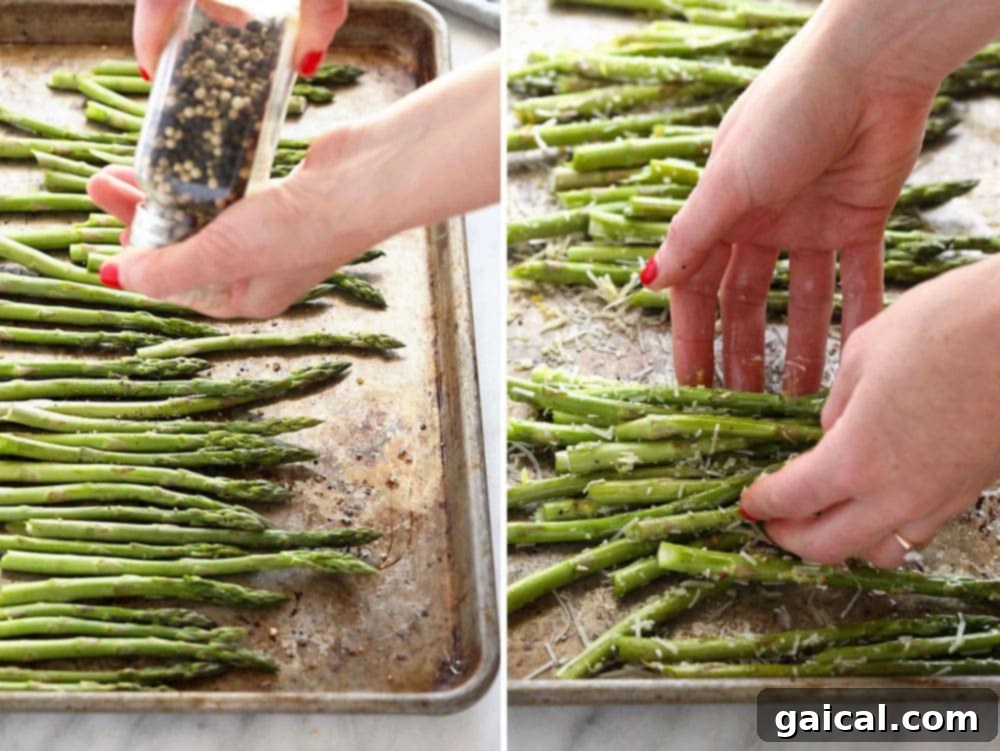
The Simple Art of How to Roast Asparagus to Perfection
Roasting asparagus is an incredibly easy cooking process that demands only a few fundamental ingredients to yield truly spectacular results. Once you’ve mastered this straightforward technique, you’ll find it incredibly simple to add further layers of flavor and customize this versatile vegetable to create the asparagus dish of your culinary dreams.
Key Ingredients You’ll Need for an Irresistible Roast:
- Fresh Asparagus: As highlighted earlier, the fresher your asparagus, the better the outcome! When purchasing, always look for spears that are firm to the touch, boast a vibrant green color, and have tightly closed tips. Asparagus that feels soft or appears wilted is likely past its prime and won’t deliver that desired tender-crisp texture. Both thin and slightly thicker spears work wonderfully for roasting, though thicker ones might require an extra minute or two in the oven.
- Olive Oil: Extra virgin olive oil is our top recommendation for roasting vegetables. Its rich, fruity notes beautifully complement the natural flavor of asparagus and are essential for achieving that delightful golden-brown exterior and tender interior. If you prefer, other high-smoke-point oils such as avocado oil or even melted coconut oil can also be used, offering slightly different flavor profiles.
- Salt and Black Pepper: For this foundational recipe, we’re sticking to the timeless and effective pairing of coarse sea salt and freshly ground black pepper. These basic seasonings are crucial for enhancing the asparagus’s inherent taste without overwhelming it, allowing its natural sweetness to shine through.
- Parmesan Cheese (Optional, but Highly Recommended!): Because, let’s be honest, a touch of cheese almost always makes things better! Grated Parmesan introduces a wonderfully delicate, salty, and savory umami depth to the asparagus. When roasted, it forms a delicious, slightly caramelized crust that adds an irresistible layer of flavor and texture. Its mild character ensures it enhances the asparagus without becoming too assertive.
- Fresh Lemon Zest (and Juice!): A small amount of fresh lemon zest goes an impressively long way in brightening the entire dish. It infuses the asparagus with a fragrant, citrusy aroma and a subtle tang that awakens the palate. For an even more intense burst of fresh, zesty flavor, feel free to squeeze a little fresh lemon juice over the spears immediately after they come out of the oven.
Achieving Perfection: The Best Temperature for Oven Roasted Asparagus
The true secret to cooking asparagus that is perfectly tender-crisp, rather than soft and watery, lies in leveraging high heat. Roasting at a higher temperature allows for rapid caramelization of the natural sugars in the asparagus and minimizes the overall cooking time. This quick cooking prevents the vegetable from releasing too much moisture and becoming waterlogged, ensuring it retains its delightful crunch.
While we wholeheartedly recommend roasting your asparagus at 425°F (218°C) for the most consistent and crisp results, we recognize that oven temperatures can vary, and personal preferences differ. Here’s a detailed guide to various temperature options along with their corresponding cooking durations:
- 425°F (218°C): For that ideal crisp-tender texture, roast your asparagus for approximately 10 to 12 minutes. This is our top recommendation for a perfect bite.
- 400°F (200°C): If you prefer a slightly gentler roast, aim for 12 to 14 minutes at this temperature. The asparagus will still be delicious, with a touch more tenderness.
- 375°F (190°C): At this lower temperature, expect the asparagus to be softer. Roast for about 14 to 16 minutes.
It is always advisable to keep a close eye on your asparagus during roasting, as actual cooking times can be influenced by the thickness of the individual spears and the calibration of your specific oven. Thinner spears will naturally cook more quickly, while thicker ones may require an additional minute or two to reach desired tenderness.
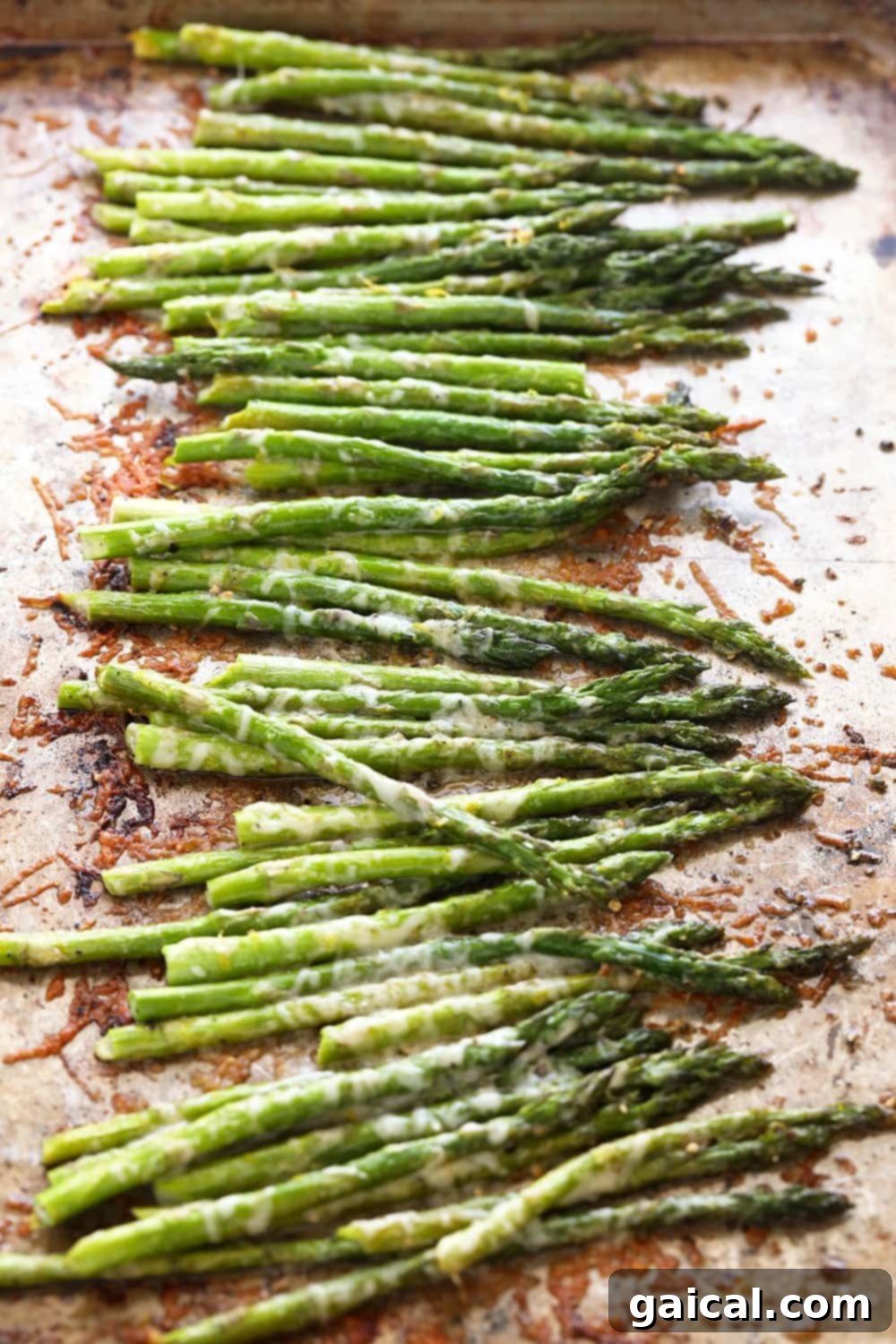
What to Do with Roasted Asparagus: Versatile & Delicious Meal Pairings
Once you’ve mastered the technique of creating perfectly roasted asparagus, you’ll often find yourself with a wonderfully delicious batch ready to enjoy. The fantastic news is that roasted asparagus is incredibly versatile and pairs beautifully with an extensive array of dishes. Here are some inspiring and straightforward ideas to integrate this flavorful and healthy vegetable into your everyday meals:
Hearty Meal Pairings & Creative Combinations:
- Pasta Dishes: One of our most cherished ways to utilize roasted asparagus is by tossing it directly into pasta. The vibrant green spears add a delightful textural contrast and a burst of fresh flavor to any pasta creation.
- Stir it into a rich and creamy vegan sauce for a truly satisfying and wholesome creamy vegan asparagus pasta.
- For a classic and zesty seafood option, combine roasted asparagus with a savory garlic butter sauce and succulent shrimp to create an irresistible asparagus shrimp scampi.
- Egg Bakes & Frittatas: Asparagus is a stellar addition to any breakfast, brunch, or even light dinner egg dish, contributing both exquisite flavor and essential nutrients.
- Elevate your morning with a colorful and flavorful veggie frittata, where roasted asparagus shines alongside other garden-fresh vegetables.
- Incorporate it into convenient, individual portions like our savory asparagus and mushroom egg cups, which are perfect for on-the-go breakfasts or healthy meal prep.
- Buddha Bowls & Grain Bowls: When you’re looking for a wholesome and customizable meal, a Buddha bowl is always a fantastic option! Roasted asparagus adds a beautiful pop of color, a tender-crisp texture, and a wealth of nutrients to any grain or power bowl.
- It’s a perfect component in our popular Pesto Chicken Meal-Prep recipe, providing a fresh and bright counterpoint to the rich pesto flavors.
- Combine it with fluffy quinoa, roasted sweet potatoes, a medley of leafy greens, and a drizzle of creamy tahini dressing for a complete and utterly satisfying vegetarian meal.
- Paired with Protein: The most straightforward, yet incredibly satisfying, application for roasted asparagus is serving it alongside your preferred protein. It serves as the quintessential healthy side dish that complements virtually any main course.
- Present it with a flawlessly cooked Sous Vide steak for an elegant and restaurant-quality dinner.
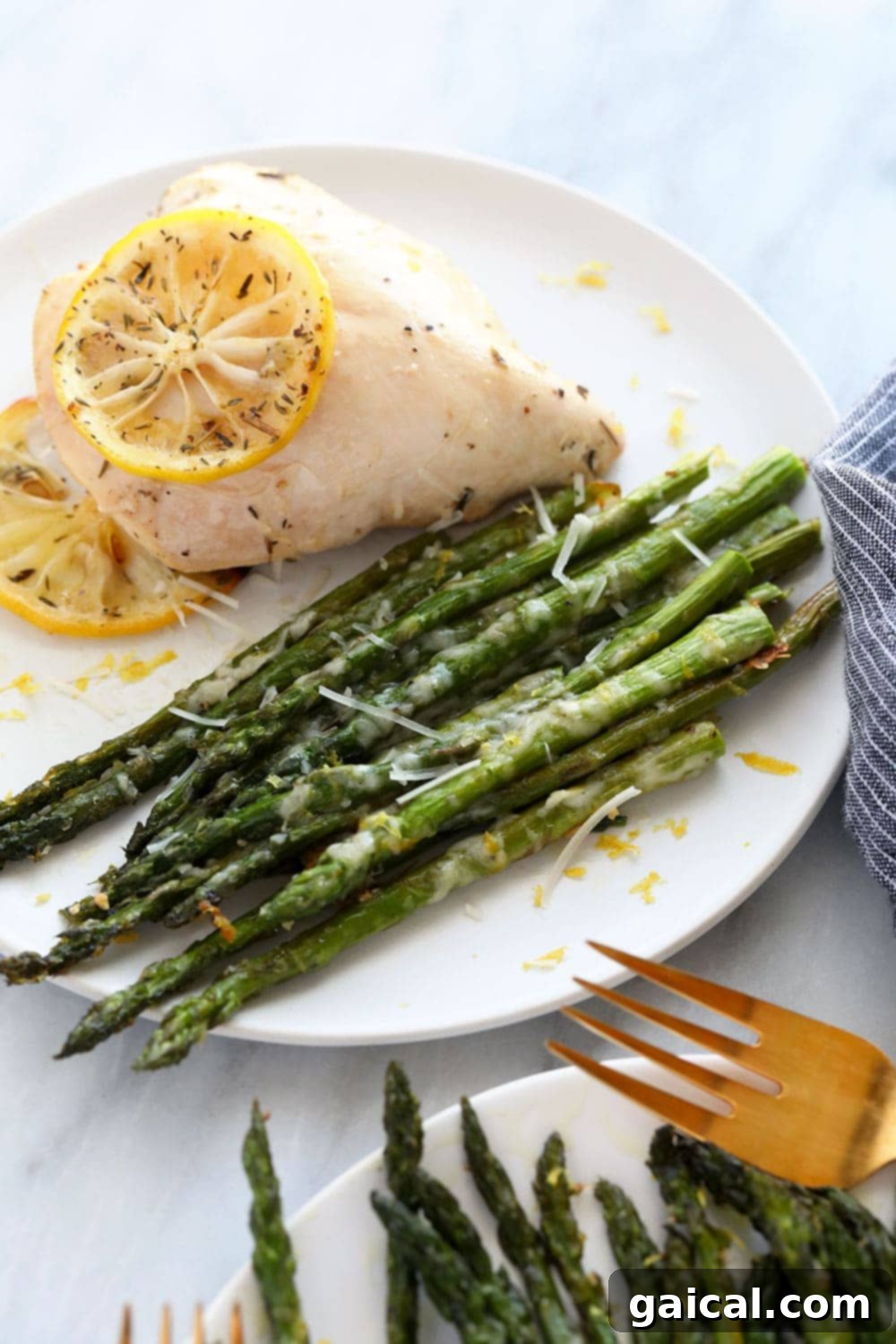
- Brighten up a tender baked lemon chicken breast with the harmonious flavors of lemon-infused asparagus.
- Enjoy its fresh crispness alongside a comforting slow cooker pork roast, where its vibrant taste expertly cuts through the richness of the meat.
- It also pairs exceptionally well with various types of fish, such as flaky salmon, delicate cod, or any grilled white fish, adding a touch of verdant elegance to your seafood platter.
- Salads & Appetizers: Don’t limit roasted asparagus to just main meals! Chop any leftover spears and toss them into green salads, potato salads, or use them as a sophisticated topping for bruschetta. It can also be served simply as a delightful stand-alone appetizer with a complementary dipping sauce.
With these diverse and delicious ideas, your perfectly roasted asparagus will always find a purpose, transforming into a versatile and much-loved element within your culinary repertoire.
Oven Roasted Asparagus: FAQs & Essential Storage Tips
Beyond the actual cooking process, understanding a few key facts about asparagus can significantly enhance your overall experience with this wonderful vegetable. Here, we address common questions and provide essential tips for storing and reheating your delicious roasted spears, ensuring maximum enjoyment and minimal waste.
When is Asparagus in Season for Peak Freshness?
Asparagus typically enjoys a vibrant growing season that stretches from late February through June, with its absolute peak harvest occurring in the month of April. This spring period is when asparagus is at its freshest, most flavorful, and often most affordable. However, thanks to modern agricultural practices and global sourcing, we are fortunate in many regions, particularly across the USA, to find fresh asparagus readily available in supermarkets almost year-round, allowing us to enjoy its distinct taste regardless of the season.
Does Eating Asparagus Make Your Pee Smell Funny? The Scientific Explanation
Ah, the classic question that many have pondered and discreetly Googled! If you’ve ever noticed a peculiar, pungent odor in your urine shortly after consuming asparagus, you are absolutely not imagining it – it’s a genuine phenomenon. Asparagus contains a unique, sulfur-rich compound known as asparagusic acid. When your body metabolizes and breaks down this acid, it produces several volatile, sulfur-containing by-products. These compounds are then excreted through your urine, giving it that distinct, somewhat sulfuric aroma. Interestingly, not every individual produces these compounds, and even among those who do, not everyone possesses the genetic ability to detect the odor. Rest assured, this bodily reaction is entirely normal, completely harmless, and a fascinating quirk of nature!
How to Properly Store Roasted Asparagus for Freshness
To preserve the freshness and delicious taste of your leftover roasted asparagus, it’s crucial to allow it to cool completely to room temperature first. Once cooled, transfer the asparagus to an airtight container. This simple step is vital as it prevents air exposure, which can cause the asparagus to dry out, and also stops it from absorbing unwanted odors from other foods in your refrigerator. Store the sealed container in the main compartment of your refrigerator.
How Long Does Roasted Asparagus Last in the Refrigerator?
When stored correctly in an airtight container within the refrigerator, your roasted asparagus will typically remain fresh and perfectly enjoyable for a period of 3 to 5 days. While it’s always at its peak flavor and crispness straight out of the oven, it still makes a wonderful and convenient addition to various meals for several days following its initial preparation.
How to Reheat Roasted Asparagus Without Sacrificing Texture
Reheating roasted asparagus can sometimes be a challenge, as the goal is to warm it through without rendering it mushy or limp. Here are the best methods to effectively restore its deliciousness and, ideally, some of its original crispness:
- Microwave (Quickest, but potentially less crisp): For the fastest reheating option, arrange the cooked asparagus on a microwave-safe plate. Heat on high for approximately 60-90 seconds, or until it is warmed through. Exercise caution to avoid overcooking, as this method can quickly lead to a softer texture.
- Stove-Top (Best for maintaining some crispness): This method is ideal for bringing back some of that coveted tender-crispness. Add about 1/2 to 1 tablespoon of olive oil to a skillet and heat it over medium-high heat. Once the oil is shimmering, add the cooked asparagus spears. Sauté for 3-5 minutes, tossing them occasionally, until they are thoroughly warmed and begin to re-crisp slightly.
- Oven (Excellent for multiple servings and optimal crispness): If you have a larger batch of roasted asparagus or desire the best possible texture, reheating in the oven is your go-to. Preheat your oven to 350°F (175°C). Spread the asparagus in a single layer on a baking sheet. Reheat for 5-8 minutes, or until it is warmed through and has slightly re-crisped.
Expand Your Culinary Horizons:
More Asparagus Recipes You’ll Love to Explore
If you’ve become a true enthusiast of asparagus, you’ll be delighted to know there are countless innovative and delicious ways to prepare and enjoy this incredibly versatile vegetable. Broaden your culinary repertoire with these other fantastic and inspiring asparagus-centric recipes:
- Creamy Vegan Asparagus Pasta: A luxurious, plant-based pasta dish that’s rich, deeply satisfying, and brimming with fresh asparagus.
- Easy Grilled Asparagus in Foil: The perfect recipe for grilling season! This method locks in moisture and infuses the asparagus with a wonderfully tender, smoky flavor.
- Bacon-Wrapped Asparagus: A truly decadent and savory appetizer or side dish, where crispy, salty bacon perfectly encases tender asparagus spears.
- Asparagus Shrimp Scampi: A remarkably quick, flavorful, and complete one-pan meal featuring succulent shrimp alongside vibrant asparagus.
Oven Roasted Asparagus: The Complete Recipe
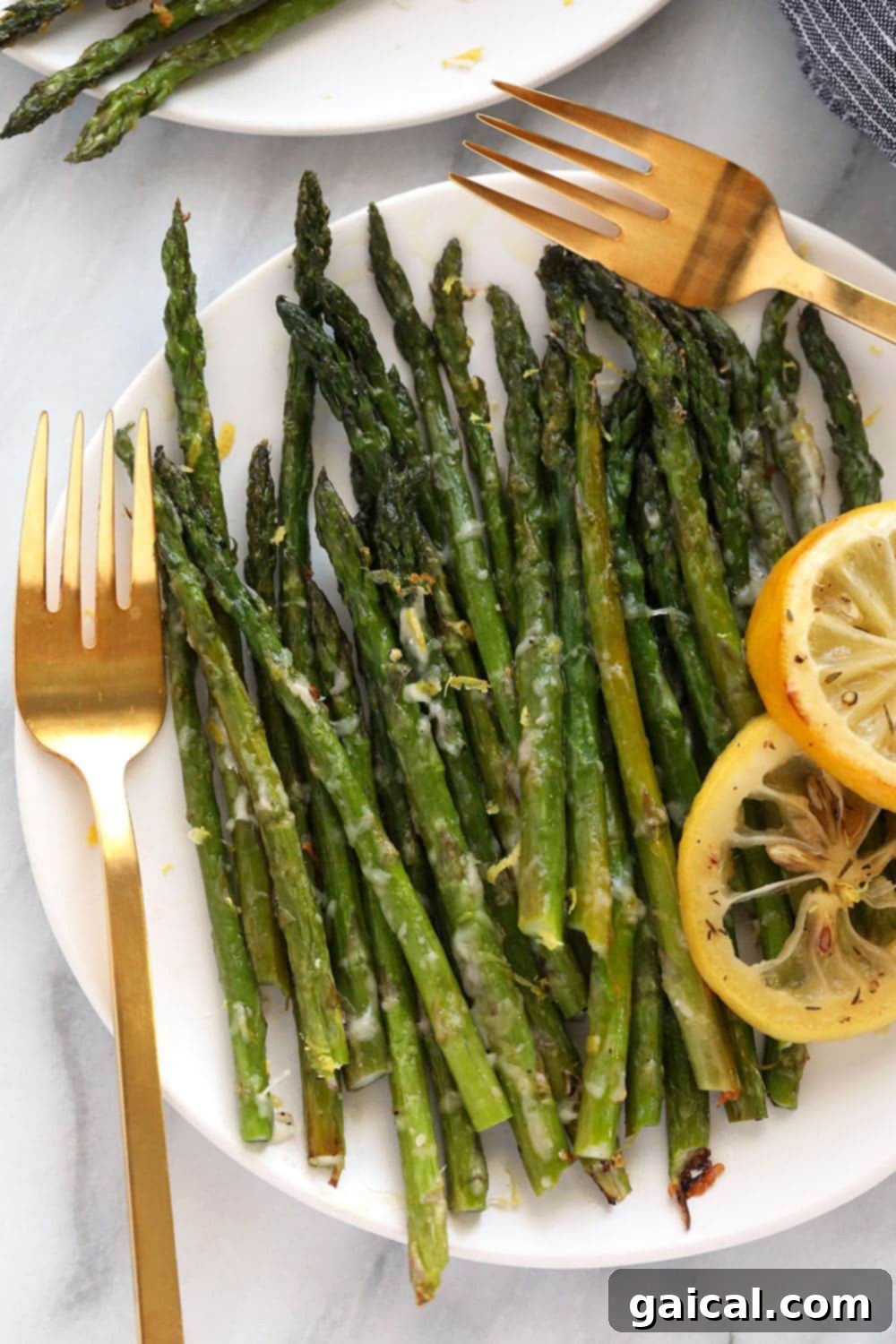
This simple yet elegant oven roasted asparagus recipe, enhanced with a sprinkle of Parmesan cheese and a hint of fresh lemon, truly offers the best way to enjoy asparagus. It’s a perfectly cooked, healthy side dish that’s incredibly straightforward to prepare and guaranteed to impress.
By: Lee Funke
Prep Time: 10 minutes
Cook Time: 10 minutes
Total Time: 20 minutes
Servings: 4
Ingredients:
- 1 lb. asparagus (thinner-cut spears are often preferred for quick cooking)
- 2 tablespoons olive oil
- 1/4 teaspoon salt
- 1/4 teaspoon black pepper (freshly ground recommended)
- 1/2 cup grated Parmesan cheese, divided
- 1 tablespoon fresh lemon zest (from about 1 medium lemon)
Instructions:
- Preheat Oven & Prepare Baking Sheet: First, preheat your oven to 425°F (218°C). Lightly grease or spray a large baking sheet with nonstick cooking spray, or line it with parchment paper for effortless cleanup.
- Trim Asparagus Ends: Next, prepare the asparagus by trimming off the tough, woody ends. You can easily do this by holding each spear and snapping it where it naturally breaks, or by using a sharp knife to cut off approximately 1 to 1.5 inches from the bottom.
- Season with Oil: Place the trimmed asparagus spears in a single layer on the prepared baking sheet. Drizzle generously with olive oil and gently toss the spears to ensure each one is lightly and evenly coated.
- Add Salt & Pepper: Generously season the asparagus with salt and freshly ground black pepper. Toss again to thoroughly distribute the seasonings.
- Combine with Parmesan & Lemon Zest: Sprinkle half of the grated Parmesan cheese and all of the fresh lemon zest over the asparagus. Toss one final time to combine these incredible flavors.
- Initial Roast: Roast in the preheated oven at 425°F (218°C) for 8 minutes.
- Add Remaining Parmesan: Carefully remove the baking sheet from the oven. Sprinkle the remaining Parmesan cheese evenly over the asparagus and gently toss the spears.
- Final Roast & Serve: Return to the oven and continue to bake for an additional 2-4 minutes, or until the asparagus is tender-crisp and the cheese is slightly golden and melted. The exact timing may vary slightly depending on the thickness of your asparagus spears; thinner spears will cook more quickly. Serve immediately with extra fresh lemon zest and an optional crack of black pepper for an extra burst of flavor.
Tips & Notes:
Adjusting Roasting Time for Spear Thickness: The cooking times provided in this recipe are optimized for thinner asparagus spears. If you have purchased thicker asparagus, you may need to extend the baking time by a few minutes (e.g., up to 12-15 minutes total). Always test for tender-crispness with a fork before removing from the oven.
Flavor Variations: Don’t hesitate to personalize your roasted asparagus! Consider adding a clove of minced garlic, a pinch of red pepper flakes for a subtle heat, or a dash of balsamic glaze before roasting for an extra layer of gourmet flavor.
Watch How It’s Made: A Visual Guide
For a step-by-step visual demonstration of how to achieve perfectly oven roasted asparagus, watch our helpful video guide:
This video walks you through the easy process of making delicious oven-roasted asparagus, complete with Parmesan cheese and a touch of lemon.
Nutrition Facts (per serving):
- Calories: 138 kcal
- Carbohydrates: 5 g
- Protein: 7 g
- Fat: 11 g
- Fiber: 2 g
- Sugar: 2 g
Please note: Nutrition information is automatically calculated and should be considered an approximation. Actual values may vary based on ingredients and preparation.