
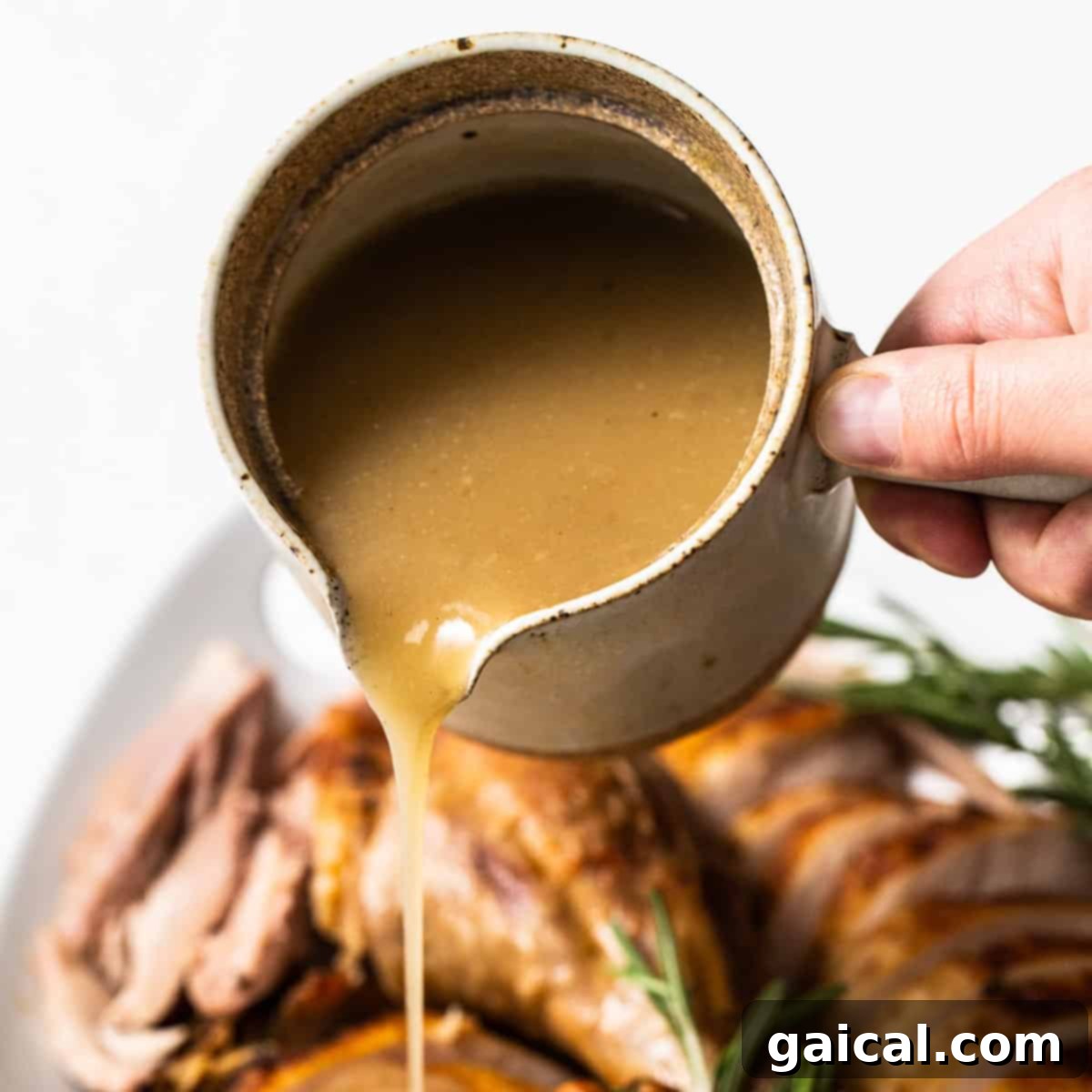
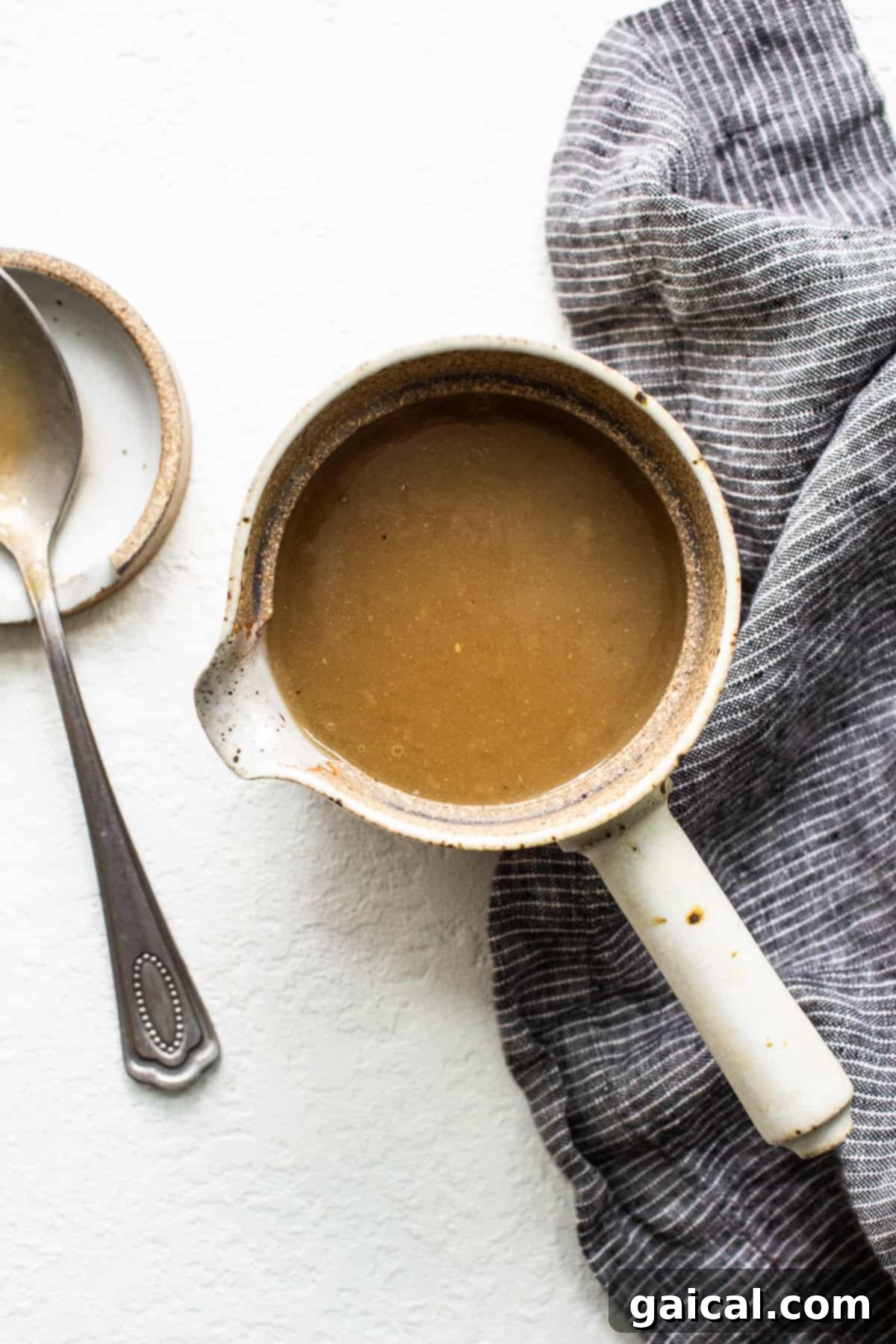
Elevate your holiday feast with the ultimate homemade **turkey gravy** – a rich, savory essential that promises to tie your entire meal together. Forget store-bought alternatives; this simple recipe, passed down through generations, utilizes the priceless drippings from your roasted turkey, combined with savory broth and a touch of cornstarch for a silky-smooth finish. It’s an effortless addition that delivers unparalleled flavor, making every bite of your Thanksgiving dinner truly unforgettable.
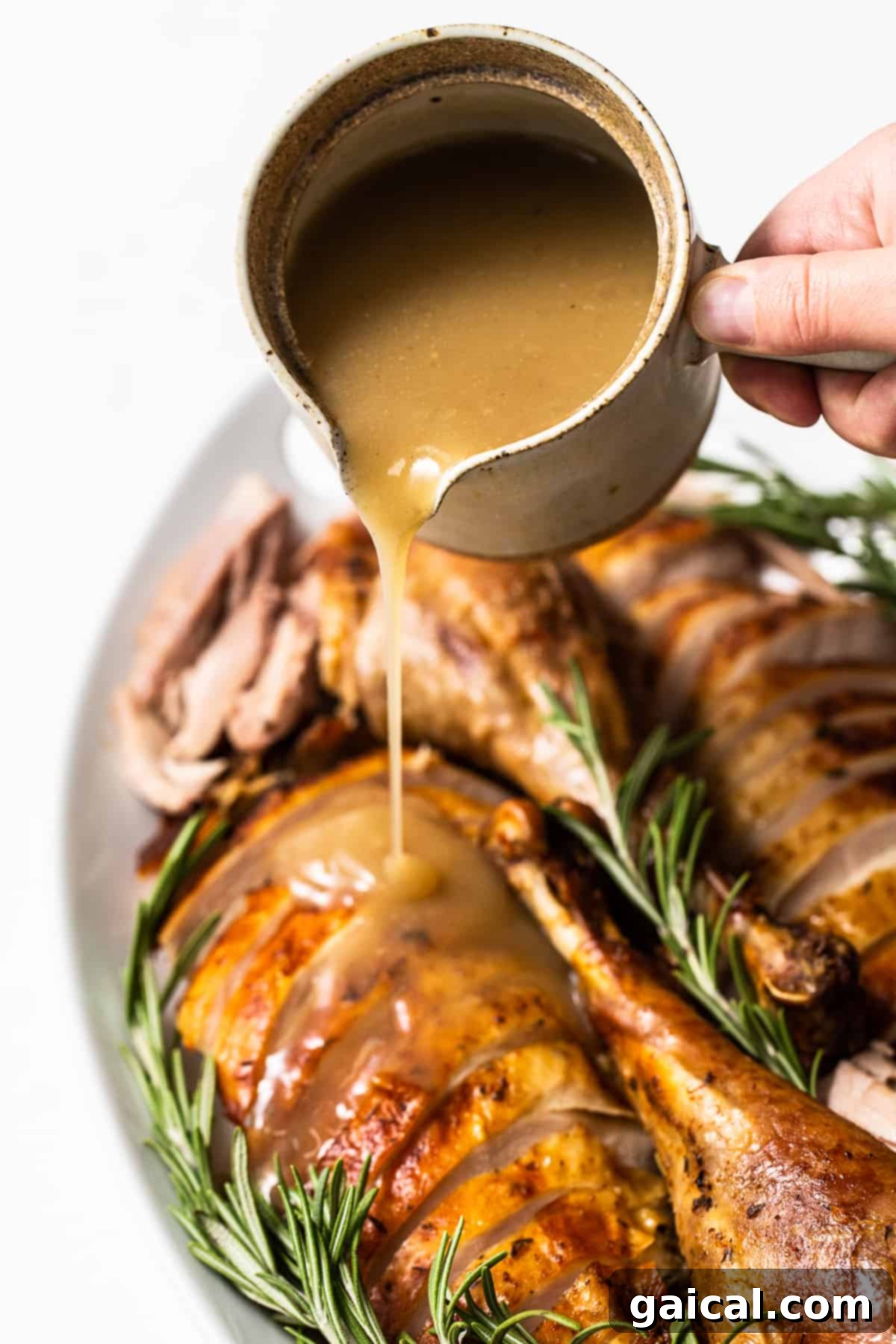
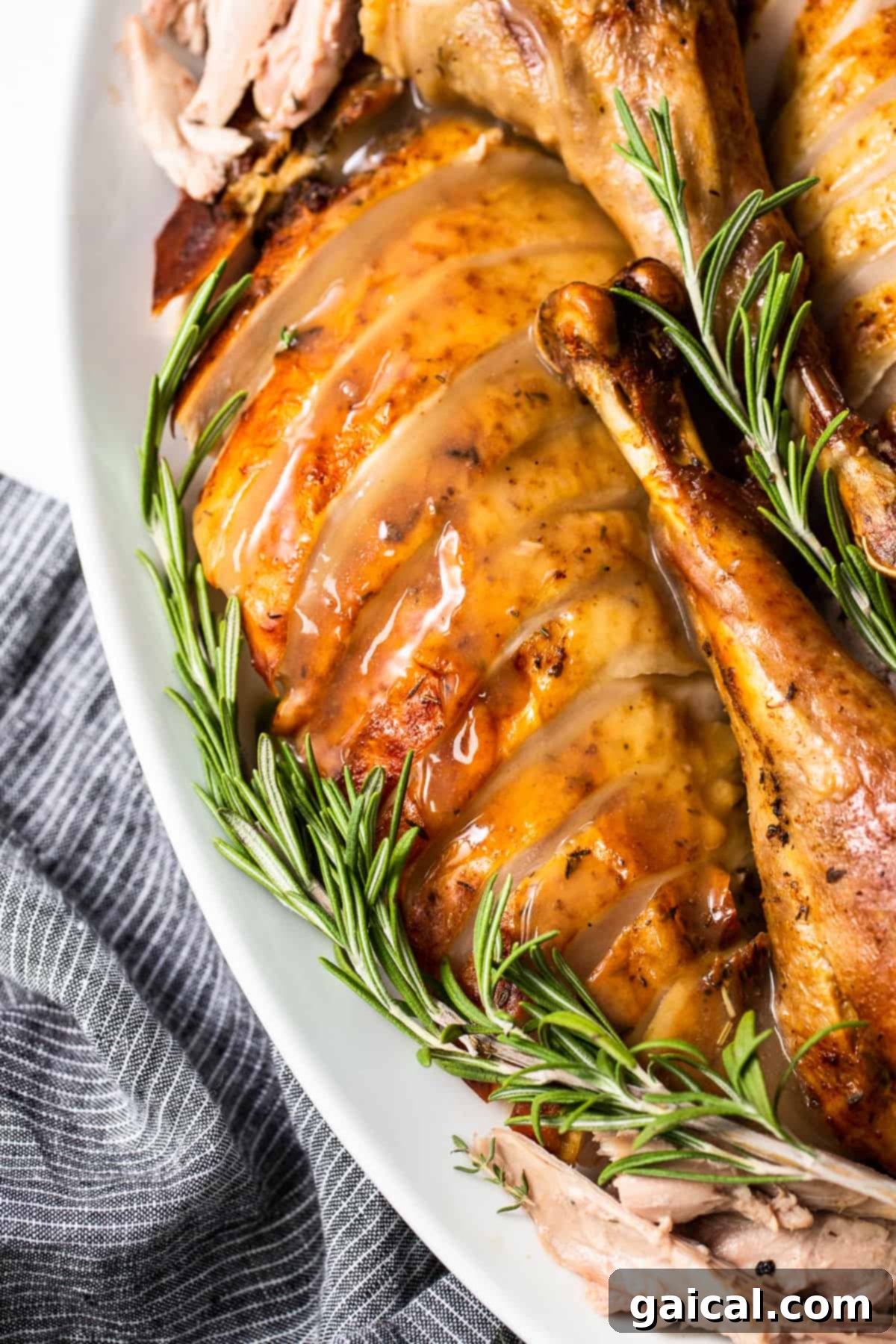
No Thanksgiving or holiday meal is truly complete without a generous drizzle of warm, flavorful gravy. Whether you’re masterfully roasting a whole turkey to golden perfection, experimenting with a delicious smoked turkey, or simply preparing succulent turkey legs, a homemade gravy is an absolute must-have. This particular recipe is our family’s trusted go-to, a technique lovingly taught by my mother, and it’s a testament to how the most basic ingredients can create the most extraordinary flavors. It’s truly a foundational element every holiday table deserves.
The Ultimate Homemade Turkey Gravy: A Thanksgiving Essential
Thanksgiving is a time for cherished traditions, family gatherings, and, most importantly, incredible food. While the turkey often takes center stage, it’s the supporting cast—the stuffing, mashed potatoes, cranberry sauce, and especially the gravy—that truly completes the culinary experience. A well-made gravy doesn’t just complement the turkey; it enhances every component on your plate, adding a layer of moisture, richness, and depth that transforms a good meal into an extraordinary one.
The beauty of this homemade turkey gravy lies in its simplicity and the use of natural flavors. Rather than relying on store-bought packets or mixes that often contain artificial ingredients and excessive sodium, this recipe harnesses the inherent deliciousness of your turkey’s pan drippings. These drippings are liquid gold, packed with all the succulent flavors and savory goodness that have rendered from your bird during cooking. Transforming them into a luscious gravy is not only cost-effective but also guarantees a fresher, more authentic taste that truly embodies the spirit of a home-cooked holiday meal.
Why Homemade Gravy Reigns Supreme
There’s an undeniable difference between homemade gravy and its store-bought counterparts. The primary reason for this superiority is the use of fresh, natural ingredients, particularly the invaluable turkey drippings. These drippings are a concentrate of all the herbs, spices, and natural juices that seasoned your turkey, offering a depth of flavor that cannot be replicated by artificial means.
- Unparalleled Flavor: Homemade gravy, especially one made from pan drippings, boasts a rich, complex flavor profile that is simply unmatched. It carries the essence of your roasted turkey, creating a harmonious taste experience.
- Control Over Ingredients: When you make gravy from scratch, you have complete control over what goes into it. You can adjust the saltiness, add your favorite herbs, or ensure it meets specific dietary needs, such as being gluten-free (by using cornstarch) or low-sodium.
- Freshness and Quality: There’s a certain freshness to homemade gravy that you just don’t get from a jar or packet. The vibrant flavors of fresh herbs and the natural richness of the drippings shine through, creating a truly gourmet accompaniment.
- A Touch of Tradition: For many, making gravy from the pan drippings is a cherished holiday tradition. It’s a culinary ritual that adds to the warmth and nostalgia of the festive season, connecting generations through shared recipes and meals.
Essential Ingredients for Your Perfect Gravy
This wonderfully flavorful turkey gravy comes together with an incredibly short list of just three core ingredients – one of which you’ll already have on hand from whatever variety of turkey you’re lovingly preparing in your kitchen. Simplicity at its finest, yet the results are profoundly delicious. Here’s what you’ll need to gather:
- Turkey Drippings / Basting Liquid: The absolute cornerstone of any truly authentic turkey gravy. Whether you’re roasting a classic whole bird or embarking on the journey of smoking a turkey, don’t let those precious, flavor-packed drippings go to waste! They are essential for a gravy bursting with rich turkey essence.
- Broth: Versatility is key here! While we highly recommend turkey broth for an intensified turkey flavor, any variety of broth will work beautifully. Chicken broth is an excellent, widely available substitute, and vegetable broth also makes a fantastic, lighter option. For best results, opt for low-sodium broth so you can control the seasoning yourself.
- Cornstarch: This incredible thickener is highly efficient, meaning a little truly goes a long way! We typically use 2-3 tablespoons to achieve a perfect consistency, but if you have a penchant for a noticeably thicker, more luxurious gravy, feel free to incrementally add a bit more until your desired richness is reached.
A note on proportions: Our extensive testing has shown that 1 cup of turkey drippings to 3 cups of broth is the ultimate, magic ratio for a perfectly balanced gravy. We learned this the hard way – increasing the amount of drippings too much resulted in a gravy that was excessively salty, overpowering rather than enhancing the meal. Stick to this ratio for consistently delicious results.
Customizing Your Gravy: Flavor Enhancements & Variations
While our classic recipe is perfectly delicious on its own, one of the joys of cooking is the ability to personalize dishes to suit your taste. This turkey gravy recipe is incredibly adaptable, allowing you to infuse it with additional flavors and adjust it to various scenarios.
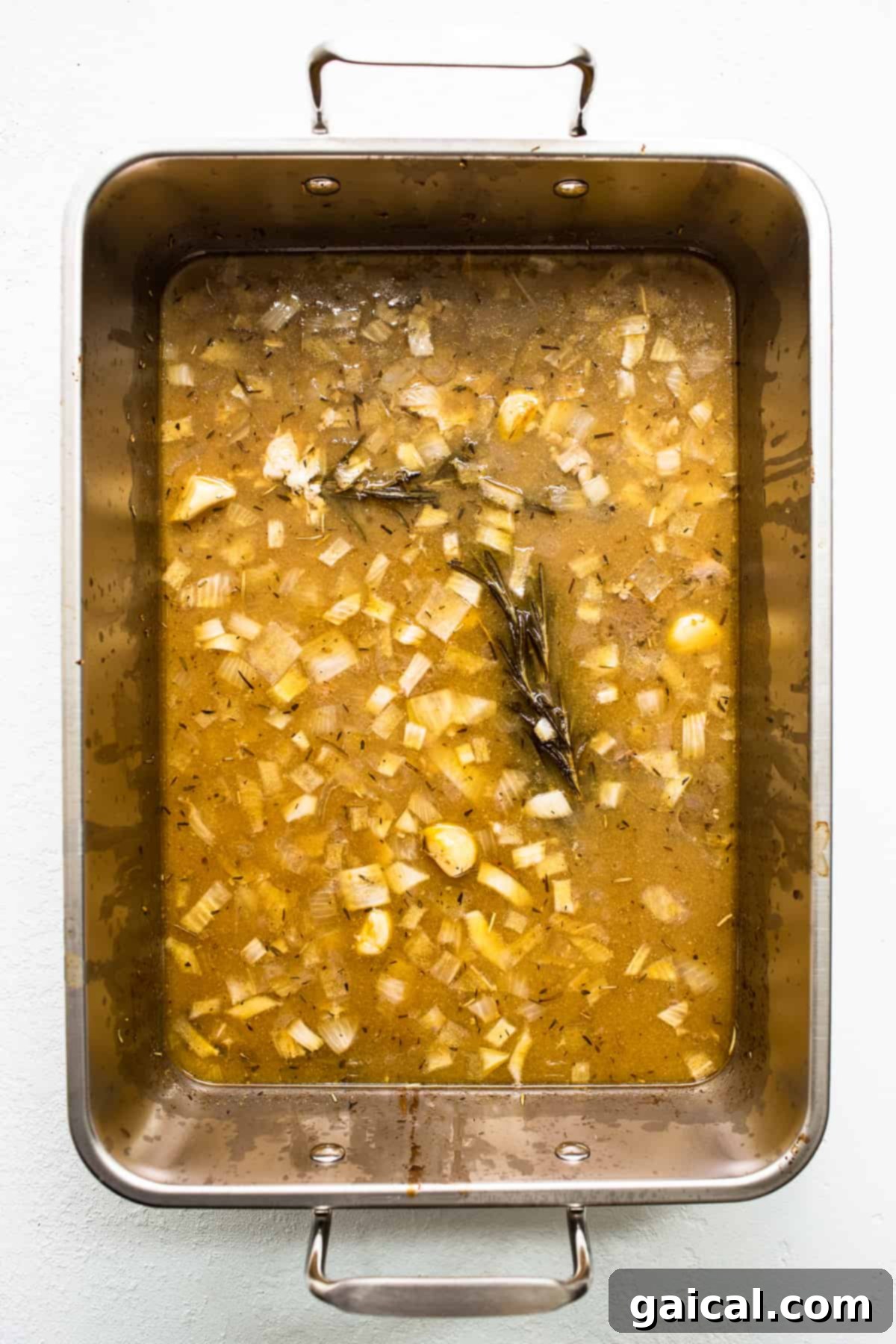
- Gravy Without a Turkey? Absolutely! Life happens, and sometimes you want gravy even if you didn’t roast a whole bird. In this case, you can easily substitute the turkey drippings by using 4 cups of broth instead. To build a rich flavor foundation, we highly recommend sautéing a few tablespoons of finely diced white onion and 2 cloves of minced garlic in a tablespoon of butter or oil in your saucepan before adding the broth. Bring this mixture to a gentle boil, and for an extra aromatic touch, include a few sprigs of fresh thyme. This method creates a deeply savory gravy that stands beautifully on its own.
- Elevate with Classic Gravy Seasonings and Herbs: Don’t hesitate to incorporate your favorite traditional gravy flavorings. Fresh sage, fresh thyme, fresh rosemary, or a delightful blend of all three would work wonders, adding an herbaceous depth. Remember, a significant portion of this recipe’s inherent flavor comes from the basting liquid itself, so taste as you go! For an even richer, more complex taste, consider mixing in some savory roasted garlic.
- Cornstarch vs. Flour: Exploring Thickening Options: My mother often made her turkey gravy with all-purpose flour, and it works similarly well! If you prefer using flour as your thickener, simply replace the cornstarch with an equal amount of flour (start with 2-3 tablespoons, adjusting for desired thickness) and follow the recipe as written. Flour tends to create a slightly more opaque gravy with a classic texture, while cornstarch yields a clearer, shinier finish. Both are excellent choices, so use what you prefer or have on hand.
- For a Thicker Gravy: If you find your gravy isn’t as thick as you’d like after the initial whisking and simmering, achieving a richer consistency is simple. Remove an additional cup of the simmering liquid from the saucepan. In a separate bowl, whisk 1 tablespoon of cornstarch (or flour) into that reserved cup of liquid until completely smooth and lump-free. Then, slowly pour this slurry back into the saucepan with the rest of the gravy, whisking continuously over medium-low heat until it thickens to your desired consistency.
Discover More Holiday Favorites!
Juicy Thanksgiving Meatballs (With Raspberry Sauce!)
Easy Oven-Roasted Turkey Tenderloin
Festive Canned Champagne Cocktail
Grandma Betty’s Swedish Coffee Cake
Caramelized Onion Dip
Storage
One of the many great things about this homemade turkey gravy is its excellent storage capability, ensuring you can enjoy its rich flavor long after the holiday meal. To keep your leftover gravy fresh and delicious, allow it to cool completely to room temperature before transferring it to an airtight container. Stored properly in the refrigerator, it will maintain its quality and taste for up to 3-5 days. This makes it perfect for enhancing subsequent meals or simply enjoying over toast for a comforting snack!
Can You Freeze Turkey Gravy?
Absolutely! You’ll be pleased to know that this turkey gravy freezes exceptionally well, making it ideal for meal prep or saving for future indulgence. Freezing allows you to extend the life of your delicious homemade gravy significantly. Follow these simple steps for successful freezing:
- Cool Completely: Before freezing, it’s crucial to let the gravy cool down entirely to room temperature. This prevents condensation and ice crystal formation, which can affect the gravy’s texture upon thawing.
- Transfer to Container: Once cooled, carefully transfer the gravy into a gallon-size freezer-safe plastic bag or a rigid, airtight freezer-safe container. If using bags, try to lay them flat for more efficient freezer storage.
- Remove Air: If using a bag, press out as much air as possible before sealing to prevent freezer burn. For containers, ensure the lid is tightly sealed.
- Freeze: Place the sealed container or bag in the freezer. Your turkey gravy can be safely frozen for up to 3 months without significant loss of quality.
To reheat frozen gravy: Thaw the frozen gravy overnight in the refrigerator. Once thawed, gently reheat it in a saucepan over medium-low heat, whisking frequently until it’s warmed through and smooth. If it appears too thick, you can add a splash of broth or water to reach your desired consistency. Taste and adjust seasonings as needed.
More of our Favorite…
Delicious Turkey Recipes
- Smoked Turkey Dry Brine
- Smoked Turkey Breast
- Baked Turkey Tenderloin
- Sous Vide Turkey
Serving Turkey Gravy: Beyond the Bird
While turkey gravy is undeniably the perfect partner for your holiday bird, its versatility extends far beyond Thanksgiving dinner. One of the things I truly adore about this recipe is how fantastic it tastes on virtually any cut of meat or side dish. Don’t let any of this golden goodness go to waste – get creative with your leftovers!
Consider drizzling it generously over a succulent baked pork roast or our flavorful spatchcock chicken. It adds a layer of rich, savory depth that elevates everyday meals into something special. And of course, no discussion of gravy would be complete without mentioning its ultimate companion: creamy mashed potatoes. The combination is pure comfort food bliss.
But don’t stop there! Gravy is also wonderful on:
- Stuffing or Dressing: Moisten and enrich every bite.
- Roasted Vegetables: Carrots, green beans, or Brussels sprouts take on new life with a pour of savory gravy.
- French Fries or Poutine: For a delightful indulgence.
- Hot Open-Faced Sandwiches: Perfect for using up leftover turkey and gravy.
- Rice or Noodles: A simple way to add robust flavor to grains.
This gravy isn’t just a condiment; it’s a flavor enhancer that brings warmth and richness to any dish it touches.
How to Make Turkey Gravy from Drippings
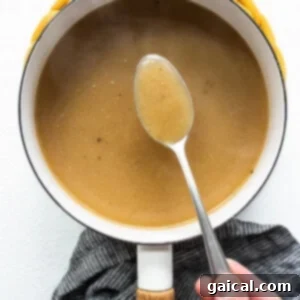
This super flavorful turkey gravy recipe is easily made with turkey drippings, broth, and a little bit of cornstarch. Enjoy!
By: Emily Richter
Pin
Ingredients
- 1 cup turkey drippings, or turkey basting liquid*
- 3 cups turkey or chicken broth
- 2-3 tablespoons cornstarch
Instructions
-
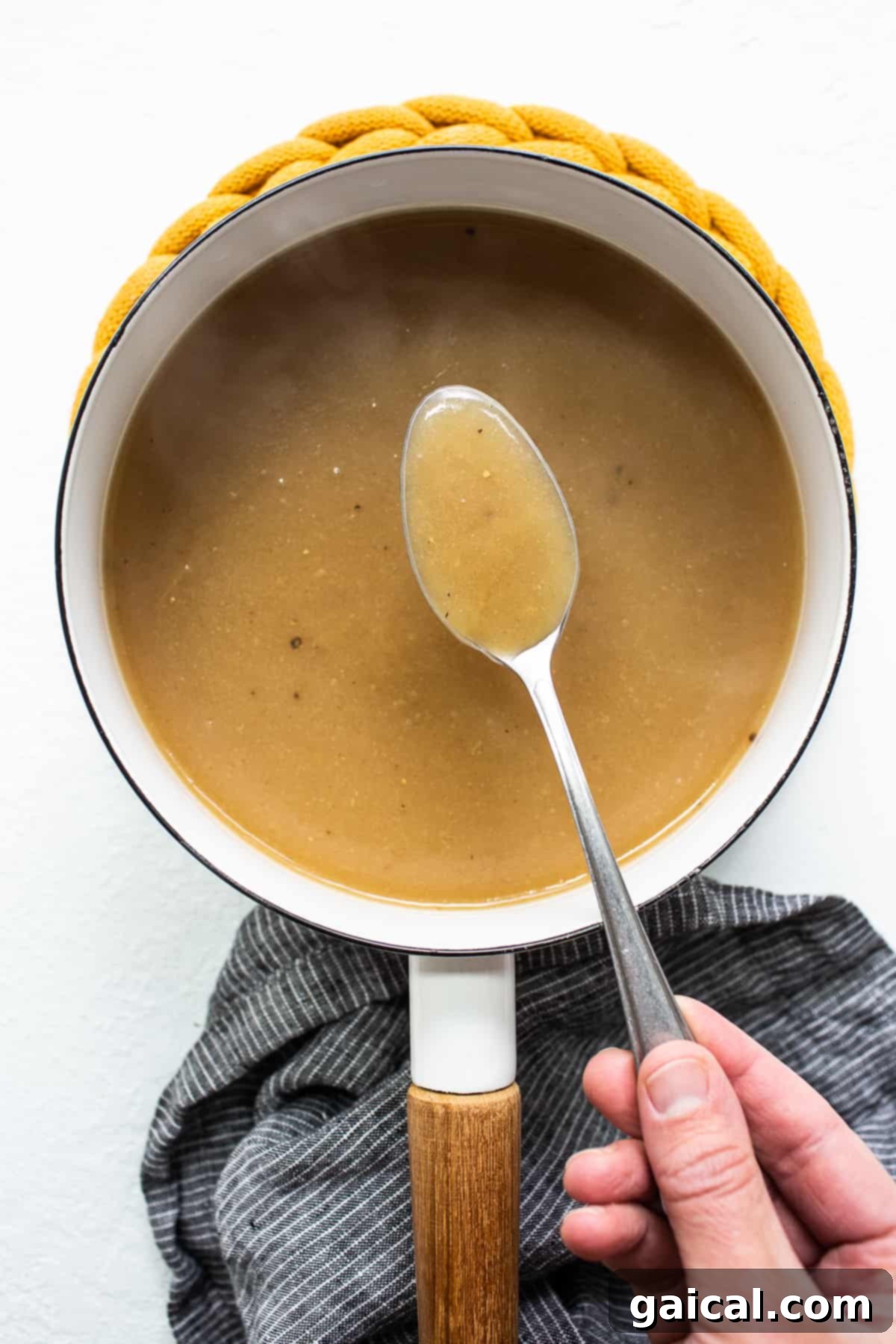
Place the basting liquid and broth into a saucepan and bring to a gentle boil. Remove 1 cup of the liquid and whisk 2 tablespoons of cornstarch into the liquid until there are no lumps.

-
Pour the mixture back into the saucepan and whisk over medium/low heat until the mixture thickens (about 5 minutes). If you wish for a thicker gravy, you can remove 1 cup more of the liquid and add 1 tablespoon of cornstarch to that cup. Whisk and pour back into the saucepan.
-
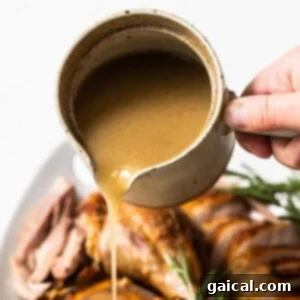
Remove from the heat, season with salt and pepper to taste, and serve immediately with turkey and other delicious sides.
Tips & Notes
- Turkey drippings*: If you want gravy, but didn’t make a turkey, you can use 4 cups of broth instead. We recommend sautéing a few tablespoons of white onion and 2 cloves of minced garlic before adding the broth to the saucepan. Bring the mixture to a gentle boil with a few sprigs of fresh thyme.
- Feel free to add any classic gravy seasoning or herbs to this recipe. Fresh sage, fresh thyme, fresh rosemary, or a mixture would work great. A lot of the flavor for this recipe comes from the basting liquid, so keep that in mind!
Watch It

Watch our step-by-step video to guide you through the process of making perfect turkey gravy!
Nutrition
Nutrition information is automatically calculated, so should only be used as an approximation.
Love this? Leave a comment below!
Don’t forget to tag your posts on social media with the hashtag #fitfoodiefinds, we’d love to see what you’re up to!
Troubleshooting Common Gravy Problems
Even seasoned cooks can encounter a few bumps when making gravy. Here are some common issues and how to easily fix them, ensuring your gravy is always a triumph:
- Gravy is Too Thin: If your gravy hasn’t reached your desired thickness, don’t panic! Simply create another slurry by whisking 1 tablespoon of cornstarch (or flour) with 1/4 cup of cold broth or water until smooth. Gradually whisk this mixture into your simmering gravy, allowing it to cook for another minute or two until it thickens. Repeat if necessary, adding small amounts at a time.
- Gravy is Too Thick: If you’ve over-thickened your gravy, thin it out by whisking in small amounts of warm turkey or chicken broth (or even a little water) until it reaches the perfect consistency. Do this slowly to avoid making it too thin.
-
Lumpy Gravy: Lumps usually form when the thickener isn’t properly whisked into cold liquid before being added to the hot liquid. If you have lumps, you have a few options:
- Vigorously whisk the gravy over heat to break them up.
- Pass the gravy through a fine-mesh sieve or strainer to remove the lumps, then reheat gently.
- Use an immersion blender right in the pot for a super smooth finish.
-
Gravy Lacks Flavor: If your gravy tastes a bit bland, there are several ways to boost its deliciousness:
- Add a splash of dry white wine or sherry and let it simmer for a few minutes.
- Stir in a pinch of dried herbs like sage, thyme, or rosemary.
- A dash of Worcestershire sauce or soy sauce can add a subtle umami depth.
- If you have any leftover roasted turkey bones or scraps, simmer them in the broth for a deeper flavor before making the gravy.
- Gravy is Too Salty: This can happen if your drippings or broth are very salty. To remedy this, add a raw, peeled potato to the simmering gravy and let it cook for 10-15 minutes; the potato will absorb some of the excess salt. Remove the potato before serving. You can also dilute the gravy with unsalted broth or water.
Frequently Asked Questions (FAQ) About Turkey Gravy
Here are some common questions we often get about making and serving the perfect turkey gravy:
-
Q: Can I make this gravy ahead of time?
A: Yes, you can! Gravy can be made up to 2-3 days in advance and stored in an airtight container in the refrigerator. Reheat gently on the stovetop over medium-low heat, whisking constantly. You might need to add a splash of broth or water to achieve the desired consistency as it can thicken in the fridge. -
Q: How do I make this gravy gluten-free?
A: This recipe is naturally gluten-free as written, using cornstarch as the thickener. If you use flour, ensure it’s a gluten-free all-purpose flour blend. Always double-check your broth label to ensure it’s gluten-free as well. -
Q: What if I don’t have enough turkey drippings?
A: If your turkey didn’t yield enough drippings, simply make up the difference with extra turkey or chicken broth. For example, if you only have 1/2 cup of drippings, use 3.5 cups of broth to maintain the overall liquid volume for the recipe. You can also enhance the flavor by sautéing some aromatics like onion and garlic in butter before adding the liquid, as mentioned in the variations section. -
Q: Should I skim the fat from the drippings?
A: It’s generally a good idea to skim most of the excess fat from your turkey drippings before making gravy. Too much fat can make the gravy greasy. You can do this using a fat separator or by chilling the drippings, allowing the fat to solidify on top, then scraping it off. Leaving a small amount of fat can contribute to richness and flavor. -
Q: Can I add wine or spirits to my gravy?
A: Absolutely! A splash of dry white wine, sherry, or even a good brandy can add a wonderful layer of complexity and depth to your gravy. Add it to the saucepan before the broth, letting it simmer for a minute or two to cook off the alcohol and concentrate the flavor.
Conclusion: The Heart of Your Holiday Meal
This homemade turkey gravy, crafted from the rich drippings of your holiday bird, is more than just a sauce; it’s the liquid gold that unifies every element on your plate. Its simple preparation belies its profound impact on your meal, delivering a depth of flavor and a comforting warmth that only a truly homemade touch can provide. From the savory turkey to the fluffy mashed potatoes and vibrant roasted vegetables, a generous pour of this exquisite gravy transforms each bite into a celebration of tradition and taste.
We encourage you to embrace the simplicity and rewarding process of making your own gravy this holiday season. It’s an easy, yet impactful, way to elevate your feast and create lasting memories around the table. With just a few key ingredients and our straightforward steps, you’ll master the art of the perfect turkey gravy, making it an indispensable part of your family’s culinary heritage for years to come. Enjoy the rich, savory satisfaction that only homemade can offer!