
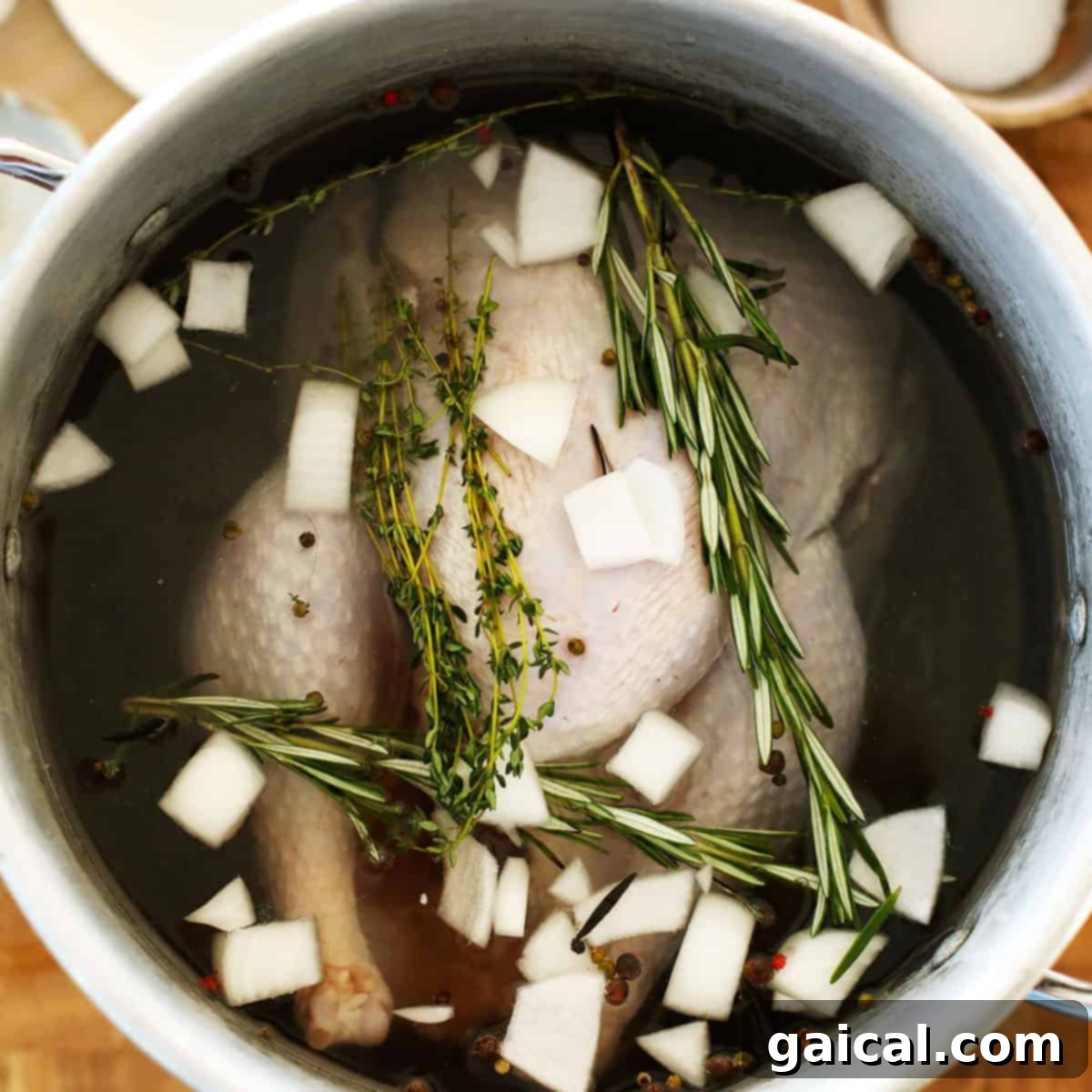
Prepare for the most succulent, flavorful, and incredibly juicy holiday turkey you’ve ever savored with this simple, classic smoked turkey brine recipe. This isn’t just any brine; it’s a carefully crafted mixture designed to transform your turkey into a masterpiece of moisture and taste, ensuring every bite is unforgettable, particularly when destined for the smoker.
While specifically tailored for a show-stopping smoked turkey, the versatility of this smoked turkey brine extends to various other poultry preparations. Feel free to adapt it for our highly-rated baked turkey tenderloin, a savory roasted turkey breast, the modern precision of sous vide turkey, or any other chicken or poultry recipe where you desire an extra boost of tenderness and seasoned depth. It’s the secret weapon for any bird, guaranteeing a truly moist and delicious outcome.
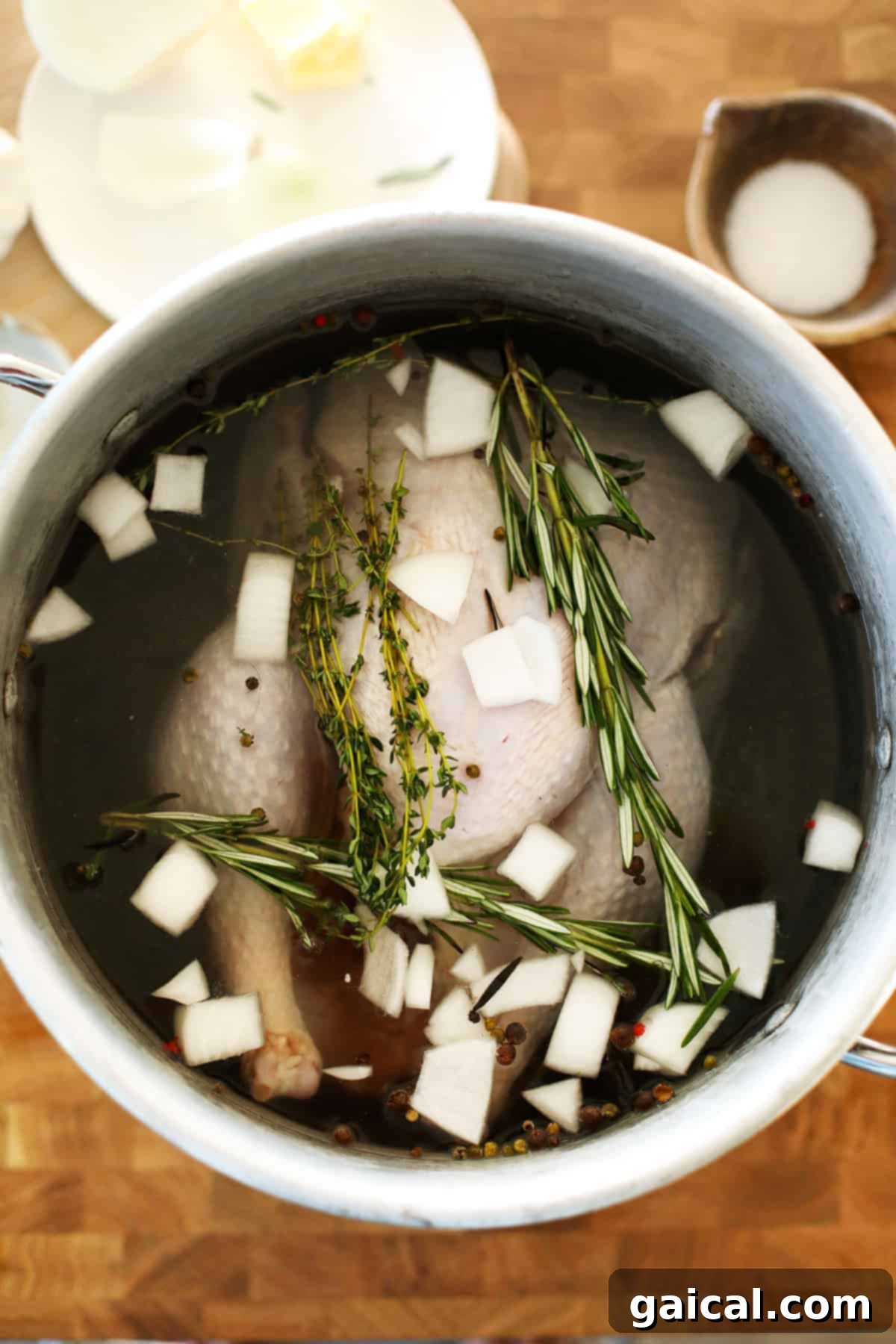
Crafting the Perfect Smoked Turkey Brine for an Unrivaled Juicy Bird
The concept of a turkey brine might sound intimidating at first glance, conjuring images of complex culinary chemistry. However, we’re here to demystify the process. Crafting a simple yet incredibly effective turkey brine for a super juicy smoked turkey is remarkably straightforward. With the right ingredients, appropriate tools, and a bit of planning, you’ll be well on your way to a holiday centerpiece that earns rave reviews. Brining is a centuries-old culinary technique, a method of infusing meat with moisture and flavor before cooking. It’s particularly beneficial for lean meats like turkey, which are prone to drying out during cooking, especially over longer periods or with dry heat methods like smoking.
When a turkey undergoes prolonged exposure to heat, as is common with smoking, it tends to lose a significant amount of its natural moisture. A well-prepared wet brine combats this by infusing the meat with a flavorful liquid, allowing the turkey to absorb extra moisture and seasoning. This process of osmosis causes the turkey meat to swell with brine solution, making it noticeably plumper and more resistant to drying. This results in a bird that’s not only tender but also packed with a savory, aromatic essence that penetrates beyond the surface, right into the deepest fibers of the meat. Imagine cutting into a turkey breast that remains moist and succulent, even after hours in the smoker – that’s the power of this brine.
To Brine or Not to Brine: The Secret to Superior Smoked Turkey
This is indeed an age-old culinary dilemma for many home cooks. Our firm belief, developed through countless holiday meals and experiments, is that the best approach is to experiment and discover your own preferences. However, when it comes to smoking a turkey, our recommendation is unequivocally to wet brine your bird beforehand. The difference in moisture and flavor is truly transformative and, we believe, essential for achieving a top-tier smoked turkey.
For turkeys destined for the oven, especially those roasted quickly, brining might not be as critical. Oven roasting typically involves higher, more direct heat over a shorter period, which can be less drying than smoking. Many find that a good rub and careful cooking are sufficient for an oven-roasted bird to be flavorful and juicy. But for smoking, where the turkey sits in the smoker for several hours at lower temperatures, a brined bird unquestionably holds significantly more moisture than an un-brined turkey. This moisture barrier is essential for preventing dry, stringy meat after a long smoke, ensuring a tender and palatable result.
Wet brining also serves as a fantastic vehicle for flavor. The aromatic ingredients in our brine (herbs, garlic, onion, spices) are slowly absorbed into the meat along with the moisture, infusing the turkey with a complex savory profile that goes beyond mere surface seasoning. While this guide focuses on wet brining, understanding the nuances of other methods is also valuable. For those curious about the merits and application of a dry brine, a dedicated post exploring this technique is currently in the works! Stay tuned for more insights into achieving different textures and flavor profiles for your holiday poultry.
Selecting the Ideal Turkey for Your Brining Adventure
The foundation of an exceptional smoked turkey begins long before the brine is even mixed. It starts with choosing the right bird. This particular brine recipe is perfectly calibrated for a 12-15 pound turkey that is “untreated.” But what exactly does “untreated” signify in the world of poultry, and why is it so important?
Many commercially available turkeys are pre-injected with a solution, often a salt-water brine, a butter-based mixture, or other flavor enhancers, to boost their flavor and moisture content. While this can be convenient for those seeking a shortcut, attempting to brine a turkey that has already been treated is, quite simply, a waste of your valuable time and carefully selected ingredients. A bird that’s already plumped with a solution will not effectively absorb your homemade brine, diminishing the impact of your efforts and potentially leading to an overly salty or unevenly flavored result.
To ensure you’re starting with a clean slate and giving your homemade brine the best chance to work its magic, always take a moment to meticulously check the turkey’s packaging. Look for labels that clearly state “untreated,” “no added solutions,” “minimally processed,” or simply confirm that the bird is “naked” and free of any pre-treatment. This small yet crucial step is vital for allowing your carefully prepared brine to work its magic fully, guaranteeing maximum flavor penetration and a genuinely juicy result. Whether you choose a fresh or frozen bird, ensure it meets this “untreated” criterion.
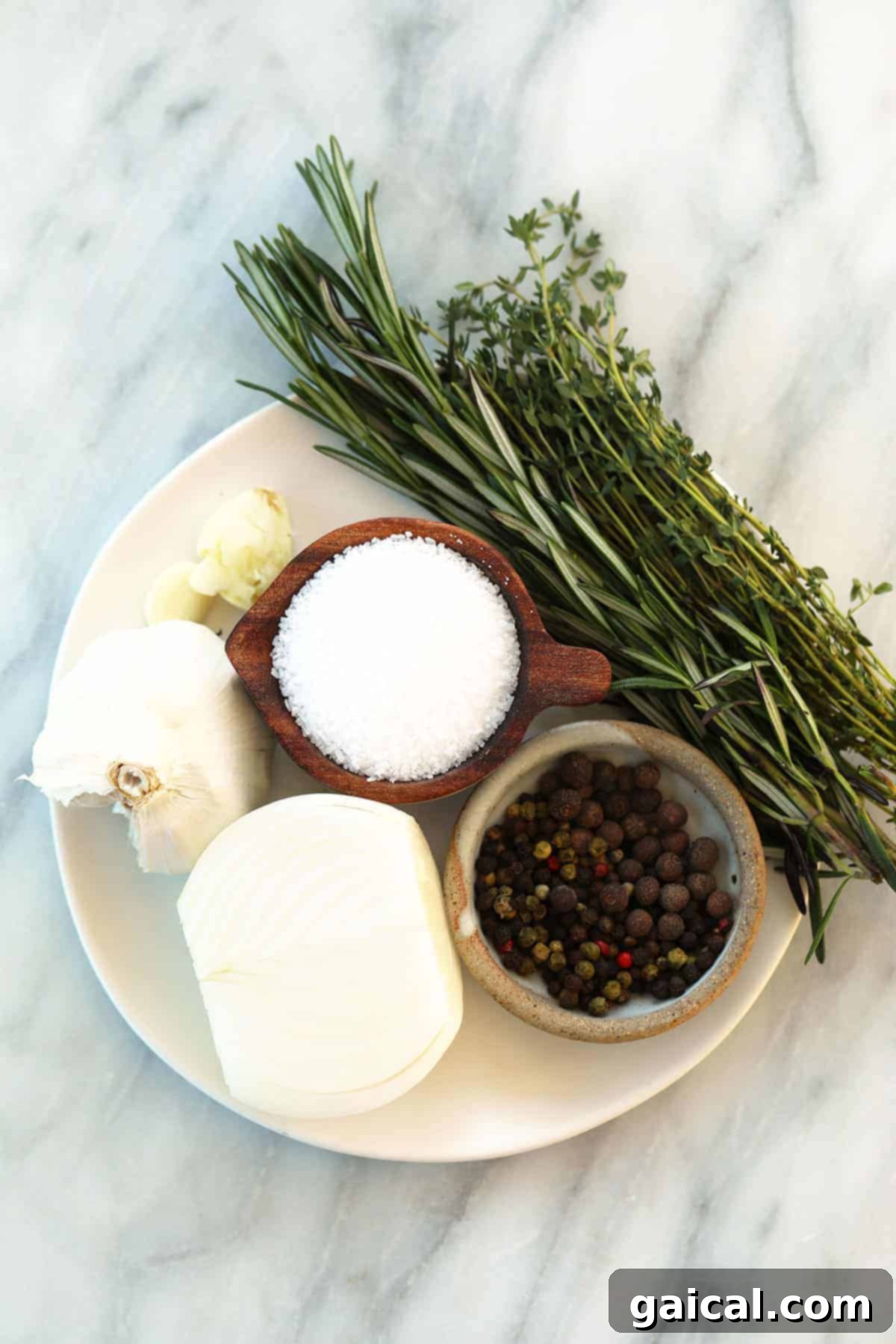
Essential Ingredients and Tools for Your Perfect Turkey Brine
Gathering your supplies is the first exciting step towards your perfectly moistened and exquisitely flavored Thanksgiving or holiday turkey. You’ll need a handful of accessible brine ingredients and a few fundamental tools to get started. Before you dive into preparation, remember a crucial preliminary step that will save you stress later:
Pro Tip: Prior to mixing your brine, ensure you’ve cleared a dedicated, spacious area in your refrigerator for your brining container! A full container can be surprisingly heavy and awkward to maneuver if space is tight! Planning ahead is key for a smooth brining process.
Choosing the Right Brining Vessel: A Huge Pot (or Alternative)
This is paramount, as without an adequate container, your brining journey will hit an immediate roadblock. The vessel must be large enough to fully submerge your turkey in the brine solution. For a 12-15 pound turkey, a 20-30 quart capacity is generally ideal. While a large stock pot is our preferred method, especially for its ease of cleaning and containment, several other effective options are available:
- A Food-Grade 5-Gallon Bucket: An excellent, often economical choice for larger birds. It’s crucial to ensure the bucket is specifically food-grade and has never been used for storing chemicals or non-food items, as residues can contaminate your turkey.
- Specialized Brining Bag: These heavy-duty, leak-proof bags are perfect for fitting irregularly shaped turkeys and can save valuable refrigerator space by conforming to the shape of the bird. For added security and to prevent any potential leaks, always place a brining bag within a large roasting pan or sturdy container.
- A Large Cooler: While some home cooks opt for a large cooler, we advise caution with this method. Maintaining a consistently safe temperature (below 40°F / 4°C) can be challenging without constant monitoring and frequent ice replenishment, making it a less reliable option for overnight brining and potentially posing a food safety risk. If using a cooler, ensure it is impeccably clean and that the ice is refreshed regularly.
If your chosen container comes with a lid, that’s ideal for maintaining temperature and preventing spills. If not, a tight covering of plastic wrap or even a clean dish towel secured with twine can serve as an effective seal, preventing spills and keeping your fridge odors contained.
The Star of the Show: Your Turkey
When selecting your turkey, consider the number of guests you plan to serve. A good rule of thumb is 1 to 1.5 pounds per person to account for bone weight and ensure ample leftovers. Remember our earlier advice: opt for an “untreated” bird, free from any pre-injected solutions. This is non-negotiable for our brine to truly shine, allowing the natural flavor of the turkey and the brine’s aromatics to develop fully.
And for goodness sake, before you gently lower your bird into the aromatic brine, always remember to remove the giblets and neck from both the main body cavity and the smaller neck cavity. These often come in a small bag and can be saved for making a rich gravy or flavorful stuffing if desired, but they certainly don’t belong in the brine!
This particular brining recipe is specifically formulated for a 12-15 pound turkey. If you find yourself with a larger bird, simply scale up the brine ingredients proportionally to ensure full submersion and adequate seasoning. Don’t fear an abundance of turkey – leftovers are a culinary gift, offering delicious meals for days! Did you know you can now even order a fresh turkey directly from Amazon? It’s true, making holiday prep even easier with convenient home delivery.
Don’t Waste a Drop: Transform Leftovers! Once your magnificent smoked turkey has been enjoyed, transform any remaining meat into incredibly comforting dishes. Make our incredibly comforting Tuscan turkey soup or a refreshing turkey salad for quick and easy meals. Trust me, you’ll be glad you did!

Recommended Tool
Thermoworks Thermapen
We absolutely swear by using a high-quality meat thermometer whenever cooking any cut of meat, especially large birds like turkey. Accurate temperature readings are crucial for food safety and preventing dry, overcooked meat. The Thermapen is our absolute go-to, consistently delivering accurate readings for perfectly cooked results every single time. It’s an investment that pays off in delicious, safely cooked food.
The Foundation: Salt
Salt is the cornerstone of any effective wet brine, primarily responsible for the osmosis process that draws liquid into the turkey’s cells, ensuring moisture retention and tenderization. For wet brining, both kosher salt and common table salt can be used interchangeably in terms of their brining function. However, we typically prefer kosher salt for its larger crystal size, which makes it easier to measure accurately and less likely to be over-packed. Just ensure you’re consistent with your measurements – if a recipe calls for kosher salt, do not substitute with the same volume of table salt directly without adjusting quantities, as table salt is denser and can lead to an overly salty bird. This brine recipe uses kosher salt as its base for optimal flavor and texture.
Aromatic Delights: Fresh Herbs
The magic of this smoked turkey brine largely comes from its aromatic components. We specifically call for fresh rosemary and fresh thyme, whose earthy, slightly piney notes beautifully complement turkey and stand up well to the smoky environment. The volatile oils in fresh herbs release a vibrant aroma that permeates the bird. However, don’t let the absence of fresh herbs deter you! Dried herbs are a perfectly acceptable substitute and will still impart wonderful flavor. As a general rule, use about one-third the amount of dried herbs compared to fresh, as their flavor is more concentrated. This isn’t a recipe where the distinction between dry and fresh will dramatically alter the overall success, though fresh herbs do impart a brighter, more vibrant aroma and a visually appealing touch.
For an additional layer of complexity and a subtle, almost floral undertone, consider adding a few bay leaves to your brine. Their quiet contribution adds depth without overpowering the other flavors, elevating your turkey’s taste profile with a hint of herbaceousness that lingers beautifully after smoking.
Pungent & Sweet: Garlic + Onion
Garlic and onion are the unsung heroes of this turkey brine, infusing it with a foundational layer of savory flavor that builds a robust base. We recommend using fresh garlic, lightly smashed to release its potent oils and maximize flavor extraction, and a crisp white onion, roughly chopped. However, flexibility is key in the kitchen! If fresh isn’t available, pre-minced garlic (use slightly more for intensity) or even garlic powder can work in a pinch (adjusting quantities, of course). Similarly, feel free to use a different color onion, such as yellow or red, depending on what you have on hand; their flavor profiles are subtly different but all contribute wonderfully to the brine’s savory depth.
Spicy Kick: Peppercorns
Whole peppercorns are included to add a subtle yet distinct peppery bite to your bird, enhancing its savory characteristics and providing a gentle warmth. Black peppercorns are standard, offering a classic robust flavor, but a mix of various colored peppercorns (like white, green, and pink) can also introduce a more complex, nuanced spice profile. If you don’t have whole peppercorns on hand, a fun and equally effective way to add a bit of warmth and spice to your brine is to include whole cloves. Their pungent, sweet, and slightly woody flavor pairs exceptionally well with poultry, adding an unexpected but delightful aromatic dimension to the turkey.
Frequently Asked Questions About Turkey Brining
Our classic turkey brine recipe intentionally omits sweet elements to allow the savory herb and spice flavors to shine brightly, especially complementing the smoky profile. However, if you desire a touch of sweetness, wish to promote better skin browning (as sugar caramelizes beautifully), or want to balance the saltiness, adding sugar can be a fantastic option. You can dissolve about 1/4 cup of brown sugar into the warm water along with the salt. Alternatively, for a subtle fruity note, incorporate 1/2 cup of apple juice or apple cider into your brine solution before adding the turkey. Both options contribute to a delicious glaze on the skin while also aiding in moisture retention through osmosis.
Yes, absolutely. For optimal results and food safety, your turkey should be mostly, if not completely, thawed before you introduce it to the brine. While a few slightly frozen spots won’t completely ruin the process, a mostly thawed bird allows for superior brine absorption and ensures you can properly remove the innards and prepare the cavity. Attempting to brine a fully frozen turkey will significantly hinder the brine’s ability to penetrate the meat effectively, leading to uneven seasoning and moisture distribution. Plan several days for thawing in the refrigerator (roughly 24 hours per 4-5 pounds of turkey).
The duration of brining is crucial for achieving the desired effect. If you’re going to invest the time and effort into wet brining a turkey, letting it brine overnight, or for a minimum of 12-24 hours for a 12-15 lb bird, will yield the most impactful results. This extended period allows the salt and aromatics to fully penetrate the meat, guaranteeing maximum moisture and flavor saturation. Avoid brining for much longer than 24 hours, especially with a salty brine, as the turkey can become overly seasoned or develop a slightly “cured” texture that might not be desirable.
For serious food safety reasons, it is strongly advised against reusing turkey brine. Once the raw turkey has been submerged, the brine becomes contaminated with bacteria from the poultry. Even if you attempt to boil the brine, it carries a significant risk of foodborne illness, as not all bacteria or toxins may be eliminated. Always discard used brine immediately after removing the turkey. It’s a single-use solution.
This recipe is designed for a 12-15 pound turkey, using 2 gallons of water. For a smaller bird (e.g., 8-10 pounds), you might reduce the water and salt by about a quarter to a third, maintaining the same ratio of aromatics for flavor. For a larger turkey (e.g., 18-20 pounds), scale up the ingredients proportionally. The critical factor is ensuring the turkey is fully submerged in the brine, so adjust the total liquid volume accordingly, while keeping the salt concentration consistent. It’s better to have too much brine than not enough to cover the bird.
Injecting a turkey involves using a syringe to directly inject flavorful liquids into the meat. While it offers a quicker way to add moisture and flavor, particularly to the breast, it doesn’t achieve the same deep, even penetration throughout the entire bird as a proper wet brine. Brining tenderizes and seasons more uniformly, whereas injection can be spotty. For a truly succulent and uniformly flavored smoked turkey, we recommend the wet brine method.
Pair with Our
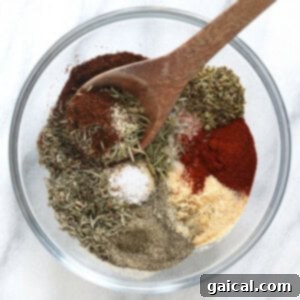
Homemade Turkey Seasoning
Elevate your turkey further by ditching store-bought seasoning and using our most Flavorful Turkey Seasoning. Crafted with 9 pronounceable ingredients like garlic powder, brown sugar, and kosher salt, it’s the perfect complement to your brined bird, adding an incredible outer layer of flavor and aroma.
Step-by-Step Guide: How to Brine Your Turkey for Smoking
Brining a turkey is a rewarding process that, when followed correctly, yields incredible results. It’s not just about adding moisture; it’s about infusing deep, complex flavors that will make your holiday meal truly stand out. Here’s a detailed, step-by-step guide to prepare your turkey for the ultimate smoked experience:
- Prepare Your Brining Container: Begin by thoroughly cleaning and sanitizing your chosen brining vessel – whether it’s a large pot, a food-grade bucket, or a brining bag placed securely within a roasting pan. Ensure the container is amply sized to comfortably accommodate your entire turkey and the full volume of brine, with sufficient headspace to prevent any accidental overflows. Crucially, confirm that the container, once filled and heavy, will fit comfortably and securely within your refrigerator. This foresight prevents last-minute logistical headaches.
- Ready the Turkey: Carefully remove the turkey from its packaging, making sure to discard any absorbent pads. Reach into both the large main body cavity and the smaller neck cavity to locate and extract the giblets (heart, liver, gizzard) and the neck. These can be reserved for making a rich gravy or flavorful stock, if desired, but they must be removed before brining. Inspect the bird for any excess fat or loose skin you wish to trim, then pat the turkey thoroughly dry with paper towels to prepare it for handling.
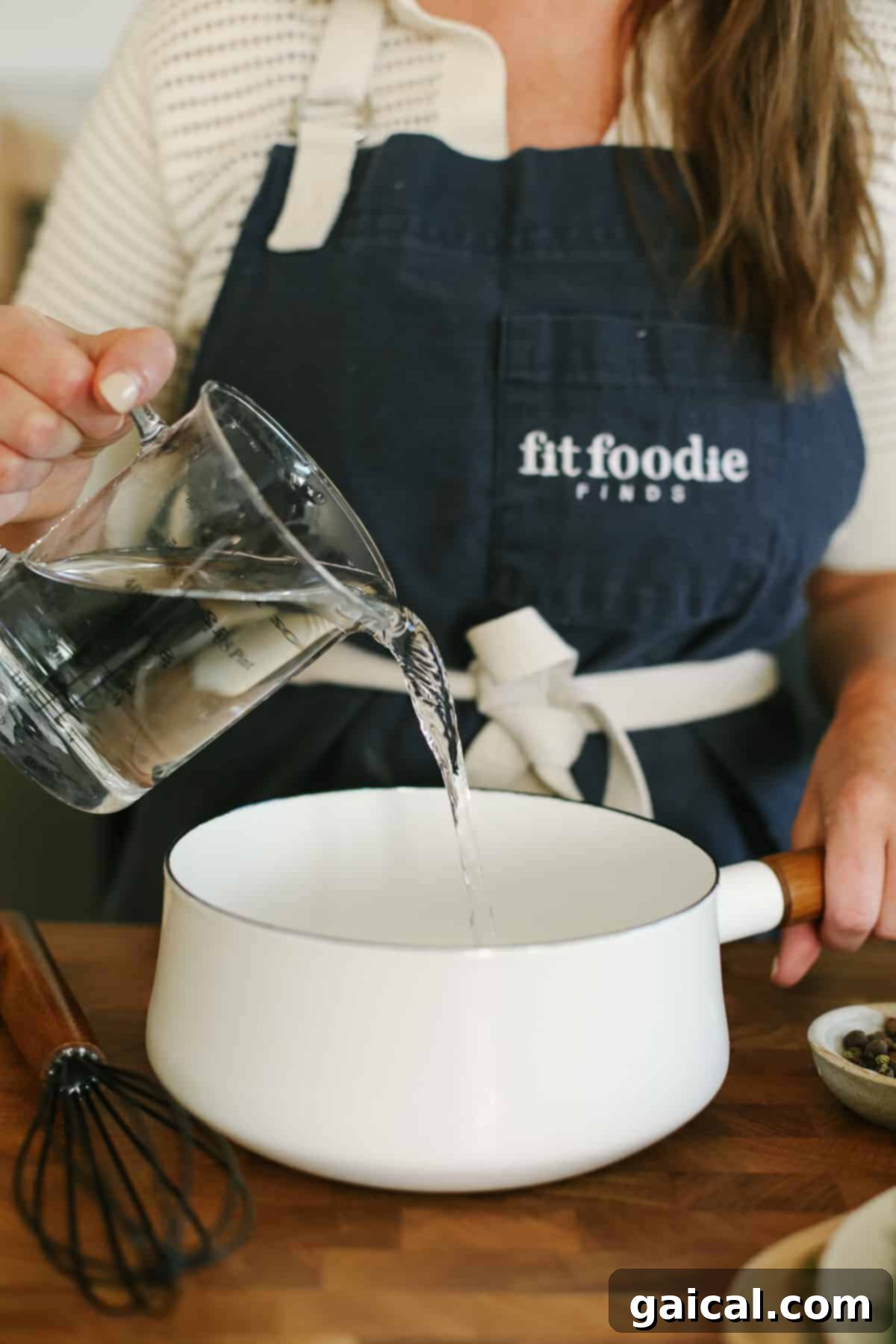
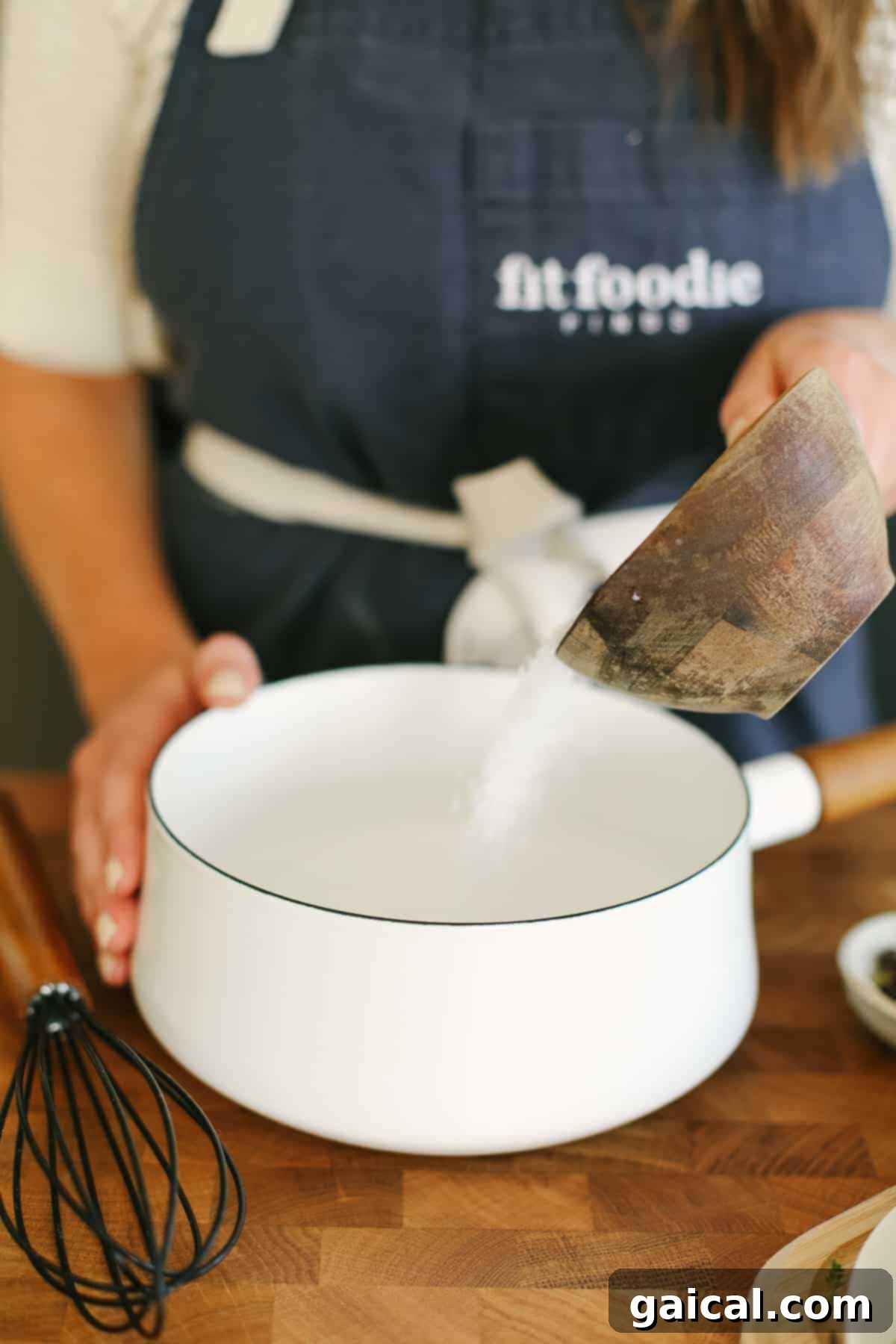
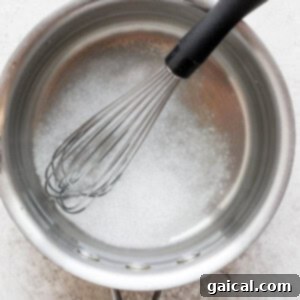
- Dissolve the Salt for the Brine Base: For efficient and complete salt dissolution without having to heat gallons of water, measure out 2 cups of the total water required for the brine. Pour this portion into a small saucepan. Add the full 1.5 cups of kosher salt to the saucepan. Gently heat the mixture over medium-low heat, stirring continuously with a whisk until the salt is completely dissolved and the solution is clear. It’s essential not to bring this solution to a boil; we just want enough warmth to aid dissolution. Once dissolved, remove from heat and set aside to cool slightly to room temperature.
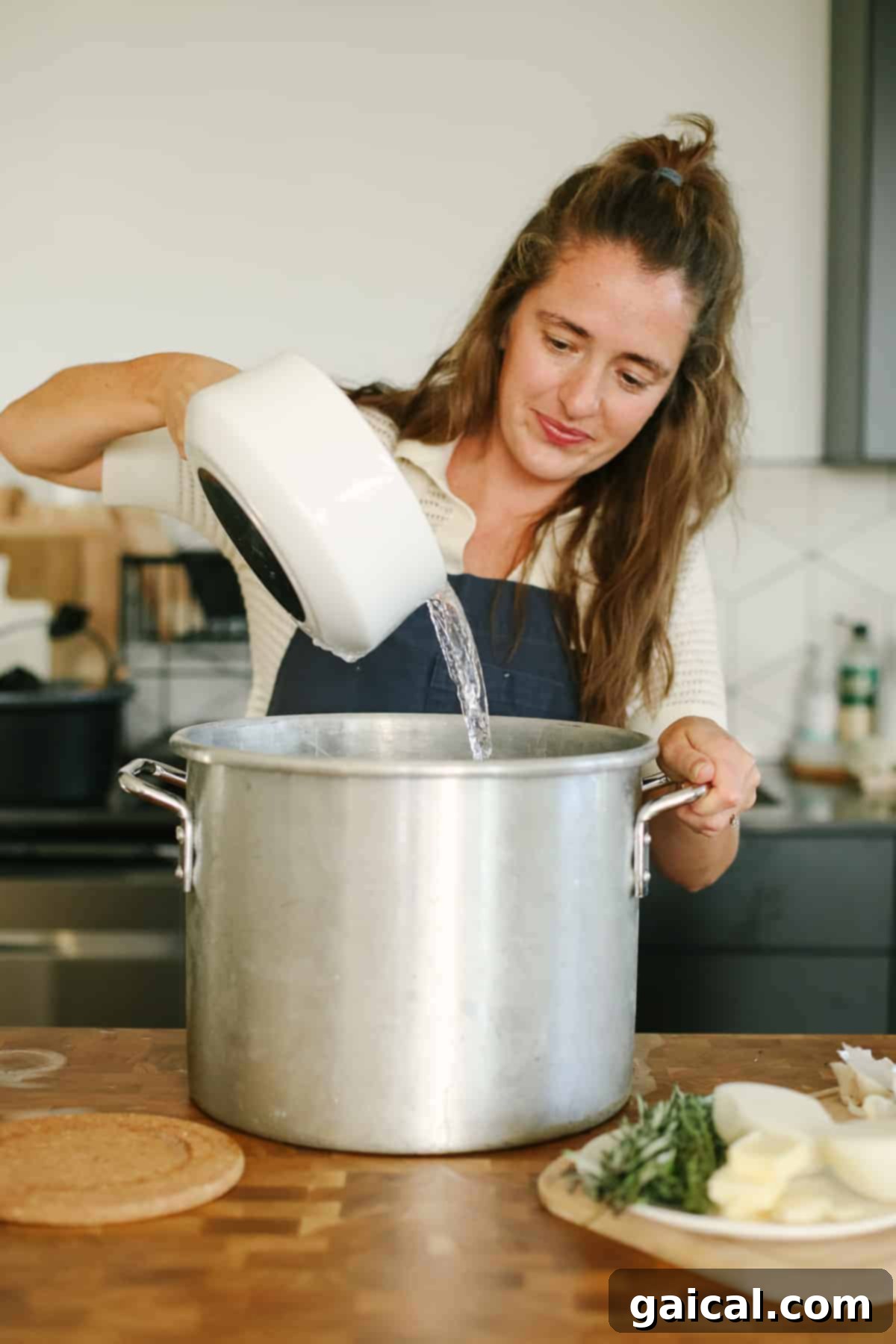
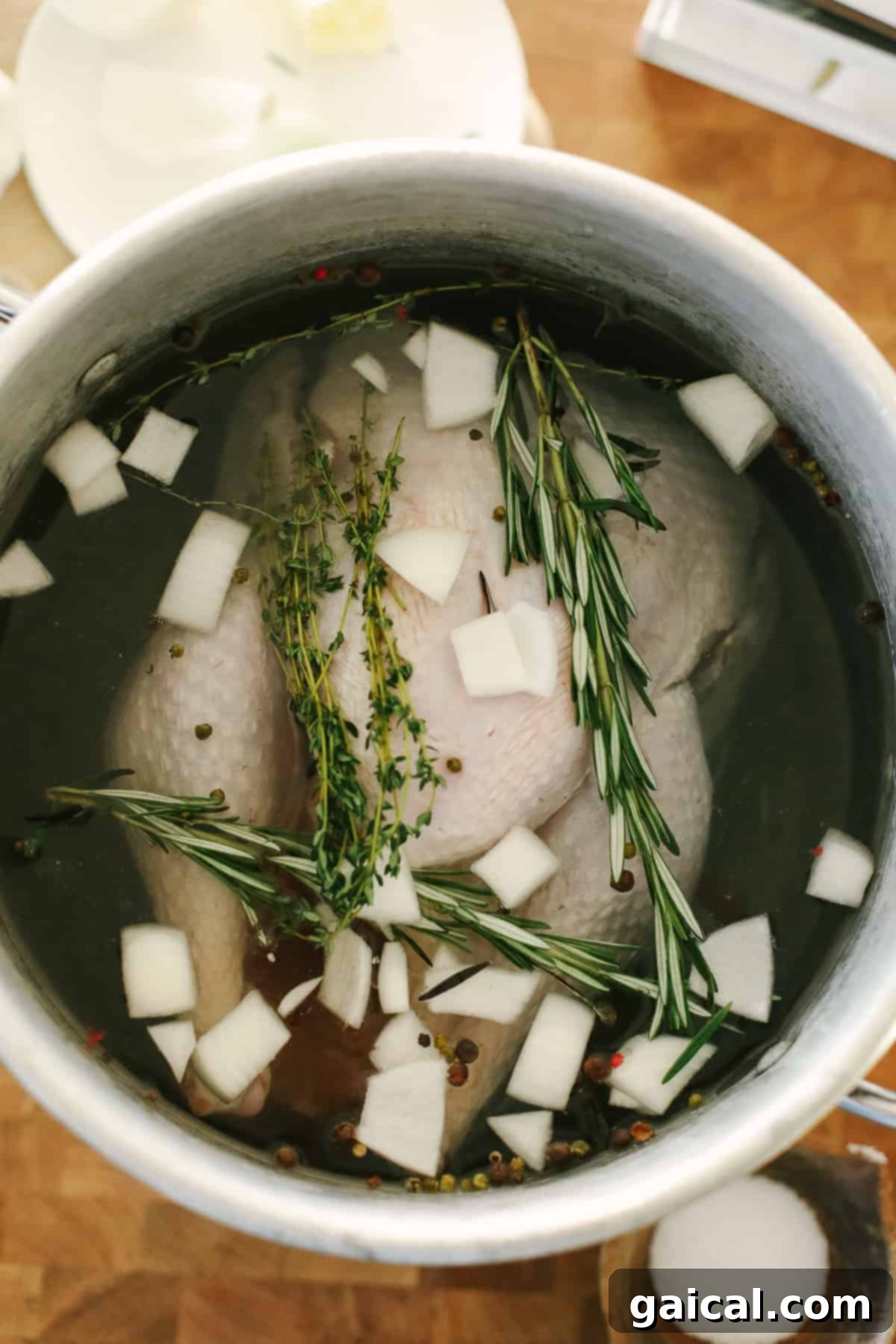
- Combine All Brine Ingredients: In your large brining container, pour in the remaining 1.75 gallons of cold water (or enough to total 2 gallons with the dissolved salt water). Add the now-cooled salt solution to the container and whisk thoroughly to ensure an even distribution of salt throughout the entire liquid. Next, incorporate the rest of your aromatic ingredients: the roughly chopped onion, lightly smashed garlic cloves, whole peppercorns, optional whole cloves, fresh thyme sprigs, and fresh rosemary sprigs. Give the entire mixture another good stir to integrate all the flavors.
- Submerge the Turkey: Gently place your prepared turkey into the brine solution, breast-side down if possible, which helps keep the breast meat moist. It is absolutely critical that the turkey is entirely submerged in the brine. If parts of the bird float to the surface, you can use a plate, a heavy, food-safe object (like a few sealed cans), or even a large clean rock to weigh it down, ensuring full and constant contact with the brine. This ensures even seasoning and moisture absorption across the entire bird.
- Refrigerate for Optimal Brining: Temperature control is paramount for both food safety and effective brining. Once the turkey is fully submerged, immediately cover the brining container with a lid or plastic wrap and transfer the entire setup to your refrigerator. It must remain chilled at or below 40°F (4°C) throughout the entire brining period to prevent bacterial growth. Brine the turkey for 12-24 hours, ideally overnight, for best results in flavor and moisture absorption. Avoid leaving it at room temperature, as this poses a significant food safety risk. While some people attempt to brine in a cooler with ice, maintaining consistent, safe temperatures can be challenging and is generally less reliable than refrigeration.
- Discard Brine and Prep for Smoking: When the brining period is complete, carefully remove the turkey from the brine and place it in a large roasting pan or on a clean cutting board. Immediately discard all of the used brine down the drain; it is not safe to reuse. Under cool running water, thoroughly rinse the turkey inside and out, making sure to flush the cavities, to remove any excess salt or residual herbs from the surface. This step is vital to prevent an overly salty final product. Finally, pat the entire bird absolutely dry, both inside and out, with paper towels – a dry skin ensures crispy, beautifully browned results when smoking, and helps any rubs adhere better. Your turkey is now perfectly prepped and ready to proceed with your chosen smoked turkey recipe.
Your Next Step
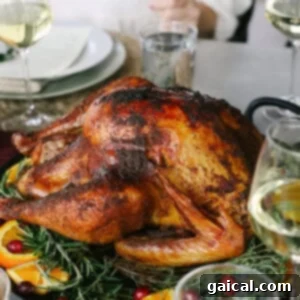
The Ultimate Smoked Turkey Recipe
Once your turkey is perfectly brined and patted dry, it’s time to bring it to the smoker and finish the process. Follow our comprehensive guide to the Ultimate Smoked Turkey Recipe for specific instructions on smoking times, temperatures, and achieving that perfect smoky flavor and golden-brown skin. This combination of brining and proper smoking will yield a truly unforgettable meal.
Discover More Delicious…
Related Turkey Recipes for Your Holiday Table
- Ultimate Smoked Turkey Recipe: Your comprehensive guide to smoking a whole turkey.
- Smoked Turkey Breast: Perfect for smaller gatherings or when you just want white meat.
- Sous Vide Turkey: A modern, incredibly precise way to achieve ultimate tenderness.
- Smoked Turkey Legs: A fun, flavorful option that’s a hit with kids and adults alike.
Rating: 5 from 1 vote
Smoked Turkey Brine Recipe
Unlock the secret to the most incredibly juicy and deeply flavorful smoked turkey with this easy-to-follow brine recipe. Designed to keep your bird moist and tender through hours of smoking, this brine is your key to a memorable holiday meal. Get ready to impress with minimal effort!
Pin Recipe
Print Recipe
Ingredients
- 2 gallons (approx. 7.5 liters) water, separated
- 1.5 cups kosher salt
- ½ large white onion, roughly chopped
- 5 cloves garlic, lightly smashed
- 1 tablespoon whole black peppercorns
- 1 tablespoon whole cloves (optional, for extra warmth and spice)
- 3 sprigs fresh thyme (or 1 tsp dried thyme)
- 3 sprigs fresh rosemary (or 1 tsp dried rosemary)
- 12-15 lb. untreated turkey, giblets and neck removed
- Optional: 1/4 cup brown sugar or 1/2 cup apple juice (for sweetness and enhanced browning)
Instructions
-
1. Prepare Your Container: Ensure your large brining pot (20-30 quart) or alternative vessel is thoroughly clean and ready. Verify that it will fit in your refrigerator once full, along with ample space for the turkey.
-
2. Dissolve Salt for Brine Base: Take 2 cups of water from the total 2 gallons and pour into a small saucepan. Add the 1.5 cups of kosher salt. Heat over medium-low heat, whisking constantly until the salt is completely dissolved. Do not boil. Remove from heat and allow to cool slightly to room temperature.

-
3. Combine Brine: In your large brining pot, combine the cooled salted water with the remaining 1.75 gallons of cold water (or enough to reach 2 gallons total). Whisk thoroughly to ensure a uniform mixture.
-
4. Add Aromatics: Add the chopped onion, smashed garlic, whole peppercorns, whole cloves (if using), fresh thyme sprigs, and fresh rosemary sprigs to the pot. Stir gently to incorporate all the aromatic ingredients.
-
5. Submerge Turkey: Ensure your 12-15 lb turkey has its giblets and neck removed. Carefully lower the turkey into the prepared brine solution in the pot. It is crucial that the turkey is completely submerged. Use a clean plate or a heavy, food-safe object to weigh it down if necessary, ensuring full contact with the brine.
-
6. Refrigerate: Cover the pot securely and immediately place it in the refrigerator. Brine the turkey for a minimum of 12 hours, and up to 24 hours, ensuring the temperature remains consistently cold (at or below 40°F / 4°C). This overnight brining is ideal for maximum moisture and flavor.
-
7. Prepare for Smoking: After the brining period, carefully remove the turkey from the brine and immediately discard all of the used brine. Rinse the turkey thoroughly, both inside and out, under cool running water to remove any excess salt and surface aromatics. Pat the entire bird completely dry with paper towels. Your turkey is now perfectly prepared for your smoked turkey recipe.

Watch the Brining Process
Nutrition Information (Approximate)
Calories: 76 kcal
Carbohydrates: 16 g
Protein: 5 g
Fat: 1 g
Fiber: 3 g
Sugar: 4 g
Please note: Nutrition information is an estimate based on ingredients, assuming a 12-15 lb turkey and calculated per serving (approx. 10 servings from 12-15lb turkey). It should be used as an approximation only and may vary depending on exact ingredients and preparation.
Loved this recipe? Leave a comment below!
Don’t forget to share your culinary creations on social media with the hashtag #fitfoodiefinds. We can’t wait to see your perfectly brined and smoked turkeys!