
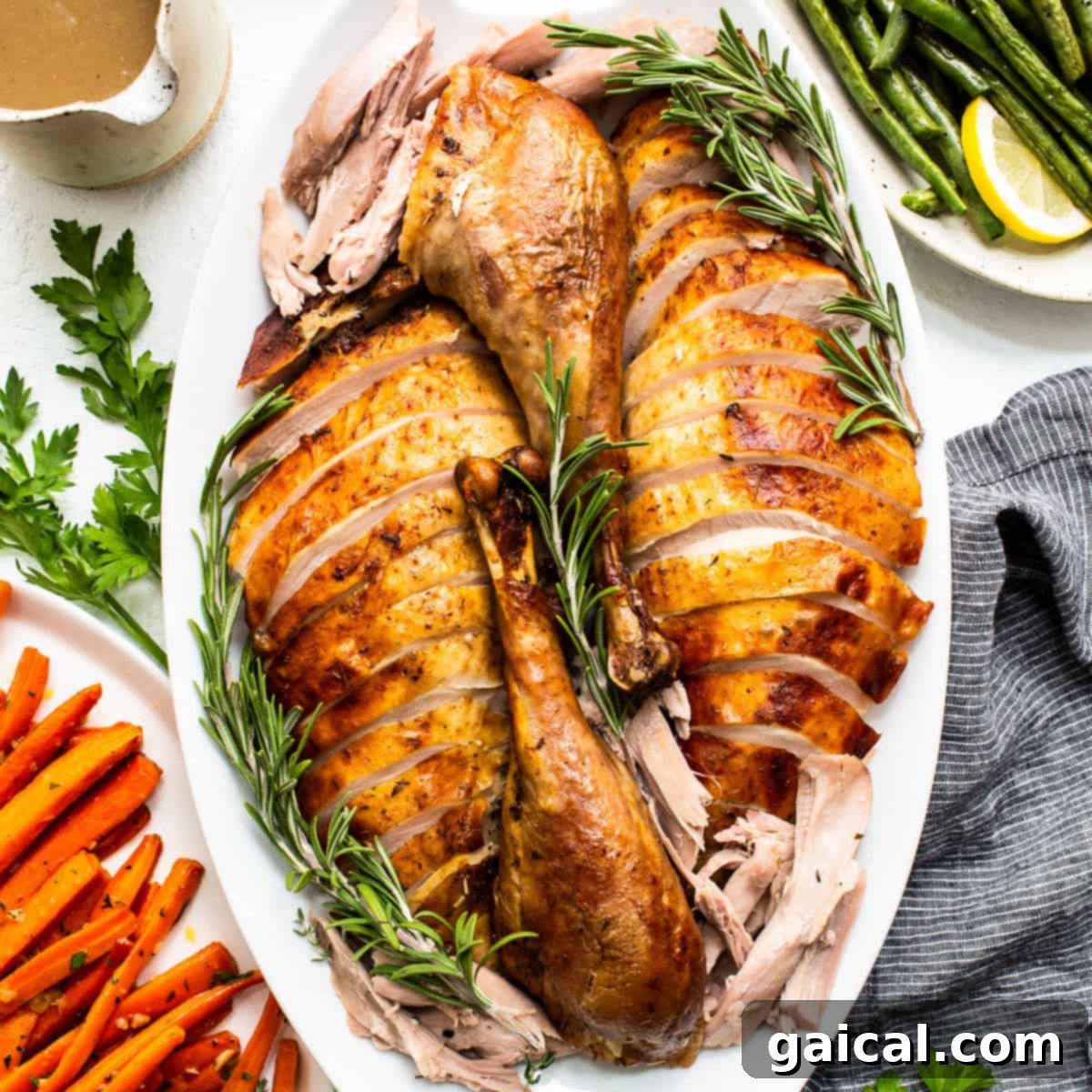
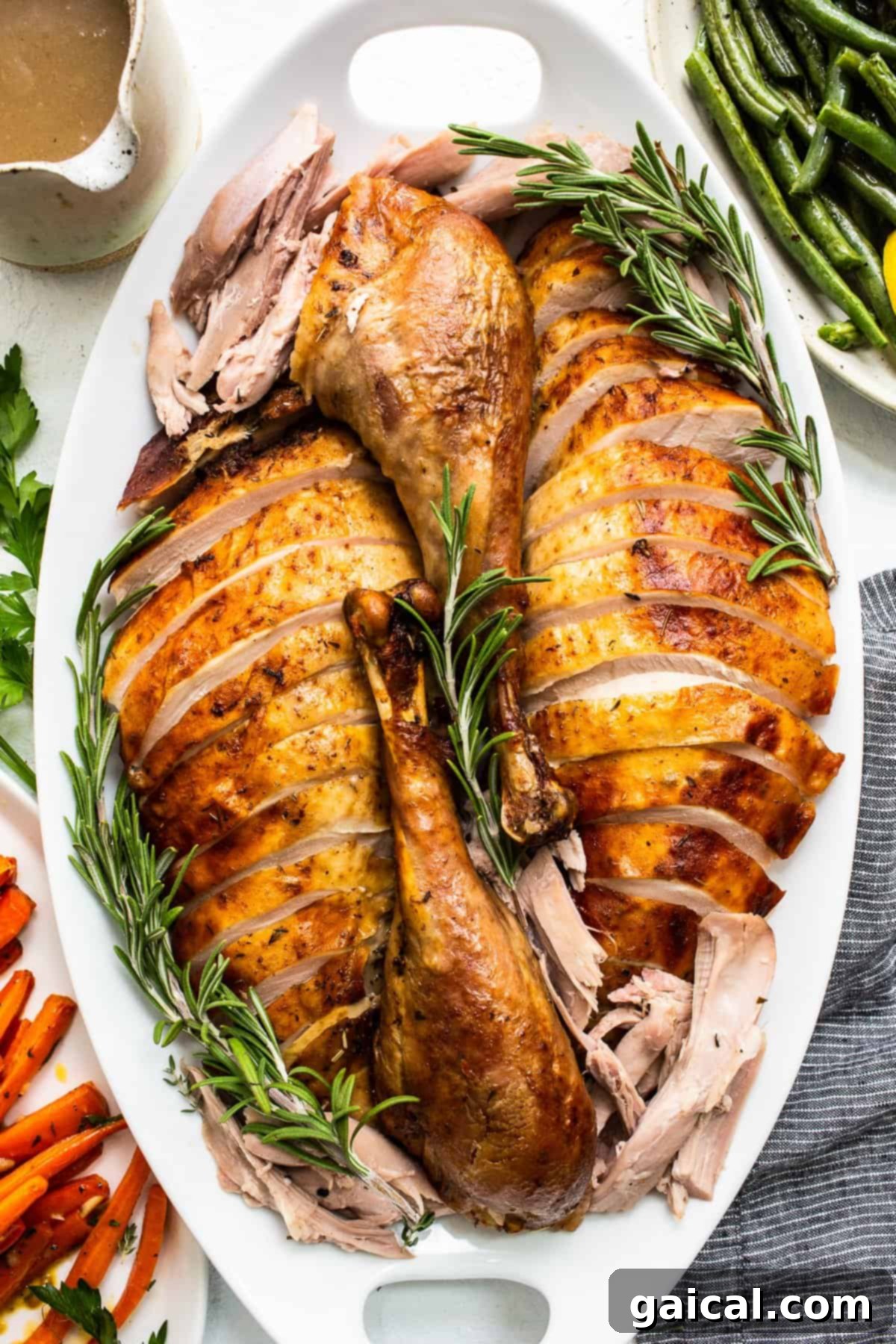
Prepare to impress your guests this holiday season with the ultimate Thanksgiving turkey recipe. This comprehensive guide walks you through every step, from selecting the perfect bird to achieving a beautifully golden, crispy skin and incredibly tender, juicy meat. Say goodbye to dry, bland turkey and welcome a show-stopping centerpiece that will be the talk of your Thanksgiving table for years to come. Our method, perfected over years, involves a simple yet effective brine, a robust dry rub, and strategic basting to guarantee a truly unforgettable flavor and texture experience.
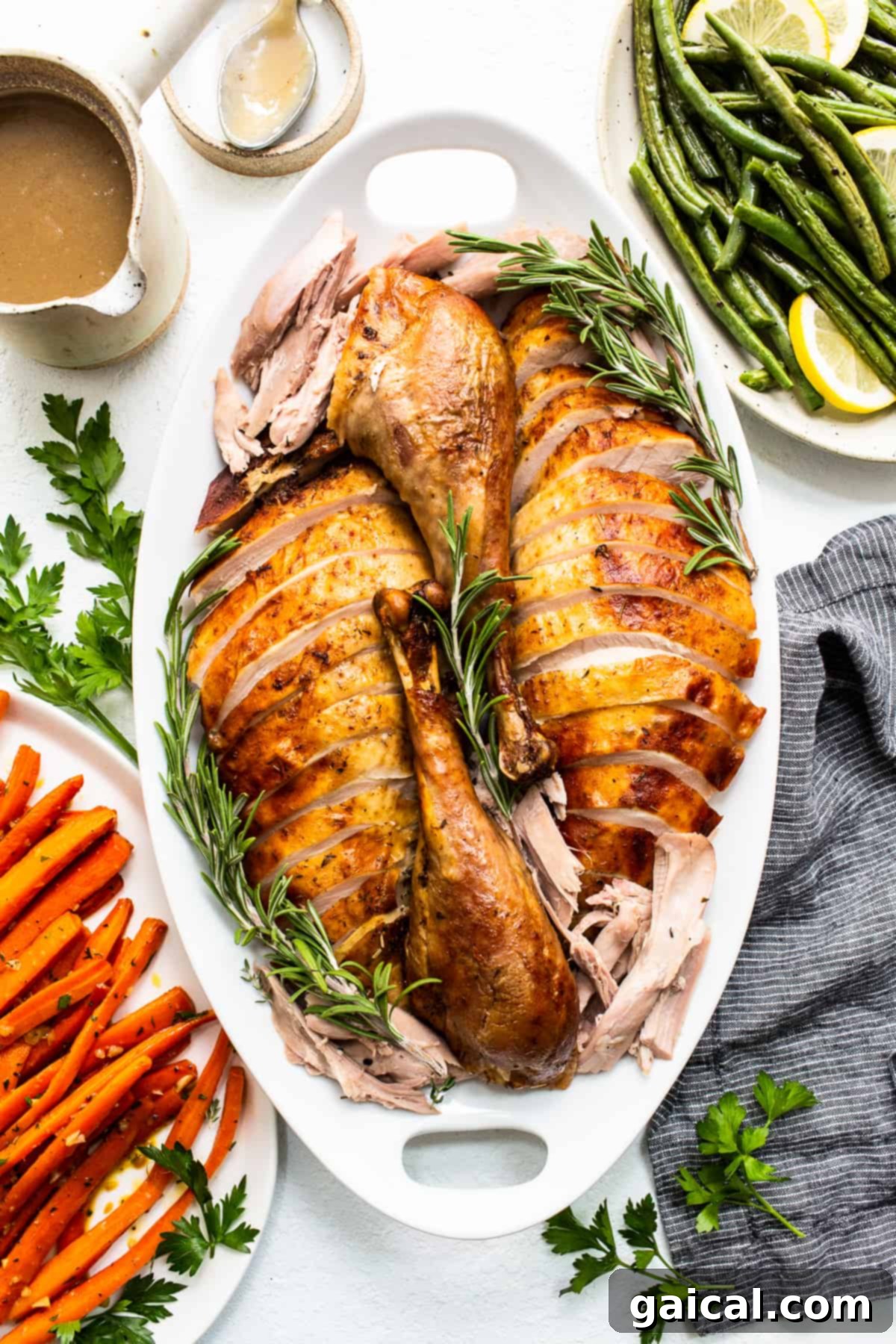
Crafting the Perfect Thanksgiving Turkey: A Step-by-Step Guide
Every year, Thanksgiving brings joy, family, and, for many, the challenge of roasting a turkey that’s both moist and packed with flavor. Have you ever found forgotten giblets still inside the bird, or worse, served a turkey so dry it needed extra gravy just to be edible? Fear not! This guide is your definitive resource to conquer those common turkey troubles and elevate your holiday feast.
Drawing inspiration from cherished family traditions and time-honored techniques, this recipe incorporates a combination of classic methods for consistently succulent results. My own upbringing involved countless hours observing and assisting my mother as she prepared our family’s Thanksgiving dinner. Her turkeys were legendary – always juicy, perfectly cooked, and a true testament to thoughtful preparation. I’ve taken the essence of her wisdom and refined it into a straightforward, foolproof process that ensures success even for first-time turkey roasters.
This meticulously crafted turkey recipe is designed to generously serve 8-12 people, making it ideal for most holiday gatherings. We begin with a 12-15 lb. whole turkey, which undergoes a transformative overnight wet brine infused with salt and vibrant citrus. The following morning, the bird is meticulously patted dry and coated with a rich, aromatic dry rub. It then roasts gently in the oven at a precise 325ºF for approximately 3.5 to 4 hours. Regular basting throughout the roasting process creates an irresistibly crispy, golden-brown skin, while locking in moisture for the most tender, flavorful meat imaginable.
Essential Tips Before You Start Your Thanksgiving Turkey
To ensure your Thanksgiving turkey journey is smooth and successful, consider these crucial pointers:
- Brining is Key: While optional, we strongly advocate for brining your turkey. A wet brine not only infuses incredible flavor deep into the meat but also significantly improves moisture retention, preventing dryness during the long roasting process. For those who prefer, a dry brine is an excellent alternative, offering similar benefits with a different approach.
- Accurate Roasting Time: The duration required to roast your turkey is directly proportional to its size. A widely accepted guideline is approximately 13 minutes of roasting time per pound of turkey at 325ºF. However, remember that ovens can vary, and the most accurate way to determine doneness is by checking the internal temperature with a reliable meat thermometer, rather than relying solely on time.
- The Power of Homemade Seasoning: We passionately recommend our homemade turkey dry rub for unparalleled flavor. It’s a simple blend of spices that truly elevates the turkey’s natural taste. If time is a constraint, a high-quality store-bought poultry seasoning can be used, but homemade always yields superior results.
- Invest in a Quality Roasting Pan: A good roasting pan is indispensable. Look for one that includes a sturdy V-rack or allows for the turkey to be elevated. This elevation is vital as it prevents the bottom of the turkey from stewing in its own juices and promotes even cooking and browning all around. The drippings collected beneath are also essential for a rich, homemade gravy.
- Don’t Forget the Gravy: A perfectly roasted turkey deserves a magnificent gravy. Utilize the flavorful pan drippings to create a homemade turkey gravy that complements the bird beautifully and ties the entire meal together.
Key Ingredients for Your Perfect Thanksgiving Turkey
Crafting a truly memorable turkey begins with selecting the right ingredients. Each component plays a vital role in developing the deep, rich flavors and tender texture that define a holiday centerpiece:
- Whole Turkey: For this recipe, aim for an untreated 12-15 pound whole turkey. A turkey within this weight range is generally easier to handle and cooks more evenly. Always ensure it’s fully thawed before starting your preparation.
- Kosher Salt: This is a non-negotiable ingredient, crucial for both the brine and the overall seasoning. Kosher salt has larger crystals than table salt, which allows for better absorption into the meat during brining without making it overly salty. It’s essential for enhancing the turkey’s natural flavor and tenderizing the meat.
- Premium Turkey Seasoning: As we always emphasize, our homemade turkey dry rub is our top recommendation for unparalleled flavor. It’s custom-blended for optimal taste. However, if time is short, a high-quality store-bought poultry seasoning can certainly be used to achieve delicious results.
- Fresh Aromatics: Onions, garlic, fresh thyme, fresh rosemary, fresh oregano, and other chosen aromatics are incredibly important for infusing depth and complexity into the turkey. Stuffing these into the cavity and incorporating them into your basting liquid adds layers of savory fragrance. Do not skip these; they are the backbone of the turkey’s aromatic profile.
- Broth (Any Variety): Whether you use homemade or store-bought, chicken or turkey broth forms the base of your basting liquid. It adds moisture, flavor, and contributes to the richness of the pan drippings, which are vital for your gravy.
- Dry White Wine: A splash of dry white wine in the basting liquid makes a remarkable difference. It adds a subtle acidity and a layer of sophisticated flavor that enhances the overall taste of the turkey. Opt for a dry white wine, such as Sauvignon Blanc or Pinot Grigio, over sweeter varieties to avoid an unbalanced flavor profile.
Mastering Turkey Preparation: From Thawing to Seasoning
Proper preparation is the foundation of a perfectly roasted Thanksgiving turkey. Follow these crucial steps to ensure your bird is ready for a magnificent transformation in the oven.
Step 1: Thawing Your Turkey Safely and Completely
It is absolutely paramount that your turkey is fully thawed before you begin the brining and roasting process. Attempting to cook a partially frozen turkey can lead to uneven cooking and potential food safety issues. Thawing a substantial 12-15 lb. turkey requires patience and planning, often taking longer than anticipated.
We recommend thawing your turkey in the refrigerator, allowing approximately 24 hours for every 4-5 pounds of turkey. For a 12-15 lb. bird, this typically means 2 to 3 days in the fridge. Alternatively, for a faster thawing method, you can submerge the wrapped turkey in a cold water bath, changing the water every 30 minutes. Be sure to keep a close eye on your turkey’s progress; ensure it’s completely defrosted before moving on to the next steps.
Step 2: Removing Turkey Innards and Giblets
Before any brining or seasoning begins, thoroughly inspect both cavities of your turkey for any giblets, neck, or other innards. These are typically found in a small bag within the main body cavity or the neck cavity. Gently reach in and pull them out. Discard any unwanted components, or save the giblets and neck to make a rich, flavorful turkey stock or gravy later on – a fantastic way to maximize flavor and minimize waste.
Step 3: The Art of Wet Turkey Brining
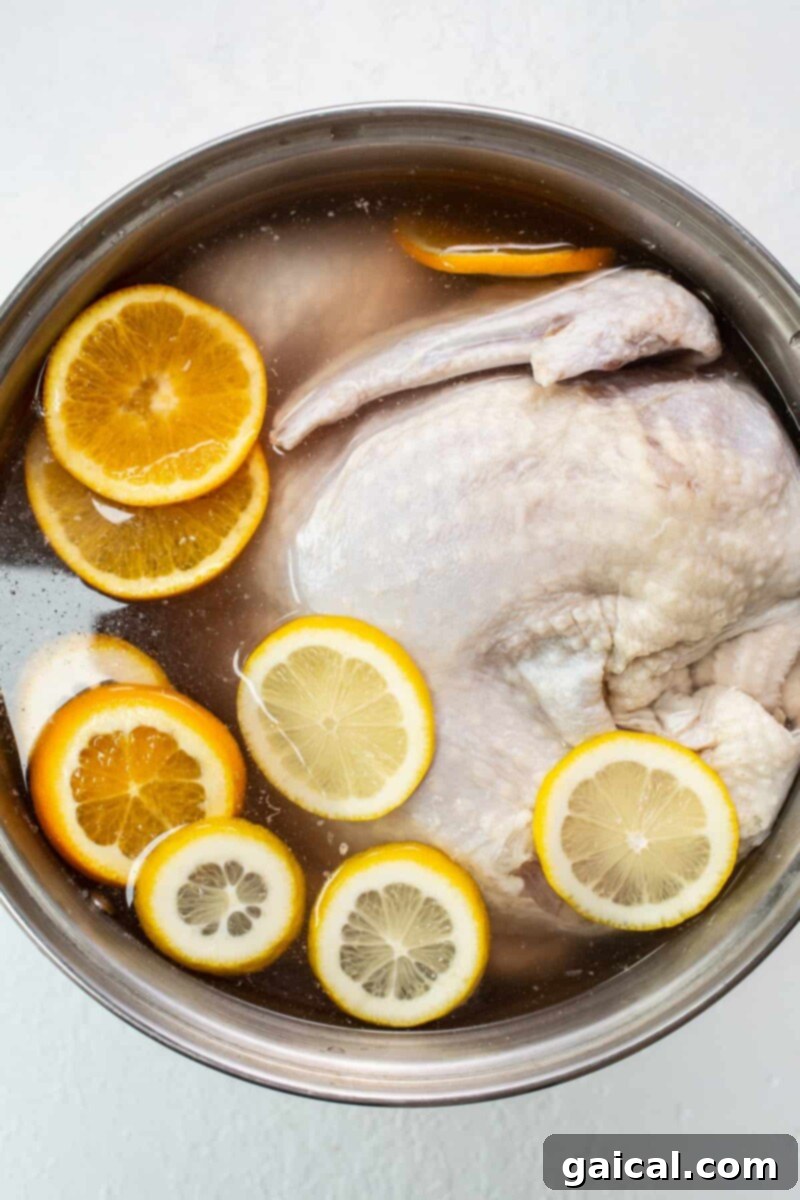
Once your turkey is thawed and its cavities are clear, it’s time to prepare the wet brine. Brining is a game-changer, infusing moisture and flavor deep into the meat, ensuring a tender and succulent result. Essentially, you are creating a seasoned saltwater bath for the turkey to soak in overnight. This process works by allowing the meat to absorb moisture and salt, which tenderizes muscle fibers and enhances the turkey’s natural taste. We have a dedicated post detailing our wet turkey brine recipe, which is highly recommended for the best outcome.
Why Brine Your Turkey Before Roasting? We firmly believe in the power of wet brining before roasting because it achieves two critical goals: it infuses an incredible depth of flavor into every part of the turkey, and it significantly aids in moisture retention throughout the long roasting process, preventing the dreaded dry bird.
How Long to Brine a Turkey? For optimal results, we recommend brining your turkey for at least 12 hours, ideally overnight (12-18 hours). This allows ample time for the flavors to penetrate and the tenderizing effect to take hold, ensuring your turkey is perfectly ready for roasting the following morning.
If you prefer a simpler, less liquid-intensive method, a turkey dry brine is an excellent alternative that also yields fantastic results!
Step 4: Applying Your Flavorful Turkey Dry Rub
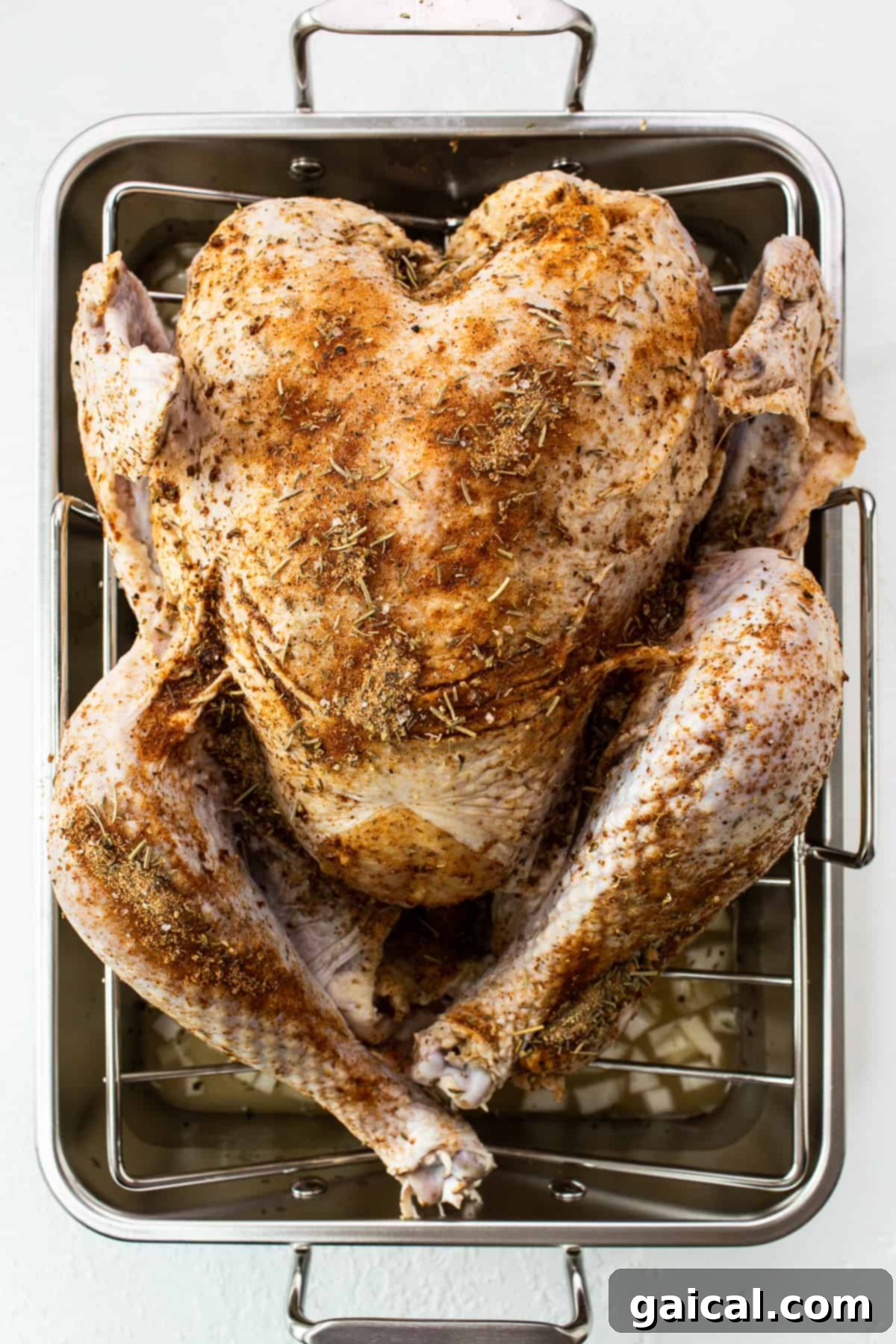
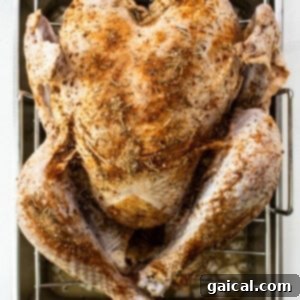
After its overnight brine, carefully remove the turkey from the brine solution. Rinse it thoroughly under cold running water, both inside and out, to remove any excess salt. Then, and this step is crucial for crispy skin, meticulously pat the turkey completely dry with paper towels. Ensure every surface, including under the wings and in the crevices, is as dry as possible. Next, generously apply our delicious turkey dry rub.
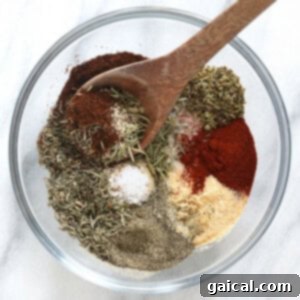
Don’t be shy with the rub! Massage it into every nook and cranny, ensuring an even coating over the entire bird. Pay special attention to the breast, thighs, and wings. We highly encourage making our homemade dry rub because its balanced blend of spices truly defines the amazing flavor profile of this recipe. You will likely use around 1/2 to 3/4 cups of our turkey seasoning, which typically includes:
- Dried thyme
- Dried rosemary
- Dried oregano
- Brown sugar
- Garlic powder
- Kosher Salt
- Ground black pepper
- Chili powder
- Smoked paprika
Elevate Your Flavor!
Homemade Turkey Seasoning
Move beyond generic store-bought seasonings and craft the most flavorful turkey rub with just 9 easily pronounceable ingredients. This blend features garlic powder, brown sugar, kosher salt, and a harmonious mix of other simple spices for an irresistible turkey dinner.
Step 5: Preparing Your Aromatic Basting Liquid
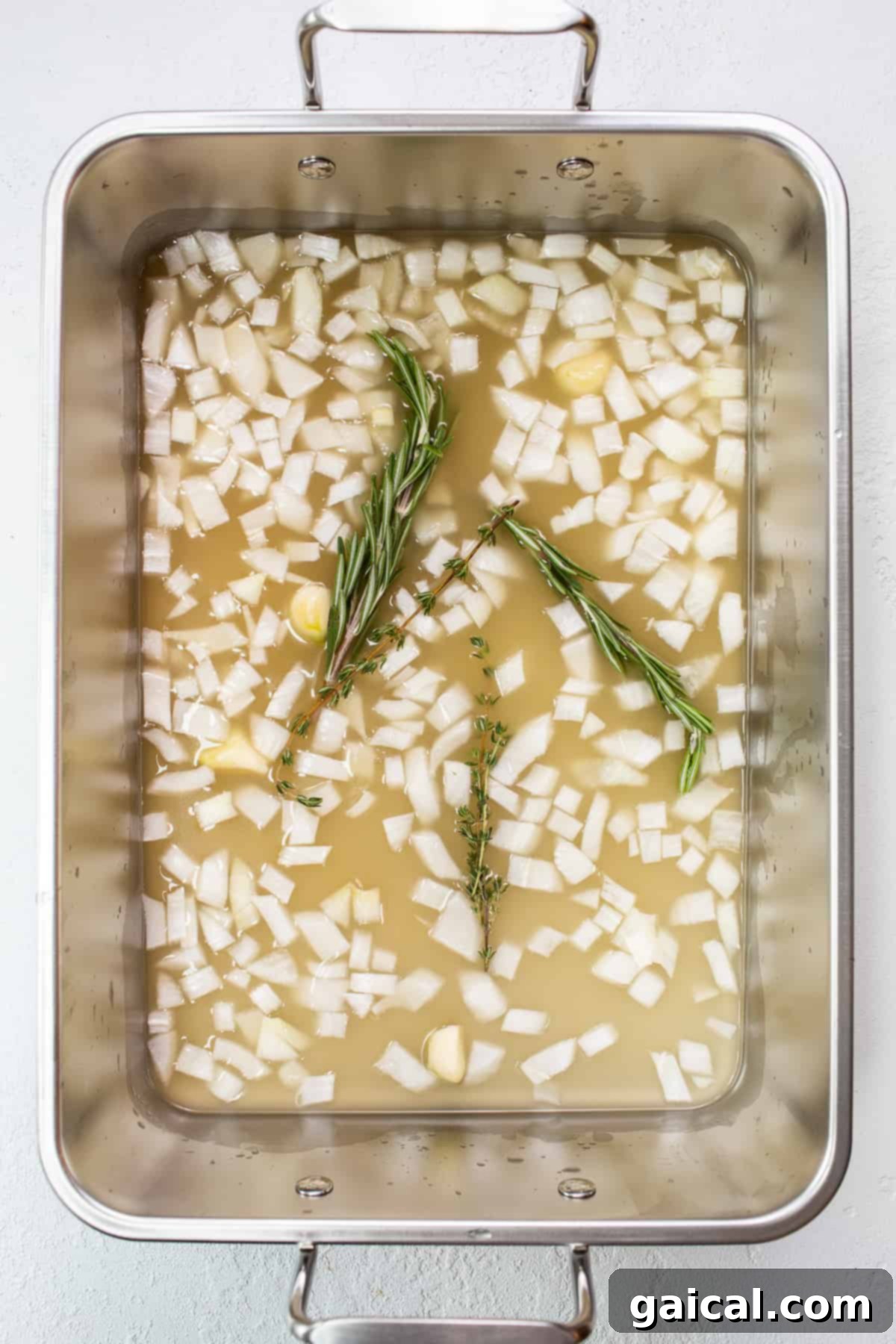
The basting liquid is a critical component for maintaining moisture and building a rich, glossy crust on your Thanksgiving turkey. Our recipe utilizes a simple yet incredibly flavorful basting liquid made from savory broth, a touch of dry white wine, diced onion, and fresh garlic. This liquid will reside at the bottom of your roasting pan, enriching the drippings and providing a flavorful base for continuous basting.
Throughout the roasting process, you will periodically spoon or brush this flavorful liquid over the turkey. This repeated basting not only keeps the skin from drying out but also contributes to its beautiful golden-brown color and incredible crispness. As the turkey roasts, its own delicious drippings mingle with the basting liquid, creating an intensely flavored foundation that will later be transformed into the most amazing homemade gravy.
Our Top Pick!
Essential Roasting Pan
A durable roasting pan with a wire rack is fundamental for achieving a perfectly cooked turkey and collecting rich drippings. We highly recommend this excellent Cuisinart roasting pan for its quality and functionality.
How Long to Roast Your Thanksgiving Turkey?
The roasting time for your Thanksgiving turkey is a critical factor for success. For a 12-15 lb. turkey, as specified in this recipe, expect a roasting time of approximately 3 to 3.5 hours at 325ºF. However, it’s vital to remember that these are estimates. The actual time can vary based on your oven’s calibration, whether the turkey is stuffed, and its precise starting temperature.
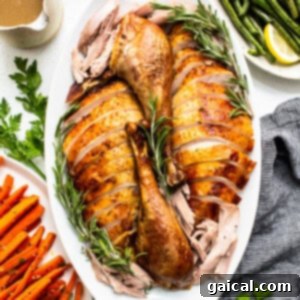
If you opt for a larger turkey, the roasting time will naturally increase. A good rule of thumb is to calculate about 13 minutes per pound. Always use a reliable meat thermometer to ensure your turkey reaches the correct internal temperature. Once the turkey is out of the oven, do not carve it immediately. Allow it to rest, loosely tented with foil, for at least 15-20 minutes. This crucial resting period allows the juices to redistribute throughout the meat, resulting in an even more tender and succulent carving experience. After resting, use a sharp carving knife to slice your perfectly roasted turkey.
Can I roast a larger turkey with this recipe? Absolutely! This recipe and its techniques are scalable. You can certainly roast a larger turkey, but be prepared for a longer cooking time. Always rely on an accurate meat thermometer to confirm doneness, adjusting cooking time as needed.
Achieving Perfection: The Internal Temperature of a Whole Turkey
Knowing the correct internal temperature is the single most important factor for a safe, juicy, and perfectly cooked turkey. Relying on visual cues or roasting time alone can lead to an undercooked or overcooked bird.
The USDA recommended safe internal temperature for turkey is 165ºF (74ºC) in the thickest part of the thigh, without touching bone. While some chefs aim for specific temperatures in different areas (e.g., 175ºF for the thigh and 160-165ºF for the breast), ensuring the entire bird, especially the thickest parts, reaches 165ºF is generally a safe and effective approach for a succulent result. The residual heat will continue to cook the turkey slightly even after it’s removed from the oven, a phenomenon known as “carryover cooking.”
Our top recommendation is to insert the probe of a digital meat thermometer into the thickest part of the turkey’s thigh, ensuring it doesn’t touch any bone. Monitor this temperature throughout the roasting process. A good quality instant-read thermometer is indispensable for quickly checking temperatures in various spots without significant heat loss.

Precision Cooking!
Thermoworks Thermapen
We cannot overstate the importance of a reliable meat thermometer for perfectly cooked meats. The Thermapen ONE is our absolute go-to, consistently delivering accurate readings for flawless results every time.
Top Turkey Roasting Tips for Success
Achieving the perfect Thanksgiving turkey doesn’t have to be daunting. Incorporate these tried-and-true tips into your cooking process for a stress-free and delicious result:
- Tip 1: Always Thaw Your Bird in Advance. This cannot be stressed enough. There’s nothing more frustrating than waking up on Thanksgiving morning to discover your turkey is still frozen solid. Plan ahead and allow ample time for complete thawing, either in the refrigerator or a cold water bath, to ensure even cooking and food safety.
- Tip 2: Embrace the Brine – Wet or Dry. Brining is the secret weapon for a consistently juicy bird, every single time. Whether you choose a wet brine, submerging your turkey in a flavorful liquid, or a dry brine, rubbing it with salt and spices, this step significantly enhances both moisture and flavor, preventing the dreaded dry turkey.
- Tip 3: Utilize a High-Quality Roasting Pan with a Rack. A good roasting pan with an elevated rack is essential. The rack keeps the turkey out of its drippings, allowing for even heat circulation and ensuring crispy skin all around. More importantly, the pan catches all those precious drippings, which are fundamental for basting and crafting an incredibly rich, homemade gravy.
- Tip 4: Don’t Skimp on Seasoning. A generous and even application of your chosen dry rub is key to a flavorful turkey. Take your time to massage the seasoning over every surface, including under the skin of the breast, to infuse maximum flavor.
- Tip 5: Baste Regularly. Consistent basting, especially during the last half of roasting, helps to moisturize the skin, contribute to a beautiful golden color, and build layers of flavor. Use the rich basting liquid at the bottom of your pan for this purpose.
- Tip 6: Trust Your Thermometer, Not Just the Clock. While time estimates are helpful, the only way to truly confirm your turkey is safely cooked and perfectly juicy is by checking its internal temperature with a reliable meat thermometer. Insert it into the thickest part of the thigh, avoiding the bone, aiming for 165ºF.
- Tip 7: Allow for Adequate Resting Time. Once your turkey reaches its target temperature, remove it from the oven and let it rest, loosely tented with foil, for 15-20 minutes before carving. This critical step allows the juices to redistribute throughout the meat, ensuring every slice is as tender and moist as possible.
More Delightful Turkey Recipes
Juicy Thanksgiving Meatballs (With Raspberry Sauce!)
Easy Oven-Roasted Turkey Tenderloin
Vibrant Egg Roll in a Bowl
Italian Grinder Sliders
Egg and Croissant Breakfast Casserole
Frequently Asked Questions About Cooking Thanksgiving Turkey
For a 12-15 pound turkey, this recipe typically requires 3 to 3.5 hours of roasting time at 325ºF. Remember that total cooking time can vary based on your specific oven and whether the turkey is stuffed. Always rely on an internal meat thermometer to confirm doneness.
This particular Thanksgiving turkey recipe calls for roasting the turkey at a consistent 325ºF. This lower temperature allows the turkey to cook more gently and evenly, helping to prevent the breast meat from drying out while ensuring the thighs cook through.
Roasting a turkey in the oven remains by far the most traditional and popular method for cooking a whole turkey, especially for Thanksgiving. However, other delicious options include smoking a turkey for a distinct smoky flavor, or preparing a sous vide turkey for unparalleled precision and tenderness.
Storing Your Thanksgiving Turkey Leftovers
Proper storage of your delicious turkey leftovers is crucial for both safety and enjoyment. Once the turkey has cooled completely, carve the meat off the bone and store it in an airtight container. Refrigerate promptly, and your turkey leftovers will remain fresh for up to 3-4 days. This ensures they are safe and delicious for sandwiches, salads, or quick reheat meals.
Can I Freeze Leftover Thanksgiving Turkey?
Absolutely! Freezing leftover turkey is an excellent way to extend its shelf life and enjoy the holiday flavors long after the feast. Once the turkey has cooled completely, carve the meat and portion it into freezer-safe bags or airtight containers. Remove as much air as possible to prevent freezer burn. Frozen turkey can be stored for up to 3 months, making it perfect for future soups, stews, casseroles, or any recipe calling for cooked turkey. Thaw it in the refrigerator overnight before use.
More of our Favorite…
Complementary Thanksgiving Recipes
- Creamy Herby Mashed Potatoes: A classic, comforting side that pairs perfectly with turkey.
- Crisp Green Beans Almondine: A elegant and fresh vegetable dish with a delightful crunch.
- Hearty Vegan Green Bean Casserole: A lighter, plant-based twist on a traditional favorite.
- Zesty Lemon Ginger Cranberry Sauce: A vibrant, homemade sauce that balances the richness of the turkey.
- Wholesome Sweet Potato Casserole: A sweet and savory side, perfect for any holiday spread.
Perfect Pairings: What to Serve with Your Thanksgiving Turkey
A magnificent Thanksgiving turkey deserves equally magnificent side dishes to create a truly memorable feast. Here are some of our top recommendations that perfectly complement the rich flavors of your roasted bird:
Creamy Butternut Squash Risotto:This rich and savory butternut squash risotto offers a delightful autumn flavor profile and creamy texture that stands out as an exquisite side dish for any fall meal. Its earthy sweetness and comforting warmth pair beautifully with turkey.
Effortless Crock Pot Mashed Potatoes: Free up oven space with these incredibly easy and utterly delicious crockpot mashed potatoes. They’re a guaranteed crowd-pleaser, perfect for any holiday gathering, and always come out smooth and fluffy.
Elegant Green Beans Almondine: This recipe delivers a fresh, buttery, and vibrant holiday side dish. It features perfectly blanched green beans, a delightful topping of slivered almonds, and a hint of fresh lemon zest that adds a bright finish to your plate.
Decadent Pumpkin Bread Pudding:Conclude your festive meal with this incredibly tender and sweet pumpkin bread pudding. Made with an entire loaf of pumpkin bread, it offers the ultimate comforting and seasonal dessert, a perfect ending to your Thanksgiving celebration.
Creative Thanksgiving Turkey Leftover Ideas
Even if you’re hosting a smaller group, a Thanksgiving turkey often means delicious leftovers! Don’t let them go to waste. Here are some fantastic and creative ideas to transform your extra turkey into exciting new meals:
- Comforting Leftover Turkey Soup: A warming and wholesome soup, perfect for a cozy post-holiday meal. Add vegetables and herbs for a hearty dish.
- Flavorful Turkey Salad: A light and versatile option, ideal for sandwiches, wraps, or as a standalone salad. Mix with mayo, celery, and your favorite seasonings.
- Quick Turkey Quesadillas: A fun and easy way to enjoy turkey, especially popular with kids. Combine with cheese and any leftover veggies for a satisfying meal.
Juicy & Flavorful Thanksgiving Turkey Recipe
This is truly the juiciest Thanksgiving turkey that you will ever taste. It is brined overnight, seasoned to perfection, and roasted to a golden crisp. Served with a rich, homemade gravy, you simply can’t beat this holiday showstopper.
Ingredients
For the Brine:
- 2 gallons water, separated
- 1.5 cups kosher salt
- 1 large orange, sliced
- 1 lemon, sliced
For the Basting Liquid:
- 3 cups broth (chicken or turkey, homemade or store-bought)
- ½ large white onion, diced
- 4 cloves garlic, minced
- 1 cup dry white wine
- 2 sprigs fresh thyme
- 2 sprigs fresh rosemary
For the Turkey:
- 12-15 lb. whole turkey, innards removed, fully thawed (ours was 14 lbs.)
- 3 tablespoons turkey seasoning (our homemade blend or quality poultry seasoning)
- 2 tablespoons unsalted butter, cut into two pieces
- 2 tablespoons olive oil
- 1 large white onion, diced
- 4 cloves garlic, minced
- 4 sprigs fresh thyme
- 4 sprigs fresh oregano
- 4 sprigs fresh rosemary
Instructions
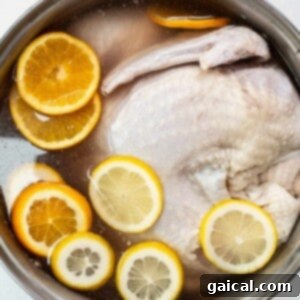
- Prepare the Turkey Brine: Fill a 20-30 quart pot with 2 gallons of water.
- Remove 2 cups of water from the pot and transfer to a saucepan. Add the kosher salt to the saucepan. Heat over medium heat, whisking constantly until the salt has completely dissolved. Do not bring to a boil. Remove from heat, then add the salted water back into the large pot and whisk to combine with the remaining water.
- Next, add the sliced oranges and lemons to the salt water in the pot.
- Finally, carefully add the thawed turkey to the pot. Ensure the turkey is fully submerged in the brine solution. If needed, place a plate on top of the turkey to keep it underwater.

- Place the entire pot in the refrigerator and allow the turkey to brine for 12-18 hours or overnight.
- Prepare the Turkey for Roasting: Preheat your oven to 325ºF. Remove the turkey from the brine, allowing any excess liquid to thoroughly drain from the cavity. Rinse the turkey under cold water, then pat the entire turkey completely dry with paper towels, inside and out. This step is crucial for crispy skin.
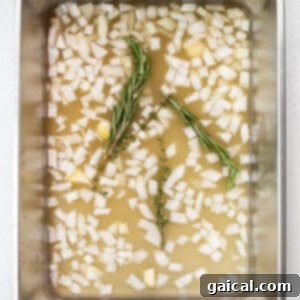
- In the bottom of a large roasting pan, combine all the ingredients for the basting liquid (broth, ½ onion, 4 cloves garlic, white wine, 2 sprigs thyme, 2 sprigs rosemary). Mix these ingredients well. Place the metal roasting rack into the basting pan, and then position the turkey breast-side up on the rack.
- Generously season the entire exterior of the turkey with your turkey seasoning. Use your hands to massage the seasoning thoroughly into the skin, ensuring maximum coverage. Then, gently lift the skin over each turkey breast and insert one pad of unsalted butter underneath. This helps keep the breast meat moist.
- Drizzle the olive oil evenly over the turkey’s skin and massage it in, which further promotes crispness and browning.
- Lastly, stuff the remaining diced onion, minced garlic, and the 4 sprigs each of fresh thyme, oregano, and rosemary into the main cavity of the turkey.
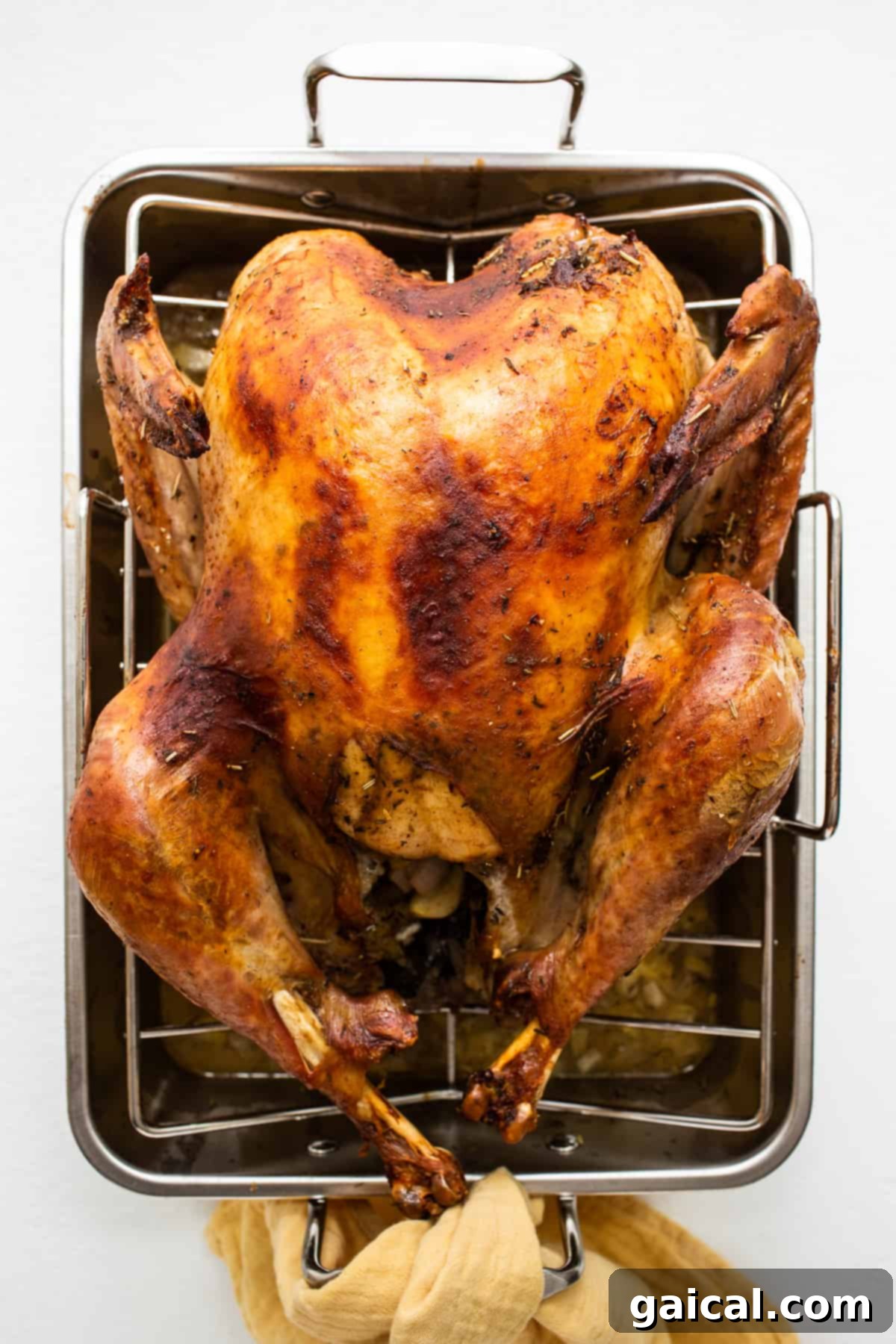
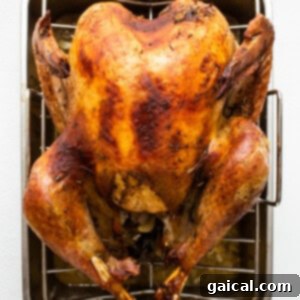
- Roast the Turkey: Carefully place the prepared turkey into the preheated oven. Roast for 3 to 3.5 hours (approximately 13 minutes per pound) or until the internal temperature reaches 165ºF in the thickest part of the turkey’s thigh, without touching bone. Baste the turkey every hour on the hour with the liquid from the pan. If the skin begins to brown too quickly in the final hour of roasting, loosely tent the turkey with aluminum foil to prevent over-browning.
- Once the internal temperature consistently reads 165ºF, remove the turkey from the oven. Transfer it to a cutting board or clean platter and allow it to rest, loosely tented with foil, for 15-20 minutes. This resting period is crucial for the juices to redistribute, ensuring a tender and moist turkey.
- After resting, carve the turkey and serve it hot with your homemade gravy and an array of delicious Thanksgiving sides.
Expert Tips & Notes
- While optional, we highly recommend brining your turkey before roasting. It significantly enhances flavor and keeps the meat incredibly moist. For a different method, consider exploring our dry brining guide.
- The exact roasting time for your turkey will vary depending on its size. A good general guideline is 13 minutes per pound of turkey, but always confirm doneness with a meat thermometer.
- For the best flavor, utilize our homemade turkey dry rub. If short on time, a good quality generic poultry seasoning is a suitable alternative.
- Ensure your roasting pan includes a wire rack to elevate the turkey. This allows for even cooking and collects the flavorful drippings essential for basting and gravy.
- Don’t forget to serve your magnificent turkey with a rich, homemade turkey gravy, ideally made from the pan drippings.
Watch The Recipe
Nutrition Information
Calories: 687 kcal, Carbohydrates: 2 g, Protein: 99 g, Fat: 30 g, Fiber: 0.4 g, Sugar: 1 g
Nutrition information is automatically calculated and should be used as an approximation only.
Photography Credit: All photos featured in this post were expertly captured by Ashley McGlaughlin from The Edible Perspective.