
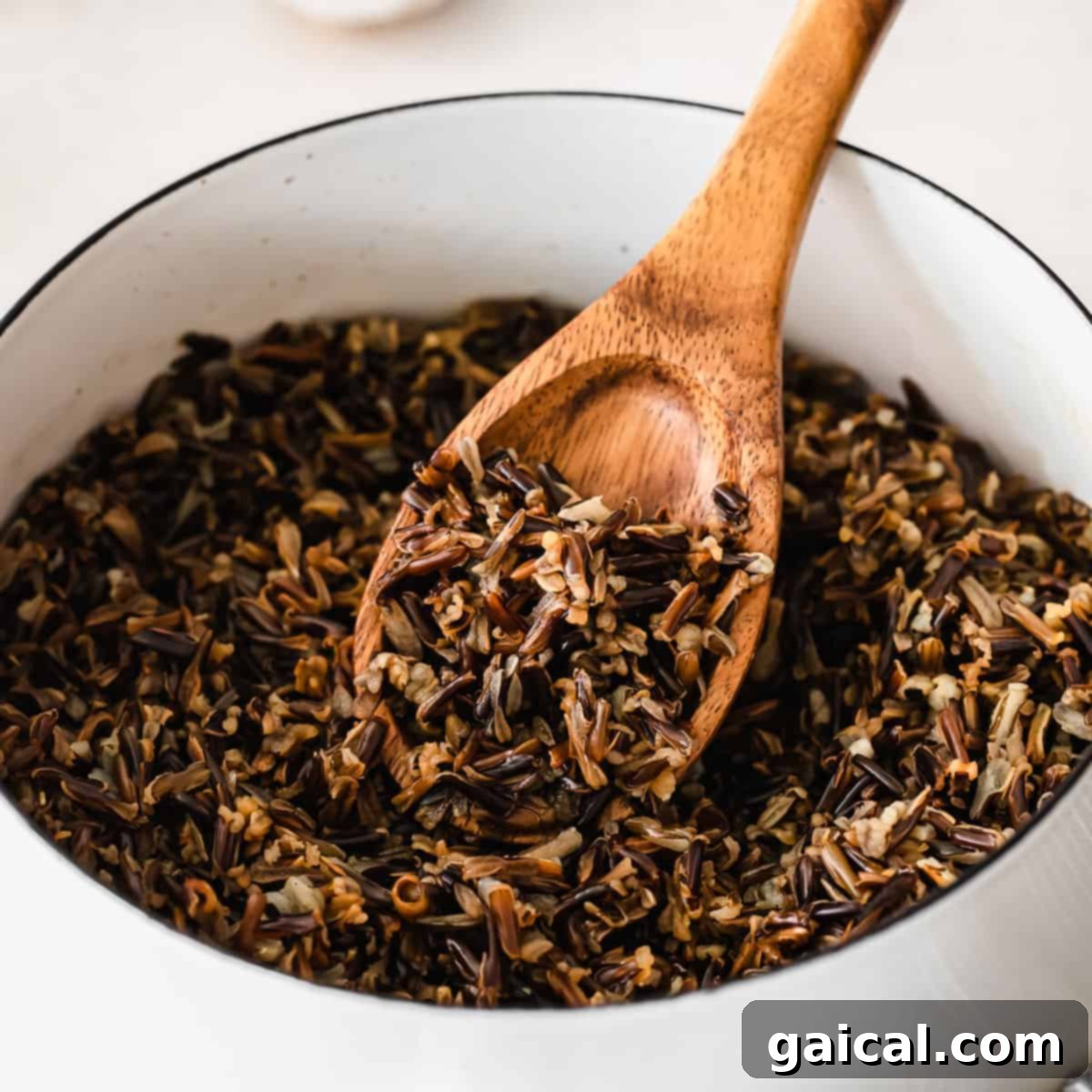
Hailing from the heart of Minnesota, we’re seasoned experts when it comes to preparing wild rice, a true staple in our kitchens. Its distinct nutty flavor and satisfying chewy texture make it an irresistible addition to everything from hearty soups and comforting casseroles to vibrant grain bowls. In this comprehensive guide, we’ll share our perfected methods for cooking wild rice, both on the stove-top and in the Instant Pot. These easy-to-follow techniques will empower you to enjoy this unique grain regularly, elevating your everyday meals with its rich taste and texture.
Wild rice is incredibly versatile, serving as a delightful topping or a robust component in countless dishes you already love. Imagine enhancing a creamy butternut squash soup with a scattering of perfectly cooked wild rice, or adding depth and substance to one of our many delicious salad recipes. Once you master the basic cooking techniques, the culinary possibilities are endless.
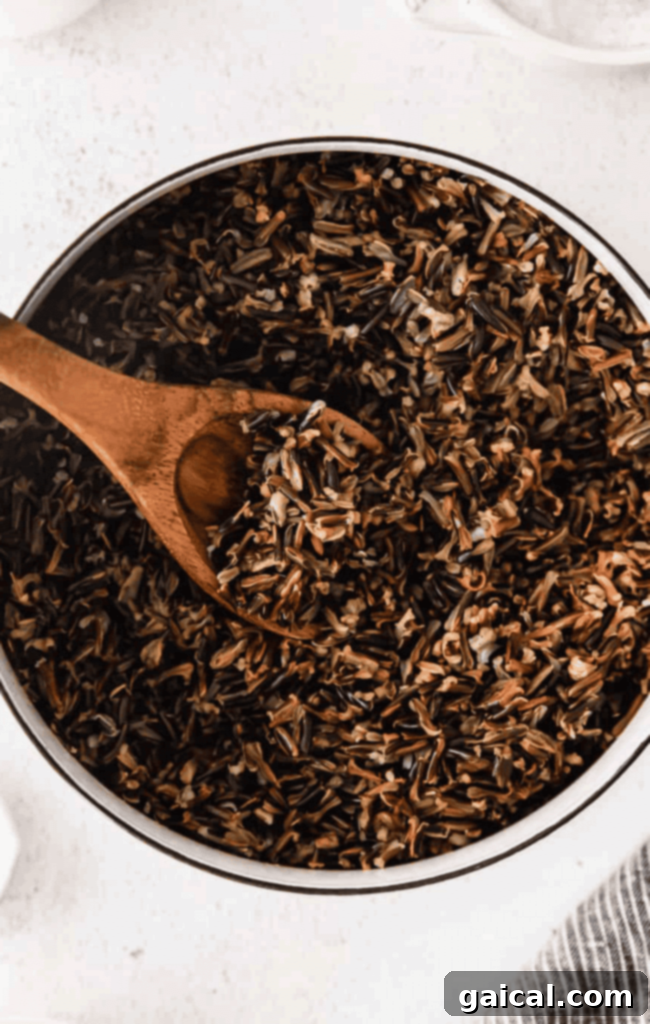
For those of us from the Midwest, wild rice isn’t just a side dish; it’s a cherished culinary tradition. This remarkable grain is predominantly grown and harvested in the bountiful Great Lakes region of North America, with significant production in Minnesota, Wisconsin, and Canada. This deep connection to our heritage makes us particularly passionate about this grain, proudly claiming it as a quintessential “food Minnesota is known for” (as highlighted by the MN DNR). Beyond its regional importance, wild rice offers a wealth of nutritional benefits, being a good source of protein, fiber, and essential minerals, making it a healthy and delicious choice for any meal.
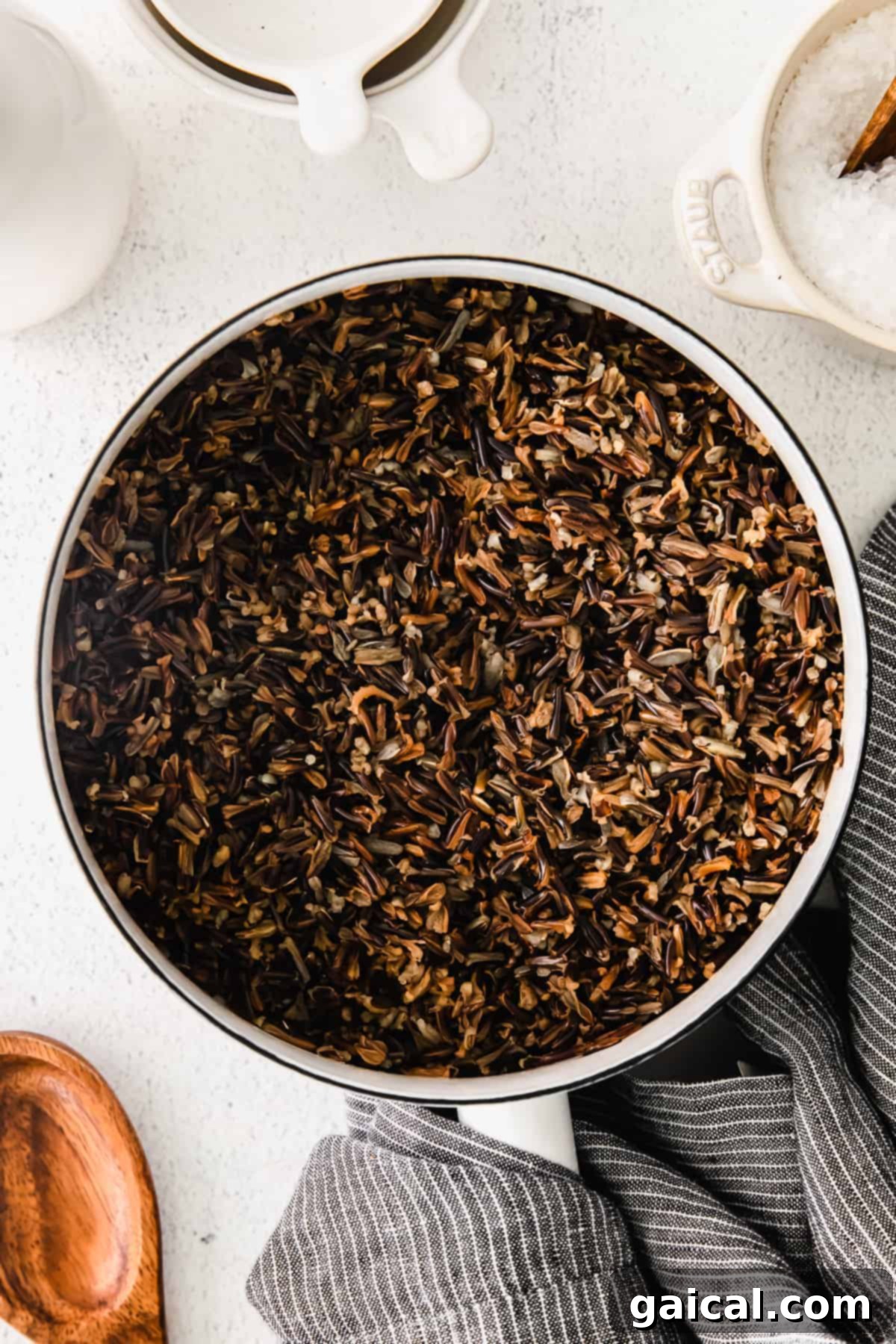
While wild rice may require a slightly longer cooking time than white or brown rice, the superior flavor and distinctive texture are unequivocally worth the wait. The magic truly happens when the grains “pop” open, revealing their lighter, tender interiors, and curl slightly. This visual cue is precisely how we were taught to recognize perfectly cooked wild rice – a sign of a truly exquisite culinary experience.
Important Tip for Cooking Wild Rice: Unlike other rice varieties, wild rice is prepared more like pasta. You boil the grain in a generous amount of water or broth, then drain any excess liquid once it’s tender. This method ensures each grain is cooked to perfection, achieving that desirable al dente texture.
Essential Ingredients and Equipment for Cooking Wild Rice
Embarking on your wild rice cooking journey requires minimal fuss. At its core, all you truly need are two fundamental ingredients: **quality wild rice and water**. However, to elevate the flavor profile of your finished dish, we highly recommend substituting water with a rich **vegetable or chicken broth**. This simple swap infuses the grains with an extra layer of savory deliciousness. As for equipment, you’ll need a sturdy **pot with a lid** for the stove-top method, or an **Instant Pot** for a hands-off approach. Regardless of your chosen method, a reliable **fine-mesh strainer** will be indispensable for draining the cooked rice.
Optimal Water-to-Wild Rice Ratio for Perfect Results
Achieving perfectly cooked wild rice hinges on using the correct water-to-rice ratio, which varies depending on your chosen cooking method. Following these guidelines will ensure your wild rice is consistently tender and chewy, never mushy or overly dry:
- Stove-top Method: For every 1 cup of dry wild rice, use 4 cups of water or broth. This generous amount allows the rice to boil freely, similar to pasta, ensuring even cooking.
- Instant Pot Method: For every 1 cup of dry wild rice, use 1.5 cups of water or broth. The pressure cooker environment requires less liquid as evaporation is significantly reduced.
Understanding Wild Rice Cooking Times
The cooking time for wild rice can vary, typically ranging from **30 to 45 minutes**, depending on your preparation method and the specific type of wild rice. Stove-top cooking usually takes a bit longer, while the Instant Pot can often shorten the active cooking duration, though pressure build-up and release add to the overall time.
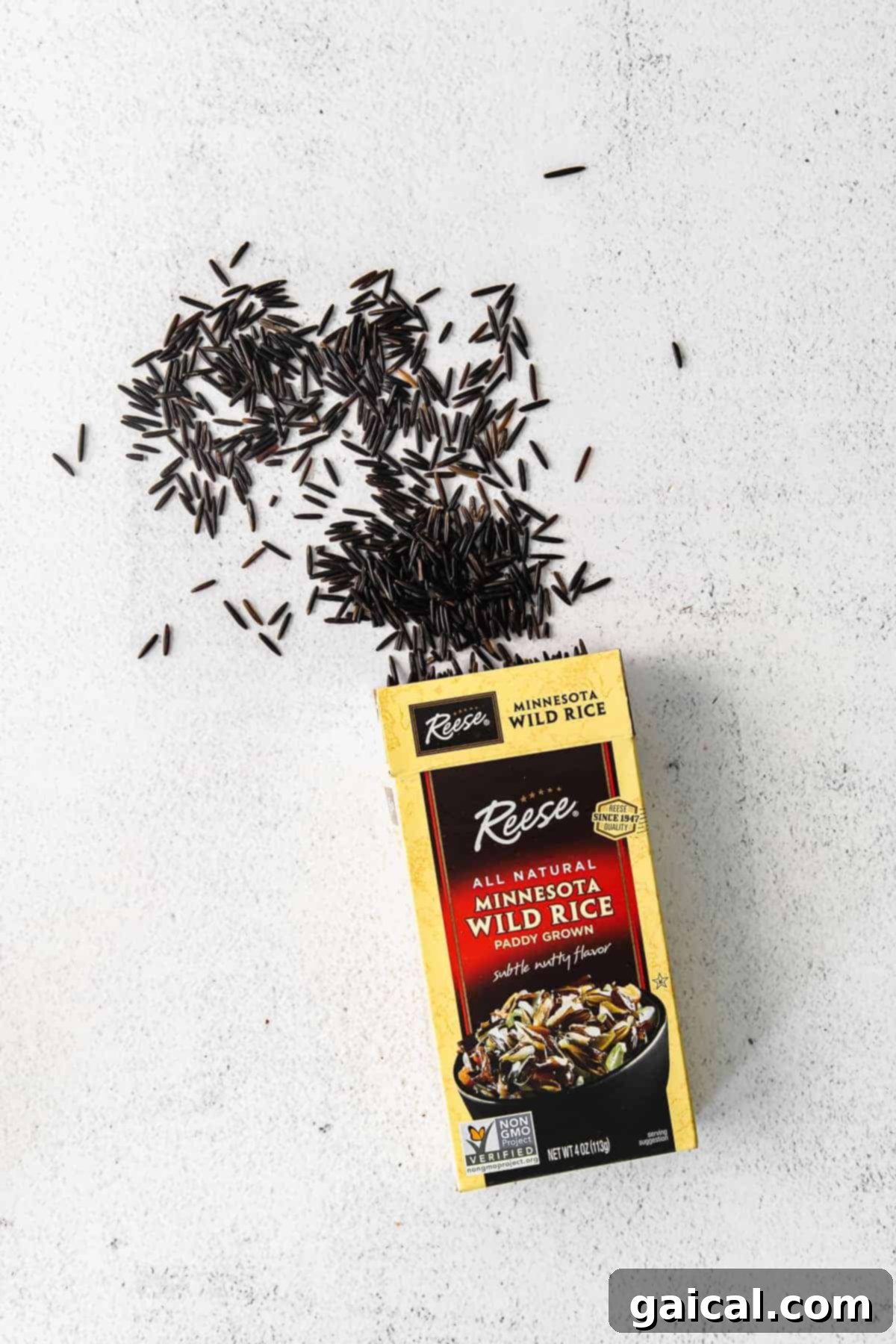
To Soak or Not to Soak: The Wild Rice Pre-Preparation Debate
A common question among those new to preparing this grain is whether soaking wild rice beforehand is necessary. We’re happy to report that **you do not have to soak wild rice before cooking it!** Our recipes are designed to be as straightforward as possible, minimizing extra steps to get you to delicious results faster. While some people choose to soak wild rice to potentially reduce the overall cooking time, we’ve found that it doesn’t significantly alter the final texture when cooked using our methods. Therefore, if you’re looking for simplicity, feel free to skip the soaking step without compromising quality. The finished texture will remain wonderfully consistent.
Understanding the Ideal Texture: Is Wild Rice Supposed to Be Crunchy?
When properly cooked, wild rice should definitely have a delightful “bite” to its texture, often described as al dente. It’s not meant to be mushy like some other rice varieties, nor should it be unpleasantly hard or crunchy to the point of hurting your teeth. The true indicator of perfectly done wild rice is when the grains visibly *split* or *pop* open, revealing their inner, lighter beige or white kernel. This splitting signifies that the grain has absorbed enough liquid and is tender throughout, while still retaining its characteristic chewiness. Aim for a tender-chewy consistency that offers a pleasant resistance with every mouthful.
Wild Rice vs. Other Rices: A Unique Grain
It’s a common misconception that wild rice is a true rice, botanically speaking. In reality, wild rice is the seed of an aquatic grass, distinct from the Asian rice varieties (Oryza sativa) that include white and brown rice. This botanical difference is crucial to understanding its unique characteristics and how it should be cooked. Wild rice grains are characterized by their tough outer sheath or hull, which encases a softer, starchy inner grain. Other rice species, such as white rice (which has its bran and germ removed) and brown rice (which retains its bran layer), lack this distinct, robust outer shell. Because of this protective casing, wild rice demands a cooking method that allows the outer shell to soften and the inner grain to expand. This is why we advocate for cooking wild rice much like you would pasta: by boiling it in a generous amount of liquid and then straining the excess, rather than relying solely on absorption as with traditional rice cooking. This ensures the best texture and flavor.
Identifying Perfectly Cooked Wild Rice
Knowing exactly when your wild rice is done cooking is key to achieving that ideal texture. The most reliable indicator is visual: your wild rice is ready when the outer casing of the grain has visibly **cracked or split open**, revealing the tender, lighter-colored inner grain. Along with this visual cue, the texture should be pleasantly **chewy and tender**, but critically, **not mushy**. Each grain should retain its individual structure with a slight resistance when bitten, offering that signature al dente characteristic that makes wild rice so appealing.
Freezing Cooked Wild Rice for Future Meals
Absolutely! Cooked wild rice freezes beautifully, making it an excellent candidate for meal prepping. Freezing allows you to prepare a larger batch and have it readily available for quick additions to future dishes. To freeze, first ensure the wild rice has **cooled completely** to room temperature. Then, transfer it into an airtight plastic freezer bag or a reusable silicone stasher bag. Press out as much air as possible from the bag before sealing to prevent freezer burn. Properly stored, cooked wild rice can be kept in the freezer for up to **3 months**. When you’re ready to use it, simply let it thaw in the refrigerator overnight or on the counter for a few hours, and then reheat gently before incorporating it into your favorite recipes.
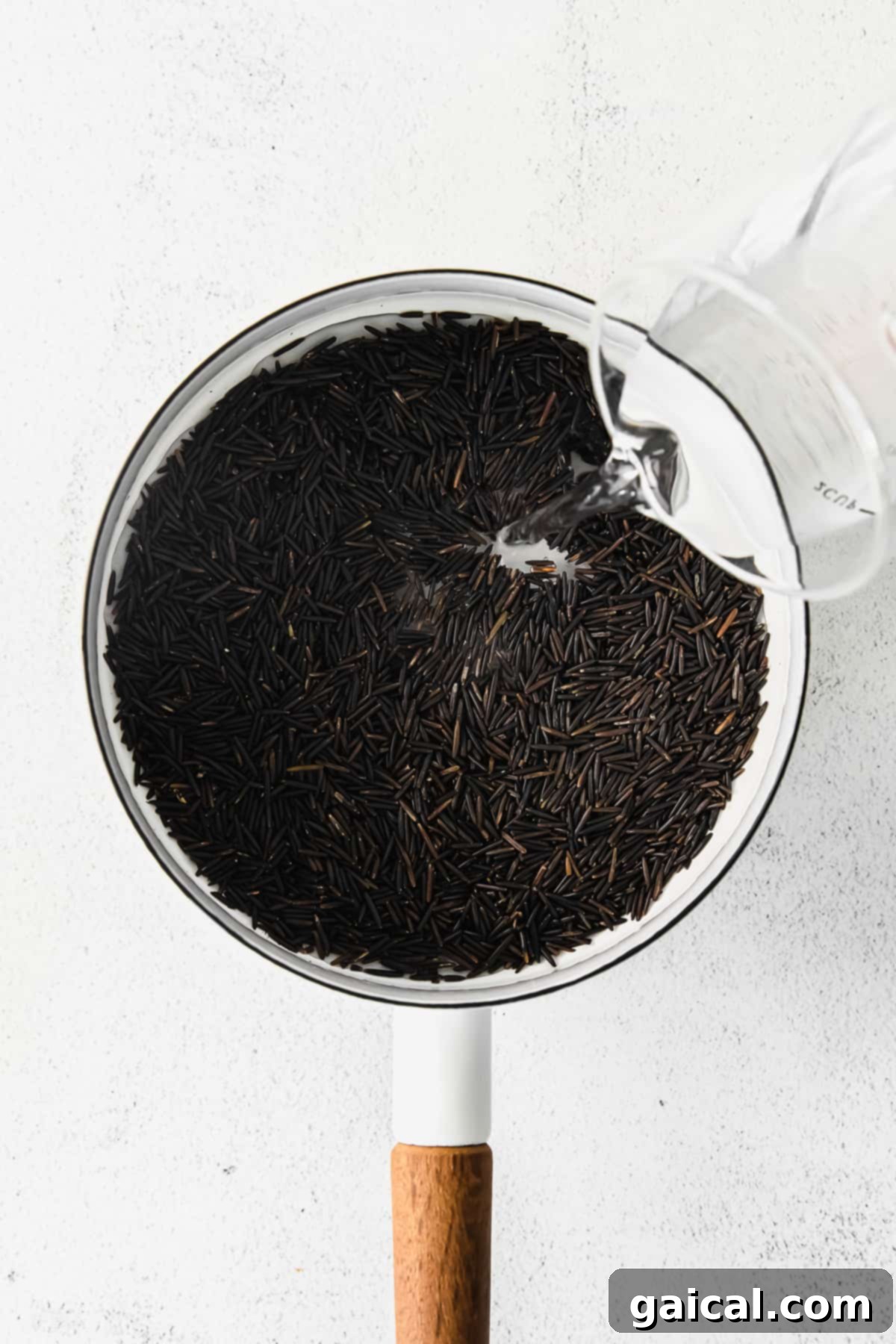
Step-by-Step Directions for Cooking Wild Rice on the Stove-Top
Cooking wild rice on the stove-top is arguably the most traditional and common method, offering precise control over the cooking process. As we’ve mentioned, think of it like cooking pasta – a simple boil-and-drain technique for perfectly tender grains. Since wild rice is a hardier grain, it naturally requires a longer cooking time compared to softer varieties of rice.
- Combine Ingredients: In a large, heavy-bottomed pot or saucepan, combine 1 cup of dry wild rice with 4 cups of water or broth. Using a larger pot allows ample space for the rice to boil freely.
- Bring to a Boil: Place the pot over high heat and bring the liquid to a rolling boil.
- Simmer and Cook: Once boiling, reduce the heat to low, cover the pot with a tight-fitting lid, and let it simmer gently for approximately 45 minutes, or until the wild rice grains have popped open and are tender-chewy. Stir halfway through to ensure even cooking.
- Drain and Serve: Carefully remove the pot from the heat. Using a fine-mesh strainer, drain any excess cooking liquid from the wild rice. Fluff with a fork and serve immediately.
Boost Your Wild Rice Flavor with Broth
For an exceptionally flavorful batch of wild rice, try boiling it in a savory chicken or vegetable broth instead of plain water. This simple substitution adds a significant depth of flavor, making your wild rice an even more delicious component in any dish you’re preparing!
Effortless Wild Rice: Instant Pot Cooking Directions
For those who appreciate convenience and a truly hands-off approach, cooking wild rice in the Instant Pot is a game-changer. It’s the ultimate “set-it-and-forget-it” method, perfectly suiting busy schedules. The beauty of Instant Pot wild rice lies in its streamlined process, delivering perfectly cooked grains with minimal effort.
- Add Ingredients: Place 1 cup of dry wild rice and 1.5 cups of water or broth directly into the inner pot of your Instant Pot. No need for extra bowls or trivets.
- Seal and Cook: Secure the lid on your Instant Pot and ensure the pressure release valve is set to the sealing position. Select the “Manual” or “Pressure Cook” setting and cook on high pressure for 35 minutes.
- Release and Enjoy: Once the cooking cycle is complete, perform a quick release of the pressure by carefully moving the valve to the venting position. Once all pressure has been released and the float valve drops, remove the lid. Fluff the cooked wild rice with a fork and serve immediately.
Helpful Instant Pot Wild Rice Tips
To ensure consistent success when preparing wild rice in your Instant Pot, keep these helpful tips in mind:
- Direct Cooking: Always add the wild rice and liquid directly into the main Instant Pot liner. There’s no need for additional bowls or trivets, simplifying the process and cleanup.
- Quick Release is Key: Unlike some other grains, a natural pressure release is not required for wild rice. The 35 minutes on high pressure is sufficient for the grains to cook thoroughly and absorb the necessary moisture. A quick release helps maintain the desired texture.
- Handle Residual Liquid: If you notice a small amount of liquid remaining at the bottom of the Instant Pot after a quick release, don’t worry. Simply let the cooked wild rice sit, uncovered, in the pot for an additional 10-15 minutes. The residual heat will allow the remaining liquid to be absorbed, resulting in perfectly fluffy grains.
More of our Favorite…
Delicious Recipes Featuring Wild Rice
- Hearty Chicken Wild Rice Soup
- Savory Wild Rice Meatloaf
- Comforting Butternut Squash, Chicken, and Wild Rice Casserole
- Classic Cornbread Stuffing with Wild Rice
- Nutrient-Rich Vegetarian Harvest Grain Bowl
Creative Ways to Incorporate Wild Rice into Your Meals
The truly remarkable aspect of wild rice is its incredible versatility. It seamlessly integrates into a vast array of dishes, transforming ordinary meals into extraordinary culinary experiences. Whether it takes center stage as the star ingredient in a hearty casserole or a rich soup, or acts as a delightful accompaniment to lighter fare, wild rice always shines. Here are some of our favorite ways to enjoy this magnificent grain:
- Chicken Wild Rice Soup: A classic, comforting favorite that perfectly showcases wild rice’s texture.
- Cornbread Dressing with Wild Rice: Adds a unique nutty flavor and chewy texture to traditional holiday stuffing.
- Creamy Pumpkin Wild Rice Soup: A seasonal delight where wild rice adds body and a wonderful counterpoint to the sweetness of pumpkin.
- Roasted Butternut Squash and Kale Salad: Replace the farro with cooked wild rice for an equally delicious and satisfying grain salad.
- Lazy Girl Turkey Chili: Stir in about 1/4 cup of cooked wild rice per serving to add extra fiber, texture, and heartiness to your chili.
- 30 Minute Spicy Butternut Squash Soup: Enhance this quick and flavorful soup with a handful of wild rice for added substance.
- Chicken Meal Prep Recipes: Use cooked wild rice as a healthy, high-fiber grain base for various meal prep bowls, complementing chicken or other proteins beautifully.
How to Cook Wild Rice
Ingredients
Stove-Top
- 1 cup wild rice
- 4 cups of water or broth
Instant Pot
- 1 cup wild rice
- 1.5 cups of water or broth
Instructions
Stove-Top
-
Add wild rice and liquid to a medium-sized saucepan and bring to a boil over high heat.

-
Lower heat to low and cover. Let wild rice simmer for around 45 minutes, stirring halfway through.
-
Once the wild rice is done (grains have split open and are tender-chewy), strain the excess liquid from the wild rice and enjoy!
Instant Pot
-
Add wild rice and liquid to the bottom of the Instant Pot inner pot.
-
Turn pressure valve to seal and cook wild rice for 35 minutes on high pressure.
-
Quick release pressure (manually vent) and once safe to open, fluff wild rice with a fork, and enjoy!
Tips & Notes
- You know when your wild rice is done when the grain pops open. It’s supposed to taste more “al dente” than mushy.
Nutrition
Protein: 6 g,
Fat: 0 g,
Fiber: 3 g,
Sugar: 1 g
Nutrition information is automatically calculated, so should only be used as an approximation.
Love this recipe? Leave a comment below!
Don’t forget to share your culinary creations on social media with the hashtag #fitfoodiefinds. We absolutely love seeing what you’re cooking up!