
How many teaspoons in a tablespoon? This fundamental query is one of the most frequently asked questions in kitchens worldwide! Understanding essential culinary conversions, like how many tablespoons in a cup or how many ounces in a cup, is vital for achieving perfect results in any recipe. Whether you’re a seasoned chef or a novice home cook, mastering these basic “how to measure” kitchen conversions will undoubtedly elevate your cooking and baking precision. Let’s demystify the world of kitchen measurements together, ensuring you’re always confident in your culinary creations.
How Many Teaspoons in a Tablespoon? The Essential Conversion
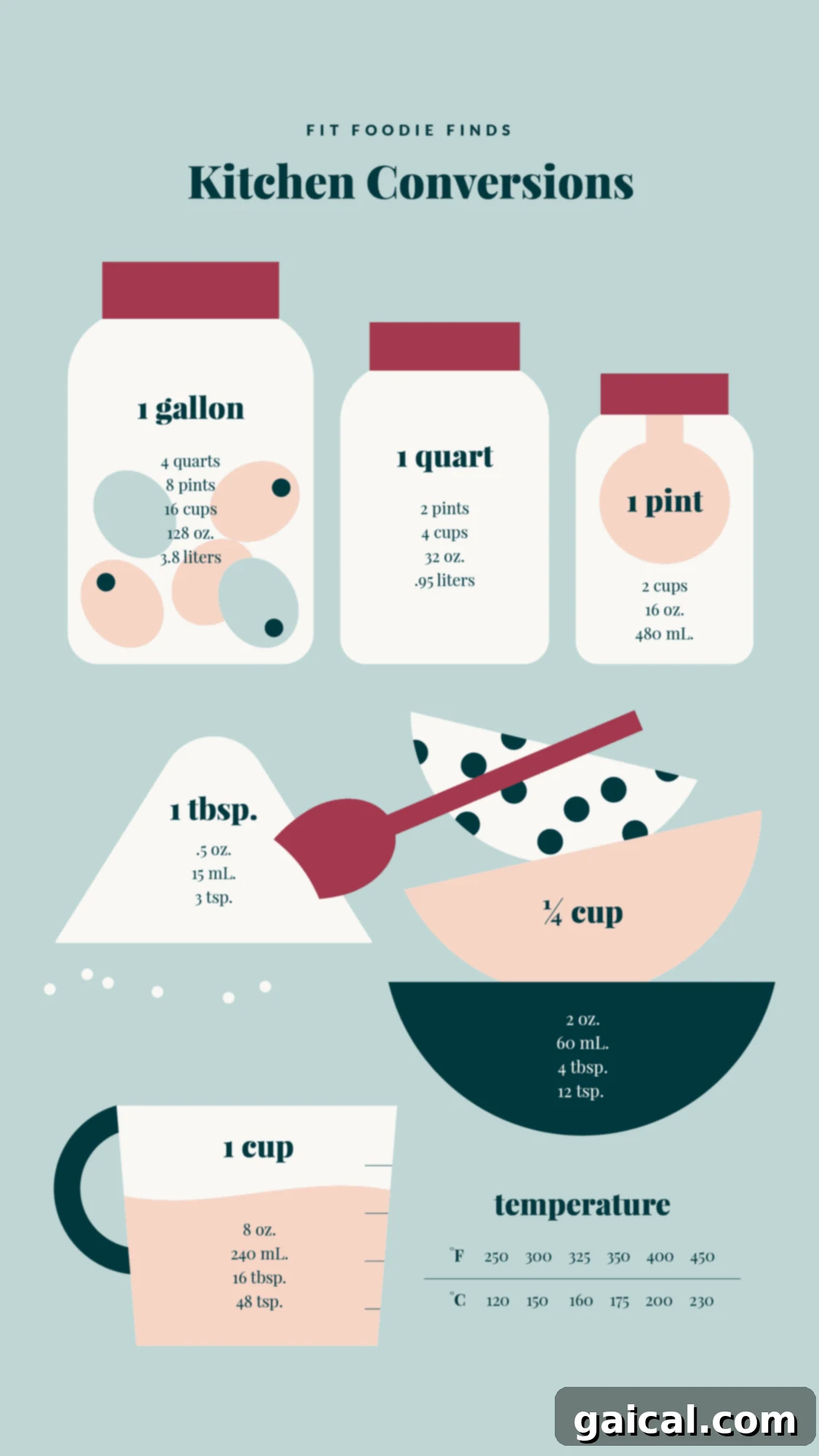
The straightforward answer is: There are 3 teaspoons in 1 tablespoon.
It’s a common scenario in kitchens everywhere: you’re engrossed in a recipe, perhaps attempting to double a batch of your favorite cookies or scale down a complex sauce, and suddenly you hit a mental block. You know you need to convert teaspoons to tablespoons, but the exact ratio momentarily escapes you. With hands potentially covered in dough or sauce, a quick search online often provides the much-needed reminder: “Ah yes, there are 3 teaspoons in 1 tablespoon!” This moment of fleeting forgetfulness is perfectly normal, and you are certainly not alone in needing a quick refresh on common kitchen measurement conversions.
Despite the convenience of modern tools like Google and smart assistants, having a reliable resource at your fingertips for these conversions can be a game-changer. That’s precisely why we’ve compiled this comprehensive guide. Consider it your handy kitchen conversion tool – a page you can bookmark, save to your desktop, or even print out and tape inside a cupboard door. It’s designed to be your go-to reference, ensuring you always remember how many teaspoons are in a tablespoon, among many other crucial measurements, allowing you to cook and bake with confidence and precision.
Dry vs. Wet Ingredients: Understanding Measurement Differences
The culinary world often sees a friendly debate regarding whether one can use the same measuring devices for both wet and dry ingredients. The succinct answer is yes, you can, but exercising extreme care and intentionality in your measuring technique is paramount if you choose this path. However, a deeper dive reveals that dedicated tools often yield more accurate and consistent results.
In essence, while it’s technically possible to interchange, different physical properties of wet and dry ingredients mean that specialized measuring tools are generally more effective at ensuring precision, which is particularly critical in baking where ingredient ratios are a science.
Measuring Dry Ingredients for Precision
When dealing with dry ingredients such as flour, sugar, oats, or spices, the most common and recommended tools are nested measuring cups, like these standard measuring cups. These typically come in sets (e.g., ¼ cup, ⅓ cup, ½ cup, 1 cup) and are designed to be leveled off for exact measurements. The proper technique involves spooning the dry ingredient loosely into the cup until it overflows, then using a straight edge (like the back of a knife or a specific leveling tool) to scrape off the excess, ensuring the ingredient is flush with the top of the cup.
Can you measure liquid in these nested measuring cups? While technically possible, it requires extreme precision. The liquid must be exactly flush with the top of the measuring cup, with no dome or dip (meniscus) visible. This method is generally not recommended for liquids due to the high margin for error, especially when dealing with smaller volumes or sticky liquids.
Accurately Measuring Wet Ingredients
For wet ingredients like water, milk, oil, or syrups, the ideal tool is a liquid measuring cup. The classic Pyrex measuring cup with its distinctive red markings, like this one, is a kitchen staple for a reason. These cups typically have a spout for easy pouring and clear measurement lines below the rim. The key to accurate liquid measurement is to place the cup on a flat surface and view the liquid at eye level. This allows you to correctly read the bottom of the meniscus (the slight curve formed by the liquid’s surface) against the measurement line, ensuring an exact volume.
Can you measure dry ingredients in this container? While a liquid measuring cup can hold dry ingredients, it’s generally not recommended for baking. The primary reason is the difficulty in leveling off dry ingredients accurately within the confines of a spout-equipped cup. Achieving a precise, level measure of flour or sugar, which is crucial for baking consistency, becomes much more challenging and prone to error using this method.
The Ultimate Tool for Both Wet and Dry: The Kitchen Scale
For unparalleled accuracy and versatility, especially in baking, the kitchen scale is a professional chef’s secret weapon and an increasingly popular tool for home cooks. If you wish to bypass the complexities of various measuring cups and spoons altogether, measuring ingredients by weight offers the highest degree of precision. To measure by weight, you simply need to purchase a reliable digital kitchen scale.
Using a kitchen scale is straightforward: turn it on, place an empty container (such as a bowl or plate) on the scale, and then use the “tare” or “zero” function to reset the scale to zero. You then slowly add your ingredient until it reaches your desired weight, as specified in the recipe. This method not only offers superior accuracy by eliminating variations caused by packing or leveling but also significantly reduces cleanup, as you often measure directly into your mixing bowl. It’s truly the best method for consistent and repeatable results, whether your recipe calls for grams or ounces.
Essential Measuring Tools for Every Kitchen
As strong proponents of accurate cooking and baking, we are big fans of having a well-equipped arsenal of measuring cups and spoons. Investing in quality tools not only makes the process smoother but also ensures reliable outcomes. Here are some of our favorite measuring tools that we highly recommend keeping in your kitchen at all times:
Stainless Steel Measuring Cups and Spoons
These are durable, easy to clean, and usually feature engraved measurements that won’t fade over time. Look for sets that include common increments like ¼, ⅓, ½, ⅔, ¾, and 1 cup for cups, and ⅛, ¼, ½, 1 teaspoon, and 1 tablespoon for spoons. Their sturdy construction makes them ideal for leveling dry ingredients accurately.
Liquid Measuring Cups (Glass or Clear Plastic)
Essential for liquids, these cups typically come in 1-cup, 2-cup, and 4-cup (quart) sizes. Glass versions are often microwave-safe, making them convenient for heating liquids. Their clear markings and spouts ensure precise pouring and easy reading at eye level.
Adjustable Measuring Spoons
For smaller measurements, adjustable spoons offer convenience by combining several sizes into one sliding mechanism. This reduces clutter in your drawers and can be particularly handy for spices or extracts.
Digital Kitchen Scale
As previously mentioned, a digital kitchen scale is indispensable for ultimate precision. Look for one that measures in both grams and ounces, has a tare function, and is easy to clean. This tool is a game-changer for baking, where accuracy in weight can significantly impact the final product’s texture and consistency.
Cooking Measurement Abbreviations: Your Quick Reference
Navigating recipes effectively requires not only knowing the conversions but also understanding the shorthand used for various measurements. Recognizing these abbreviations is an important part of confidently following any recipe card and avoiding common errors. Below is a comprehensive list of common measurement abbreviations for you to familiarize yourself with and memorize, making your time in the kitchen smoother and more efficient.
Metric Measurement Abbreviations
- mL. = Milliliter (a unit of volume)
- kg. = Kilogram (a unit of mass)
- L. = Liter (a unit of volume)
- g. = Grams (a unit of mass)
Metric measurements are widely used around the world and are based on powers of ten, making conversions within the system quite straightforward.
Standard (Imperial) Measurement Abbreviations
- lb. = Pound (a unit of weight/mass)
- gal. = Gallon (a unit of volume)
- pt. = Pint (a unit of volume)
- qt. = Quart (a unit of volume)
- c. = Cup (a unit of volume)
- fl. oz. = Fluid Ounce (a unit of liquid volume)
- oz. = Ounce (a unit of weight/mass)
- tsp. = Teaspoon (a unit of volume)
- Tbsp. = Tablespoon (a unit of volume)
The Imperial system, primarily used in the United States, includes a mix of volume and weight measurements, which can sometimes lead to confusion without clear distinctions.
Clarifying Common Kitchen Measurement Questions
Beyond the basic conversions, there are often nuances and distinctions that can trip up even experienced cooks. Let’s address some frequently asked questions to ensure your understanding of kitchen measurements is as clear as possible.
Is there a difference between metric and imperial teaspoons?
Yes, there is indeed a slight difference! An imperial teaspoon (U.S. standard) is approximately 4.93 mL, whereas a metric teaspoon is precisely 5 mL. While this difference is negligible for most everyday cooking, it can become significant in very precise baking or when scaling recipes, especially those from international sources. Always be mindful of the origin of your recipe if extreme accuracy is required.
What is the difference between ounces and fluid ounces?
This is a crucial distinction that often causes confusion. Ounces and fluid ounces are both units of measurement, but they measure fundamentally different properties:
- Ounces (oz.): This unit measures weight or mass. You would use ounces to measure ingredients like flour, sugar, meat, or chocolate on a kitchen scale.
- Fluid ounces (fl. oz.): This unit measures volume. You would use fluid ounces to measure liquids like water, milk, or oil using a liquid measuring cup.
The key takeaway is that an ounce of weight does not equal a fluid ounce of volume unless you are measuring water, where 1 fluid ounce of water approximately weighs 1 ounce (at specific temperatures and pressures). For other ingredients with different densities (e.g., oil is less dense than water), 1 fluid ounce will weigh differently than 1 ounce. Always pay attention to whether a recipe specifies “oz.” (weight) or “fl. oz.” (volume) to ensure accuracy.
Why Accurate Measurement Matters in the Kitchen
Beyond simply knowing the conversions, understanding *why* precision is important can elevate your cooking significantly. In baking, measurements are a science. Too much or too little of an ingredient can drastically alter the texture, rise, and flavor of your baked goods. For instance, too much flour can lead to dense, dry cakes, while insufficient leavening agent can result in flat cookies. In cooking, while there’s often more room for improvisation, precise measurements for certain components like spices or thickening agents can be the difference between a perfectly balanced dish and one that falls short.
Consistency is another key benefit of accurate measurement. If you want to replicate a dish perfectly every time, precise measurements are your best friend. They ensure that each batch of cookies tastes just as good as the last, and your signature soup always has that familiar depth of flavor. Investing a little time in understanding and applying proper measuring techniques will save you from culinary disappointments and foster greater confidence in the kitchen.
Your Comprehensive Kitchen Conversion Chart
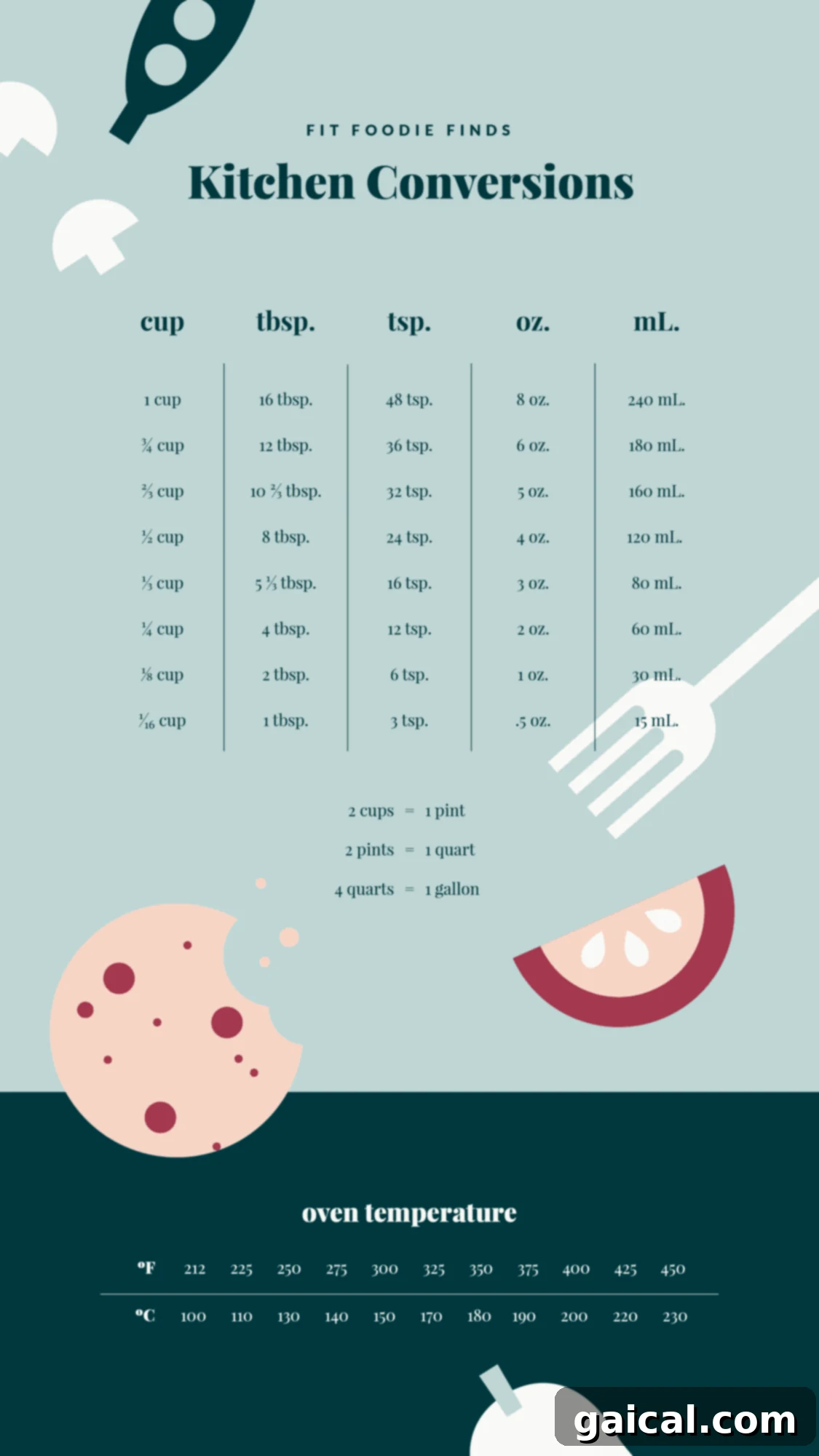
Now that you’re well-versed in how many teaspoons are in a tablespoon and the critical differences between measurement types, it’s time to equip you with a broader range of essential kitchen conversions. Having all these conversions readily available in one place will make your cooking and baking experiences far more seamless. Refer to this chart whenever you need a quick conversion, from ounces to cups or liters to gallons.
How many ounces in a cup? There are 8 fluid ounces in a 1 standard U.S. measuring cup.
How many ounces in a gallon? There are 128 fluid ounces in 1 gallon.
How many ounces in a pound? There are 16 ounces (weight) in 1 pound (weight).
How many cups in a quart? There are 4 cups in 1 quart.
How many grams in an ounce? There are approximately 28.35 grams in 1 ounce (weight).
How many liters in a gallon? There are approximately 3.785 liters in 1 gallon.
How many oz in a gallon? There are 128 fluid ounces in 1 gallon (reinforcing the fluid ounce concept).
How many tablespoons in a cup? There are 16 tablespoons in 1 cup.
How many cups in a gallon? There are 16 cups in 1 gallon (since 1 gallon = 4 quarts and 1 quart = 4 cups, 4 x 4 = 16).
How many grams in a pound? There are approximately 453.59 grams in 1 pound.
How many cups in a pint? There are 2 cups in 1 pint.
How many ounces in a liter? There are approximately 33.81 fluid ounces in 1 liter.
How many pints in a quart? There are 2 pints in 1 quart.
How many milliliters in a cup? There are approximately 236.59 milliliters in 1 standard U.S. cup.
Tips for Flawless Measurement Every Time
To ensure your measurements are always spot-on, here are a few best practices:
- Always Level Dry Ingredients: Use a flat edge to scrape off excess from your measuring cup or spoon.
- Measure Liquids at Eye Level: Bend down to check the meniscus (the curve of the liquid) at the bottom of the line.
- Use the Right Tools: Dedicated nested cups for dry, liquid measuring cups for wet, and a scale for ultimate precision.
- Spoon, Don’t Scoop Flour: When measuring flour, gently spoon it into the measuring cup before leveling, rather than scooping directly from the bag, which can compact it and lead to too much flour.
- Read Your Recipe Carefully: Pay attention to whether it specifies weight (oz, g, lb) or volume (fl. oz, tsp, Tbsp, cup) and choose your tools accordingly.
- Wipe Spoons Clean: For sticky ingredients like honey or molasses, lightly coat the spoon with cooking spray to prevent sticking.
By integrating these practices into your cooking routine, you’ll find greater consistency and success in all your culinary endeavors. Happy cooking!