
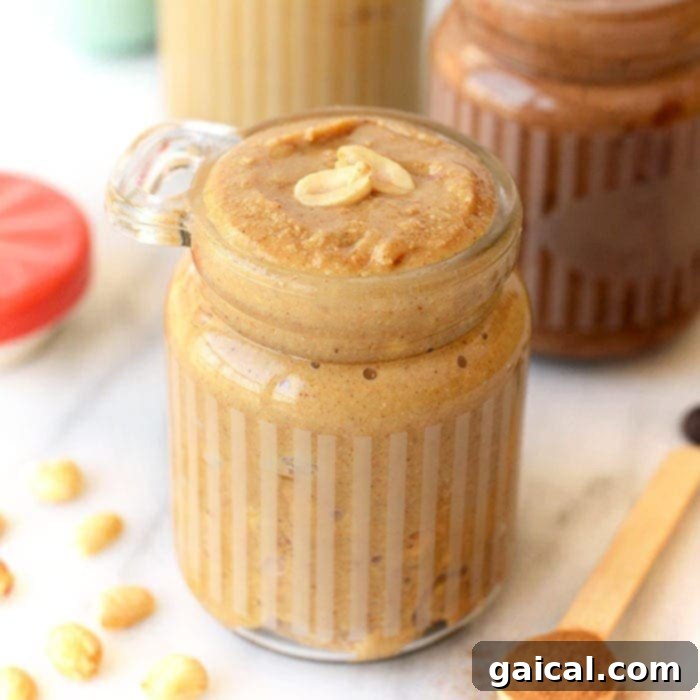
Homemade Peanut Butter: The Ultimate Guide to Healthy, Easy, and Delicious Spreads
Tired of store-bought peanut butter filled with unnecessary additives, sugars, and oils? Imagine spreading a rich, creamy, and undeniably fresh peanut butter that you made yourself, with just one core ingredient! This detailed guide will show you exactly how to craft your own healthy homemade peanut butter, offering incredible flavor, superior nutrition, and the satisfaction of knowing exactly what goes into every delicious spoonful.
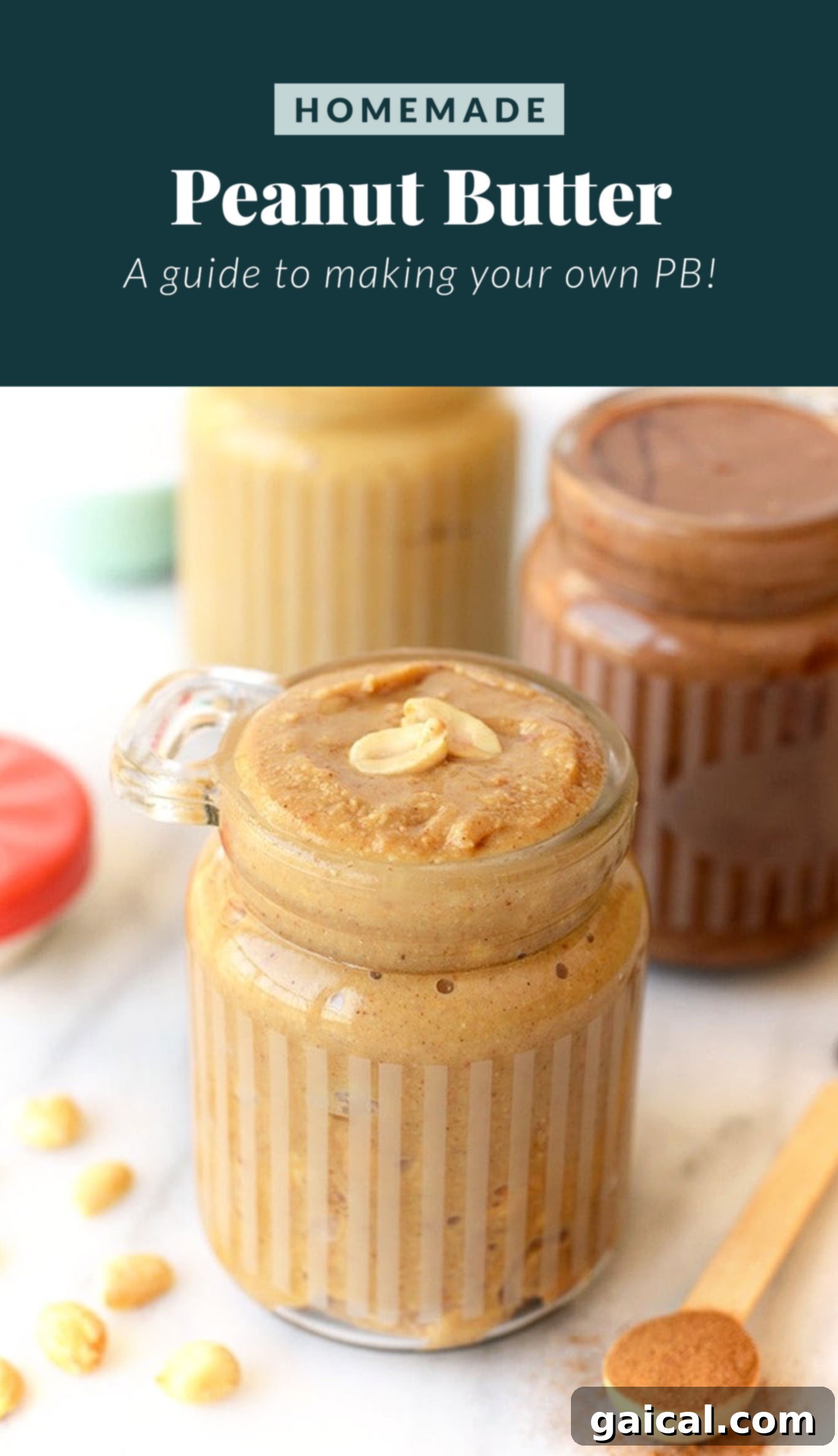
Why Make Your Own Healthy Peanut Butter?
Making your own peanut butter isn’t just a fun kitchen experiment; it’s a step towards a healthier, more controlled diet. Store-bought options often contain hidden sugars, hydrogenated oils, and preservatives that can detract from the natural goodness of peanuts. By going homemade, you ensure that your spread is pure, packed with natural nutrients, and tailored to your taste preferences.
The process is surprisingly simple, requiring minimal effort and just a handful of minutes. Once you experience the superior taste and texture of fresh, homemade peanut butter, you’ll wonder why you ever bought it from a jar!
The Nutritional Powerhouse of Natural Peanut Butter
Natural peanut butter, made solely from peanuts, is a fantastic source of energy and essential nutrients. It’s an excellent addition to a balanced diet, providing sustained energy and supporting overall health. Here’s a closer look at the impressive nutrition facts for all-natural peanut butter:
- Rich in Protein: Approximately 8 grams of protein per serving, making it a great plant-based protein source for muscle repair and growth.
- Packed with Essential Nutrients: Contains 6 vital nutrients, including magnesium, phosphorus, zinc, niacin, and Vitamin E.
- Heart-Healthy Fats: Abundant in monounsaturated and polyunsaturated fats, which are beneficial for cardiovascular health.
- Low in Sodium: Naturally low in sodium, especially when made without added salt.
- Lower in Carbohydrates: A relatively low-carb option compared to many other spreads.
- Dietary Friendly: Naturally vegan, keto-friendly (check net carbs for strict keto), and paleo-friendly (peanuts are technically legumes, but often consumed in paleo diets).
- Typical Nutrition (per 2 tablespoon serving of classic homemade peanut butter):
- Calories: 190 kcal
- Carbohydrates: 7g
- Fiber: 3g
- Sugar: 2g (natural sugar from peanuts)
- Fat: 16g
- Protein: 8g
Choosing natural, homemade peanut butter means you’re harnessing these benefits without the drawbacks of added sugars and unhealthy fats often found in commercial varieties.
Your Simple Guide: How to Make Peanut Butter in Just 2 Steps
Now that you’re well-versed in the incredible health benefits, let’s get to the exciting part: making your own peanut butter! The process is surprisingly straightforward, turning simple peanuts into a creamy, luscious spread.
Essential Equipment: The Power of a High-Speed Food Processor
The key to silky-smooth homemade peanut butter lies in your equipment. You’ll need a high-speed food processor or a powerful blender like a Vitamix. A robust motor is crucial for breaking down the peanuts and releasing their natural oils efficiently. While you can attempt this with a less powerful machine, it might take longer and require more frequent scraping of the sides.
Investing in a good quality food processor can make all the difference, ensuring a consistently smooth and creamy result every time. (For those interested, this is the Vitamix we highly recommend – it’s a worthwhile investment for any kitchen enthusiast).
The Two Simple Steps:
- Step 1: Add Peanuts to Processor
Place your chosen peanuts (we recommend dry roasted for optimal flavor and oil release) into the bowl of your high-speed food processor. Ensure the peanuts are unsalted unless you prefer a salty spread. - Step 2: Process Until Creamy
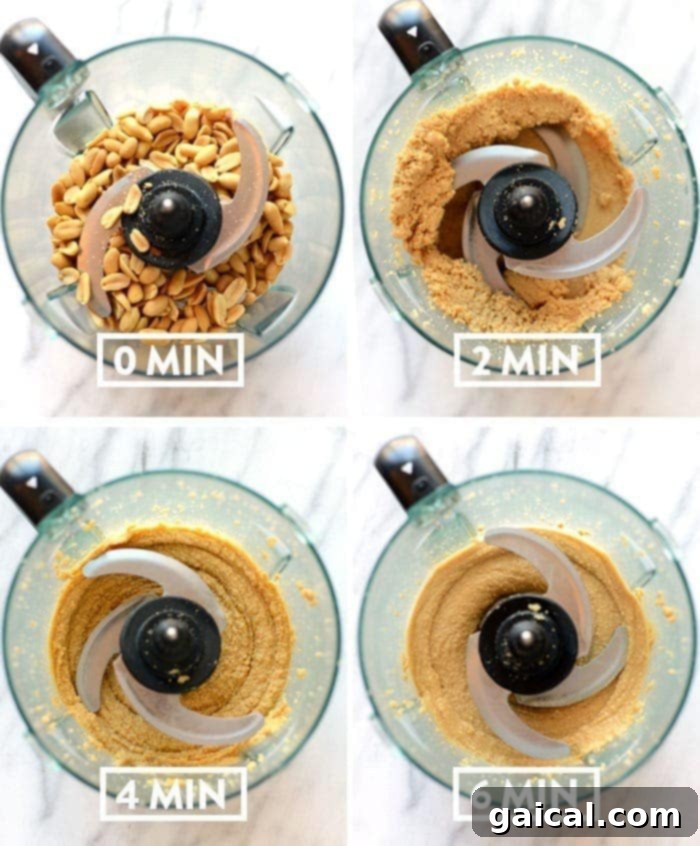
Secure the lid and turn your food processor to a high setting. Let it process continuously for 5-8 minutes. During this time, the peanuts will go through several stages: first, they’ll become a coarse meal, then a sticky ball, and finally, a smooth, liquid-like butter. It’s essential to scrape down the sides of the bowl every minute or so to ensure all peanuts are uniformly processed and the mixture remains smooth. Keep processing until it reaches your desired creamy, drippy consistency. For most processors, this takes around 6-7 minutes.
Pro Tips for Perfect Homemade Peanut Butter Every Time
Achieving the perfect consistency and flavor for your homemade peanut butter is simple with a few key considerations:
Choosing Your Peanuts: Roasted vs. Raw
While you can use raw peanuts, we’ve found that dry roasted peanuts yield the best results for homemade peanut butter. Roasting enhances their flavor and helps release their natural oils more easily, contributing to a smoother consistency. If using raw peanuts, consider roasting them lightly in the oven first (at 350°F / 175°C for 10-15 minutes, stirring once) to deepen their flavor and facilitate the oil extraction process.
Freshness Matters: The oil content in peanuts can vary based on their freshness. Older peanuts tend to have lower oil content, which might result in a thicker, less creamy butter. If, after 7-8 minutes of processing, your peanut butter still isn’t reaching that ideal drippy texture, simply add a small amount of neutral oil. A tablespoon or two of coconut oil (at room temperature) or a mild vegetable oil can help achieve the perfect smoothness without altering the flavor significantly.
Mastering Your Food Processor
As mentioned, a powerful food processor is your best friend here. If your machine starts to feel warm or struggles, give it a short break before continuing. This prevents overheating and ensures a consistent blend. Patience is key – let the machine do its work, and don’t be discouraged if it takes a few minutes to transition from meal to butter. The texture changes are a natural part of the process!
Unleash Your Creativity: 3 Irresistible Peanut Butter Flavor Variations
While classic homemade peanut butter is utterly delicious on its own, one of the greatest joys of making it yourself is customizing the flavors! Experiment with these healthy and exciting variations to elevate your peanut butter experience.
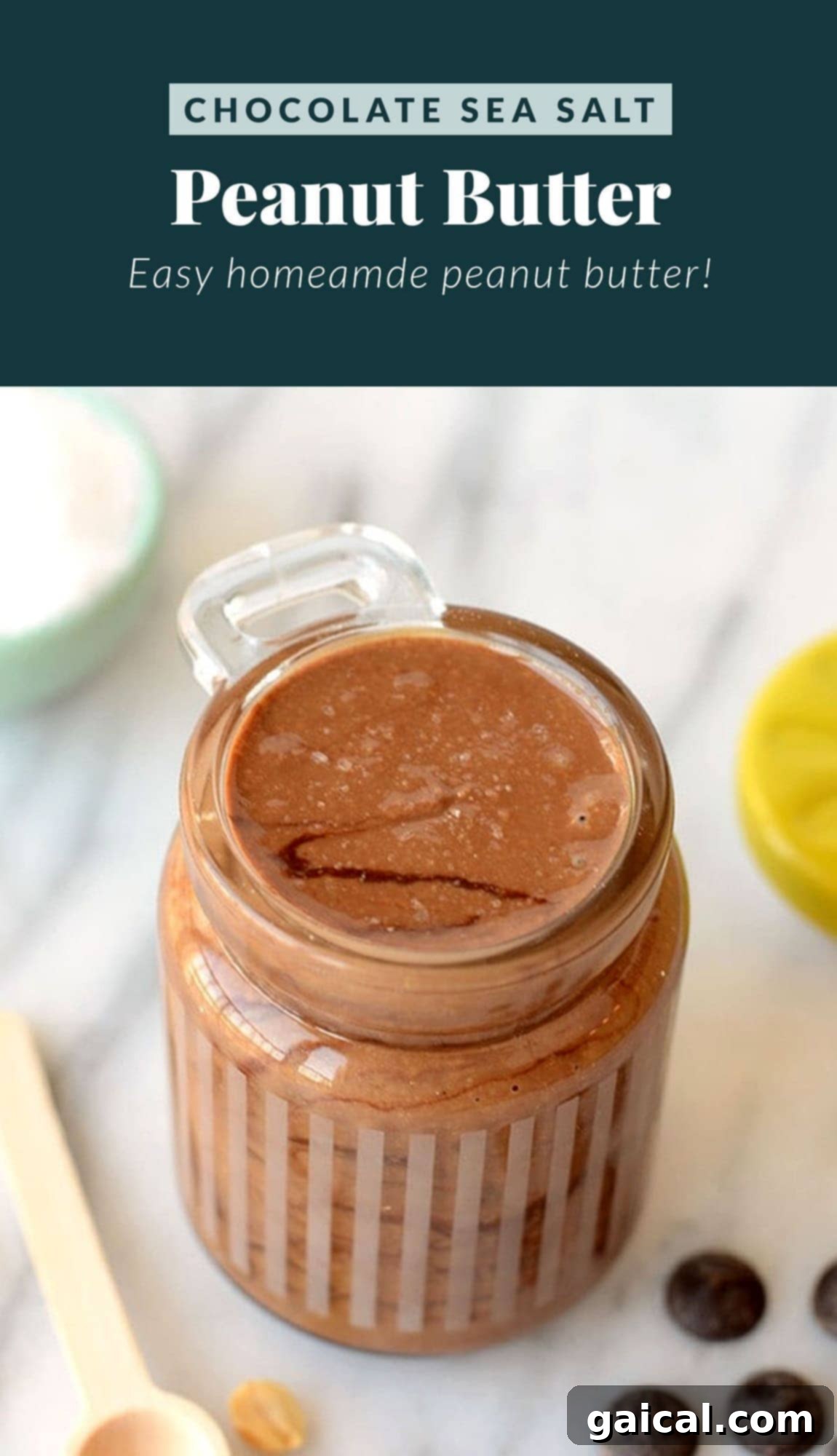
1. Decadent Chocolate Sea Salt Peanut Butter
Indulge in the perfect balance of sweet and salty with this rich chocolate sea salt peanut butter. It’s ideal for drizzling over fruit, toast, or enjoying straight from the spoon!
Ingredients:
- 3 cups unsalted dry roasted peanuts
- 1/4 cup dark chocolate chips (room temperature)
- 1/8 teaspoon sea salt
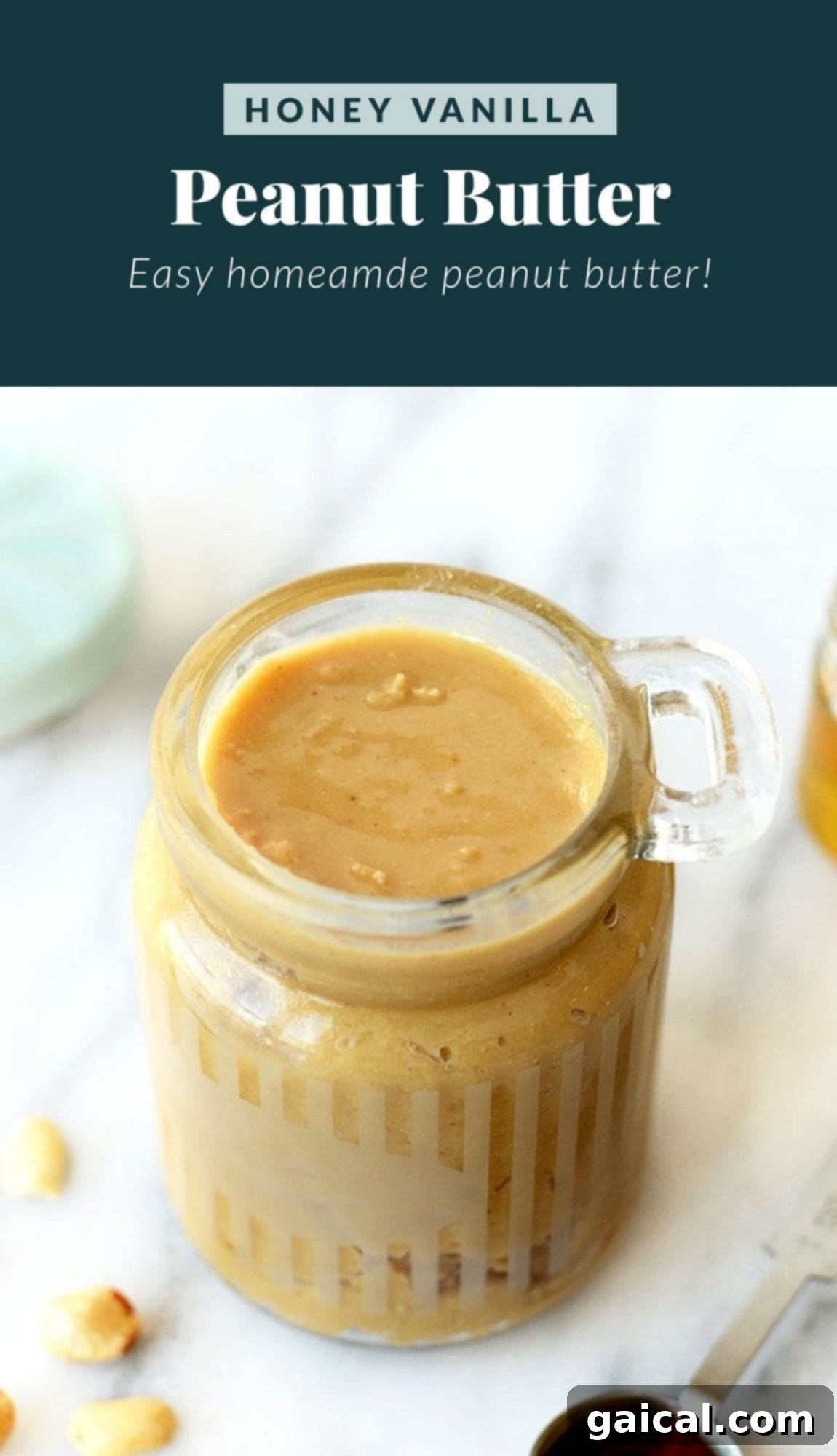
2. Comforting Honey Vanilla Peanut Butter
Naturally sweetened with golden honey and infused with the warm aroma of vanilla, this variation offers a comforting and subtly sweet flavor profile. It’s fantastic in smoothies or spread on warm pancakes.
Ingredients:
- 3 cups unsalted dry roasted peanuts
- 2 tablespoons honey
- 1 teaspoon vanilla extract
- 2 tablespoons coconut oil (room temperature)
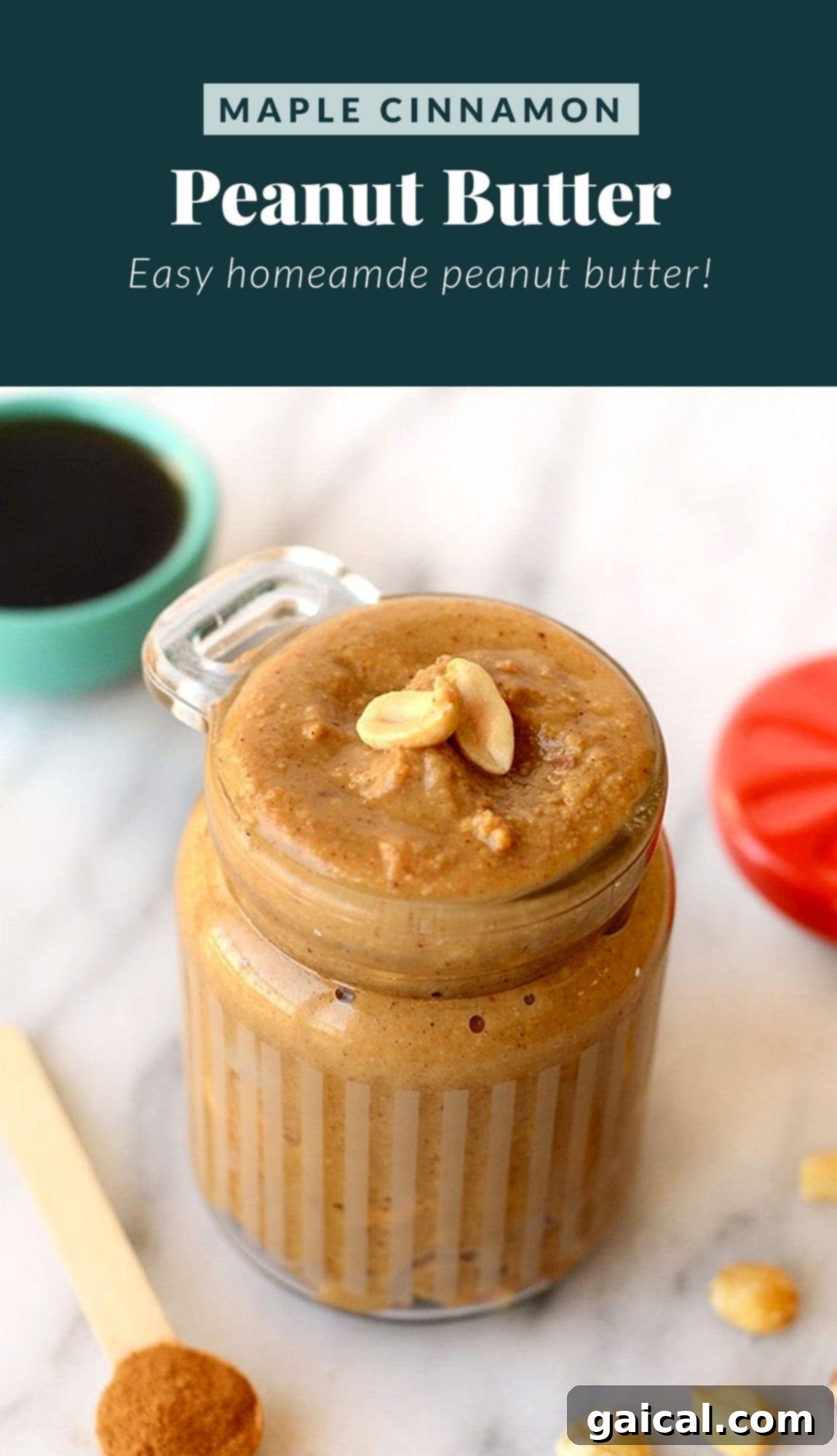
3. Satisfying Crunchy Maple Cinnamon Peanut Butter
For those who love a bit of texture, this crunchy peanut butter is sweetened with pure maple syrup, spiced with cinnamon, and enhanced with whole peanuts for an extra satisfying bite. Perfect for spreading on apple slices!
Ingredients:
- 3 cups unsalted dry roasted peanuts (for blending)
- 1/3 cup whole unsalted peanuts (for crunch)
- 2 tablespoons 100% pure maple syrup
- 1 teaspoon ground cinnamon
- 2 tablespoons coconut oil (room temperature)
To make these variations: First, prepare the classic peanut butter as described in the 2-step guide. Once it’s smooth and drippy, add the additional flavor ingredients. For honey vanilla and maple cinnamon, blend again for 2-3 minutes until smooth (the coconut oil helps prevent seizing). For chocolate sea salt, add the chips and sea salt and blend for about 1 minute until well combined, ensuring chocolate chips are at room temperature to avoid seizing. For crunchy maple cinnamon, add the whole peanuts at the very end and pulse a few times to incorporate them while retaining texture.
Storage & Shelf Life: Keeping Your Homemade Peanut Butter Fresh
Unlike commercial peanut butter, your homemade version is free from preservatives and stabilizers. This means its shelf life is shorter, but its freshness and natural taste are unparalleled.
How Long Does Homemade Peanut Butter Last?
We highly recommend storing your homemade peanut butter in an airtight container in the refrigerator. When properly stored in the fridge, it will remain fresh and delicious for up to 3 months. While it might last a couple of weeks at room temperature, refrigeration significantly extends its quality and prevents spoilage.
Signs of Spoilage
To tell if your peanut butter has gone bad, rely on your senses. If it develops an off-smell, a rancid odor, or shows any signs of mold, it’s best to discard it. The natural oils can eventually go rancid, especially if not refrigerated.
Delicious Ways to Enjoy Your Homemade Peanut Butter
Homemade peanut butter is incredibly versatile! Here are some fantastic ideas to incorporate your freshly made spread into your daily meals and snacks:
Peanut Butter Delights: More Recipes to Explore
- Homemade Peanut Butter Cups: Use your fresh peanut butter to create healthier versions of your favorite candy. Try Crunchy Rice Crispy Peanut Butter Cups or Healthy Peanut Butter Cups for a delightful treat.
- Energy-Boosting Peanut Butter Bars: Incorporate it into wholesome snack bars like Peanut Butter Oatmeal Bars or Homemade Protein Bars for an on-the-go fuel-up.
- Wholesome Peanut Butter Oatmeal: Elevate your breakfast with a dollop of homemade goodness. Delicious in Peanut Butter Baked Oatmeal or Vegan Peanut Butter Cup Overnight Oats.
- Healthy Peanut Butter Cookies: Bake up guilt-free cookies like Grain Free Peanut Butter Cookies or Peanut Butter No Bake Cookies.
- Nutrient-Rich Peanut Butter Smoothies: Blend it into creamy, satisfying drinks such as a Peanut Butter Banana Cold Brew Protein Smoothie or a Healthy Peanut Butter Cup Smoothie.
Recipe: Classic Homemade Peanut Butter
This foundational recipe uses just one ingredient to create a perfectly smooth and natural peanut butter, ready to be enjoyed as is or flavored with your favorite additions.
Prep time: 15 minutes
Total time: 15 minutes
Yields: Approximately 1.5 cups (12 servings)
Ingredients
- 3 cups unsalted dry roasted peanuts
Instructions
- Place the 3 cups of unsalted dry roasted peanuts into the bowl of a high-speed food processor.
- Secure the lid and process the peanuts on high for 5-8 minutes. During this time, the peanuts will gradually transform: from coarse crumbs to a thick paste, then a sticky ball, and finally, a smooth, creamy, and drippy peanut butter.
- Stop the food processor every minute or so to scrape down the sides of the bowl with a spatula, ensuring all peanuts are incorporated and blend evenly. Continue processing until your desired smooth and drippy consistency is achieved. This typically takes about 6-7 minutes.
- Once ready, transfer the homemade peanut butter to an airtight container.
Tips & Notes
- Storage: Store your homemade peanut butter in an airtight container in the refrigerator for up to 3 months for best freshness.
- Yields: This recipe typically yields about 1.5 cups of peanut butter.
- Adjusting Consistency: If your peanut butter is too thick, especially if using older or less oily peanuts, add 1-2 tablespoons of a neutral oil like coconut oil (melted) or peanut oil while processing until desired smoothness is reached.
Nutrition Information (per 2 tablespoon serving)
(Based on classic homemade peanut butter recipe with unsalted peanuts)
- Calories: 190 kcal
- Carbohydrates: 7 g
- Protein: 8 g
- Fat: 16 g
- Fiber: 3 g
- Sugar: 2 g
Note: Nutrition information is an approximation and can vary based on specific ingredients and processing.
Frequently Asked Questions About Homemade Peanut Butter
- Can I use raw peanuts?
- Yes, you can use raw peanuts. However, dry roasted peanuts are generally recommended because their flavor is more developed and their oils are more readily released, leading to a smoother consistency. If using raw, consider toasting them lightly first for better flavor.
- My peanut butter isn’t getting creamy, what should I do?
- Patience is key! It takes 5-8 minutes for the peanuts to release enough oil. If it’s still thick after this time, especially with older peanuts, try adding 1-2 tablespoons of a neutral oil like coconut oil (at room temperature or slightly melted) or peanut oil and continue processing until it reaches the desired creamy texture.
- How do I make crunchy peanut butter?
- For crunchy peanut butter, simply process the peanuts until they reach your desired creamy consistency. Then, add about 1/4 to 1/3 cup of whole, unsalted peanuts back into the food processor and pulse a few times until they are roughly chopped and evenly mixed throughout the butter. This creates a delightful textural contrast.
- Can I add other sweeteners or spices?
- Absolutely! After your classic peanut butter is made, feel free to blend in other additions like a pinch of cinnamon, a dash of nutmeg, a sprinkle of cayenne for a spicy kick, or natural sweeteners like maple syrup or a date. Always add these to taste and blend until well combined.