
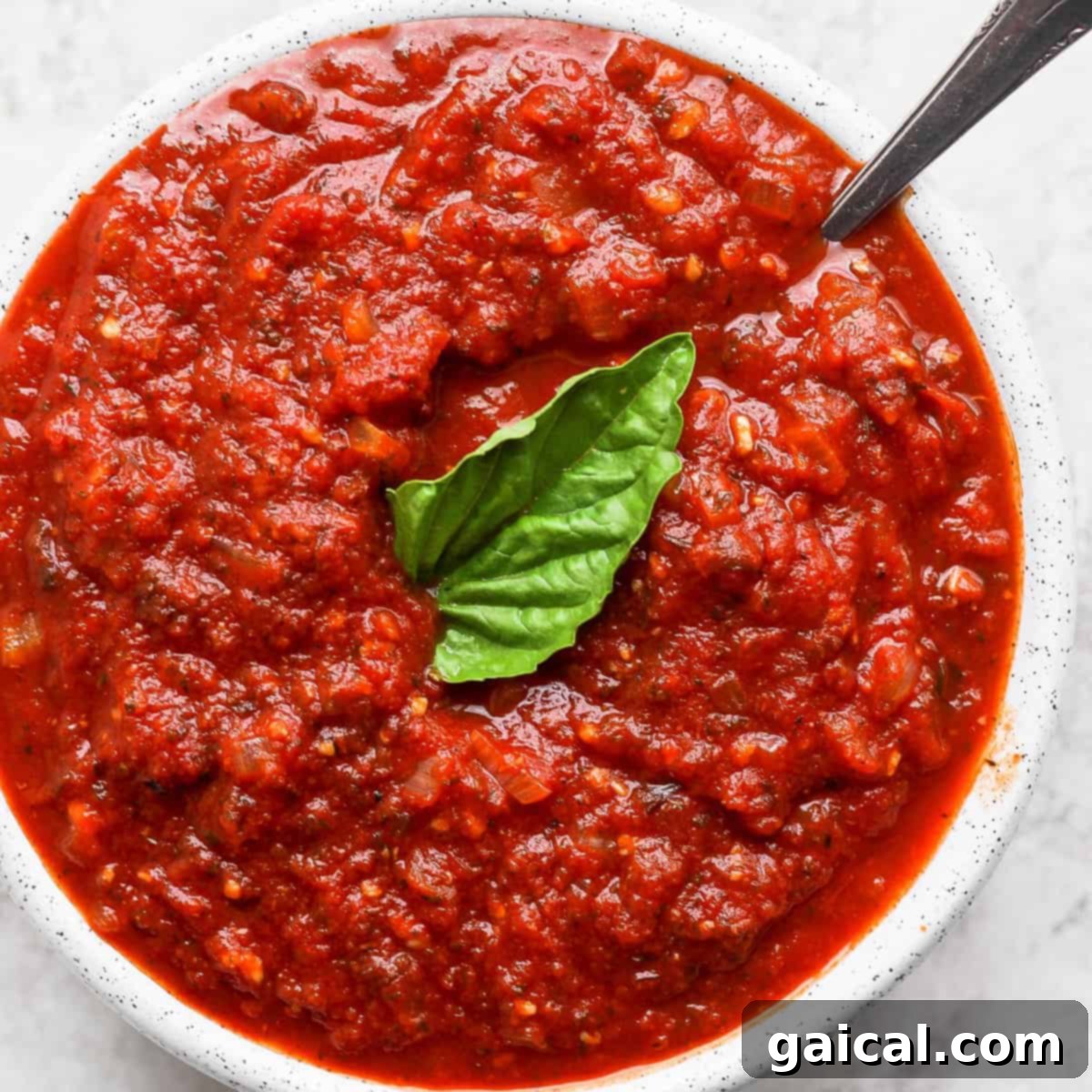
Discover the secret to the most delicious homemade marinara sauce, a staple of Italian-American kitchens, crafted with simple, wholesome ingredients like robust tomatoes, aromatic onion, and fresh garlic. This versatile red sauce is incredibly easy to make from scratch, transforming everyday meals into culinary experiences.
In this comprehensive guide, you’ll learn precisely how to make authentic marinara sauce, explore its myriad uses in classic and contemporary dishes, and master the best techniques for storing it to enjoy long after it’s made. Prepare to elevate your cooking with a sauce that’s bursting with rich, savory flavor and fresh appeal.
Homemade Marinara Sauce Recipe: The Ultimate Guide to Easy Italian Red Sauce
For many, the aroma of simmering tomato sauce evokes cherished memories of family dinners and comforting home-cooked meals. In our household, growing up, spaghetti and meatballs was more than just a dish; it was a weekly tradition, a celebration of Italian-American culinary heritage. My mother, raised on hearty, flavorful Italian dishes, always held marinara sauce in high regard as a fundamental and beloved component of our family feasts.
While this recipe might not lay claim to generations of Italian grandmothers meticulously slow-cooking tomatoes, it is deeply inspired by the authentic flavors and simple philosophy passed down through Italian family traditions. This rendition focuses on ease and accessibility, allowing you to whip up a rich and flavorful marinara sauce right in your own kitchen, reminiscent of the best homemade versions without the fuss. It’s a quick, delicious, and incredibly satisfying way to bring the taste of Italy to your table.
Why You’ll Love This Homemade Marinara Sauce
- Effortlessly Easy: Forget complex steps or endless hours over the stove. This recipe requires just one pot and a wooden spoon, making it perfect for busy weeknights or when you need a reliable, flavorful sauce in a pinch.
- Made with Simple, Wholesome Ingredients: Utilizing readily available canned tomato products, alongside fresh, aromatic garlic and onion, this sauce focuses on quality ingredients that deliver maximum flavor without unnecessary additives.
- Perfect for Freezing: Prepare a larger batch and freeze portions for future use. Having homemade marinara on hand means quick, delicious dinners are always within reach, even on your most hectic days.
- Highly Versatile: Whether you prefer a robust, chunky sauce, a silky smooth base, or one with a little kick of spice, this marinara recipe is incredibly adaptable. Easily customize it to suit your personal taste preferences and culinary needs.
- Superior Flavor: Experience the difference of homemade. Unlike store-bought varieties, this marinara boasts a fresh, vibrant taste that truly enhances any dish it accompanies.
What Exactly is Marinara Sauce? A Culinary Breakdown
At its heart, marinara sauce is a bright, vibrant, and relatively quick-cooking tomato sauce. Originating from Naples, Italy, its name, meaning “mariner’s style,” is believed to refer to the simplicity of the sauce, often prepared by sailors or quickly upon their return to shore. It’s characterized by its fresh tomato flavor, typically achieved with a base of ripe tomatoes (often canned for consistency and convenience), infused with garlic, onions, and various herbs. Unlike heavier, slow-simmered sauces, marinara is designed to be light and allow the natural sweetness and acidity of the tomatoes to shine.
This beloved red sauce serves as a foundational element in a vast array of classic Italian dishes. From coating tender Italian meatballs to layering in a comforting lasagna, or complementing the crispy texture of chicken parmesan, marinara sauce provides that quintessential Italian flavor profile that ties everything together. Its simplicity is its strength, offering a pure tomato taste that pairs beautifully with almost any pasta or baked dish.
Marinara Sauce vs. Spaghetti Sauce: Understanding the Nuances
While often used interchangeably, there are subtle yet distinct differences between marinara sauce and what is commonly referred to as “spaghetti sauce.” Typically, spaghetti sauce tends to be thicker and often contains more ingredients, such as ground meat, a wider variety of vegetables (like carrots or bell peppers), and might be simmered for a longer duration to develop a richer, more complex flavor. Marinara, on the other hand, is generally lighter, focuses predominantly on tomatoes, garlic, onion, and herbs, and has a shorter cooking time, resulting in a fresher, brighter taste. However, due to their similar flavor profiles, marinara sauce can absolutely be used as a delicious, lighter alternative to traditional spaghetti sauce in most applications.
Can I Use Marinara Sauce as Pizza Sauce?
Absolutely! While traditional pizza sauce is often thicker and sometimes less seasoned to allow other toppings to stand out, marinara sauce makes an excellent substitute. Its robust tomato flavor and aromatic hints of garlic and herbs are perfect for a pizza base. If you prefer a thicker pizza sauce, you can gently simmer your homemade marinara for an additional 10-15 minutes to reduce it slightly and achieve a more concentrated consistency. This will prevent your pizza from becoming soggy and intensify the flavor, making for a truly gourmet homemade pizza experience.
Essential Ingredients for the Best Homemade Marinara Sauce
Crafting an exceptional marinara sauce starts with selecting the right ingredients. Here’s a detailed look at what you’ll need to create a flavorful and aromatic red sauce:
- Extra Virgin Olive Oil: This isn’t just for sautéing; it’s a foundational flavor element. Good quality olive oil provides a rich, fruity base and contributes essential healthy fats, enhancing the overall depth and mouthfeel of the sauce.
- Onion (White or Yellow): A true workhorse in the kitchen, onion provides a sweet, savory base when properly sautéed. Either white or yellow onions will work beautifully; just ensure it’s finely minced to blend seamlessly into the sauce. Don’t underestimate its role in building complexity.
- Garlic: The soul of Italian cooking! Freshly minced garlic is absolutely crucial for an authentic marinara. The fresher your garlic, the more potent and aromatic its contribution will be. It infuses the olive oil and onion with an irresistible fragrance that defines the sauce.
- Chunky Tomato Sauce or Crushed Tomatoes: The heart of your marinara. We recommend using high-quality canned chunky tomato sauce, or crushed tomatoes, such as those from Muir Glen, known for their superior flavor and texture. If chunky tomato sauce isn’t available, crushed or even finely diced tomatoes can be used, offering flexibility while maintaining that rich tomato base.
- Tomato Paste: This concentrated tomato wonder is key to deepening the flavor profile and adding a beautiful richness to your sauce. It also helps to naturally thicken the marinara, giving it a more luxurious consistency without requiring a long simmer. Sautéing it briefly before adding other liquids unlocks its full umami potential.
- Salt: A critical flavor enhancer. Don’t be shy, but remember to salt in stages! Seasoning the onions and garlic early on, and then adjusting the salt content as the sauce simmers, ensures a perfectly balanced flavor profile.
- Dried Spices (Parsley, Thyme, and Oregano): These classic Italian herbs are fundamental to marinara sauce. Dried parsley adds a touch of freshness, thyme provides earthy notes, and oregano delivers that quintessential Italian aroma. For convenience, a high-quality Italian seasoning blend can also be used as a substitute, offering a balanced mix of these and other complementary herbs.
- Black Pepper: A pinch of freshly ground black pepper adds a subtle warmth and enhances the overall spice profile. Adjust to your taste.
Can I Use Fresh Tomatoes Instead? Absolutely! While canned tomatoes offer convenience and consistent flavor, especially out of season, fresh, ripe tomatoes can create an exceptionally vibrant marinara. For a truly seasonal delight, consider our dedicated Roasted Tomato Basil Marinara Sauce recipe, which showcases the exquisite flavor of roasted fresh tomatoes and fragrant basil.
Essential Kitchen Tools for Your Marinara Journey
You don’t need a gourmet kitchen to make incredible marinara. Just a few basic tools will get the job done:
- Wooden Spoon: Ideal for stirring and scraping the bottom of the pot without damaging the surface.
- Medium to Large Pot or Dutch Oven: A sturdy pot with enough capacity to comfortably hold all ingredients and allow for simmering. A Dutch oven is excellent for even heat distribution.
- Mason Jars or Freezer-Safe Containers: Essential for storing any leftover sauce, whether in the fridge or freezer.
- Can Opener: For easily opening those vital cans of tomatoes and tomato paste.
- Cutting Board and Sharp Knife: For prepping your onion and garlic with precision.
How to Make Marinara Sauce from Scratch: A Simple Step-by-Step Guide
Making homemade marinara sauce is surprisingly simple and incredibly rewarding. Follow these easy steps to create a rich, flavorful sauce that rivals any restaurant:
- Sauté Aromatics: Begin by heating 1 tablespoon of high-quality extra virgin olive oil in a medium pot or Dutch oven over medium-high heat. Once shimmering, add your finely minced white or yellow onion along with the fresh minced garlic. Sprinkle with about ¼ teaspoon of salt. Sauté these aromatics for 2-3 minutes, stirring occasionally, until the onion becomes translucent and fragrant, and the garlic is lightly golden (be careful not to burn it!). This step is crucial for building the flavor foundation of your sauce.
- Combine Tomato Products and Spices: Next, introduce the star ingredients. Pour in the 28-oz can of chunky tomato sauce (or crushed tomatoes) and add the tablespoon of tomato paste, along with the dried parsley, thyme, oregano, and the remaining salt and pepper. Stir everything thoroughly to combine, ensuring the tomato paste is fully incorporated into the mixture.
- Simmer to Perfection: Bring the sauce to a gentle boil, then immediately reduce the heat to low. Allow the marinara to simmer uncovered for at least 15-20 minutes. Simmering is where the magic happens; the flavors will meld and intensify, and the sauce will naturally thicken to a beautiful consistency. Stir occasionally to prevent sticking. For a richer, deeper flavor, you can simmer for up to an hour, but 20 minutes is sufficient for a delicious quick marinara.
- Taste and Adjust: Before serving, taste your marinara sauce. This is your chance to adjust seasonings. You might want to add a touch more salt, a pinch of sugar (if the tomatoes are very acidic), or a dash of red pepper flakes for heat.
- Serve and Enjoy: Your homemade marinara sauce is now ready! Serve it warm over your favorite cooked pasta, use it as a base for a hearty lasagna, or pair it with our acclaimed eggplant parmesan recipe. Garnish with fresh basil or grated Parmesan cheese for an extra touch of Italian flair.
Elevate Your Marinara: Flavor Customization and Variations
One of the joys of making marinara from scratch is the ability to customize it to your exact preferences. Here are some popular flavor variations to experiment with:
- Make it Spicy: For those who appreciate a kick, add ½ to 1 teaspoon of red pepper flakes along with the other dried spices. For an even more intense heat, consider adding a finely minced fresh chili pepper during the sautéing stage.
- Infuse Freshness: While dried herbs are excellent, fresh herbs can truly elevate your sauce. Stir in a handful of freshly chopped basil and parsley during the last 5 minutes of simmering. You can also make your own crushed tomatoes by lightly pulsing whole peeled tomatoes in a food processor with a splash of water for a brighter, fresher taste.
- Create a Chunky Sauce: If you enjoy a more rustic texture, incorporate a can of drained diced tomatoes along with the chunky tomato sauce. For a heartier, vegetable-packed sauce, get inspired by a bolognese and sauté finely diced carrots, celery, or bell peppers along with the onion and garlic.
- Richness with Red Wine: For an added layer of depth and complexity, deglaze the pot with about ¼ cup of dry red wine (like Merlot or Cabernet Sauvignon) after sautéing the aromatics. Allow it to simmer until almost evaporated before adding the tomatoes.
- A Touch of Sweetness: If your tomatoes are particularly acidic, a pinch (¼ to ½ teaspoon) of sugar can help balance the flavors and bring out the natural sweetness of the tomatoes without making the sauce overtly sweet.
- Herbal Infusion: Consider adding a bay leaf during simmering for a subtle, earthy note, or a sprig of fresh rosemary for a more robust herbal aroma. Remember to remove them before serving.
Endless Possibilities: Creative Ways to Use Homemade Marinara Sauce
Once you’ve mastered this homemade marinara, you’ll find countless ways to incorporate its vibrant flavor into your meals. Its versatility makes it a kitchen hero:
- Classic Chicken Parmesan: Elevate your chicken parmesan by using this homemade sauce. Whether you prefer baked chicken parmesan or a quicker air fryer version, start with our delicious parmesan-crusted chicken and bake it to perfection with generous spoonfuls of your freshly made marinara.
- Hearty Spaghetti and Meatballs: There’s a reason this is an all-time family favorite. Substitute store-bought pasta sauce with a generous amount of this homemade marinara for an unforgettable spaghetti and meatballs experience.
- Layers of Lasagna: This rich red sauce provides an exceptionally flavorful and easy base for any lasagna recipe. Try it in our comforting crockpot lasagna or add a seasonal twist with our butternut squash lasagna.
- Delicious Stuffed Shells: For a delightful vegetarian meal, our sweet potato, spinach, and ricotta stuffed shells pair perfectly with this simple yet flavorful marinara sauce.
- Rustic Ratatouille: Transform our vibrant ratatouille recipe, made with a medley of squash and creamy ricotta, by swapping its tomato sauce base with your homemade marinara for an even richer depth of flavor.
- Versatile Dipping Sauce: Beyond main courses, this marinara shines as a dipping sauce. Serve it alongside crispy baked zucchini fries, warm cheesy garlic bread, mozzarella sticks, or even as a flavorful dip for arancini or calzones.
- Savory Shakshuka: Use it as a robust base for this Middle Eastern and North African dish, creating wells in the simmering sauce for eggs to poach in.
- Bruschetta Topping: Lightly toast baguette slices, spread with a little garlic, and top with warmed marinara and fresh basil for a simple yet elegant appetizer.
- Pizza and Calzone Base: As discussed, a slightly reduced marinara makes for a fantastic and flavorful pizza or calzone sauce, imparting a fresh tomato taste to your homemade creations.
- Soup Base: Use it as a flavorful foundation for minestrone, tomato soup, or other vegetable-based soups.
Storage Tips for Your Homemade Marinara Sauce
Proper storage ensures your delicious homemade marinara sauce remains fresh and safe to enjoy for days to come. After allowing the sauce to cool completely to room temperature, transfer it to an airtight container. It can be safely stored in the refrigerator for up to 3-5 days. Always use clean utensils when serving to prevent contamination and extend its shelf life.
Freezer Directions: Preserving Marinara for Later
One of the greatest advantages of making marinara from scratch is its excellent freezer-friendliness. Batch cooking and freezing this sauce will be a game-changer for quick, healthy meals on busy evenings. Here’s how to properly freeze your homemade marinara:
- Cool Completely: Before freezing, ensure the marinara sauce has cooled entirely to room temperature. Freezing hot sauce can create condensation and affect texture, or even raise the temperature of your freezer.
- Portion and Transfer: Divide the cooled sauce into practical, single-serving or meal-sized portions. Transfer these portions into gallon-size plastic freezer bags (laying them flat for efficient storage) or sturdy, freezer-safe containers. Leave about an inch of headspace if using rigid containers to allow for expansion.
- Remove Air and Seal: If using freezer bags, press out as much air as possible before sealing to prevent freezer burn. For containers, ensure the lids are tightly sealed.
- Label and Freeze: Label each bag or container with the date. Your homemade marinara sauce can be safely frozen for up to 3 months. For best quality, try to consume it within this timeframe.
- Thawing and Reheating: To thaw, simply transfer the frozen sauce to the refrigerator overnight. For quicker thawing, you can immerse a sealed bag in cold water or use the defrost setting on your microwave. Reheat gently on the stovetop over low heat, stirring occasionally, until thoroughly warmed through. Add a splash of water or broth if it seems too thick.
Discover More of Our Favorite Homemade Sauces
Explore More Homemade Sauce Recipes
- Roasted Tomato Basil Marinara Sauce
- Homemade Enchilada Sauce
- Classic BBQ Sauce
- Authentic Teriyaki Sauce
Homemade Marinara Sauce
A simple and flavorful homemade marinara sauce crafted with basic Italian ingredients like ripe tomatoes, garlic, onion, and a blend of aromatic spices.
By: Lee Funke
Prep Time: 10 mins
Cook Time: 25 mins
Total Time: 35 mins
Servings: 4
Ingredients
- 1 tablespoon extra virgin olive oil
- ½ small white or yellow onion, minced
- 2 tablespoons minced garlic (fresh is best!)
- 1 (28-oz) can chunky tomato sauce (e.g., Muir Glen) OR crushed tomatoes*
- 1 tablespoon tomato paste
- 1 teaspoon dried parsley
- 1 teaspoon dried thyme
- ½ teaspoon ground oregano
- ½ teaspoon salt (plus more to taste)
- ¼ teaspoon ground black pepper
Instructions
- Heat 1 tablespoon olive oil in a medium pot or Dutch oven over medium-high heat.
- Add the minced white onion and minced garlic to the pot. Sprinkle with ¼ teaspoon salt. Sauté for 2-3 minutes until the onion is translucent and fragrant.
- Stir in the chunky tomato sauce (or crushed tomatoes), tomato paste, dried parsley, dried thyme, ground oregano, remaining salt, and ground pepper. Mix thoroughly to combine all ingredients.
- Bring the marinara sauce to a gentle boil, then reduce the heat to low. Simmer uncovered for 15-20 minutes, allowing the flavors to meld and deepen. Stir occasionally to prevent sticking.
- Taste and adjust seasoning as needed. Serve immediately over your favorite dishes, or let cool and store for later use.
Tips & Notes
- Tomato Consistency: If chunky tomato sauce is unavailable, diced tomatoes can be used for a similar texture, or crushed tomatoes for a smoother consistency.
- Yield: This recipe typically makes approximately 4 cups of delicious marinara sauce.
- Optional Sweetness: If your tomatoes are very acidic, add a pinch (¼ teaspoon) of sugar to balance the flavors.
Watch How to Make It
Nutrition
Calories: 100 kcal, Carbohydrates: 13 g, Protein: 2 g, Fat: 2 g, Fiber: 2 g, Sugar: 7 g
Nutrition information is automatically calculated and should be used as an approximation.
Love this recipe? Leave a comment below!
Don’t forget to tag your posts on social media with the hashtag #fitfoodiefinds – we’d love to see what you’re cooking!
Photography by: The Wooden Skillet
Embark on your journey to mastering the art of homemade marinara. With this guide, you have everything you need to create a versatile, flavorful sauce that will become a cherished staple in your kitchen and a highlight of your family meals. Enjoy the process, and savor the authentic taste of Italy!