
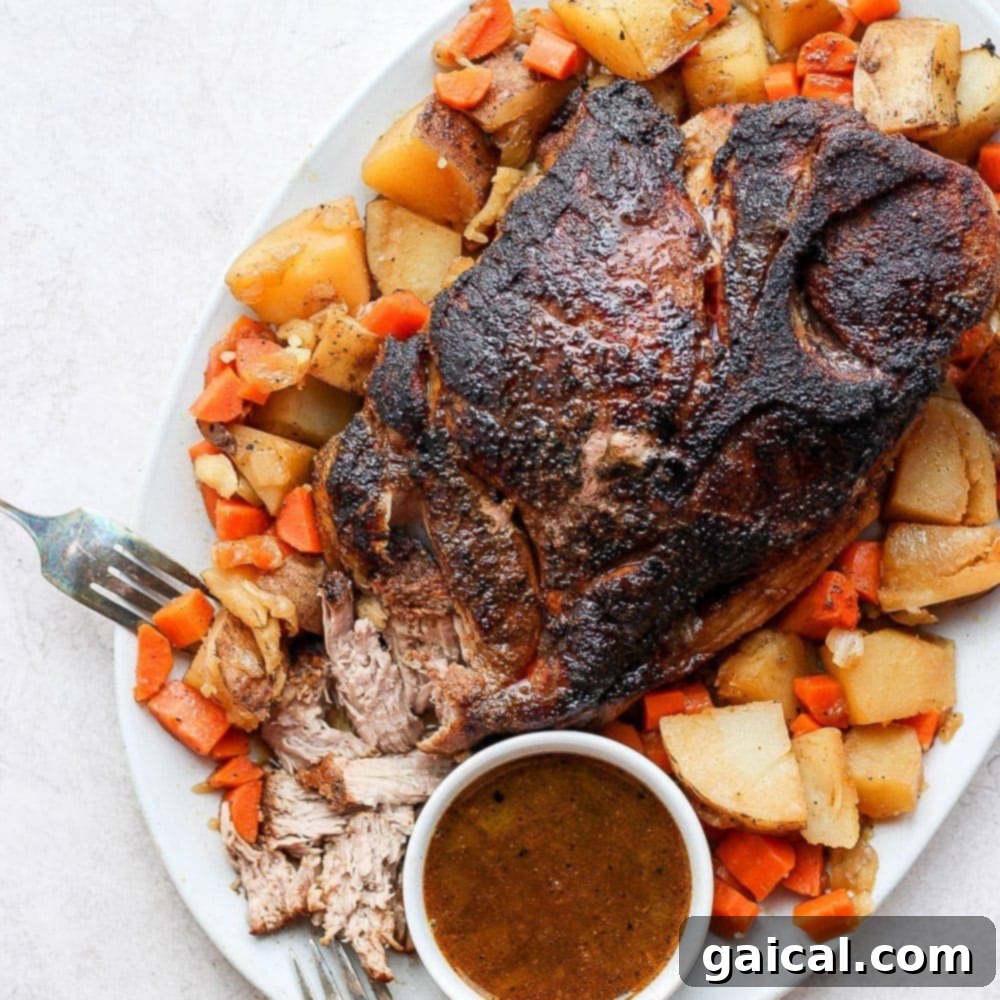
Ultimate Oven Baked Pork Roast: Your Guide to Tender, Juicy Perfection
Prepare to transform your kitchen into an aromatic haven with this incredible oven baked pork roast recipe. Infused with savory flavors from a simple yet powerful pork dry rub and surrounded by an abundance of hearty, perfectly roasted vegetables, this dish guarantees an unforgettable meal. The true magic lies in its delightful contrast: a beautifully crispy exterior encasing meat so tender it effortlessly falls off the bone. It’s no surprise that this convenient one-pot meal has quickly become a cherished family favorite, earning regular requests!
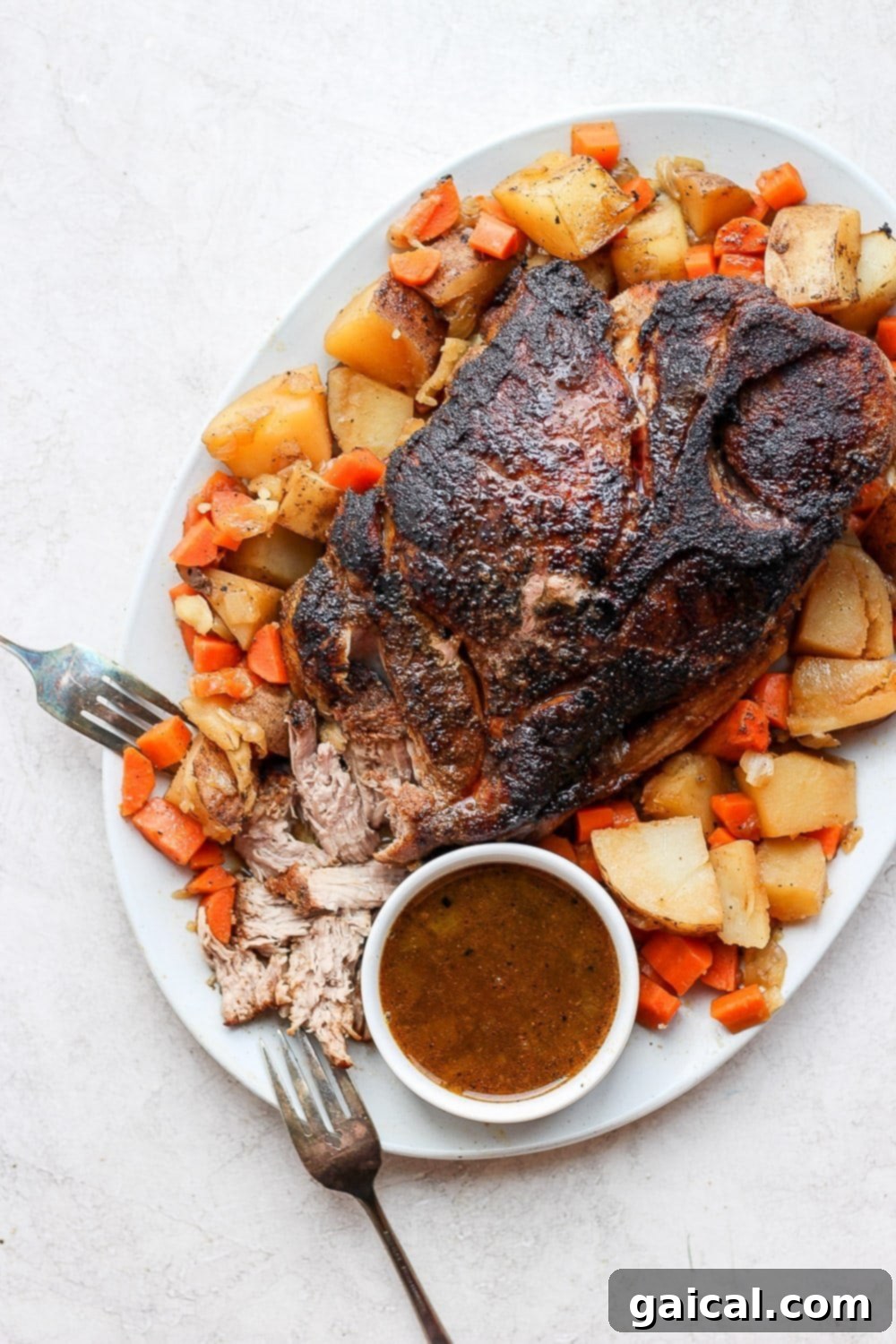
This particular oven baked pork roast recipe stands as a testament to its deliciousness, consistently ranking among the most popular dinners on Fit Foodie Finds. With hundreds of 5-star ratings, it’s clear that our community adores its simplicity, robust flavor, and satisfying results. It’s a dish that brings comfort and joy to the dinner table without demanding extensive culinary expertise.
The journey to this delectable meal begins with a straightforward approach: generously season your pork shoulder roast with our recommended dry rub, then sear it to achieve a golden-brown crust that locks in moisture and develops rich, complex flavors. Following this crucial step, the roast is transferred to the oven, where it slow-cooks alongside chopped potatoes, onions, and carrots. This allows the meat to reach an unparalleled tenderness and juiciness, while the vegetables absorb the wonderful drippings. As a crowning touch, those same flavorful drippings are then transformed into a simple yet incredibly savory gravy, creating a truly complete and harmonious meal that’s effortlessly elegant.
What I personally adore about this pork roast recipe is its all-inclusive nature. It masterfully provides not just a succulent protein centerpiece, but also a generous helping of nutritious, flavor-packed vegetables and a luscious gravy, all emanating from a single cooking vessel. This minimal-effort, maximum-flavor approach makes it an ideal choice for a comforting weeknight dinner or a relaxed weekend feast, guaranteeing rave reviews every time.
Selecting the Perfect Pork Cut for Roasting Success
The secret to an exceptionally tender and flavorful pork roast begins with choosing the right cut of meat. For this specific recipe, we wholeheartedly recommend a boneless pork shoulder roast. Often referred to as “pork butt” (despite being sourced from the shoulder region, not the hindquarters), this cut is a favorite among chefs and home cooks alike for its abundant marbling and connective tissues. These elements are key to creating that coveted “fall-off-the-bone” texture; as the roast slowly cooks, the fat renders and the connective tissues break down into gelatin, infusing the meat with moisture and rich flavor, ensuring it remains incredibly tender and juicy.
To pinpoint the ideal cut for a truly traditional and succulent pork roast, our culinary team conducted extensive testing, primarily comparing the pork loin roast with the pork shoulder roast:
- Pork Loin Roast: This cut comes from the pig’s back and is notably leaner than the shoulder. While it can be roasted, its low fat content makes it prone to drying out if overcooked. If you opt for a pork loin in this recipe, expect a firmer, more steak-like texture that will require slicing for serving, rather than easily shredding. It offers a different, less yielding experience than a shoulder roast.
- Pork Shoulder Roast: Originating from the pig’s shoulder, this cut is inherently richer in fat and connective tissue. These attributes make it perfectly suited for slow roasting, as they slowly break down to deliver unparalleled juiciness and tenderness. Without a doubt, we strongly recommend the pork shoulder roast for this recipe. Its inherent fattiness guarantees a consistently moist, rich, and tender outcome, making it the superior choice for a deeply satisfying roast.
Planning Tip: If you’re a fan of alternative cooking methods, you’ll be pleased to know that we offer a diverse range of other pork roast recipes. Whether you’re in the mood for the speed of a Instant Pot Pork Roast or the convenience of a Slow Cooker Pork Roast, our collection has something for every cooking style!

Mastering Pork Cuts: A Comprehensive Guide
Ever wondered about the origin of different pork cuts on a pig? We’ve made it easy to understand! For an in-depth look at everything pork, including detailed descriptions and tips, explore our extensive roundup of favorite pork recipes.
Perfecting the Cook Time for Your Oven Baked Pork Roast
The duration required to perfectly cook your pork roast in the oven is primarily influenced by its weight and thickness. For a typical 3 lb. boneless pork shoulder, anticipate a cooking time of approximately 75-80 minutes when roasted at 350ºF (175°C). The ultimate goal is for the pork to reach a safe and succulent internal temperature of 145ºF (63°C), as recommended by the FDA. It’s crucial to also allow the roast a mandatory 3-minute rest period after it comes out of the oven, which helps redistribute the juices, ensuring maximum tenderness and flavor. Before baking, don’t skip the step of searing all sides of your pork roast; this initial browning not only contributes to an appetizing crust but also significantly deepens the overall savory profile of the meat.
The Secret to a Fall-Off-The-Bone Pork Roast
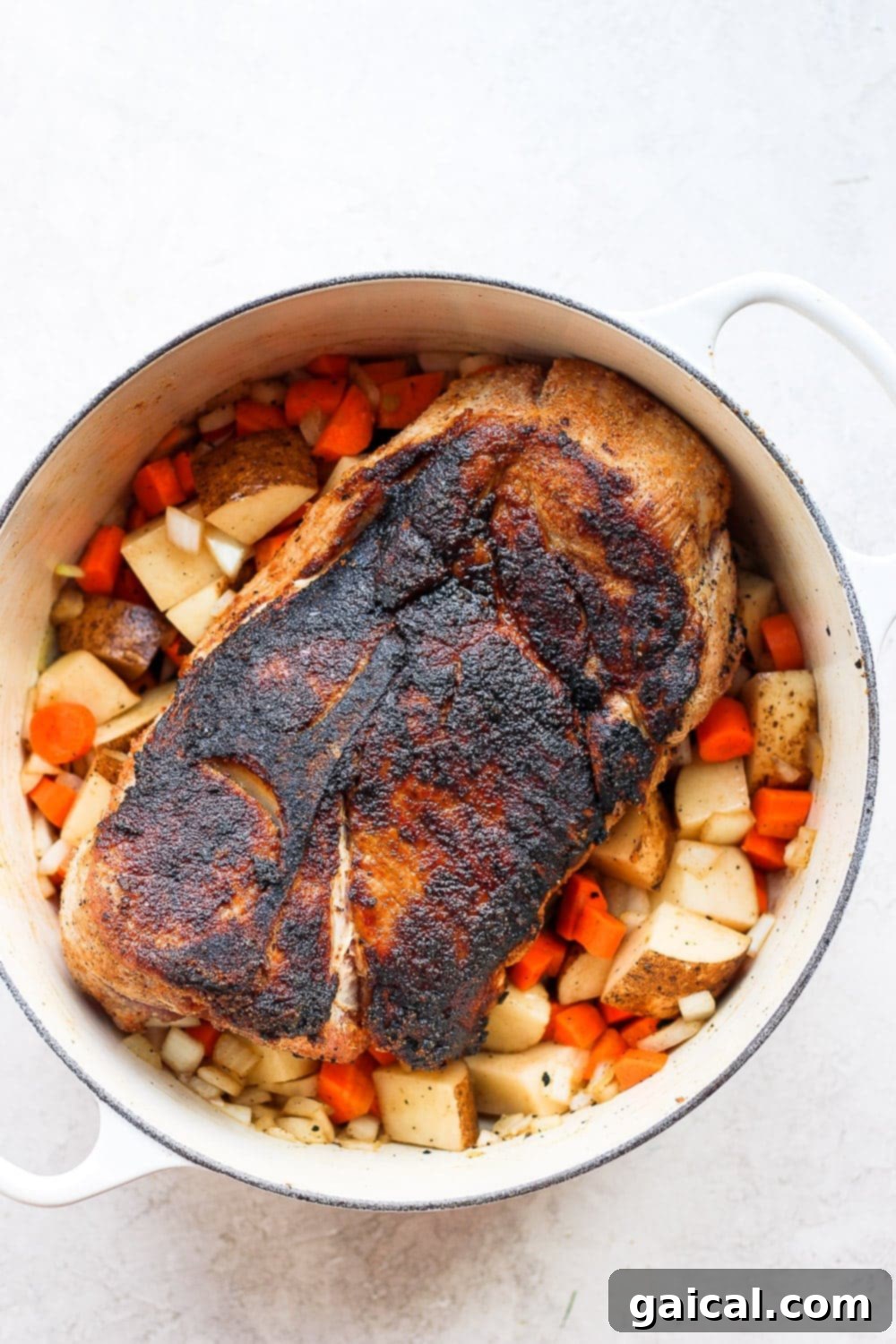
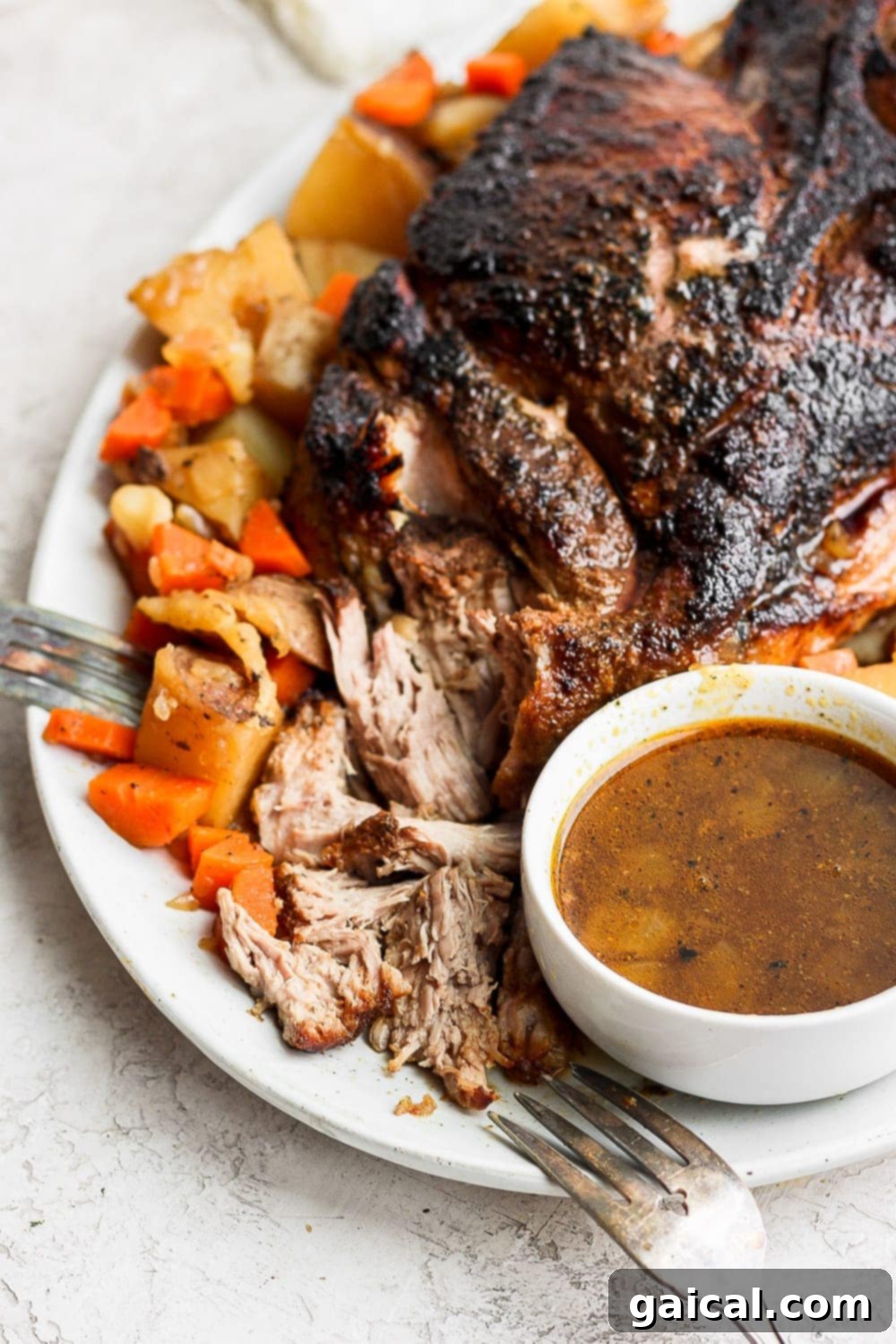
The highly sought-after “fall-off-the-bone” texture is a hallmark of a truly well-executed pork roast, and its achievement largely depends on the inherent characteristics of the pork shoulder you choose. As our accompanying photos illustrate, a pork shoulder with ample marbling – streaks of fat woven throughout the meat – is more likely to yield that supremely tender, easily shreddable outcome. The generous fat content and rich connective tissues in these fattier cuts slowly render and break down during the long, gentle roasting process, transforming into gelatin and moisture that imbue the meat with incredible succulence and allow it to practically melt in your mouth.
Conversely, if you happen to select a leaner pork shoulder (as there can be natural variations in fat content even within the same cut), you might find that while still delightfully tender and juicy, it maintains a slightly firmer structure. In such cases, the meat might be better suited for clean slices rather than effortless shredding. Regardless of the fat ratio, adhering to the correct internal cooking temperature and allowing for a sufficient resting period post-roast are paramount to achieving a fantastic and satisfying result with any pork shoulder.
Ensuring Your Pork Roast is Perfectly Cooked
Knowing precisely when your pork roast is done cooking is a blend of visual assessment and, crucially, an accurate internal temperature reading. A reliable meat thermometer is your most essential tool here. Insert the thermometer into the thickest part of the roast, being careful to avoid any bone, which can give an inaccurate reading. Your pork roast is considered perfectly cooked when it reaches a minimum internal temperature of 145ºF (63°C) or higher. Beyond temperature, visual cues include the meat being easy to cut into, and for a well-marbled pork shoulder, it will almost “fall apart” with minimal effort, showcasing its exquisite tenderness. Always remember the importance of allowing the roast to rest for at least 10 minutes after removing it from the oven; this critical step permits the meat’s juices to redistribute throughout the fibers, resulting in a significantly more moist and flavorful final product.
Crafting and Thickening Your Irresistible Savory Gravy
The rich pan drippings left at the bottom of your roasting pot are liquid gold, forming the perfect foundation for an intensely flavorful gravy that beautifully complements your pork roast. While some may find the natural consistency of these drippings perfectly adequate, you have the option to thicken your gravy for a more luxurious texture, if that suits your preference.
To achieve a thicker gravy, simply whisk together 1 to 2 teaspoons of cornstarch with about 3 tablespoons of the hot pan drippings in a small bowl until a smooth, lump-free slurry forms. Gradually incorporate this cornstarch slurry back into the remaining gravy in the stockpot, stirring continuously over medium heat. Continue to whisk gently until the gravy thickens to your desired consistency. This method ensures a silky-smooth gravy without any clumps. For an added layer of complexity and aroma, consider incorporating a splash of dry red wine or a sprig of fresh herbs like thyme or rosemary during the final moments of simmering the gravy.
Effortless Slow Cooker Pork Roast: An Alternative Method
While this recipe truly shines when oven baked, it’s also remarkably versatile and can be adapted for a slow cooker, offering a fantastic hands-off solution for busy days. If you prefer the convenience of minimal supervision, these simple instructions will guide you to a similarly tender and juicy pork roast using your slow cooker:
- Prepare the Base: Begin by placing your prepared root vegetables – potatoes, carrots, and onions – in an even layer at the bottom of your slow cooker. This layer creates a flavorful bed for the pork and ensures the vegetables cook perfectly in the rich drippings.
- Season and Sear (Optional but Recommended): Generously apply the dry rub to all sides of the pork roast. For an intensified flavor profile and a beautiful golden-brown crust, quickly sear the pork in a hot skillet over medium-high heat for a few minutes per side before transferring it to the slow cooker. This step, though optional, significantly enhances the depth of flavor.
- Assemble and Add Liquid: Carefully place the seasoned (and seared, if applicable) pork roast directly on top of the vegetables in the slow cooker. Pour the liquid mixture (chicken broth, maple syrup, Worcestershire sauce) over the pork and vegetables, ensuring everything is well-moistened.
- Slow Cook to Perfection: Secure the lid on your slow cooker and set it to cook on the LOW setting for 6-8 hours, or on HIGH for 3-4 hours. The cooking time may vary slightly depending on the size of your roast and the specific model of your slow cooker. Cook until the pork is exquisitely tender and easily shreds with a fork, or truly falls off the bone.
For even more specialized tips and a dedicated recipe formulated for slow cookers, be sure to explore our comprehensive crock pot pork roast guide.
More of our Favorite…
Explore More Delicious Pork Roast Recipes
- Instant Pot Pork Roast for Quick Weeknight Meals
- Slow Cooker Pork Roast for Convenient, Hands-Off Cooking
- Instant Pot Pork Tenderloin: A Leaner & Faster Option
- Sous Vide Pork Tenderloin for Precision and Tenderness
- Classic Slow Roasted Pork Shoulder Recipe
- Hearty Slow Cooker Pork Loin with Vegetables
- Discover Even More Pork Shoulder Recipes for Every Occasion
Storing and Reheating Leftover Pork Roast Effectively
This savory pork roast is so incredibly delicious that leftovers might be a rare occurrence! However, if you do find yourself with extra portions, proper storage ensures you can enjoy this delightful meal for several more days. Once your pork roast, along with its accompanying vegetables and gravy, has completely cooled to room temperature, transfer them into an airtight container. This crucial step helps to maintain their freshness, moisture, and robust flavor. Stored correctly in the refrigerator, the leftovers will keep wonderfully for up to 3-5 days. For the best reheating experience, gently warm the pork and vegetables in a covered oven-safe dish with a splash of extra chicken broth or water to prevent any drying out. Alternatively, reheat in the microwave using short intervals until thoroughly heated. Leftover shredded pork also makes fantastic additions to sandwiches, tacos, salads, or even a quick quesadilla, offering versatility for future meals.
Ultimate Oven Baked Pork Roast Recipe
This ultimate oven baked pork roast recipe delivers a magnificent crispy crust and incredibly tender, fall-off-the-bone meat. Complete with perfectly roasted root vegetables and a rich, homemade savory gravy, it’s the quintessential comfort food for any family gathering or cozy evening.
By: Emily Richter
Prep Time: 25 minutes
Cook Time: 1 hour 15 minutes
Total Time: 1 hour 40 minutes
Servings: 8
Ingredients
- 3 lb. boneless pork shoulder roast
- 1.5 tablespoons garlic powder
- 2 teaspoons onion powder
- 1 teaspoon chili powder
- 1/8 teaspoon smoked paprika
- 1 teaspoon coarse sea salt
- 1/4 teaspoon ground black pepper
- 1/4 teaspoon ground cinnamon
- 1 tablespoon light brown sugar
- 6 medium russet potatoes, cut into large 1-inch chunks
- 1 large yellow onion, diced
- 6 large carrots, diced
- 2 tablespoons olive oil
- 1 cup chicken broth
- 1 tablespoon maple syrup
- 2 tablespoons Worcestershire sauce
Instructions
- First, preheat your oven to 350ºF (175°C). Remove the pork shoulder from its packaging and use paper towels to thoroughly pat it dry. Place the dried pork on a large plate and set aside.
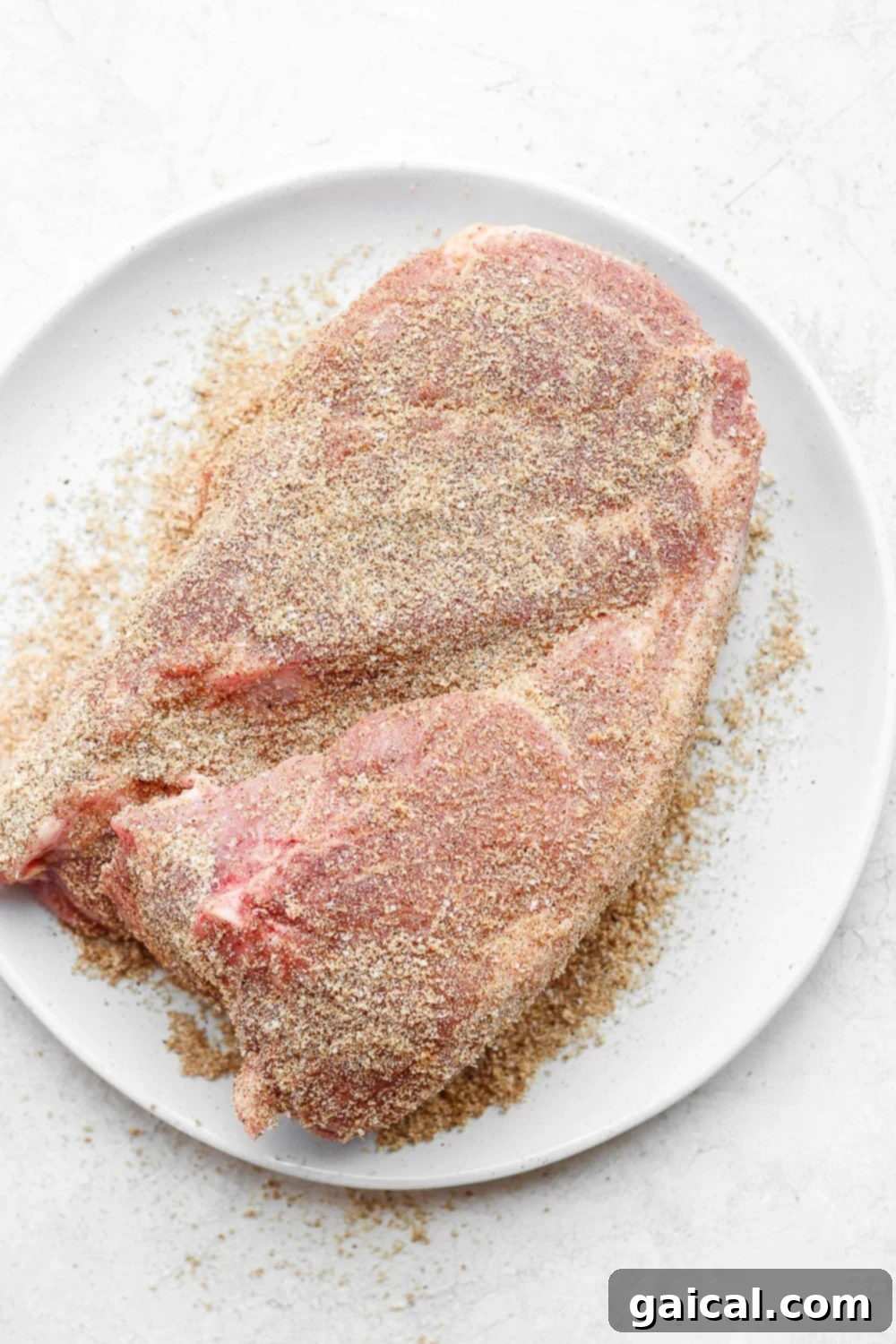
- In a small bowl, combine all the dry rub ingredients: garlic powder, onion powder, chili powder, smoked paprika, coarse sea salt, ground black pepper, cinnamon, and light brown sugar. Mix these spices together until well combined. Generously rub this aromatic spice mixture over all sides of the pork shoulder, ensuring an even coating. Allow the seasoned pork to rest in the refrigerator while you proceed with preparing the rest of the recipe components.
- Prepare your vegetables: cut the russet potatoes into substantial 1-inch chunks, and dice the large yellow onion and carrots into similarly sized pieces. These larger cuts ensure the vegetables cook evenly alongside the pork without becoming overly soft or mushy. Set the prepared vegetables aside.
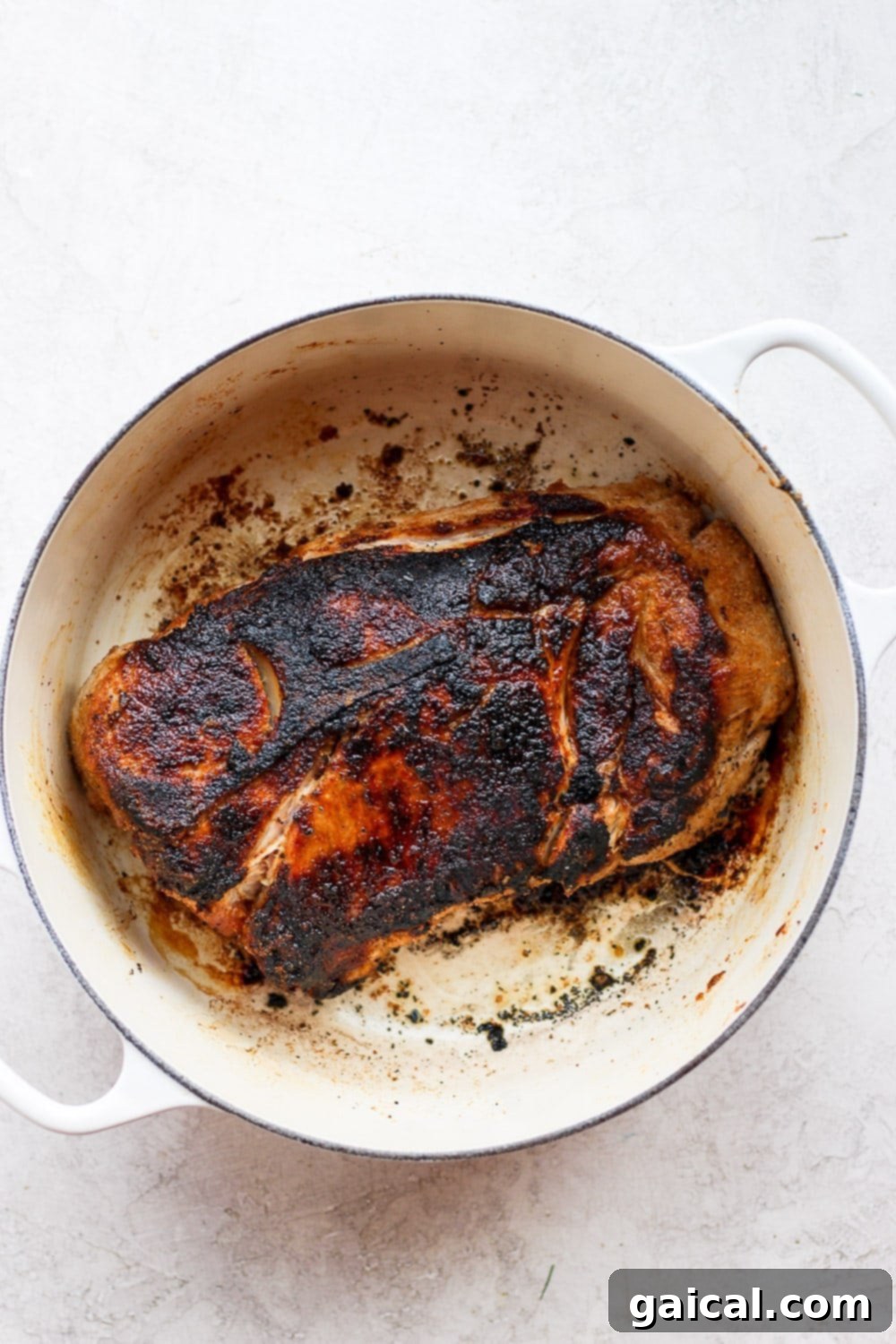
- Heat 2 tablespoons of olive oil in a large cast-iron stockpot or any oven-safe pot with a heavy bottom over medium-high heat. Once the olive oil is shimmering and fragrant, carefully place the pork shoulder into the pot and sear all four sides for approximately 2 minutes per side, or until a beautiful, golden-brown crust forms. This searing step is vital for developing a deep, complex flavor profile. Once seared, remove the pork shoulder from the pot and transfer it back to the plate.
- Pour a small amount of chicken broth (about 1/4 cup) into the hot stockpot. Use a wooden spoon to vigorously scrape up all the flavorful browned bits (the “fond”) from the bottom of the pot; these bits are packed with flavor and will enrich your gravy. Next, transfer all the diced potatoes, onions, and carrots into the stockpot, tossing them gently to coat in the broth and any remaining oil. Place the seared pork shoulder (fat-side up, which helps in self-basting) on top of the bed of vegetables. Be sure to scrape any remaining spice rub that fell off the pork shoulder from the plate into the pot, as this also contributes immensely to the gravy’s flavor.
- In a separate medium bowl, whisk together the remaining chicken broth, maple syrup, and Worcestershire sauce until well combined. Carefully pour this flavorful liquid mixture over the top of the pork shoulder and the vegetables in the stockpot.
- Place the uncovered stockpot into the preheated oven. Roast at 350ºF (175°C) for an initial 60 minutes. After this time, remove the pot from the oven and immediately measure the internal temperature of the pork using a meat thermometer inserted into the thickest part. Continue cooking the roast in increments of 10 minutes, checking the temperature each time, until the pork reaches a minimum internal temperature of 145ºF (63°C). For our 3 lb. pork shoulder, the total cooking time typically ranges from 75-80 minutes.
- Once the pork roast reaches the desired internal temperature, carefully remove the stockpot from the oven. Allow the pork roast to rest, uncovered, for at least 10 minutes before carving or shredding. This crucial resting period permits the internal juices to redistribute evenly throughout the meat, ensuring a more tender, moist, and flavorful final product. During this time, the internal temperature of the pork will continue to rise by an additional 5-10 degrees.
- After the pork has rested, gently toss the roasted vegetables directly in the rich, flavorful pan drippings and gravy that have collected in the pot. This ensures every piece of vegetable is thoroughly coated with the amazing, savory flavors.
- Serve the ultimate oven baked pork roast sliced or shredded, accompanied by the tender, flavor-packed roasted vegetables and an generous amount of the delicious homemade gravy. Enjoy your perfectly cooked, comforting meal!
Tips & Notes for Your Best Roast
- Gravy Customization: If you desire a thinner gravy, you can easily add a bit more chicken broth at the end of the cooking process. For those who prefer a thicker, more luxurious gravy, feel free to use the cornstarch slurry method detailed in the “How to Thicken Gravy” section above.
- The Right Meat Matters: For the most tender, succulent, and truly fall-off-the-bone pork, a well-marbled pork shoulder roast (also known as pork butt) is your best bet. Leaner cuts like pork loin roast will still yield a delicious meal, but they typically result in a more classic, sliced pork texture rather than a shreddable one. We wholeheartedly recommend pork shoulder for this recipe’s intended outcome.
- Adjusting Cook Time for Roast Size: The golden rule for perfectly cooked pork is to reach an internal temperature of 145ºF (63°C).
- For a Smaller Roast: If your roast is under 3 lbs, begin checking the internal temperature after 45 minutes of cooking. Continue to check every 10 minutes thereafter until it reaches 145ºF (63°C).
- For a Larger Roast: For roasts exceeding 3 lbs, you will need to extend the cooking time. Add 5-10 minute increments to our suggested 75-80 minutes, consistently monitoring the internal temperature with your meat thermometer until it hits the target of 145ºF (63°C).
- Serving Suggestions: While this one-pot meal is wonderfully complete on its own, it pairs beautifully with a fresh, crisp green salad or some crusty artisanal bread, perfect for soaking up every last drop of that delectable gravy.
- Flavor Boosters: Don’t hesitate to experiment with adding fresh herbs such as rosemary or thyme sprigs to the pot during the last hour of roasting. These aromatics will infuse your roast and vegetables with an extra layer of exquisite flavor.
Approximate Nutrition Information (Per Serving)
- Calories: 461 kcal
- Carbohydrates: 31 g
- Protein: 33 g
- Fat: 23 g
- Fiber: 4 g
- Sugar: 7 g
Nutrition information is automatically calculated and should be used as an approximation only. Individual results may vary based on exact ingredients and preparation.
Loved this recipe? Leave a comment below!
We absolutely adore seeing your culinary creations! Don’t forget to tag your posts on social media with the hashtag #fitfoodiefinds – your delicious results are a true inspiration to us!
Photography by: The Wooden Skillet