
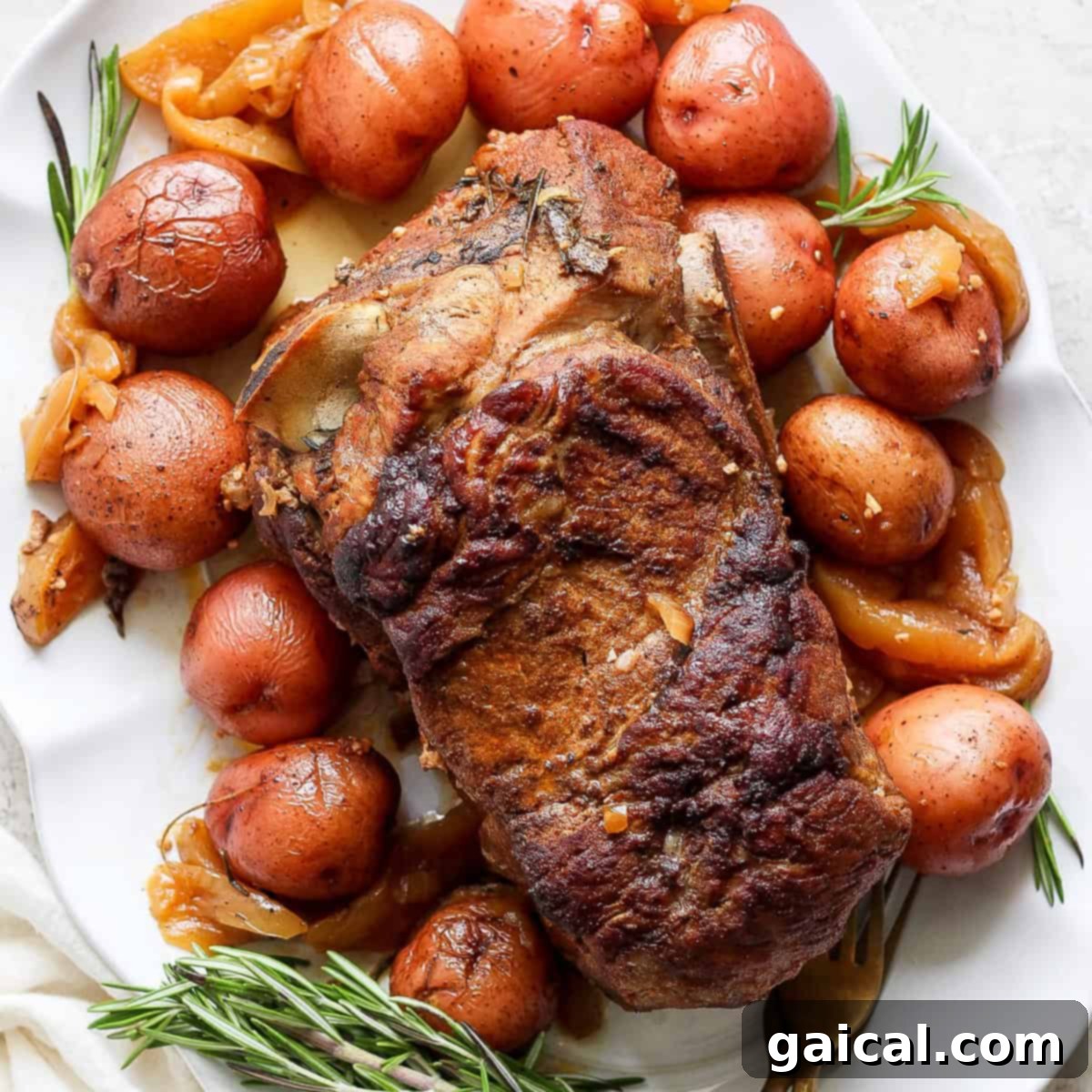
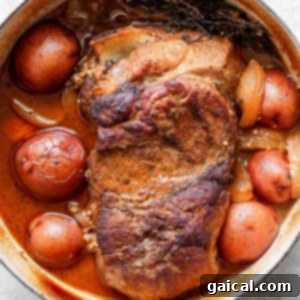
There’s nothing quite like the comforting aroma of a hearty meal simmering on a crisp autumn day. This Apple Cider Braised Pork Shoulder is an absolute dream for anyone craving deeply flavored, fork-tender pork infused with the sweet and tangy essence of apple cider. It’s a quintessential fall dish, perfect for cozy family dinners, holiday gatherings, or a relaxed weekend getaway. Imagine a succulent pork roast, perfectly seared to a golden crisp, then slow-braised in a rich apple cider bath until it’s melt-in-your-mouth tender. This recipe promises not only incredible flavor but also an effortless cooking experience.
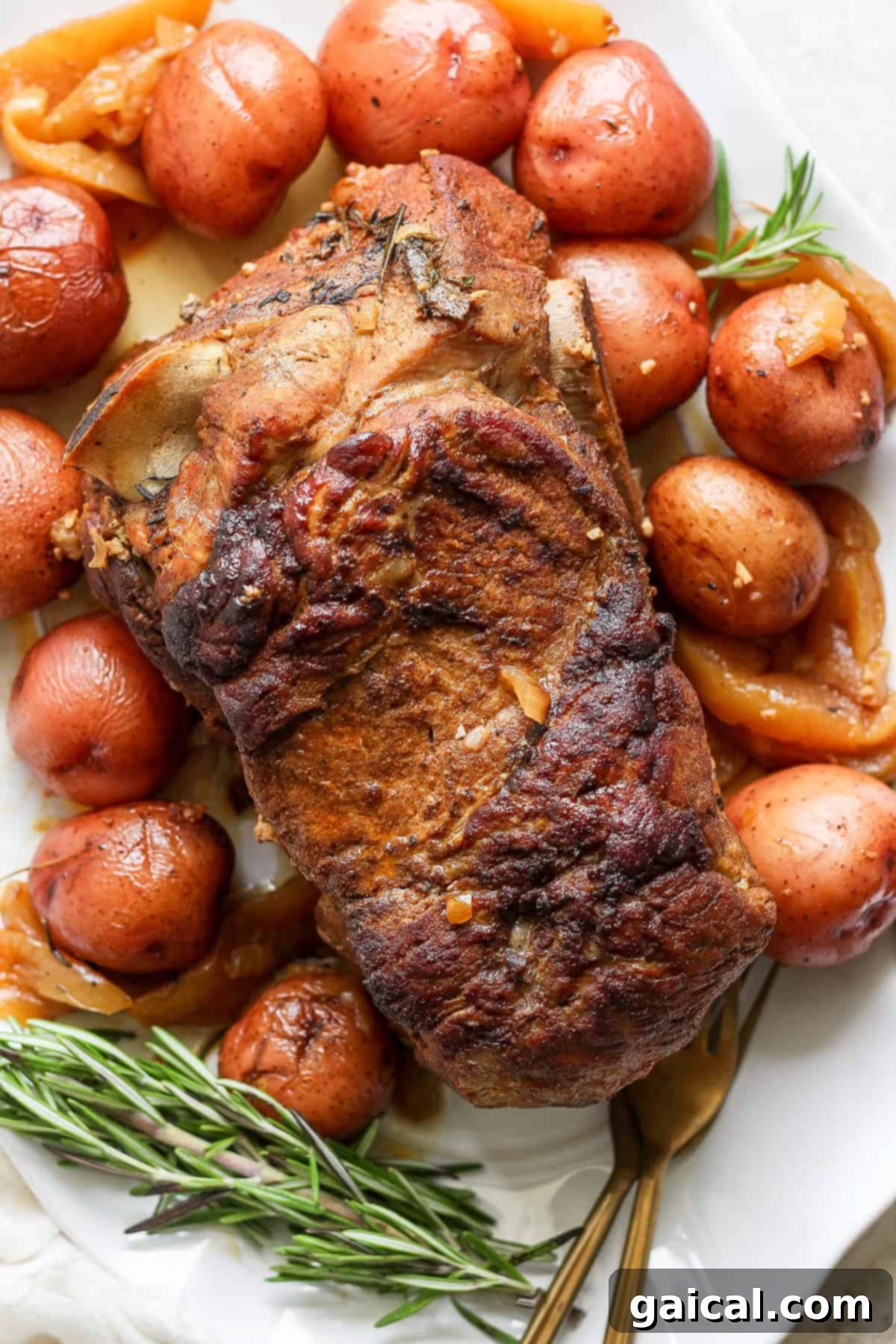
This magnificent cut of meat isn’t just a feast for the eyes; it’s incredibly simple to prepare, making it an ideal “set-it-and-forget-it” kind of pork roast. Whether you’re hosting a large family gathering or simply looking for an impressive yet easy weekend meal, this recipe delivers. The best part? It can be made ahead of time, allowing you to enjoy more quality moments with loved ones without being stuck in the kitchen. The process is straightforward: season the pork shoulder generously, sear it to develop a beautiful crust and lock in flavors, then combine it with aromatic vegetables, fresh apples, and fragrant apple cider in a sturdy Dutch oven. A few hours in the oven transform these simple ingredients into a lusciously tender, deeply flavorful masterpiece.
Key Ingredients for an Exceptional Apple Cider Braised Pork Shoulder
Crafting a truly memorable braised pork shoulder begins with selecting the right ingredients. Each component in this recipe plays a crucial role in building the complex, comforting flavors that make this dish so special. Here’s a closer look at what you’ll need:
- Pork Shoulder: Also known as pork butt or Boston butt, this cut is a braising champion. Its generous marbling and connective tissues break down beautifully during slow cooking, yielding incredibly moist and tender meat that easily shreds. The fat content ensures the pork stays succulent and flavorful throughout the long cooking process, making it the perfect canvas for rich braising liquids.
- Pork Seasoning: A robust seasoning blend is essential for enhancing the pork’s natural flavors. While a simple mix of salt, freshly ground black pepper, garlic powder, onion powder, and paprika works wonders, you can also experiment with your favorite store-bought pork rub. Consider adding a pinch of brown sugar for caramelization or a touch of smoked paprika for depth. Don’t be shy with the seasoning; it forms the foundation of the dish’s flavor.
- Apple Cider: This is truly the star of our braising liquid. Pure, unfiltered apple cider offers a rich, complex sweetness with a hint of tartness that apple juice simply cannot replicate. It not only infuses the pork with its distinctive fruity flavor but also helps tenderize the meat as it slowly cooks, creating a truly unforgettable sauce.
- Worcestershire Sauce: A secret weapon in many braising recipes, Worcestershire sauce adds an umami-rich depth and a subtle tang that balances the sweetness of the apple cider. It contributes to a more complex and savory flavor profile, making the sauce incredibly addictive.
- Honeycrisp Apple: Thinly sliced and added directly to the braising liquid, Honeycrisp apples are our preferred choice due to their delightful sweet-tart flavor and firm texture. They hold their shape well during the long cooking time and release their aromatic sweetness into the pork and sauce, complementing the cider beautifully.
- Baby Red Potatoes: These small, tender potatoes are ideal for braising. They maintain their shape and integrity even after hours of slow cooking, absorbing all the wonderful flavors from the braising liquid. They become soft, flavorful, and are a fantastic accompaniment to the rich pork.
- Fresh Herbs (Rosemary and Thyme): Fresh herbs are non-negotiable for adding an earthy, aromatic dimension to the dish. Rosemary provides a piney, peppery note, while thyme offers a delicate, subtly floral aroma. Together, they create a fragrant bouquet that elevates the entire meal.
- Dutch Oven: A heavy, oven-safe pot with a tight-fitting lid is indispensable for braising. Its even heat distribution and ability to go from stovetop to oven make it perfect for searing the pork and then slowly cooking it to perfection.
Can I Use Apple Juice Instead of Apple Cider?
While both come from apples, apple cider and apple juice are not interchangeable in this recipe. We strongly advocate for using pure apple cider due to its richer, more concentrated, and complex flavor profile. Apple cider often has a cloudier appearance and a more robust, sometimes slightly tart, taste compared to the filtered, sweeter, and more one-dimensional flavor of apple juice. The depth that apple cider brings to the braising liquid is crucial for achieving the full, authentic taste of this dish. If apple cider is absolutely unavailable, and you must use apple juice, we recommend adding a splash of apple cider vinegar (about 1-2 tablespoons) to the braising liquid. This will help to introduce some of the tartness and complexity that the cider naturally provides, giving your pork a more balanced flavor profile.
Can I Use a Different Kind of Apple?
Absolutely! While Honeycrisp apples are our top recommendation for their ideal balance of sweetness, tartness, and firm texture that holds up well during cooking, feel free to use any variety of apple you prefer or have on hand. Other excellent choices for baking and braising include Gala, Fuji, Braeburn, or even Granny Smith if you prefer a more pronounced tartness to complement the richness of the pork. Just be aware that different apples will contribute slightly different nuances to the flavor and texture of the final dish. So, choose an apple that you enjoy eating, and it will undoubtedly be delicious in this braised pork shoulder.
Crafting Your Delicious Apple Cider Braised Pork Shoulder
Preparing an entire pork shoulder might sound daunting, but this recipe simplifies the process, making it accessible even for novice cooks. The magic lies in a few key steps that build incredible flavor layers, culminating in a dish that’s surprisingly easy and utterly delicious. Follow these detailed steps to create a truly memorable meal:
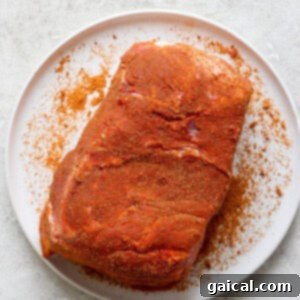
- Season and Marinate the Pork: Begin by thoroughly massaging the entire pork shoulder with a generous amount of kosher salt and your chosen pork seasoning blend. Ensure every surface is coated evenly with the spices. This crucial step not only seasons the meat deeply but also helps to draw out moisture and tenderize the pork. For maximum flavor penetration, wrap the seasoned pork tightly in plastic wrap and refrigerate it for at least two hours, or ideally, overnight. This resting period allows the flavors to meld and deepen, contributing to a more flavorful final product.
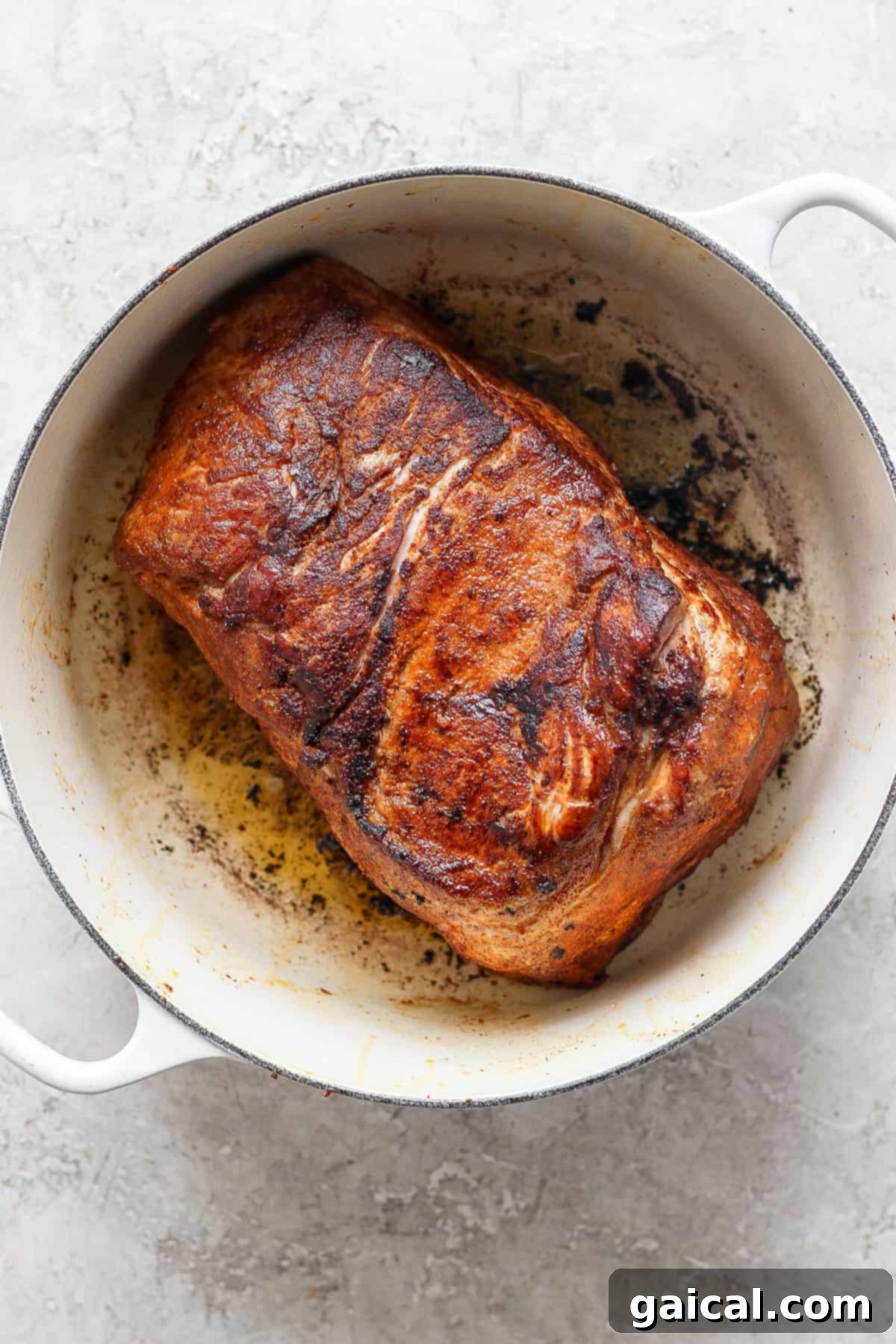
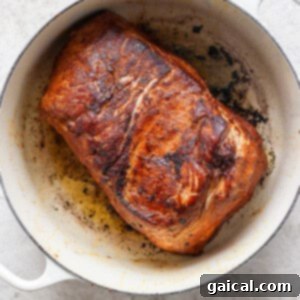
- Sear for Flavor and Texture: Preheat your oven to 325ºF (160ºC). Next, heat 3 tablespoons of avocado oil (or another high-smoke-point oil) in a large, heavy-bottomed Dutch oven over high heat until shimmering. Carefully place the seasoned pork shoulder into the hot oil. Sear each side for approximately 2-3 minutes, or until a deep golden-brown crust forms. This searing process, known as the Maillard reaction, is vital for developing rich, complex flavors and a beautiful outer texture. Once all sides are nicely browned, remove the pork from the pot and set it aside.
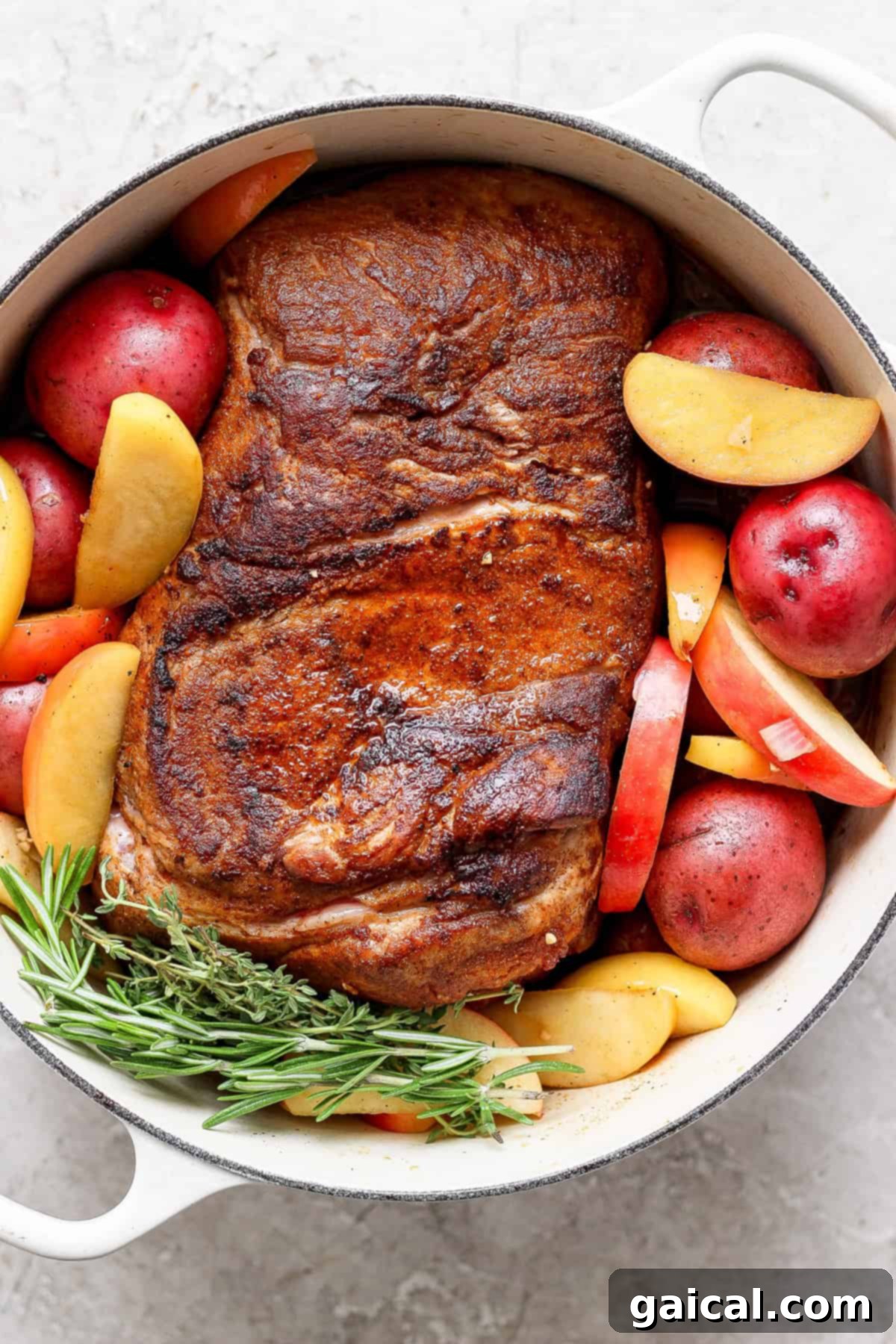
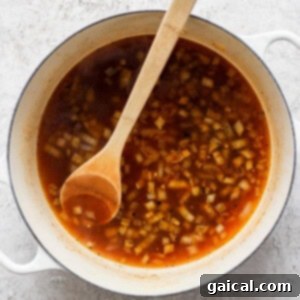
- Build the Aromatic Sauce: With the pork removed, deglaze the hot Dutch oven by adding ½ cup of apple cider vinegar. Use a wooden spoon to scrape up all the delicious brown bits (known as “fond”) stuck to the bottom of the pot. These bits are packed with flavor and will dissolve into your sauce. Then, pour in the remaining 2 cups of apple cider, along with the Worcestershire sauce, chopped onion, and minced garlic. Whisk the mixture well to combine, ensuring all the flavors are incorporated. Finally, add the baby red potatoes and sliced Honeycrisp apple to the pot, tossing them gently to coat in the aromatic liquid.
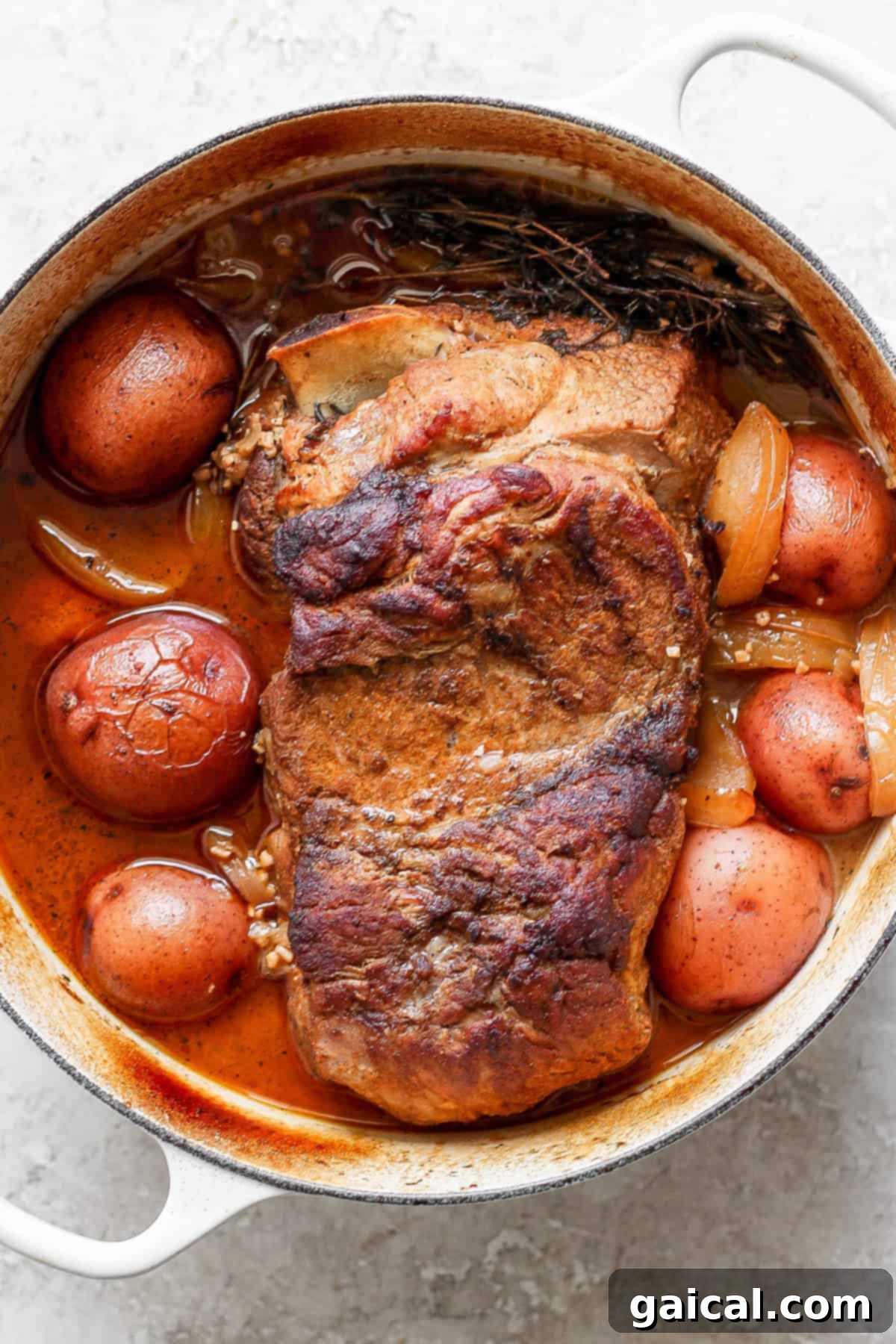
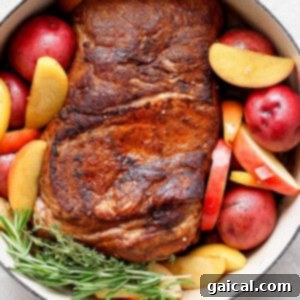
- Slow Braise to Perfection: Gently nestle the seared pork shoulder back into the Dutch oven, positioning it amongst the vegetables and apples. Distribute the fresh rosemary and thyme sprigs around the pork. Cover the Dutch oven tightly with its lid and transfer it to your preheated oven. Bake for approximately 3 to 3.5 hours. During this slow cooking period, the pork will become incredibly tender. To keep the pork moist and further infuse it with flavor, baste it with the apple cider braising liquid every hour or so.
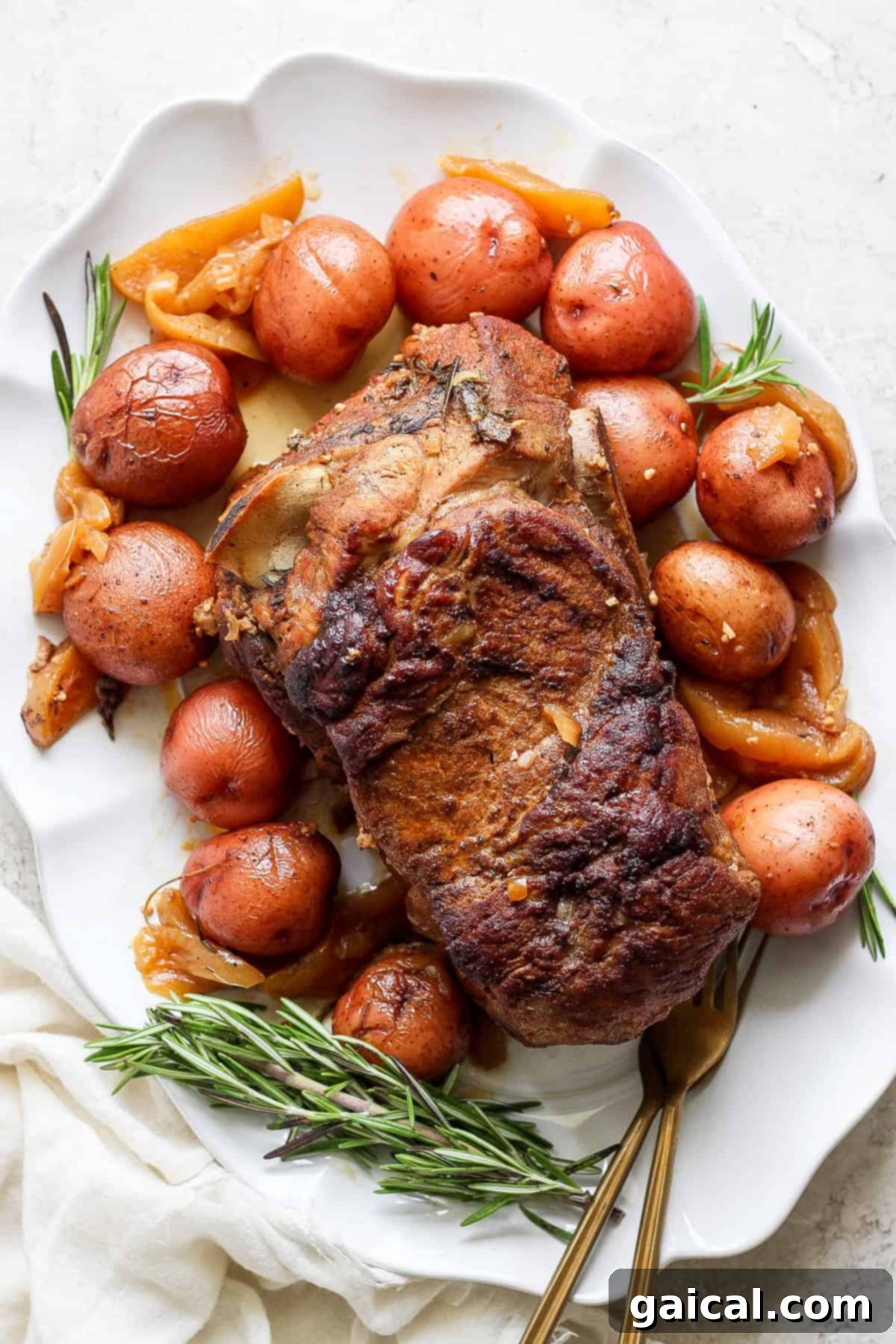
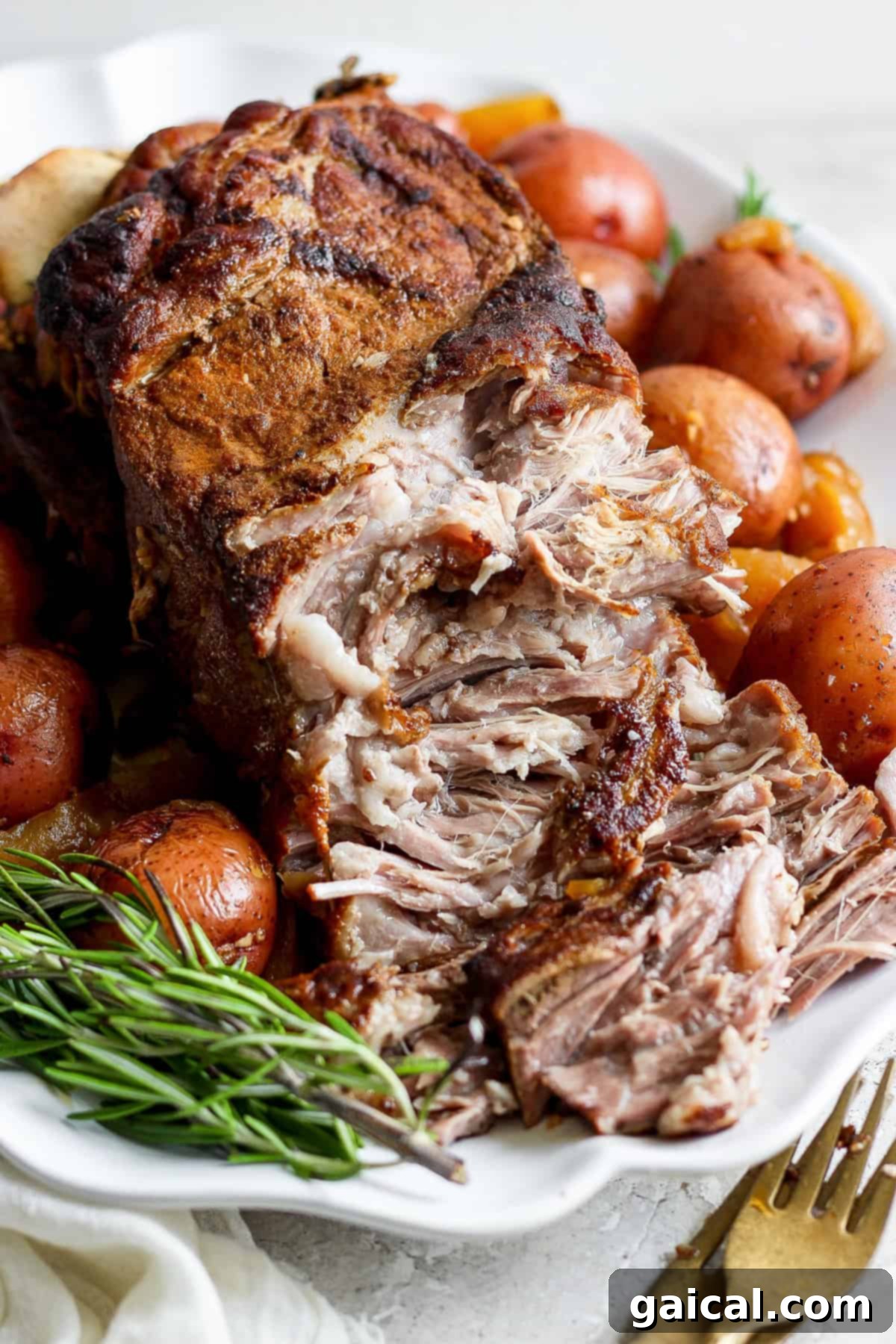
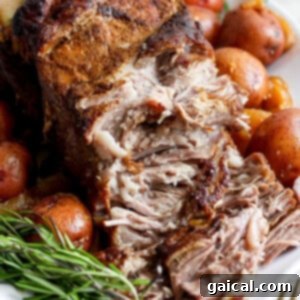
- Rest and Serve: The pork is ready when it reaches an internal temperature of 200ºF (93ºC) or can be easily shredded with a fork. Once cooked, carefully remove the Dutch oven from the oven. It’s crucial to let the meat rest for at least 10 minutes, covered, before shredding. This allows the juices to redistribute throughout the pork, ensuring maximum moisture and tenderness. After resting, remove the herb stems from the pot. Use two forks to shred the tender pork directly in the pot, mixing it with the flavorful vegetables and the rich apple cider sauce. Serve immediately, enjoying the accompanying potatoes, apples, and the savory braising liquid. Enjoy every bite of this autumn masterpiece!
Why Cook the Pork Shoulder to 200°F?
While pork is considered safe to eat at an internal temperature of 145ºF (as per USDA guidelines), for braised dishes like pork shoulder, we aim for a much higher temperature of 200ºF (93ºC). This isn’t about food safety, but rather about achieving that coveted fall-apart, shreddable texture. Pork shoulder contains a lot of connective tissue (collagen), which, when cooked low and slow to temperatures around 200ºF, breaks down and converts into gelatin. This transformation is what makes the meat incredibly tender, juicy, and easy to shred, resulting in that delightful melt-in-your-mouth experience that is the hallmark of a perfectly braised dish.
Don’t Forget to Baste!
Basting is more than just an extra step; it’s a vital technique in this recipe that significantly contributes to the overall success of your braised pork shoulder. Regularly spooning the flavorful apple cider braising liquid over the pork as it cooks serves multiple purposes:
- Maintains Moisture: As the pork cooks for several hours, basting helps to keep the exposed surfaces moist, preventing them from drying out.
- Enhances Flavor: Each time you baste, you’re re-applying the rich, aromatic apple cider mixture directly onto the pork, allowing the flavors to penetrate even deeper into the meat and build layers of deliciousness.
- Promotes Browning: The sugars in the apple cider and any seasoning on the pork will caramelize slightly on the surface with each basting, contributing to a beautiful color and an even more flavorful crust.
This simple action ensures your pork shoulder is not only tender but also uniformly flavorful and juicy from crust to core.
Storing and Reheating Leftover Braised Pork
This Apple Cider Braised Pork Shoulder makes for fantastic leftovers, often tasting even better the next day as the flavors continue to meld and deepen. To store any remaining pork, transfer it along with the accompanying vegetables and any leftover braising sauce into an airtight container. It will keep beautifully in the refrigerator for up to 3-4 days.
When you’re ready to enjoy it again, reheating is simple. You can gently warm it on the stovetop over low to medium heat, stirring occasionally, until it is heated through. Alternatively, for convenience, place it in a microwave-safe dish and heat in short intervals, stirring between each, until piping hot. The moist braising liquid will help keep the pork succulent. Leftovers are perfect for quick weeknight meals, pulled pork sandwiches, or even folded into tacos for a delicious twist!
What to Serve with This Apple Cider Pork Roast
With the savory pork and tender potatoes already in the pot, you have a solid foundation for a complete meal. However, a few complementary sides can elevate this apple cider pork roast into an unforgettable feast. Here are some delightful ideas to pair with your braised pork:
- Roasted Vegetables: Enhance the seasonal theme with more roasted veggies. Try our Roasted Brussels Sprouts with Bacon for a smoky crunch, or our Honey Balsamic Roasted Carrots for a touch of sweet glazed perfection. Green beans or asparagus would also be wonderful choices, adding freshness and color.
- Fresh Salads: A crisp, vibrant salad offers a refreshing counterpoint to the rich, hearty pork. Consider our French Carrot Salad with Honey Mustard Dressing for a bright and tangy addition, or the elegant Apple Burrata Salad, which echoes the apple flavors of the main dish with creamy burrata and crisp greens.
- Hearty Grains: For an even more substantial meal, serve the pork over a bed of fluffy quinoa, creamy polenta, or even a wild rice pilaf. These options are excellent for soaking up all the delectable braising liquid.
- Seasonal Drinks: Embrace the apple theme wholeheartedly with your beverages! Our Spiked Apple Cider makes for a festive and warming adult drink, while an Apple Cider Hot Toddy provides a comforting end to your meal, especially on a chilly evening. For a non-alcoholic option, simply serve chilled or warm apple cider.
- Decadent Desserts: Conclude your meal on a sweet, autumnal note. An Easy Apple Crisp or a rustic Brown Butter Apple Galette would be the perfect finale, bringing a delightful blend of spiced apples and comforting warmth.
★
★
★
★
★
Apple Cider Braised Pork Shoulder Recipe
Lee Funke
Prep:
1 hour
Cook:
3 hours 30 minutes
Total:
4 hours 30 minutes
8
Ingredients
- 5-6 lb. pork shoulder
- 1 tablespoon kosher salt
- ¼ cup pork seasoning
- 3 tablespoons avocado oil
- 2 cups apple cider
- 2 tablespoons Worcestershire sauce
- ½ large white onion
- 5 cloves garlic, minced
- 1 large Honeycrisp apple, sliced
- 3 lbs. baby red potatoes
- 5 sprigs fresh rosemary
- 5 sprigs fresh thyme
Instructions
-
Massage the pork shoulder with kosher salt and pork seasoning. Be sure the whole pork shoulder is coated in spices. Wrap in plastic wrap and transfer to the refrigerator for at least two hours.

-
Preheat the oven to 325ºF. Heat oil in a large Dutch oven over high heat. Sear each side of the pork shoulder for 2-3 minutes or until browned. Remove it from the pot once all sides have been browned.
-
Deglaze the pot with ½ cup of apple cider vinegar and scrape the brown bits from the bottom of the pot. Add the rest of the apple cider, Worcestershire, onion, and garlic to the pot and whisk to combine. Add the potatoes and apples and toss to coat.
-
Nestle the pork shoulder in between all of the vegetables and add the fresh herbs. Cover and bake for 3-3.5 hours, basting the pork with the apple cider every hour or so.
-
When the pork reaches 200ºF or is easily shreddable with a fork, remove the pork from the oven.
-
Let the meat rest for 10 minutes. Remove the herb stems from the pot and shred the pork. Serve with accompanied vegetables and any remaining apple cider sauce.
Tips & Notes
- We highly recommend using apple cider instead of apple juice for the most robust and authentic flavor.
- For perfectly shreddable pork, aim for an internal temperature of 200ºF (93ºC). This allows the connective tissues to break down completely.
- While pork is safe at 145ºF (USDA), the “low and slow” cooking to 200ºF is key for tenderization, not just safety, transforming the meat into a wonderfully soft, shreddable texture.
Nutrition
Calories:
657 kcal
,
Carbohydrates:
44 g
,
Protein:
60 g
,
Fat:
26 g
,
Fiber:
5 g
,
Sugar:
11 g
Nutrition information is automatically calculated, so should only be used as an approximation.
💬
Love this? Leave a comment below!
Don’t forget to tag your posts on social media with the hashtag #fitfoodiefinds – we’d love to see what you’re cooking up!
Photography by: The Wooden Skillet