
Unleash Your Strength: The Ultimate Sexy Arms Dumbbell Circuit & 10-Minute Cardio HIIT
In today’s fast-paced world, finding time for fitness can be a challenge. That’s why efficiency and intensity have become the cornerstones of effective workout routines. If you, like me, find yourself yearning for powerful results without spending hours at the gym, then you’re in the right place. My personal fitness philosophy revolves around short, high-impact sessions. I’ve discovered that my focus wanes after about 45 minutes, and frankly, I’d rather maximize every minute of my workout and then get on with my day. This principle extends to everything from lifting sessions to spin classes—I prefer a hard, concentrated 45 minutes over a drawn-out 60.
The Quest for the Perfect Gym: Convenience Meets Quality
Choosing the right gym is a crucial step in maintaining a consistent fitness regimen. For a long time, I navigated the dilemma of convenience versus quality. I’ve always held high standards for fitness facilities, a byproduct of my experience in the fitness industry. My expectations are set on top-tier service, a diverse range of modern equipment, and engaging classes. Initially, I commuted about 20 minutes to an Anytime Fitness, or visited one during my work commute. However, the shift to full-time remote work highlighted a new priority: proximity.
A few months ago, I finally made the strategic decision to join LA Fitness. The primary driver was its unbeatable location—the closest gym to my home. While I might be a self-proclaimed “gym snob,” sometimes, the sheer convenience of a nearby facility outweighs all other considerations. It’s about removing barriers to consistent training. When your gym is just minutes away, it drastically reduces the mental friction of getting there, making it easier to stick to your workout schedule. This isn’t just about saving time; it’s about fostering an environment where fitness becomes an effortless part of your daily life.
The Advantage of a Dedicated Workout Space (and a Great Partner!)
Beyond the standard gym membership, having access to alternative workout spaces can be incredibly beneficial. My friend Brooke, for instance, has an exceptional gym right within her apartment complex. This dedicated space is perfectly suited for the type of focused, intense workouts I prefer. It offers privacy, accessibility, and all the essential equipment needed to get a sweat on.
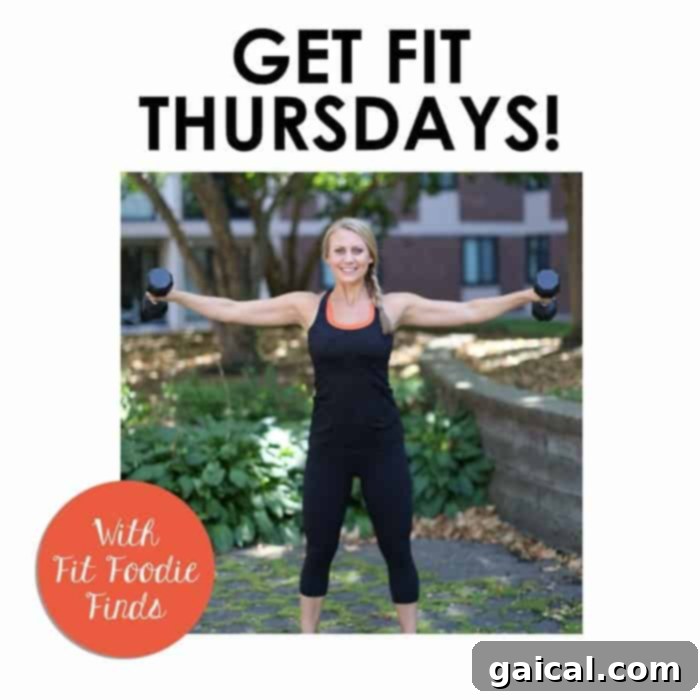
This gym often serves as our go-to meeting point when Brooke and I train together. Our schedules can be a bit challenging to align—Brooke is a nurse who works nights, which means coordinating daytime workouts requires flexibility. But the proximity of her apartment gym makes it incredibly simple. I can literally meet her right at her doorstep, and we can immediately dive into our session. Training with a partner like Brooke not only adds an element of fun but also significantly boosts accountability. It’s harder to skip a workout when you know someone is relying on you, and having a dedicated friend to share the sweat and effort with is a powerful motivator.
Your High-Impact Arm & Cardio Workout: Get Ready to Sweat!
The workout I’m about to share is a testament to the effectiveness of combining intense cardio with targeted strength training. This is a session Brooke and I completed a few weeks back, and it left us both feeling energized, accomplished, and with that satisfying “good burn” in our arms. It’s designed to be efficient, challenging, and incredibly rewarding.
Equipment Essentials for Your Session
Before you begin, gather these fundamental pieces of equipment:
- Dumbbells: A pair of 10-pound dumbbells and/or 15-pound dumbbells. Beginners may opt for 5-pound or 8-pound weights. The key is to choose a weight that challenges you while allowing you to maintain perfect form.
- Cardio Equipment: Any machine that allows for high-intensity intervals, such as a stair stepper, elliptical, treadmill, stationary bike, or even a jump rope.
Phase 1: Ignite Your Metabolism with HIIT Cardio (10 Minutes)

I am a firm believer in starting my lifting sessions with an elevated heart rate and already breaking a sweat. This approach not only serves as an excellent warm-up, priming your muscles for the work ahead, but also ignites your metabolism from the get-go. However, if you prefer to tackle your cardio post-lifting, feel free to adjust the order to suit your personal preference.
Choose your preferred cardio machine for this segment. Begin with a gentle 2-minute warm-up, allowing your body to gradually increase its temperature and prepare for intensity. Following the warm-up, transition into 10 minutes of high-intensity interval training (HIIT). The structure is simple yet effective: sprint at approximately 90% of your maximum effort for 30 seconds, then recover at a moderate pace (around 60% effort) for 30 seconds. Repeat this sprint-recovery cycle for the duration of the 10 minutes. When I performed this, I used an elliptical set to a medium resistance, ensuring my recovery periods were just enough to bring my heart rate down before the next burst of effort.
No Cardio Equipment? No Problem! Try Plyometrics!
If access to cardio machines is limited, don’t let that stop you. You can achieve a fantastic cardio burn using dynamic bodyweight exercises known as plyometrics. Select two different plyometric movements and perform them in a Tabata format (20 seconds of work, 10 seconds of rest, repeated 8 times for a total of 4 minutes per exercise, or adjust for a 10-minute total). Excellent choices include:
- Jump Squats: Explosive squats that propel you off the ground.
- Burpees: A full-body movement combining a squat, push-up, and jump.
- Jump Lunges: Dynamic lunges where you alternate legs with a jump.
- Diamond Jumps (or Star Jumps): Jumping jacks with an added explosive element.
These exercises are fantastic for quickly elevating your heart rate and building explosive power, making them a perfect alternative for your HIIT segment.
Phase 2: Sculpt and Strengthen with the Dumbbell Circuit

This dumbbell circuit is designed to hit various muscle groups in your arms and shoulders, ensuring a comprehensive and challenging workout. The goal is to perform each exercise for one minute without any breaks in between. Once you complete all six exercises, that counts as one circuit. You will complete this entire circuit three times, allowing for a 1-minute rest period between each full circuit. This structure keeps your heart rate up and your muscles engaged, maximizing your time and effort.
1. Bicep Curls
Target Muscles: Biceps brachii.
Execution: Stand with your feet hip-width apart, holding a dumbbell in each hand, palms facing forward. Keep your elbows tucked close to your sides. As you inhale, slowly curl the dumbbells upwards towards your chest, stopping just before your forearms are completely vertical (about three-quarters of the way up). Focus on squeezing your biceps at the top. As you exhale, control the movement as you lower the dumbbells back to the starting position. Avoid swinging the weights; the movement should be controlled and deliberate.
2. Bent-Over Rear Delt Flyes
Target Muscles: Rear deltoids, rhomboids, trapezius.
Execution: Stand with your feet hip-width apart and hinge at your hips, keeping your back flat and your core engaged. Let your arms hang straight down, holding a dumbbell in each hand, palms facing each other (or slightly forward). Maintain a slight bend in your elbows. As you inhale, open your arms laterally out to the sides, squeezing your shoulder blades together as if trying to hold a pencil between them. Your arms should go no higher than shoulder height. As you exhale, slowly return the dumbbells to the center, maintaining control. This exercise is excellent for improving posture and targeting often-neglected rear shoulder muscles.
3. Squat + Shoulder Press
Target Muscles: Quadriceps, glutes, core, deltoids, triceps.
Execution: Begin standing with your feet hip-width apart, holding a dumbbell in each hand at shoulder height, palms facing forward. As you inhale, push your hips back and bend your knees to perform a squat, ensuring your weight is in your heels. Keep your chest up and back straight. As you exhale, explosively drive up from the squat, simultaneously pressing the dumbbells overhead until your arms are fully extended. Lower the dumbbells back to shoulder height as you transition into your next squat. This compound movement is a powerful calorie burner and builds comprehensive strength.
4. Reverse Flies
Target Muscles: Rear deltoids, upper back.
Execution: Stand with your feet hip-width apart, hinging forward at your hips until your torso is nearly parallel to the floor, maintaining a flat back. Let your arms hang towards the floor, holding a dumbbell in each hand, palms facing each other, with a slight bend in your elbows. As you inhale, raise your arms laterally out to the sides, squeezing your shoulder blades together. Focus on using your rear deltoids and upper back muscles to lift the weights. The movement should resemble a bird flapping its wings. As you exhale, slowly lower the dumbbells back to the starting position. This helps to strengthen the upper back and counteract rounded shoulders.
5. Tricep Kickbacks
Target Muscles: Triceps brachii.
Execution: Stand with your feet hip-width apart, hinge at your hips so your torso is almost parallel to the floor, maintaining a flat back. Hold a dumbbell in each hand, palms facing each other. Bend your arms at a 90-degree angle, keeping your elbows “pinned” close to your sides and upper arms stationary. Take an inhale. As you exhale, extend your forearms straight back, contracting your triceps at the top. Your arms should become almost straight. As you inhale, slowly release back to the 90-degree bend. Crucially, avoid any “swinging” motion; the movement should originate purely from the elbow joint, isolating the triceps.
6. Front to Lateral Raise Combo
Target Muscles: Anterior deltoids, lateral deltoids.
Execution: Stand with your feet hip-width apart, arms extended down in front of your thighs, holding a dumbbell in each hand with palms facing your body. As you inhale, lift the weights directly in front of you, stopping at shoulder height (Front Raise). As you exhale, slowly lower the weights back down. Immediately, as you inhale again, lift the weights laterally out to your sides, stopping at shoulder height, palms still facing down (Lateral Raise). As you exhale, slowly lower the weights back down. This sequence completes one repetition of the combo. Focus on controlled movements, preventing momentum from taking over, to effectively target both the front and side deltoids.
Maximizing Your Results & Staying Safe
Listen to Your Body: Form Over Weight
This principle cannot be stressed enough: **FORM ALWAYS TRUMPS WEIGHT.** It is far more effective and safer to lift lighter weights with impeccable form than to struggle with heavy weights, compromising your posture and risking injury. If you find yourself struggling to maintain proper technique, don’t hesitate to decrease the weight. I suggested 10-pound and 15-pound dumbbells as a guideline, but for beginners or those focusing on form, 5-pound or 8-pound weights are perfectly acceptable. The goal is muscle engagement, not ego lifting. Pay close attention to your body’s signals and prioritize precision in every movement.
Important Disclaimer
While I am a certified ACE Group Fitness Instructor and Yoga Sculpt Instructor, the content shared here is for informational purposes and reflects my personal workout routines. **It is absolutely essential to consult with your doctor or a qualified healthcare professional before embarking on any new fitness regimen, especially if you have pre-existing health conditions or concerns.** The workouts provided on Fit Foodie Finds (or similar platforms) are intended to serve as inspiration and ideas for your own training. Always feel empowered to modify exercises with progressions (making them harder) or regressions (making them easier) to suit your individual fitness level and needs. Your health and safety are paramount.
Explore More Workouts for a Stronger You
If you enjoyed this circuit and are looking for more ways to challenge your body, here are some other workout ideas you might like. Building a diverse routine keeps your body guessing and your motivation high!
Join the Conversation: Your Fitness Insights!
I love hearing about your fitness journey and preferences. Share your thoughts in the comments below:
Do you prefer to do cardio before or after your strength training workout? What’s your reasoning?
What factors influenced your choice of gym? Is convenience the ultimate trump card for you, or do other features take precedence?
Have you tried combining HIIT cardio with a dumbbell circuit? What were your results?