
Start your day with an exceptional cup of coffee, easily brewed to perfection in a French press! You don’t need to be a seasoned barista to craft a rich, full-bodied cup in less than 15 minutes. This ultimate guide will walk you through every step, ensuring a consistently delicious brew that invigorates your mornings.
For many coffee enthusiasts, the French press isn’t just a brewing method; it’s a cherished daily ritual. Its ability to extract deep, complex flavors, combined with the relaxing process of manual brewing, makes it a preferred choice for connoisseurs and casual drinkers alike. We’ve personally relied on our French press for years, not only for its robust results but also for the calming routine it brings to our mornings. Get ready to transform your coffee experience right in your own kitchen.
Mastering the Art of French Press Coffee: Your Ultimate Brewing Guide
Nothing quite compares to a bold, flavorful cup of coffee to kickstart the morning. Using a French press coffee maker is surprisingly straightforward, requiring just a few key components: hot water, fresh coarse-ground coffee, and the French press itself. This simple setup allows for unparalleled control over the brewing process, leading to a truly customized coffee experience.
The Enduring Appeal of French Press Coffee
The French press, also known as a coffee press or coffee plunger, has a storied history dating back to the mid-19th century, evolving into the iconic design we recognize today in the 1920s. Its enduring popularity stems from its ability to create a coffee that is rich in flavor, full-bodied, and deeply aromatic. Unlike drip machines that rely on paper filters, the French press uses a mesh filter, allowing more of the coffee’s natural oils and fine sediments to pass through into your cup. This results in a thicker, more textured brew that many find superior.
Why We Love French Press Coffee
Our preference for French press coffee over traditional drip machines comes down to several key advantages:
- Precision Brewing: You have greater command over crucial variables like water temperature and brew time, allowing you to fine-tune the extraction process.
- Optimal Servings: A standard French press often yields the perfect amount of coffee for 3-4 people, ideal for sharing or multiple servings throughout the morning.
- Rich Flavor Profile: The absence of a paper filter means more of the coffee’s natural oils and delicate flavors make it into your mug, delivering a robust and complex taste.
- Environmentally Friendly: With no disposable paper filters needed, the French press is a more sustainable brewing option.
It’s an excellent method for brewing small batches of exceptionally delicious coffee, giving you complete control over its strength and character.
Step-by-Step: How to Make Perfect French Press Coffee
To simplify the process and ensure a consistently excellent result, we’ve broken down the four most critical elements to master when preparing French press coffee. By paying attention to these factors, you’ll be well on your way to brewing a connoisseur-level cup:
- Choosing the Right Coffee Beans
- Achieving the Ideal Grind Size
- Monitoring Water Temperature
- Optimizing Your Brew Time
While we provide expert tips and guidelines, remember that coffee brewing is also an art form. Feel free to experiment and adjust these parameters to perfectly match your personal taste preferences. The goal is your ultimate enjoyment!
1. Selecting the Right Coffee Beans
Our golden rule for superior French press coffee: always opt for whole bean coffee over pre-ground when possible! The difference in flavor and freshness is truly remarkable. Pre-ground coffee begins to lose its aromatic compounds and freshness almost immediately after grinding due to increased surface area exposure to air. This can lead to a dull, stale taste.
Investing in a bag of your favorite whole bean coffee and grinding it just before brewing will dramatically elevate your French press experience. Look for high-quality beans, whether they are single-origin or a carefully crafted blend, to ensure the best possible foundation for your brew.
No Coffee Scale? No Problem!
While many professional baristas meticulously weigh their coffee grounds for precise water-to-bean ratios, we understand that not everyone has a kitchen scale readily available. For day-to-day brewing, we often skip the scale ourselves. Here are simple, practical measurements using standard measuring cups:
How much coffee beans for French press?
- 2 Servings: Use 1/4 cup of whole coffee beans + 2 cups of filtered water.
- 4 Servings: Use 1/2 cup of whole coffee beans + 4 cups of filtered water.
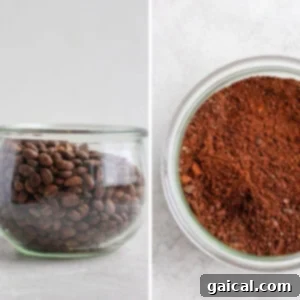
So, for a standard 4-serving pot, remember to use 1/2 cup of whole beans. The first step after measuring is to grind these beans to a coarse consistency, then place them directly into the bottom of your French press.
2. Achieving the Perfect Grind Size
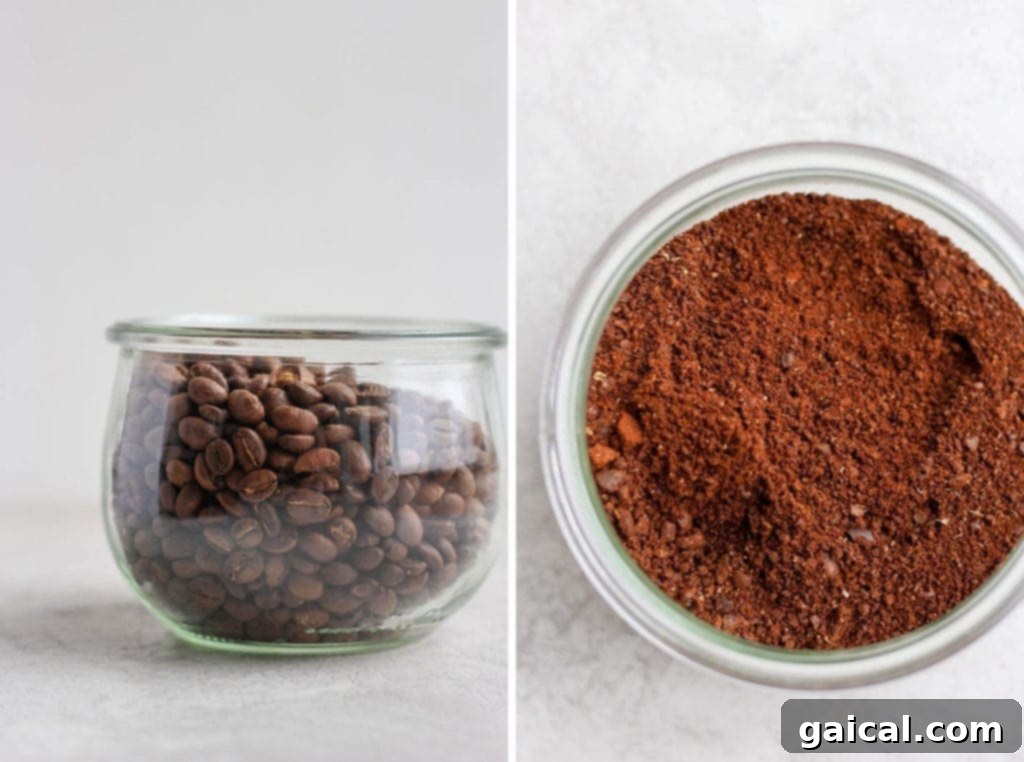
The grind size of your coffee beans is arguably one of the most critical variables in French press brewing. It directly impacts the extraction rate and, consequently, the flavor of your coffee. The goal for French press is a coarse, uniform grind, resembling large sea salt crystals or coarse sand.
Why is this specific grind size so important? If you grind your coffee beans too finely, the excessive surface area will lead to over-extraction, resulting in a muddy, bitter, and overly thick cup. Fine grounds can also slip through the French press filter, leaving unwanted sediment. Conversely, if your coffee beans aren’t ground enough (too coarse), you’ll experience under-extraction, producing a weak, watery, and flavorless brew. The key is to find that sweet spot.
When it comes to coffee grinders, you typically have two main options: a burr grinder or a blade grinder. While both can work, a burr grinder is generally preferred because it grinds coffee beans to a more consistent and uniform size, which is essential for optimal extraction. Blade grinders, on the other hand, chop the beans unevenly, leading to a mix of fine and coarse particles that can cause both over- and under-extraction simultaneously.
How to Set Your Coffee Grinder for French Press
- If you have a preprogrammed burr grinder, set it specifically to a “coarse” or “French press” setting. If not available, aim for a medium-coarse setting.
- When using a manual electric grinder or a hand grinder, grind your coffee until it achieves a uniform consistency, resembling large, distinct sand crystals. Avoid grinding into a fine powder.
Quick Tip for Pre-Ground Coffee Beans
While fresh whole beans are ideal, if you must use pre-ground coffee, be mindful of its grind size. Many pre-ground options are designed for drip coffee makers, meaning they are too fine for a French press. If your pre-ground coffee is finer than ideal, consider using a slightly larger quantity to compensate for potential under-extraction. As a general guideline for 4 cups of water, if using pre-ground coffee, use a heaping half-cup. This is because 1/2 cup of whole beans, coarsely ground, typically yields a little more than 1/2 cup of ground coffee when unpacked.
3. The Critical Role of Water Temperature
The temperature of your brewing water is paramount for a successful French press. Using water that is too hot can “scald” the coffee grounds, leading to a burnt, acrid taste and extracting unwanted bitter compounds. Conversely, water that isn’t hot enough will result in under-extraction, leaving you with a weak, sour, and unappealing cup because the flavors aren’t fully released from the grounds.
The ideal water temperature for French press coffee is precisely 200ºF (93ºC). This temperature range ensures optimal extraction of desirable flavors without drawing out bitterness.
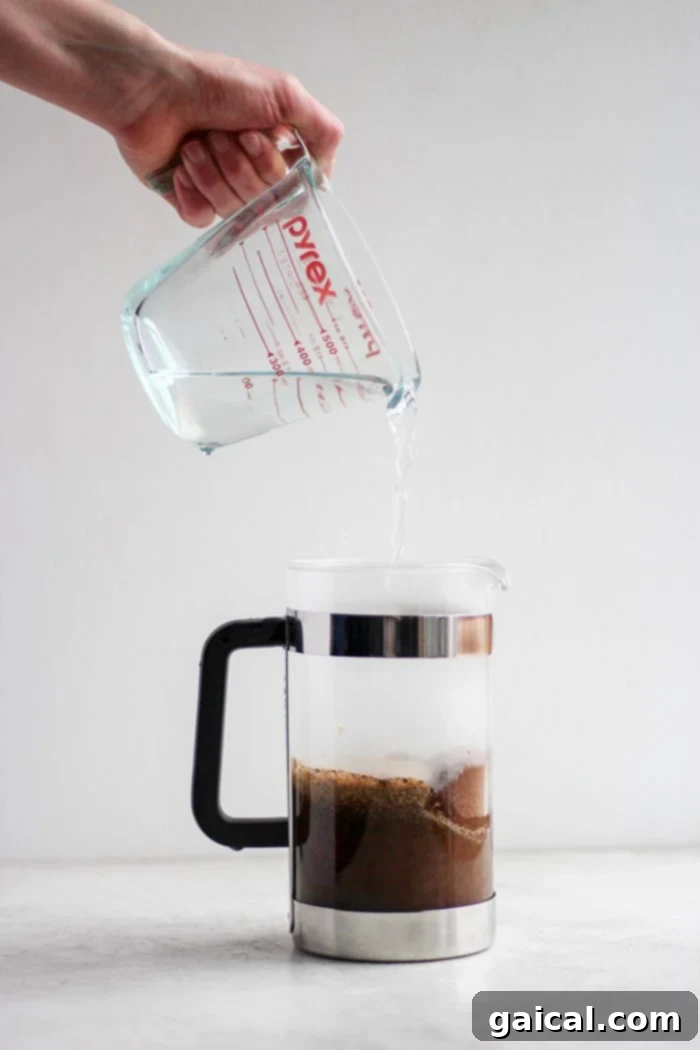
Many modern electric kettles allow you to set the water to the perfect temperature. If you don’t have a temperature-controlled kettle, the trick is simple: bring a pot of filtered water to a rolling boil, then remove it from the heat source and let it sit undisturbed for at least 1-2 minutes before pouring it over your coffee grounds. This cooling period will bring the water down to the optimal temperature, preventing scalding and promoting a balanced extraction. Always use filtered water for the cleanest, purest coffee flavor.
4. Optimizing Your Brew Time
After you’ve added your coarse coffee grounds and the perfectly heated water to the French press, it’s time for the crucial immersion phase. Give the grounds a gentle stir to ensure they are fully saturated, a process often referred to as the “bloom” which allows gases to escape and prepares the coffee for extraction. Then, let the mixture steep.
Through extensive testing, we’ve discovered that the “sweet spot” for French press brew time is exactly 5 minutes. Brewing for anything less than this typically results in under-extracted coffee, where the full depth and complexity of the flavors haven’t been adequately drawn out. The coffee will taste weak, thin, and possibly sour. On the other hand, brewing for significantly longer than 5 minutes can lead to over-extraction, where bitter compounds and astringent notes begin to dominate the flavor profile. While some prefer a very strong brew and might extend this slightly, exercise caution as bitterness can quickly take over.
For an ideal balance of strength and flavor, let your coffee brew for precisely 5 minutes. We recommend placing the French press lid gently on top during this time to help retain heat. Once the brewing time is complete, it’s time for the final step.
5. The Plunge and Serve
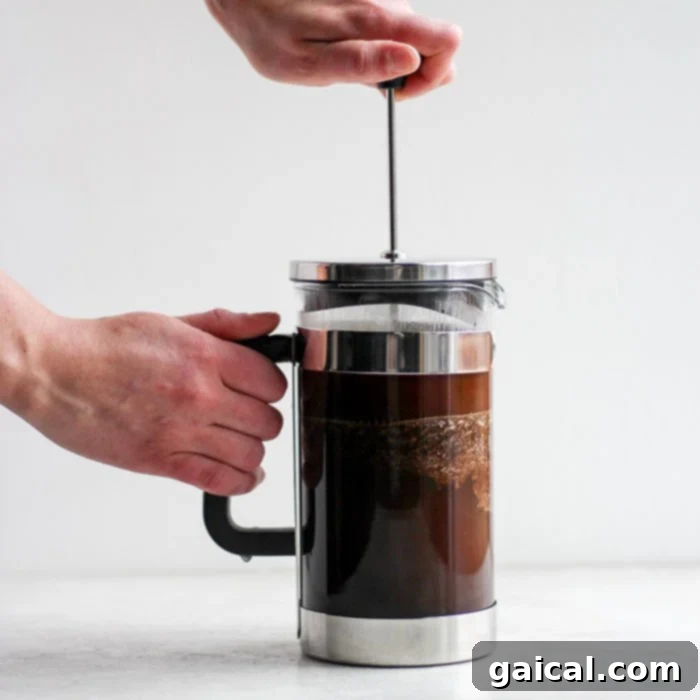
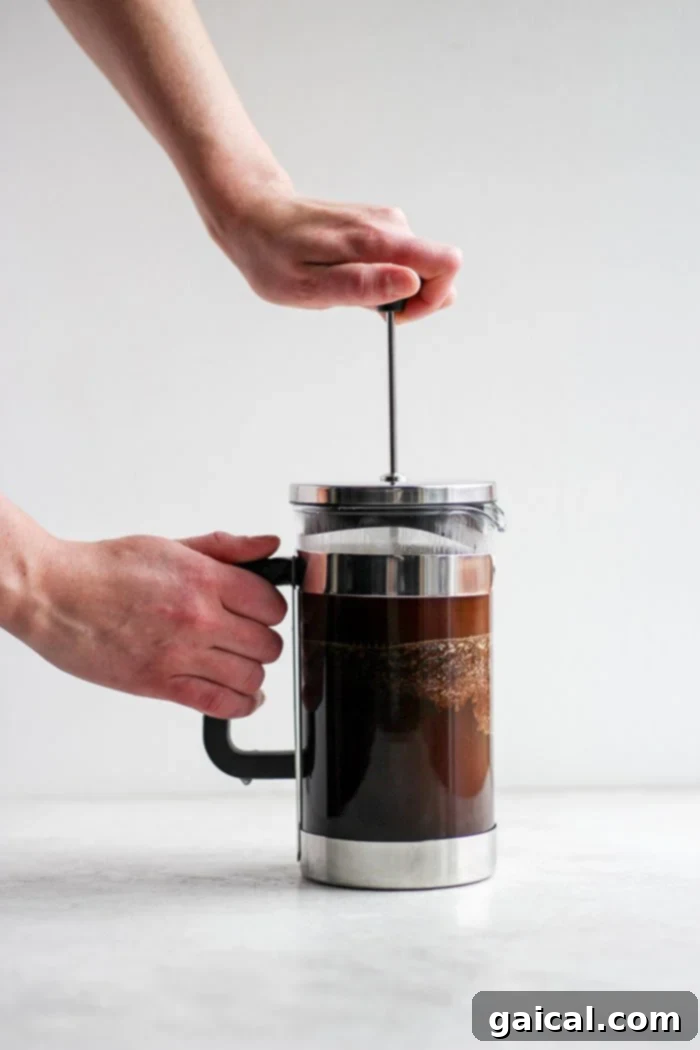
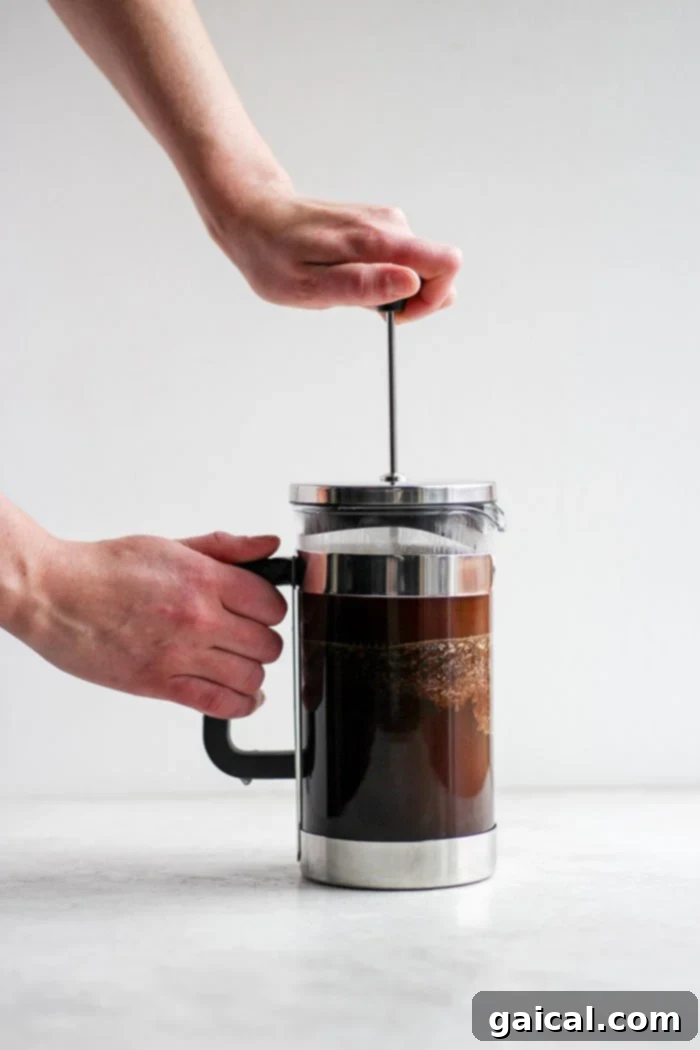
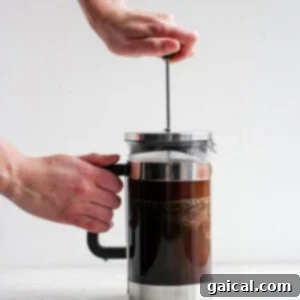
After the 5-minute brew time, it’s time to gently press the plunger down. Do this slowly and steadily, maintaining even pressure. This motion separates the spent coffee grounds from the brewed coffee, pushing them to the bottom of the carafe. Avoid pressing too quickly or forcefully, as this can agitate the grounds, potentially forcing fine particles through the filter and resulting in a muddy cup.
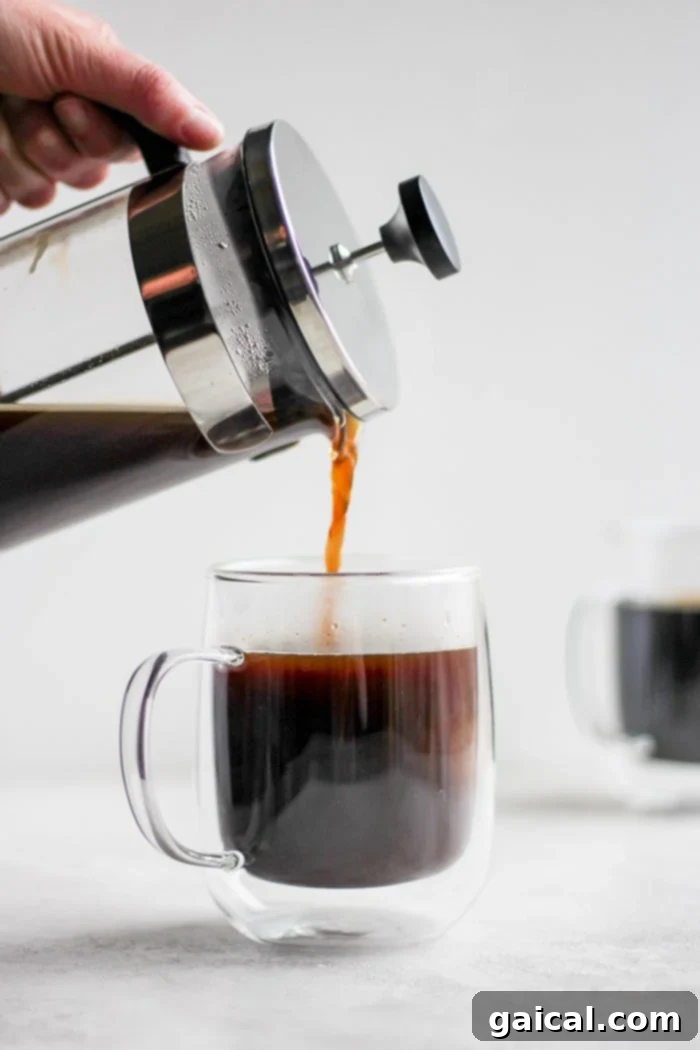
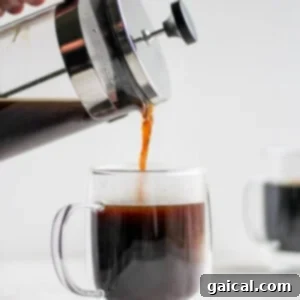
Once the plunger reaches the bottom, immediately pour your freshly brewed coffee into your favorite mug and savor it. Leaving the coffee in the French press with the grounds can lead to continued extraction, causing the coffee to become increasingly bitter over time. If you won’t drink all of it at once, transfer the remaining coffee to a separate carafe to maintain its optimal flavor.
Customizing Your French Press Experience
The beauty of French press coffee lies in its versatility. It’s a highly customizable brewing method that allows you to tailor your cup precisely to your liking. Don’t be afraid to experiment with the variables to discover your perfect brew.
Adjusting for Stronger Coffee
If you prefer a bolder, more intense cup, here’s what you can do to achieve stronger French press coffee:
- Reduce Water, Same Coffee: Use slightly less water while keeping the amount of ground coffee constant. This increases the coffee-to-water ratio.
- More Coffee, Same Water: Maintain your standard water volume but increase the amount of ground coffee used. Again, this boosts the coffee concentration.
- Extend Brew Time: While 5 minutes is our sweet spot, you can experiment by brewing for 6 or even 7 minutes. Be cautious, as extending the brew time too much can lead to bitterness.
Brewing Without a Scale: Simple Measurements
As mentioned earlier, you don’t always need a precise scale to make great French press coffee. Our cup-based measurements provide a reliable starting point:
- For 2 servings, use 1/4 cup of whole beans and 2 cups of water.
- For 4 servings, use 1/2 cup of whole beans and 4 cups of water.
Remember these ratios, and you’ll always have a good estimate for your desired batch size.
Quick Tip for Pre-Ground Coffee
If you find yourself using pre-ground coffee, which is often finer than ideal for French press, you might need to adjust the quantity. A heaping half cup of pre-ground coffee for 4 cups of water can help compensate for the quicker extraction that occurs with finer grounds, mimicking the strength you’d get from a coarser, 1/2 cup whole-bean grind.
Troubleshooting Common French Press Issues
Even with the best intentions, you might encounter some common issues. Here’s how to diagnose and fix them:
- Bitter Coffee: This is often a sign of over-extraction. Your grind might be too fine, your water too hot, or your brew time too long. Try adjusting these variables.
- Weak or Sour Coffee: This usually points to under-extraction. Your grind might be too coarse, your water not hot enough, or your brew time too short. Ensure full saturation of grounds during brewing.
- Muddy Coffee with Sediment: A major culprit here is a grind that’s too fine, allowing particles to pass through the filter. An uneven grind from a blade grinder can also contribute. Ensure you have a consistent coarse grind.
Cleaning and Maintenance for Longevity
Proper cleaning of your French press is essential for maintaining its functionality and ensuring consistently delicious coffee. After each use, discard the coffee grounds (they make great compost for your garden!). Rinse the carafe and plunger thoroughly with warm water. For a deeper clean, especially to remove coffee oils that can turn rancid and affect flavor, disassemble the plunger and wash all parts with mild soap and water. A soft brush can help remove stubborn grounds from the mesh filter. Regular cleaning will prevent buildup and extend the life of your French press, always ready for your next perfect brew.
Exploring Other Popular Coffee Brewing Methods
While the French press holds a special place in our hearts, the world of coffee brewing offers a delightful array of methods, each delivering a unique experience. We’ve explored many, and each suits different occasions and preferences:
- Pour Over: When you desire a single, exceptionally clean, and bright cup of coffee, the pour-over method is unparalleled. We have a detailed tutorial on how to make the perfect cup of pour-over coffee that guides you through this delicate process.
- Machine Drip Coffee: For ultimate convenience and serving larger groups, the classic machine drip coffee maker, like a trusty Mr. Coffee, is hard to beat. It’s a reliable option when efficiency is key.
- AeroPress: This compact and versatile brewer uses pressure for quick extraction, producing a clean, rich cup. It’s perfect for travel, camping, or when you need a single serving quickly. It’s portable and ideal for calm mornings.
- Espresso Machines (Nespresso/Keurig): For those craving speed and consistency, pod-based espresso machines offer a rapid solution for coffee or espresso. We particularly appreciate Nespresso for their robust flavor profiles and convenient pod recycling program.
- Percolator (Moka Pot): Often mistaken for a percolator, the Moka Pot is a stove-top espresso maker that brews a strong, concentrated coffee, perfect for crafting Americanos or other espresso-based drinks. It’s a classic method for a bold Italian-style brew.
More of our Favorite Coffee Inspirations…
Explore More Coffee & Beverage Recipes
- Allergy-Friendly Chai Tea Latte
- Vegan Chai Hot Chocolate
- How to Make the Perfect Cup of Pour-Over Coffee
- Pour Over Coffee (Chemex Tutorial)
- How to Make Cold Brew Coffee
French Press Coffee Recipe
Craft the perfect pot of rich, full-bodied coffee using a French press. This simple method requires just hot water, coarse-ground coffee, and your French press for an exceptional morning brew.
By: Linley Hanson | Prep Time: 10 mins | Cook Time: 5 mins | Total Time: 15 mins | Servings: 4
Ingredients
- 4 cups filtered water
- 1/2 cup whole roasted coffee beans (for 4 servings)
Instructions
-
Bring 4 cups of filtered water to a rolling boil. Using filtered water is crucial for the purest coffee flavor.
-
While the water is heating, grind your whole coffee beans to a coarse consistency. The grounds should resemble large, uniform sand crystals. Avoid a fine grind, which can lead to bitterness and sediment.

Ensure your coffee grounds are uniformly coarse, like large sand crystals. -
Once the water has reached a boil, remove it from the heat and let it rest for 1-2 minutes. This allows the temperature to drop to the optimal 200ºF (93ºC), preventing scalding of the coffee grounds.
-
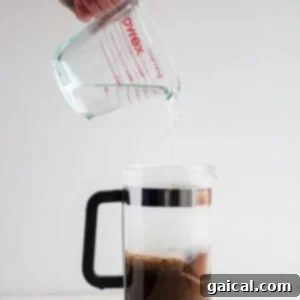
Pour the coarse grounds into the bottom of your French press. Slowly and evenly pour the hot water over the grounds. Use a long spoon to gently stir the mixture, ensuring all grounds are fully saturated (this is the “bloom” phase). Place the French press lid on top, without pressing the plunger, to retain heat. Let the coffee brew for 5 minutes (adjust to your preference for stronger coffee, but be mindful of bitterness).
Stir gently to saturate all grounds, then let it brew. -
After 5 minutes, slowly and steadily press the plunger down, pushing the coffee grounds to the bottom of the French press. Avoid pressing too quickly or forcefully.
Press the plunger down slowly and evenly. -
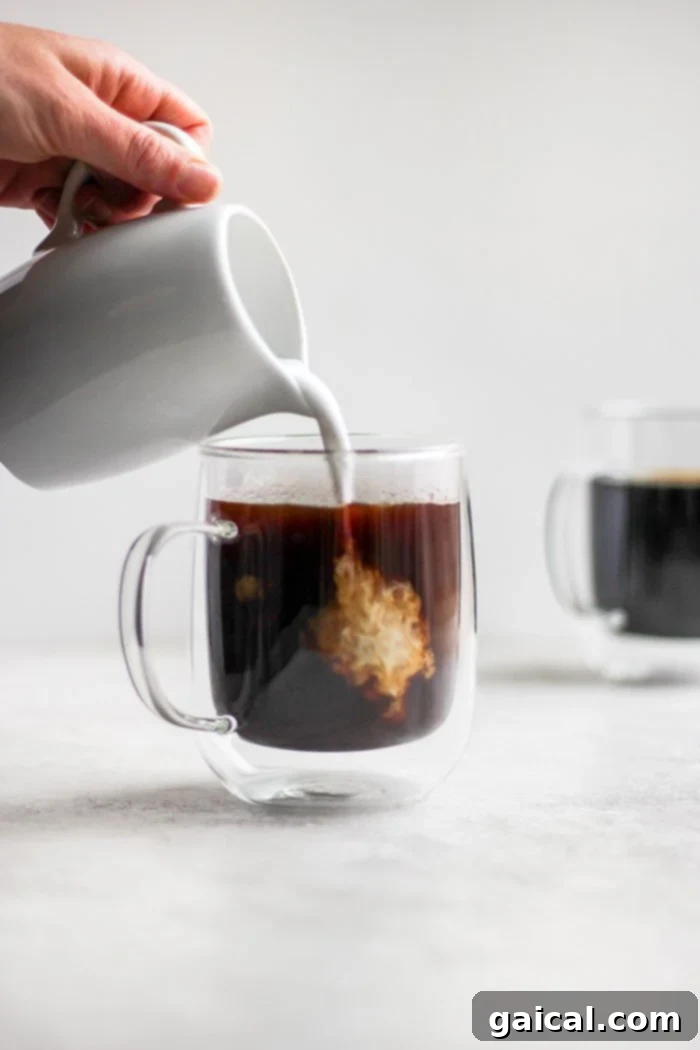
Immediately pour the fresh coffee into your favorite mug and enjoy! You can drink it black or customize it with milk, cream, or your preferred sweetener. If you have leftover coffee, transfer it to an insulated carafe to prevent over-extraction.
Serve and enjoy your perfectly brewed French press coffee!
Nutrition Facts
Calories: 1 kcal, Carbohydrates: 0 g, Protein: 0 g, Fat: 0 g, Fiber: 0 g, Sugar: 0 g
Nutrition information is automatically calculated and should only be used as an approximation.
Love this recipe? Share your thoughts below!
We’d love to hear about your French press journey. Don’t forget to tag your beautiful coffee creations on social media with the hashtag #fitfoodiefinds – we can’t wait to see your perfect brew!
Photography by: The Wooden Skillet