

Have you ever wondered about the absolute best way to cook bacon? The secret to consistently perfect, crispy, or deliciously chewy strips of bacon, without the usual mess and fuss, lies in your oven. Forget splattering stovetops and unevenly cooked pieces. This guide will show you how to cook bacon in the oven using just three simple items: your favorite bacon, a sturdy metal baking rack, and a tin foil-lined baking sheet. Get ready to enjoy the most perfect oven-baked bacon, every single time.
Whether your preference leans towards super crispy, shatter-in-your-mouth bacon, or a more substantial, thick-cut and delightfully chewy experience, cooking bacon in the oven is a foolproof method that delivers exceptional results. It truly is a game-changer for breakfast, brunch, or any meal that benefits from that irresistible bacon flavor.
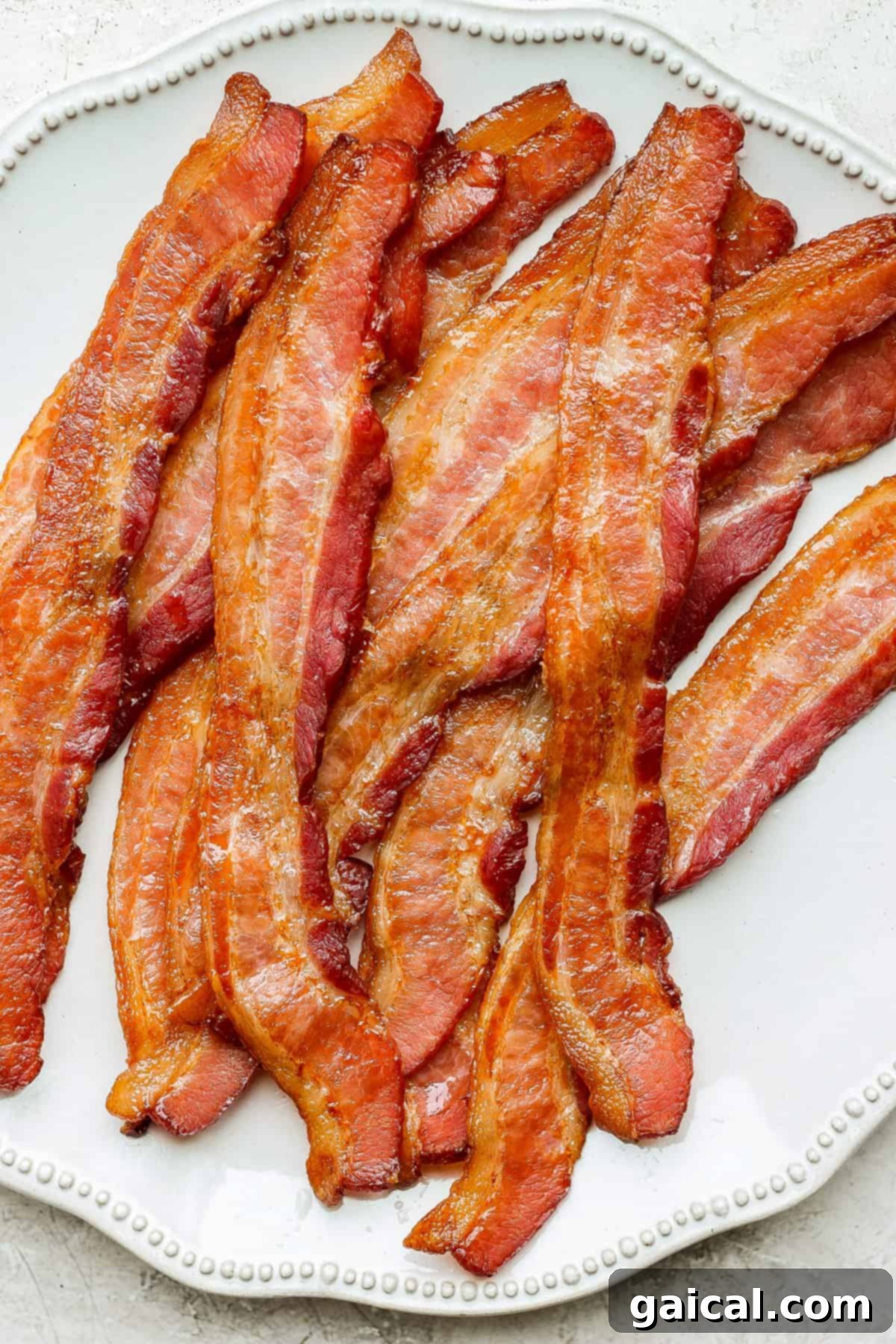
Stovetop bacon was likely the first method many of us learned for preparing this beloved breakfast staple. It’s certainly effective for quickly frying a few strips, but it often comes with the unwelcome side effect of grease splattering across your kitchen. If your goal is a mess-free cooking experience with minimal cleanup, and you need to prepare bacon for a larger group, then cooking bacon in the oven is unequivocally the superior choice.
Imagine effortlessly preparing a feast for friends and family without juggling multiple pans on the stove. When entertaining a crowd, we often line several baking sheets with bacon, allowing the oven to handle the heavy lifting. This frees up the stovetop for other essential breakfast items like fluffy pancakes or perfectly scrambled eggs, making breakfast prep a breeze.
Why Oven-Baked Bacon is the Best Way to Cook Bacon
While there are numerous ways to cook bacon – pan-frying, air frying, grilling, or even microwaving – the oven method stands out as the ultimate choice. Here’s a detailed look at why baking bacon in the oven reigns supreme:
Effortless and Hands-Off: Say goodbye to constantly monitoring and flipping bacon strips. With oven baking, once your bacon is arranged on the wire rack, it goes into the oven, and you’re free until it’s perfectly cooked. This hands-off approach allows you to multitask or simply relax while your bacon sizzles to perfection, making it ideal for busy mornings or when preparing a larger meal.
Significantly Less Mess: The notorious bacon grease splatter that accompanies stovetop cooking is virtually eliminated when you bake bacon. By utilizing a baking sheet lined with tin foil, all the rendering grease drips neatly below the bacon strips. This contained cooking environment means no more scrubbing grease off your backsplash or stovetop, ensuring a remarkably simple cleanup process. After cooking, simply let the grease solidify on the foil, then crumple and discard.
Cooks Large Batches with Ease: Unlike the stovetop, where you’re often limited to cooking a few strips at a time, the oven allows you to cook a substantial amount of bacon simultaneously. Depending on the size of your oven and baking sheets, you can easily prepare up to 2 pounds of bacon or more in a single batch. This makes oven-baked bacon the perfect solution for entertaining guests, meal prepping for the week, or feeding a hungry family.
Consistent Perfection Every Time: The even heat distribution of an oven ensures that each strip of bacon cooks uniformly. This eliminates the common problem of some pieces being burnt while others remain undercooked. The result is bacon that boasts a consistent texture and golden-brown crispness across the entire sheet, guaranteeing perfect bacon with minimal effort every single time you cook it.
Essential Equipment for Perfect Oven Bacon
Before diving into the simple steps of baking bacon, let’s gather the few crucial items you’ll need. The good news is, you likely already have most of these in your kitchen!
Bacon: The Star Ingredient
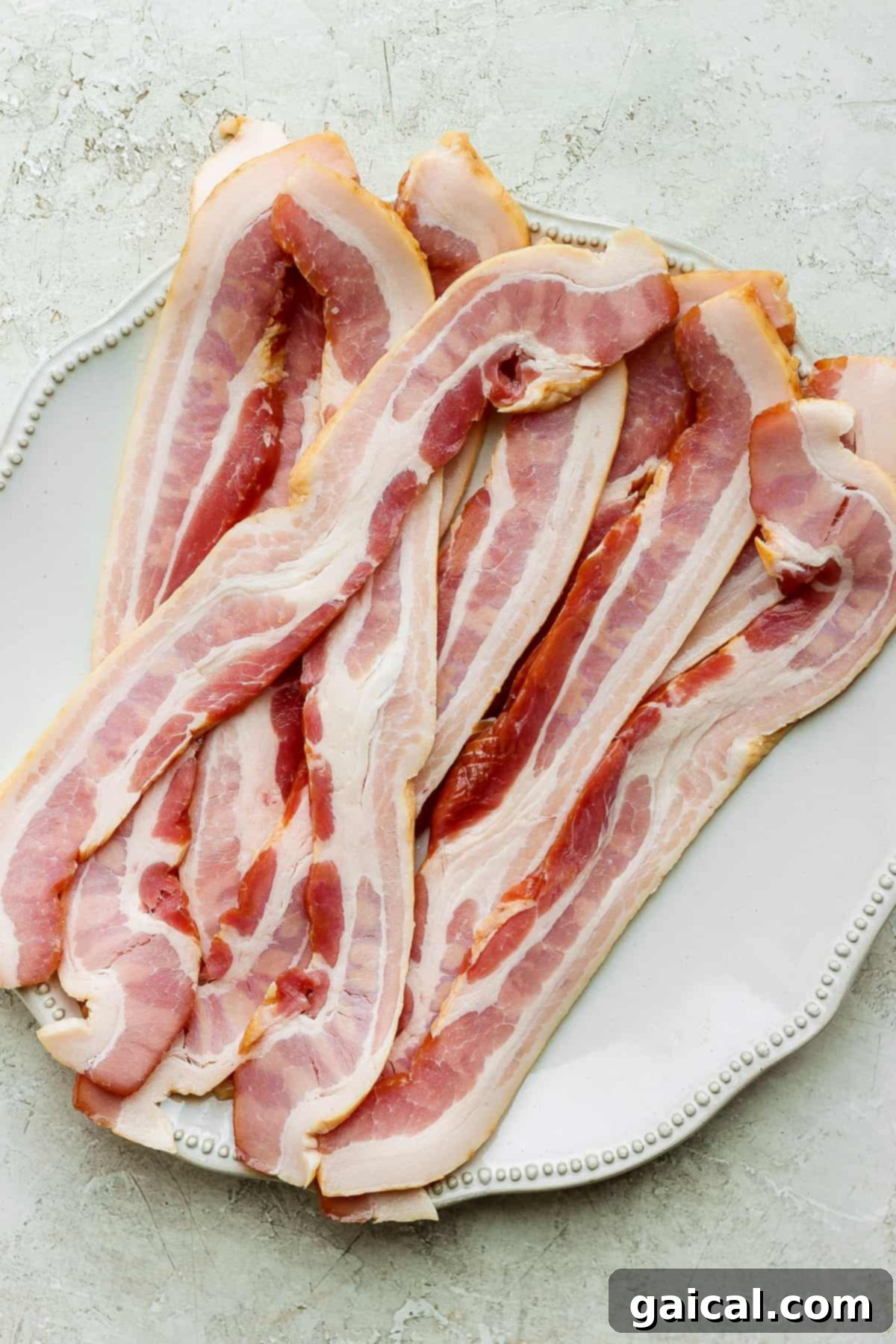
Unsurprisingly, bacon is the only *ingredient* required for perfect baked bacon. It’s almost too simple, isn’t it? The market offers a wide variety of bacon types, and ultimately, your choice comes down to personal preference. Are you a fan of delicate, super-crunchy bacon, or do you prefer a thicker, meatier, and chewier strip? Rest assured, any type of bacon will work beautifully with this oven method.
However, one piece of advice that elevates the experience is to invest a little extra in high-quality bacon. Opt for brands that are free of nitrates and unnecessary additives. Not only does superior bacon offer a richer flavor profile, but it also often renders more evenly, contributing to a better overall result.
Choosing Your Bacon: Thickness Matters
The thickness of your bacon will directly impact its texture and cooking time. Here’s a quick guide to help you choose:
- Thin-Cut Bacon: Ideal for those who crave ultra-quick cooking and exquisitely crispy bacon that shatters with every bite.
- Medium-Cut Bacon: Offers a delightful balance, achieving a perfect in-between texture that’s both tender and slightly crisp.
- Thick-Cut Bacon: The go-to for a more substantial, satisfyingly chewy bacon experience with crispy edges. This is often preferred for its robust texture.
The Indispensable Metal Baking Rack
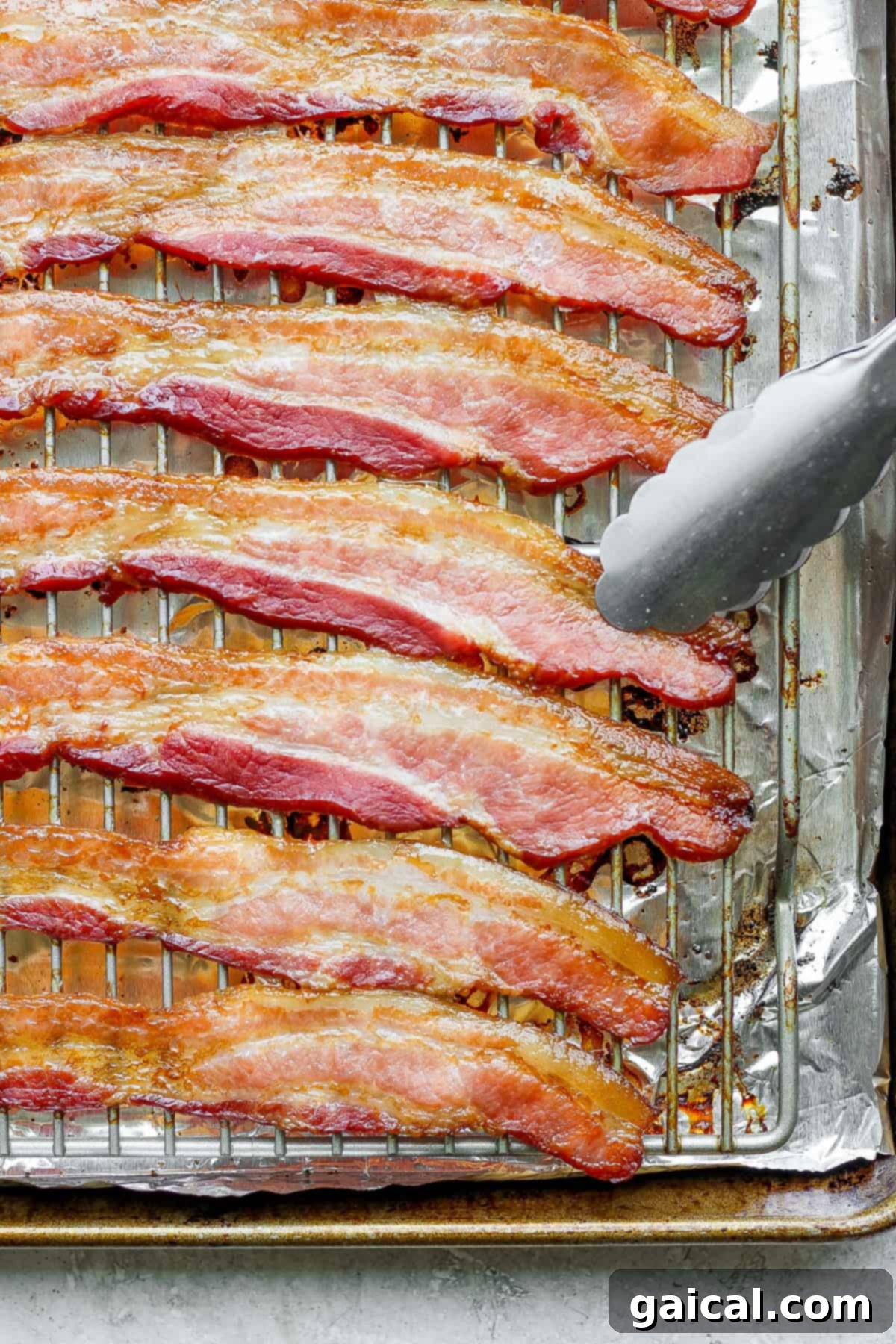
A metal baking rack is a critical component of this oven bacon recipe, and we strongly advise against skipping it! The brilliance of a metal baking rack lies in its ability to elevate the bacon above the baking sheet. This elevation allows for superior air circulation around each strip and, more importantly, ensures that the rendered fat drains away from the meat.
Consider the alternative: bacon sizzling directly in its own grease on a flat pan. This often leads to uneven cooking, the bacon bubbling and curling, and a higher risk of burning in spots. By contrast, when bacon cooks on a wire rack, the fat drips neatly to the bottom, allowing the heat to circulate evenly around all sides of the bacon. This promotes consistent crisping and prevents the bacon from stewing in its own fat, resulting in perfectly cooked strips.
Do I absolutely have to use a metal baking rack? While it’s possible to cook bacon in the oven without a wire rack, we highly recommend using one for optimal results. When cooked without a rack, the bacon will sit directly in its rendered grease, leading to less even cooking and a softer texture. Additionally, the cleanup becomes a bit messier as the bacon grease coats the pan more thoroughly, rather than just pooling beneath a rack. For truly superior oven-baked bacon, the rack is key.
The Essential Baking Sheet (Lined with Aluminum Foil)
Whatever you do, do NOT forget to line your baking sheet with aluminum foil! The baking sheet serves as the vital catchment for all that delicious, rendered bacon grease as it drips from the meat. Forgetting the baking sheet would lead to grease dripping directly onto the bottom of your oven, creating a smoky mess and a significant cleaning chore that nobody wants.
Pro Tip: Easy Cleanup with Foil
Always line your cookie sheet (or baking sheet) with tin foil. This simple step makes cleanup incredibly easy. Once the bacon grease has cooled and solidified on the foil, you can simply lift the foil and discard it, leaving your baking sheet sparkling clean!
How to Bake Bacon: Your Step-by-Step Guide to Perfection
Ready to master the art of baking the most perfect oven-cooked bacon on the planet? This easy, foolproof tutorial will guide you through every step, ensuring delicious results. The best part? A mouthwatering breakfast (or any meal) can be served in under 30 minutes with minimal active effort!
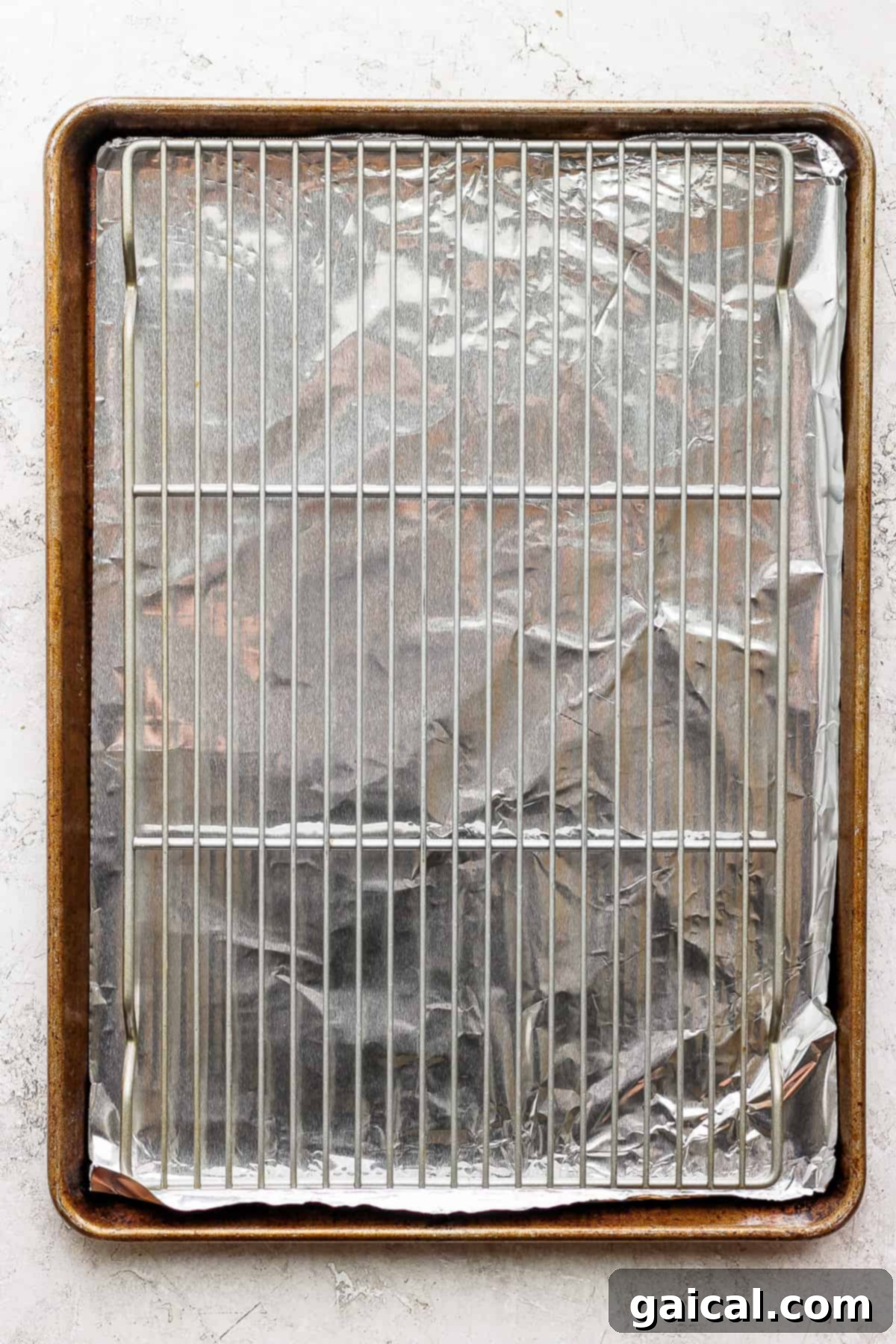
- First, begin by preheating your oven to 400ºF (200ºC). While the oven is heating, prepare your baking sheet by lining it completely with heavy-duty tin foil. Ensure the foil extends slightly up the sides of the pan to contain any grease.
- Next, carefully place a metal baking rack directly on top of the foil-lined baking sheet. This creates the essential elevated surface for your bacon.
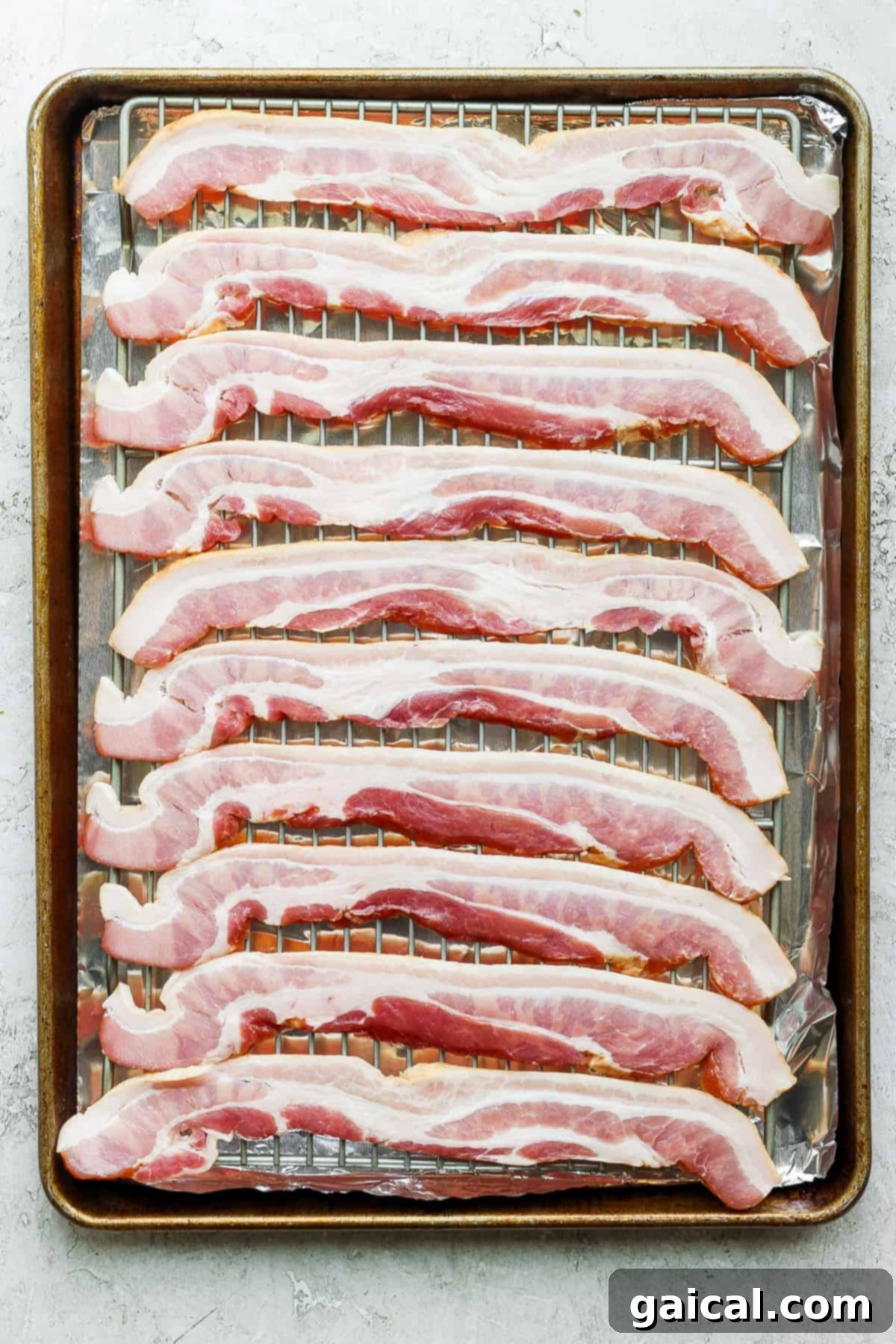
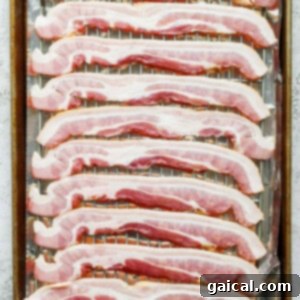
- Remove the bacon strips from their package and lay each strip flat on the metal baking rack. It’s crucial to ensure that none of the bacon pieces overlap. However, it’s perfectly fine if the edges are touching, as the bacon will shrink slightly as it cooks. Arranging them in a single layer ensures even cooking and crispness.
- Once your baking sheet is loaded, carefully place it into the preheated oven. The baking time will vary depending on the thickness of your bacon and your desired crispness. Use the following bake times as a general guideline, but always keep an eye on your bacon:
- Thin-Cut Bacon: Bake for 10-15 minutes for optimal crispness.
- Medium-Cut Bacon: Bake for 15-20 minutes for a balanced texture.
- Thick-Cut Bacon: Bake for 20-25 minutes for a chewier center with crispy edges.
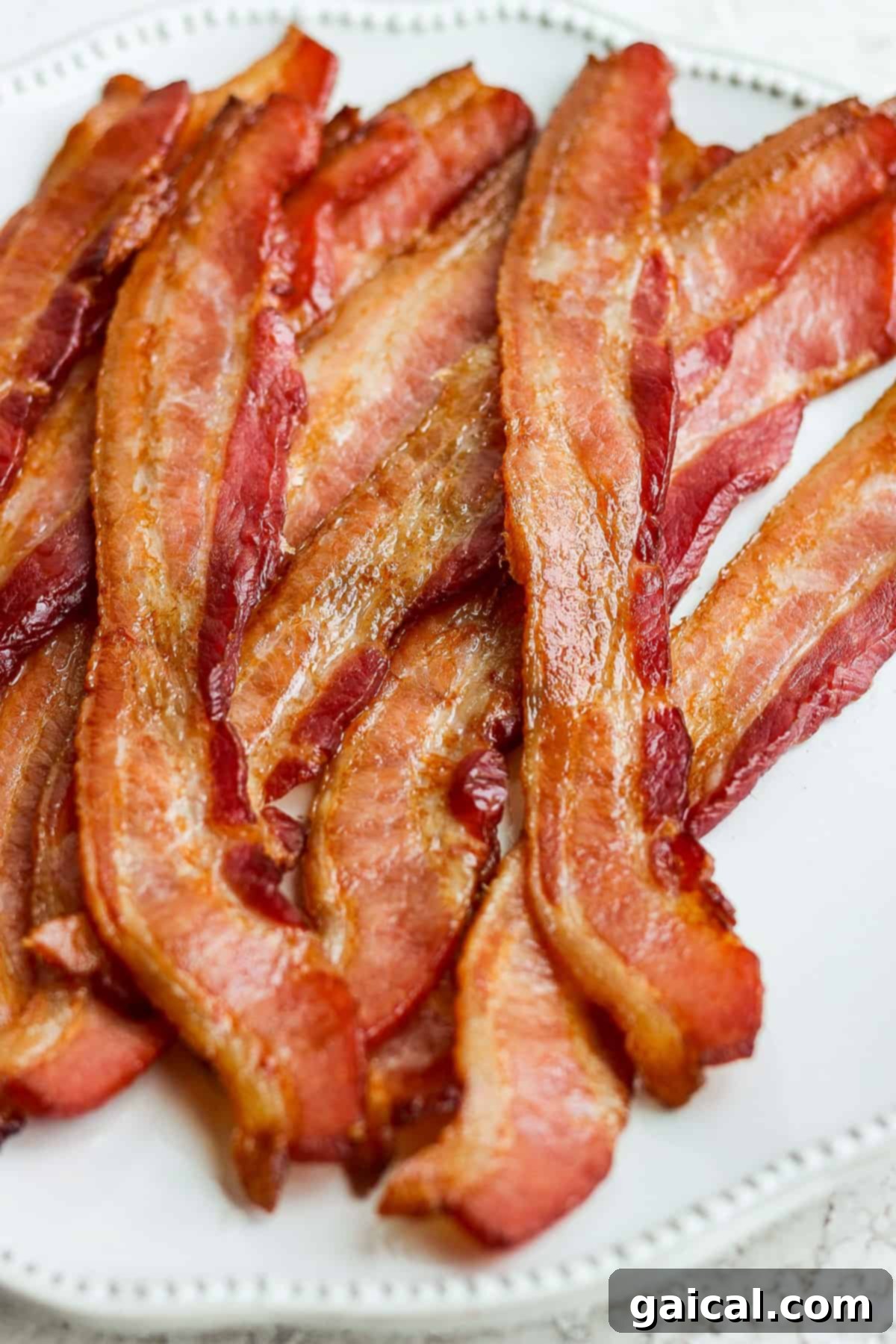
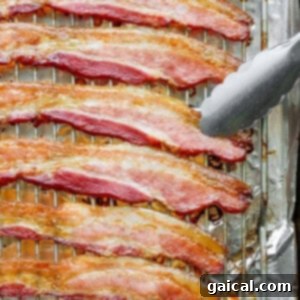
Once your bacon has reached your desired level of crispness and golden-brown perfection, carefully remove the baking sheet from the oven. Let the bacon rest on the rack for a few minutes to cool slightly; it will crisp up further as it cools.
Then, transfer the cooked bacon strips to a plate lined with several layers of paper towels. Gently press a few more pieces of paper towel over the top to absorb any excess grease, making your bacon ready to serve.
Keep a Close Eye on Your Bacon!
Bacon can transition from perfectly cooked to unfortunately burnt very rapidly. It’s essential to monitor your bacon, especially during the last few minutes of cooking, to prevent over-cooking. While some might enjoy a very well-done strip, no one likes charred bacon!
Frequently Asked Questions About Baking Bacon
For medium-cut bacon, cook in a preheated oven at 400ºF (200ºC) for approximately 15-20 minutes. Thin-cut bacon typically takes 10-15 minutes, while thick-cut bacon requires 20-25 minutes. Always adjust timing based on your oven and desired crispness.
Bacon is done when it transforms from a pale pink to a rich, darker golden-brown color. It should appear firm and slightly curled. For crispy bacon, it will look even darker and feel rigid to the touch. Remember, it will continue to crisp up slightly as it cools outside the oven.
No, there is no need to flip bacon when cooking it in the oven, especially if you are using a wire rack. The wire rack allows for excellent heat circulation around both sides of the bacon, ensuring even cooking without any intervention on your part.
You can certainly cook bacon in the oven without aluminum foil, but be prepared for a more challenging cleanup. The foil acts as a convenient liner that catches all the rendered bacon grease, protecting your baking sheet. Without it, the grease will bake onto the pan, requiring a more rigorous scrubbing afterwards.
No, it is generally not recommended to use parchment paper for cooking bacon in the oven, especially if the temperature exceeds 400°F (200°C), which is often the max safe temperature for parchment. Bacon also produces a lot of grease, which can saturate parchment paper and potentially cause it to burn or catch fire. Aluminum foil is the safest and most effective choice for this method.
5 Expert Tips for Cooking Oven Bacon PERFECTLY Every Time
Achieving consistently perfect oven-baked bacon is easy once you know a few key tricks. Follow these tips to ensure your bacon is always delicious, whether you prefer it crispy or chewy:
- Optimal Oven Temperature: The ideal temperature for baking bacon is crucial for crisp results. We’ve found that 400ºF (200ºC) hits the sweet spot, allowing the bacon to cook through and crisp up beautifully without burning too quickly. Avoid lower temperatures as they can result in rubbery bacon.
- The Wire Baking Rack is Non-Negotiable: As emphasized earlier, a wire baking rack is your best friend for oven bacon. It’s not just important for even cooking and allowing fat to drip away; it also simplifies cleanup significantly by preventing the bacon from sitting in and cooking in its own grease.
- Vigilance is Key – Don’t Burn It!: Bacon can go from exquisitely perfect to unfortunately overcooked in mere moments. Stay attentive, especially towards the end of the cooking time. Keep an eye on its color and texture, and remove it from the oven promptly once it reaches your preferred crispness.
- Prioritize High-Quality Bacon: The starting ingredient truly matters. Whenever possible, choose high-quality, nitrate-free, and locally sourced bacon. Better bacon not only cooks more evenly and consistently, but it also delivers a superior, richer flavor that elevates your entire dish.
- Match Thickness to Your Preference: Your bacon’s thickness directly impacts its final texture. We wholeheartedly recommend thick-cut bacon for baking, as it produces a delightful chewiness in the center with wonderfully crispy edges. If you’re a devoted fan of super crispy, delicate bacon, opt for thin- or medium-cut varieties to achieve that signature crunch.
Delicious Pairings for Your Oven-Baked Bacon
Every perfectly cooked strip of bacon deserves to be accompanied by something equally delicious. Here are some fantastic and healthy breakfast pairings to complement your irresistible oven-baked bacon:
- Fluffy Protein Waffles
- Crispy Sweet Potato Hash Browns
- Savory Sweet Potato Crust Quiche
- Perfect Hard-Boiled Eggs
- Easy Baked Eggs in the Oven
- Hearty Sheet Pan Sweet Potato Hash
- Creamy Perfect Scrambled Eggs
- Wholesome Banana Pancakes
How to Store Cooked Bacon for Freshness
Once your oven-baked bacon has completely cooled to room temperature, transfer it to an airtight container or a resealable bag. Store it in the refrigerator for optimal freshness for up to 3-5 days. This makes it a great option for meal prepping throughout the week.
How to Quickly Reheat Cooked Bacon
The quickest and easiest way to reheat cooked bacon is using your microwave. Simply place the bacon strips on a microwave-safe plate and cover them with a piece of paper towel. Microwave on high for 60-90 seconds, or until the bacon is hot and re-crisped to your liking. For a crispier finish, you can also reheat it in a toaster oven or even back in a regular oven for a few minutes until warmed through.
Creative Ways to Use Leftover Bacon
Don’t let any delicious oven-baked bacon go to waste! There are countless ways to incorporate leftover bacon into other meals, adding a smoky, savory kick:
- Crumble it into bacon bits and sprinkle over salads for extra crunch and flavor.
- Add it to your favorite breakfast sandwich or burrito for a hearty start to your day.
- Pair it with vegetables, such as roasted Brussels sprouts with bacon, for a flavorful side dish.
- Incorporate it into pasta dishes, like our delicious BLT pasta for a quick and satisfying dinner.
- Chop and mix into omelets, quiches, or frittatas.
- Sprinkle over baked potatoes or creamy soups.
- Use it to garnish deviled eggs or avocado toast.
Can You Freeze Cooked Bacon for Later?
Yes, cooked bacon freezes wonderfully, making it an excellent component for future meal prep. To freeze, first ensure the bacon has cooled completely. Then, transfer the strips into a freezer-safe gallon-size bag or an airtight container. Remove as much air as possible before sealing to prevent freezer burn. Cooked bacon can be stored in the freezer for up to 3 months. When ready to use, simply thaw in the refrigerator or reheat directly from frozen using your preferred method.
Discover More…
Other Popular Ways to Cook Bacon
While oven-baked bacon is our top recommendation for its convenience and results, it’s always good to know other methods for specific needs or preferences:
- Microwave Bacon: Quickest for a few strips, but best for crispy, thin bacon.
- Air Fryer Bacon: Great for small batches and very crispy results, often faster than the oven.
- Stovetop Bacon: Classic method for small quantities, but requires more active cooking and cleanup.
How to Cook Bacon in the Oven
Lee Funke
5 minutes
15 minutes
20 minutes
4
Ingredients
-
1
lb.
bacon,
nitrate-free if possible (any thickness)
Instructions
-
First, preheat the oven to 400ºF and line a baking sheet with tin foil.
-
Next, place a metal baking rack on top of the baking sheet and set aside.

-
Remove bacon from package and place bacon strips side by side on the baking rack. Make sure that the strips are not overlapping. It’s okay if they touch because they will shrink while baking.
Bake bacon at 400ºF using the following time guideline:
-
Thin-cut bacon: bake for 10-15 minutes.
-
Medium-cut bacon: bake for 15-20 minutes.
-
Thick-cut bacon: bake for 20-25 minutes.
-
Once the bacon is at its desired texture, remove it from the oven and let rest for 5 minutes before transferring it to a paper towel lined plate. Use more paper towels to remove excess bacon grease.
Tips & Notes
- Storage: Let your cooked bacon cool completely, and then store it in an airtight container in the fridge for up to 3-5 days.
- Thickness recommendation: We are huge fans of thick-cut bacon when baking because it gives you that perfect combination of chewy on the inside and slightly crispy on the outside.
Nutrition (Approximate per serving)
Calories: 93 kcal,
Carbohydrates: 0 g,
Protein: 7 g,
Fat: 7 g,
Fiber: 0 g,
Sugar: 0 g
Nutrition information is automatically calculated and should only be used as an approximation.
🐷
Love this recipe? Leave a comment below!
Don’t forget to tag your posts on social media with the hashtag #fitfoodiefinds – we’d love to see what you’re cooking up!
More of Our Favorite…
Delicious Bacon-Centric Recipes
- Bacon-Wrapped Dates Stuffed with Goat Cheese
- Roasted Brussels Sprouts with Bacon
- Flavorful Bacon-Wrapped Shrimp
- Healthy Broccoli Salad with Bacon
- Bacon-Wrapped Egg Cups
- Cauliflower Mac n’ Chicken Casserole (with bacon!)
Photography by: The Wooden Skillet