
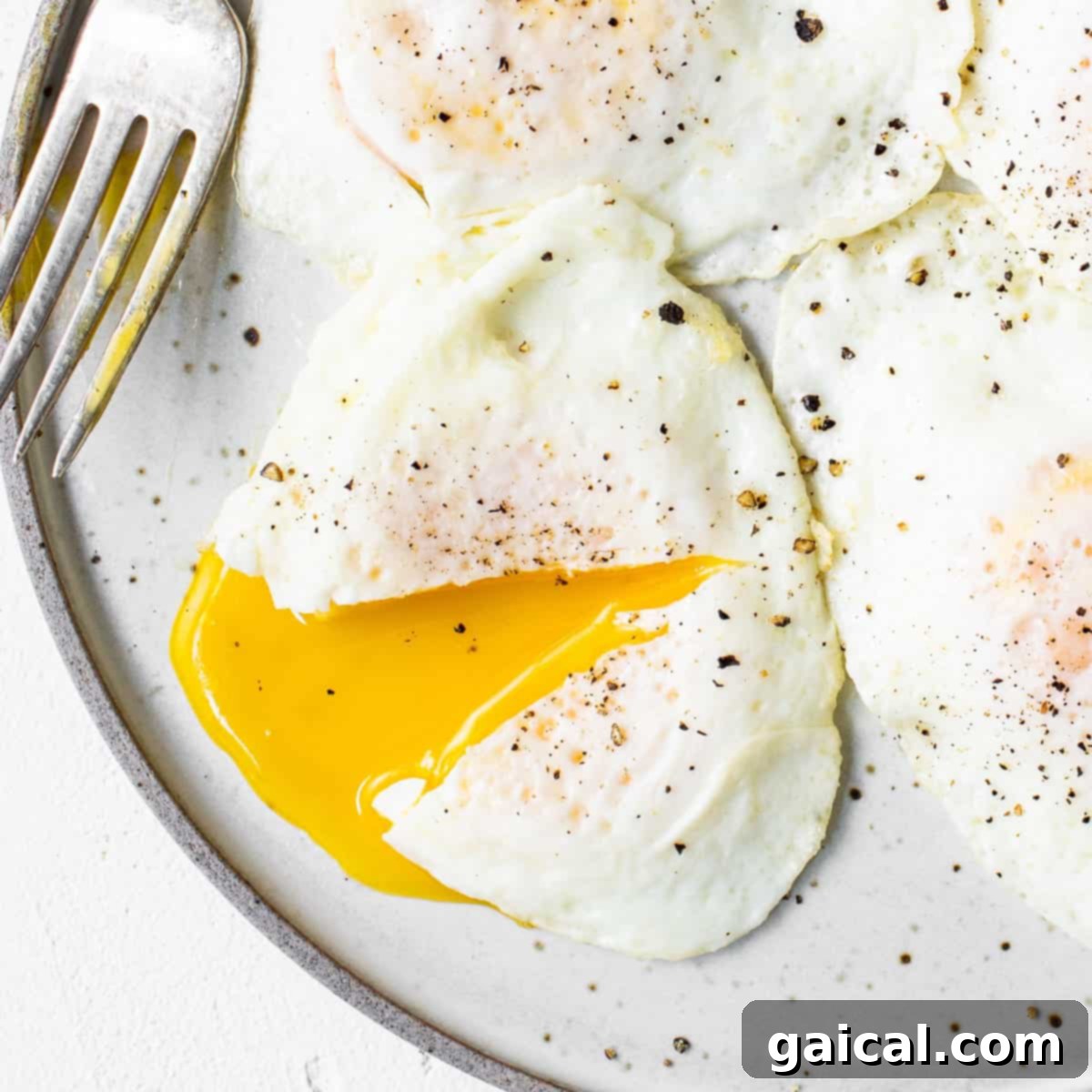
Mastering Over Easy Eggs: Your Guide to Perfectly Runny Yolks & Fluffy Whites
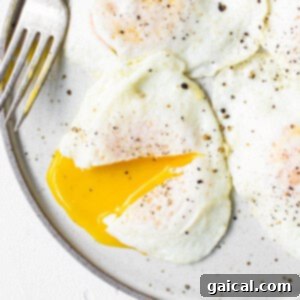
Craving that sublime culinary experience where a fork gently breaks into a perfectly cooked egg, unleashing a cascade of rich, golden yolk that mingles with tender, fluffy whites? If this sounds like your ideal breakfast (or any meal!), then mastering the art of over easy eggs is a must. This comprehensive guide will walk you through a simple, foolproof technique to achieve consistently delicious over easy eggs, transforming your home cooking from good to gourmet.
Over easy eggs are a beloved classic, distinguished by their fully set whites and a delightfully runny, liquid yolk that’s perfect for dipping toast, enriching grain bowls, or topping off a savory dish. While seemingly simple, achieving that ideal balance requires just the right touch. Forget tough whites or undercooked yolks; we’ve tested and refined this method to ensure your success every single time.
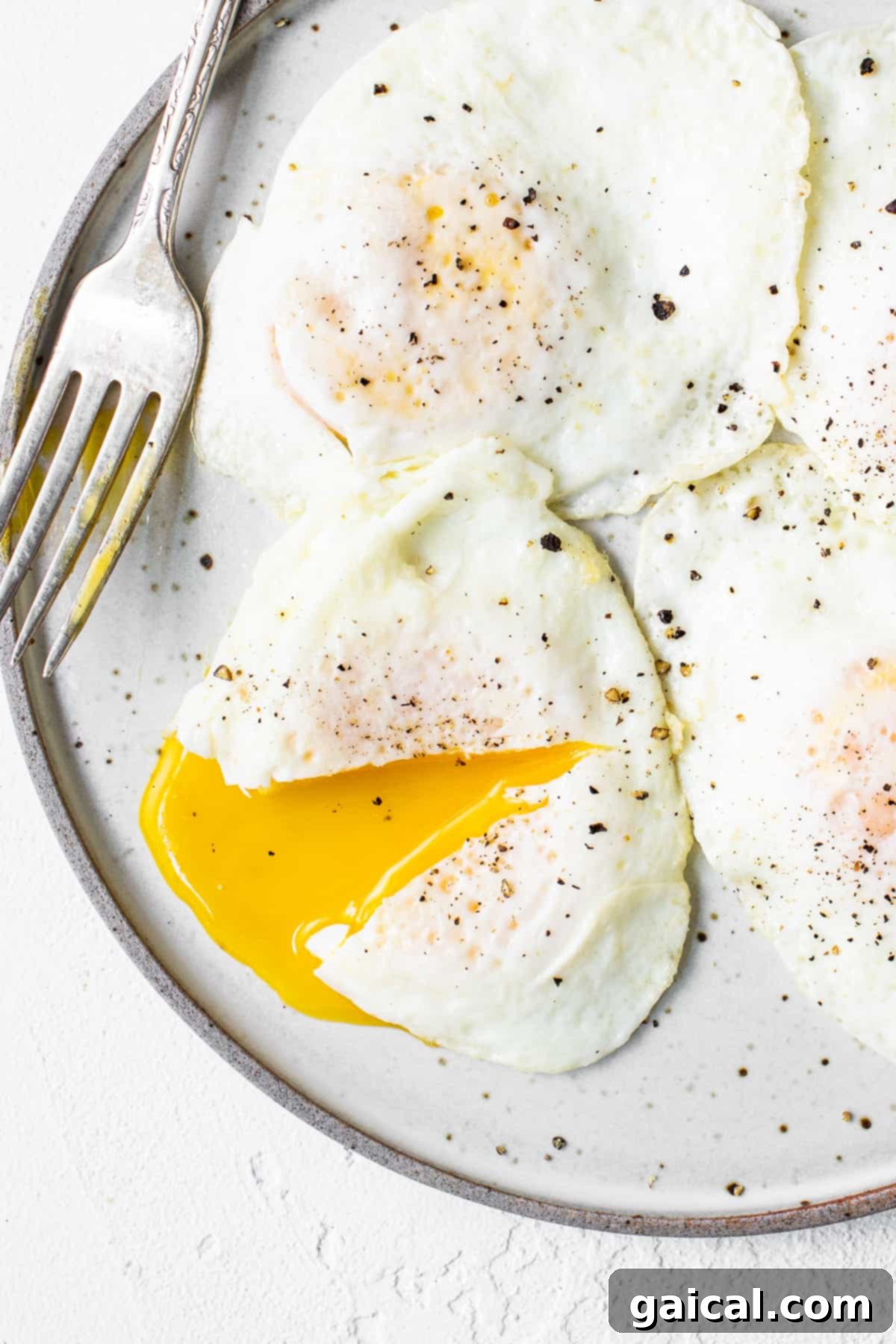
Among the myriad ways to prepare eggs, over easy holds a special place in our hearts. The appeal lies not just in its undeniable flavor but also in its incredible versatility. That luscious, oozy yolk isn’t exclusively for breakfast plates; it elevates everything from a simple slice of avocado toast to a hearty grain bowl, a gourmet burger, or even a fresh salad. It adds a layer of richness and moisture that few other ingredients can provide.
If you’ve hesitated to try making over easy eggs, perhaps fearing sticking or overcooking, fret no more. Our meticulous testing has identified the optimal conditions and ingredients for consistent perfection. We experimented with various fats and pan types to pinpoint the winning combination that guarantees your over easy egg success. The undisputed champions? Unsalted butter and a high-quality nonstick pan.
Essential Ingredients & Equipment for Perfect Over Easy Eggs
Gathering the right components is the first step towards culinary success. Here’s what you’ll need to create flawlessly over easy eggs:
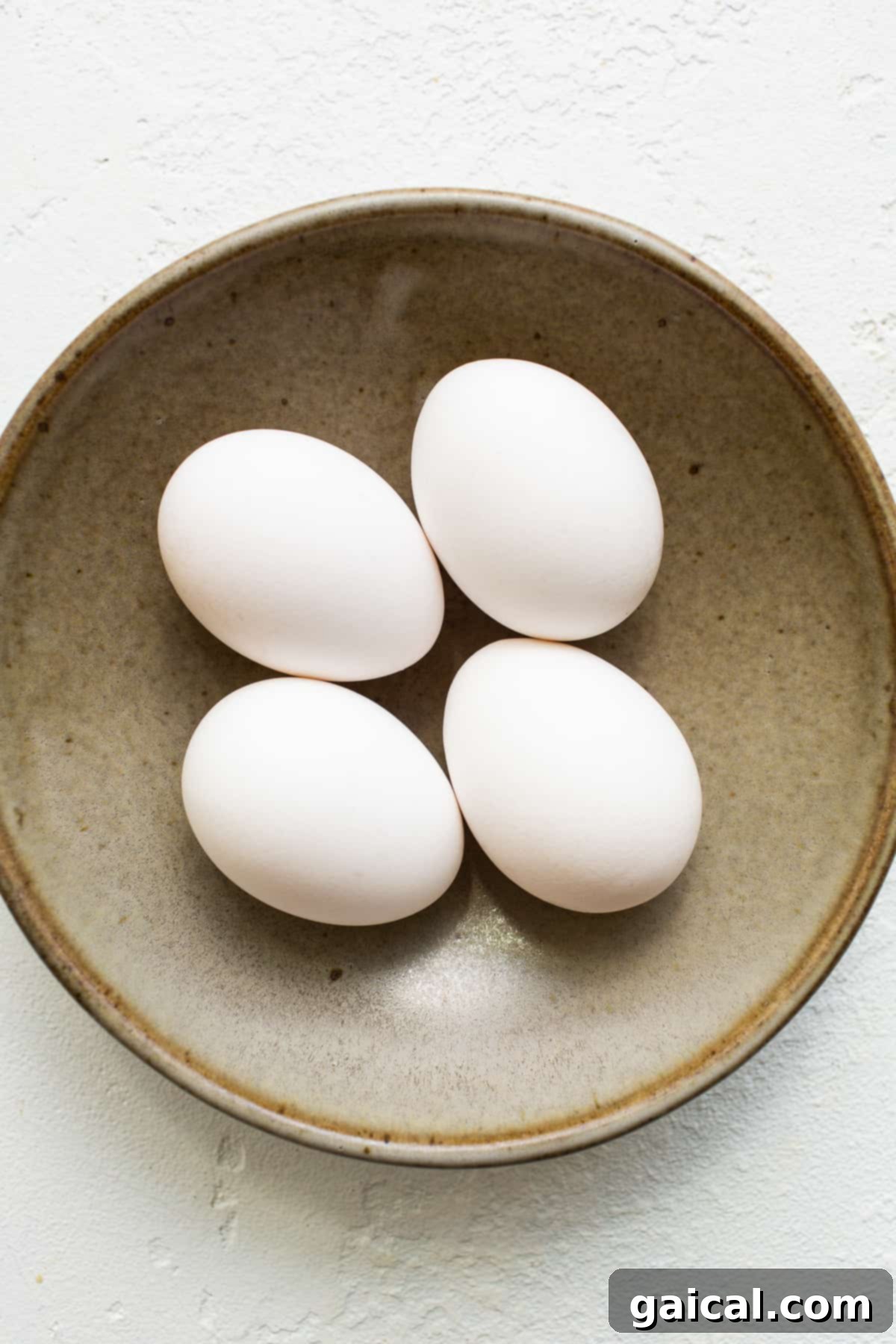
- Large Eggs: While any egg size will technically work, large eggs are generally recommended as our cooking times are calibrated for them. Keep in mind that smaller eggs will cook faster, and extra-large eggs may require a few extra seconds. Always opt for the freshest eggs available, as their yolks are firmer and less likely to break during flipping, and their whites hold their shape better.
- Unsalted Butter: Our preferred cooking fat, unsalted butter, imparts a wonderfully nutty flavor to the eggs and helps achieve that desirable delicate browning on the whites. We specify unsalted so you can control the seasoning precisely. If you only have salted butter, simply adjust or omit any additional salt when serving.
- Nonstick Pan: This is arguably the most crucial piece of equipment. A good nonstick pan ensures your eggs glide effortlessly off the surface, preventing tears and maintaining their pristine shape. We delve deeper into pan choices below, but a nonstick surface offers the easiest, most reliable results. An 8-inch or 10-inch pan is ideal, allowing enough space for two eggs without overcrowding.
- Nonstick Spatula: A thin, flexible nonstick spatula (such as one made of silicone or rubber) is essential for gently sliding under the eggs and executing a clean flip without piercing the yolk or tearing the whites. Avoid metal or rigid spatulas, which can scratch your nonstick pan and make flipping more challenging.
Don’t forget to personalize your eggs with your favorite seasonings! A simple sprinkle of salt and freshly ground black pepper is always a classic. For an extra layer of flavor, consider adding a pinch of paprika, garlic powder, or even a touch of chili flakes for a subtle kick. These simple additions can transform your eggs into a truly memorable dish.
Why Butter is Our Go-To for Over Easy Eggs
While various fats can be used to fry an egg, butter consistently delivers superior results for over easy eggs, particularly when it comes to flavor and aesthetic. Using butter yields an egg with a delicate, nutty undertone and minimal browning, ensuring the whites remain tender and pristine – exactly what you see in our recipe photos.
Of course, other oils like olive oil, avocado oil, or vegetable oil can also be used. However, be aware that these alternatives will subtly alter both the taste and appearance of your over easy eggs. For instance, cooking with high-smoke-point oils like avocado oil or even some olive oils can lead to more aggressive bubbling in the egg whites, often resulting in those coveted crispy, slightly browned edges that many adore in a classic fried egg. If you prefer this texture, feel free to use oil. But for the true over easy experience – soft whites and a tender, minimally browned surface – butter is the champion.
Selecting the Best Pan for Over Easy Eggs
As mentioned, a nonstick pan is our top recommendation for cooking over easy eggs due to its ease of use and consistent results. However, you’re not entirely limited to nonstick; with the right technique, you can successfully cook over easy eggs in other pan types. Here’s a detailed look at the best pan choices and tips for each:
- Nonstick Pan (Highly Recommended): This is your ultimate tool for frying eggs. The nonstick surface allows the eggs to release effortlessly, minimizing the risk of tearing the delicate whites or breaking the yolk. It truly makes an already simple recipe even easier, ensuring a smooth flip and a perfect presentation every time. Always use a low to medium-low heat to preserve the pan’s coating and prevent overheating, which can lead to sticking even on nonstick surfaces.
- Cast Iron Skillet: A well-seasoned cast iron skillet can also yield excellent results because it heats up quickly and retains heat exceptionally well, providing a consistent cooking surface. The key to preventing sticking in cast iron is sufficient fat and a properly seasoned surface. Be generous with your butter (or oil) and ensure the pan is adequately preheated but not smoking hot. Continuously check the edges of your egg with your spatula, gently loosening them from the pan to prevent them from adhering. If the egg seems to be sticking, add a small knob of butter around the edges.
- Stainless Steel Pan: If a stainless steel pan is your only option, don’t despair—it can certainly be used. However, it requires a bit more vigilance. Stainless steel can heat inconsistently, leading to “hot spots” where eggs are more likely to stick or burn. To mitigate this, ensure your pan is fully preheated to the correct temperature (a small drop of water should sizzle and evaporate immediately). Use a sufficient amount of butter or oil, and swirl it around to coat the entire cooking surface. Be very diligent when frying, frequently checking and gently nudging the eggs to prevent sticking. Lower heat and patience are paramount to success with stainless steel.
Top Tips for Frying the Perfect Over Easy Eggs
Beyond the right ingredients and equipment, a few key techniques will guarantee your over easy egg success:
- Start with Fresh Eggs: The fresher your eggs, the better they will fry. Fresh eggs have a thicker white that holds its shape better, creating a more compact and aesthetically pleasing egg. Older eggs tend to spread out more. Always check the expiration date on your carton.
- Room Temperature Eggs: For the most even cooking, try to bring your eggs to room temperature about 10-15 minutes before cooking. Cold eggs dropped into a hot pan can cause the whites to cook unevenly.
- Don’t Overcrowd the Pan: For best results, cook no more than two eggs at a time in a standard 8-inch or 10-inch skillet. Overcrowding can lower the pan’s temperature, leading to uneven cooking and making flipping difficult.
- Use Enough Fat: A common mistake is not using enough butter or oil. Sufficient fat acts as a buffer between the egg and the pan, preventing sticking and contributing to even cooking and flavor. If you notice your eggs beginning to stick, gently lift the edges with your spatula and slide a small amount of extra butter or oil underneath.
- Be Patient with Heat: The temptation to rush the cooking process with high heat is strong, but patience is a virtue when making over easy eggs. Medium-low heat is crucial. It allows the whites to cook through gently without browning excessively or becoming rubbery, while the yolk remains perfectly runny.
- Master the Flip: The flip is key. Wait until the whites are mostly set but still slightly jiggly around the yolk. Use your nonstick spatula to quickly and confidently slide under the egg and flip it in one swift motion. A quick, decisive flip minimizes the chance of breaking the yolk.
- Don’t Forget to Season: A sprinkle of salt and freshly ground black pepper just after cooking is essential. Seasoning enhances the natural flavor of the egg and elevates the entire dish. Feel free to experiment with other spices like paprika, garlic powder, or even a dash of hot sauce.
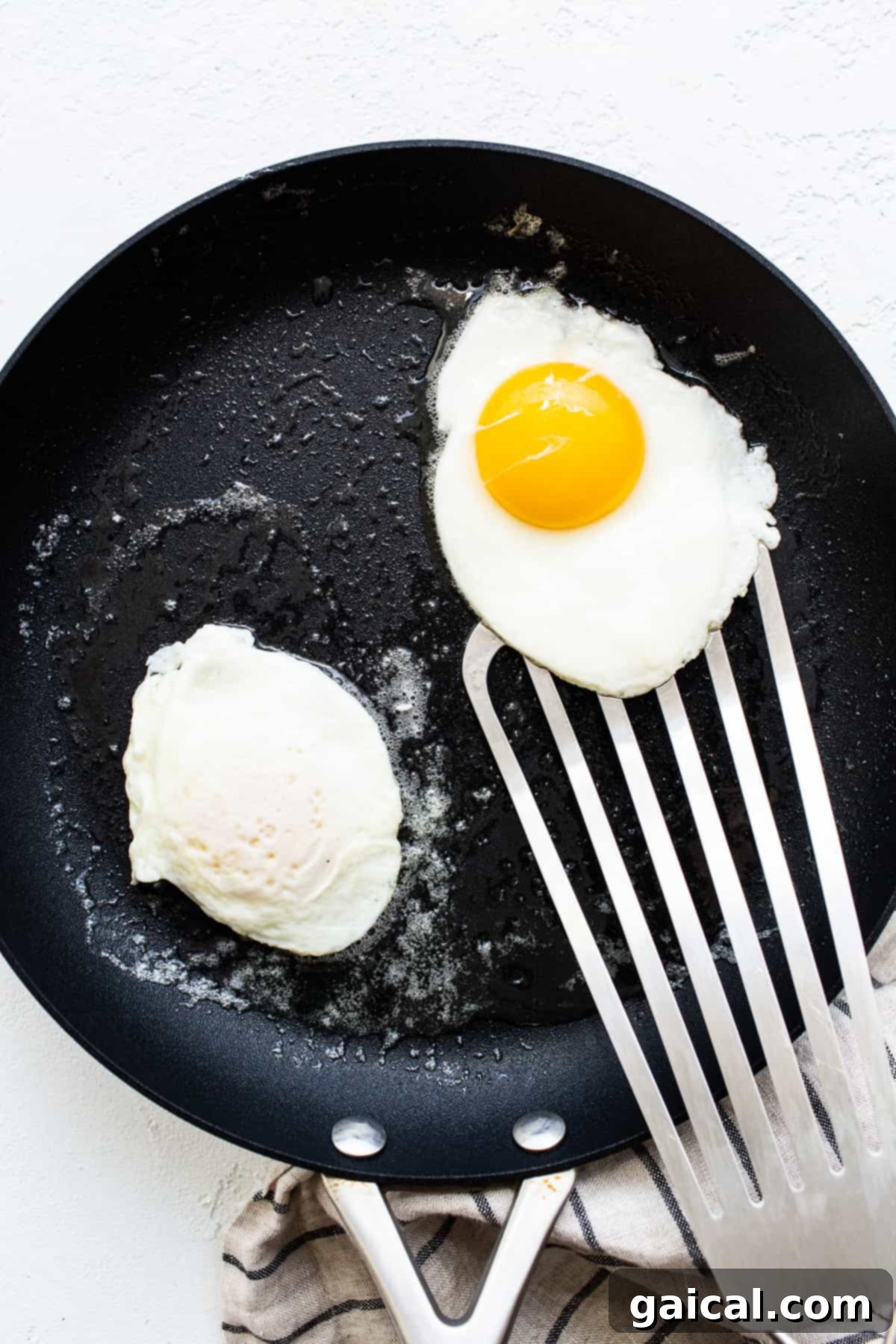
Try More!
Fried Eggs — Every Way!
Unlock the secrets to perfectly fried eggs, no matter your preference. Our comprehensive guide teaches you how to master over easy, over hard, sunny side up, and everything in between for flawless results every time.
Frequently Asked Questions About Over Easy Eggs
The primary distinction lies in the cooking method and the yolk’s exposure. A sunny side up egg is cooked entirely on one side without being flipped. This results in firm, cooked egg whites and a fully visible, bright yellow yolk that remains liquid and slightly set on top. An over easy egg, on the other hand, is flipped briefly. This quick flip ensures both sides of the whites are fully cooked, completely encasing a liquid, runny yolk within.
While eggs are generally nutritious regardless of preparation, cooking methods that use less or no added fat are often considered healthier. Poached or boiled eggs are typically seen as the healthiest options because they require no cooking fat. However, over easy eggs, when prepared with minimal butter or oil, are still a highly nutritious choice, often preferred over scrambled eggs (which can absorb more fat), sunny-side up, over-medium, or over-hard eggs, especially if the goal is to keep the yolk in its most natural, less cooked state.
Cooked eggs, including over easy eggs, should not be left at room temperature for more than 2 hours. This is in accordance with food safety guidelines, as bacteria can multiply rapidly in the “danger zone” between 40°F (4°C) and 140°F (60°C). If the ambient temperature is particularly warm (above 90°F or 32°C), this time limit is reduced to 1 hour. For optimal safety and quality, it’s always best to enjoy over easy eggs immediately after cooking.
The ideal pan temperature for over easy eggs is medium-low. This allows the egg whites to cook gently and evenly without becoming rubbery or excessively crispy, while giving you enough time to ensure the yolk remains liquid. If the pan is too hot, the whites will cook too quickly, become tough, and the bottom may burn before you have a chance to flip, or before the top of the white is set enough.
You’ll know an over easy egg is done when the whites are completely set and opaque, but the yolk is still visibly fluid and moves slightly when you gently shake the pan. After the flip, the egg only needs about 20-30 seconds on the second side—just enough time for the very thin membrane over the yolk to barely set, ensuring the yolk itself remains perfectly runny. The goal is for the yolk to be stable enough to transfer to a plate without breaking, but still beautifully liquid inside.
Explore More of Our Favorite…
Egg Cooking Tutorials
- Perfect Hard Boiled Eggs
- How to Make Over-Medium Eggs
- Soft Boiled Eggs Guide
- The Secret to Poached Eggs
- Cooking Over Hard Eggs
- Simple Baked Eggs
- Fluffy Scrambled Eggs
- Sunny Side Up Eggs, Perfected
- All About Fried Eggs
- Air Fryer Hard Boiled Eggs
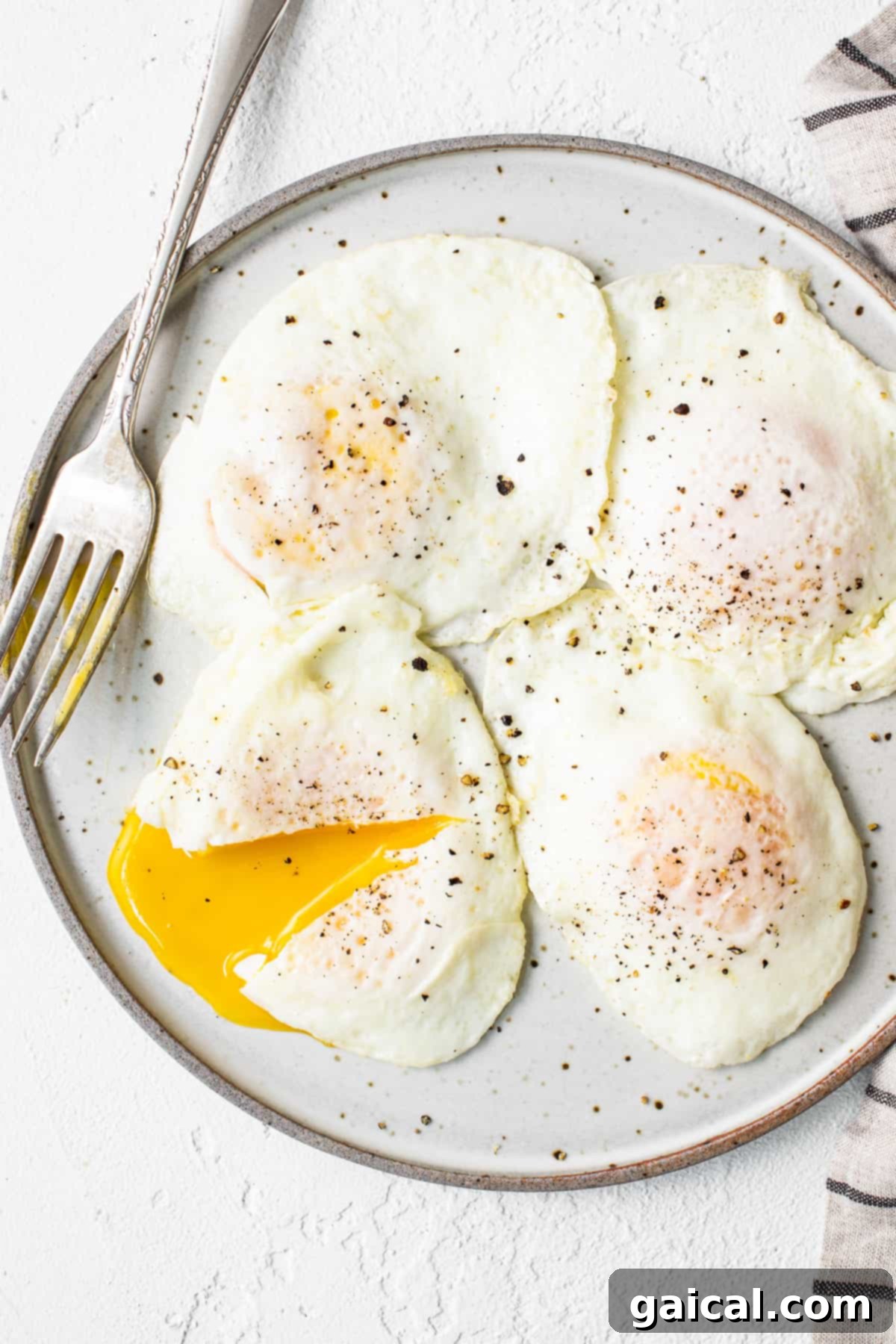
Storage and Reheating Tips for Over Easy Eggs
Over easy eggs are truly at their best when enjoyed fresh, straight from the pan. The delicate balance of runny yolk and tender white is difficult to perfectly preserve once cooled. However, should you find yourself with leftovers, you can safely store them in an airtight container in the refrigerator for up to 3 days. While the yolk will likely solidify upon chilling, the eggs can still be repurposed and enjoyed.
To reheat: Reheating over easy eggs can be tricky, as the goal is to warm them without further cooking the yolk. We recommend reheating on a low setting in the microwave, in short bursts (15-20 seconds at a time), until just warmed through. Alternatively, you can gently warm them in a skillet over very low heat with a tiny bit of butter or water, covering the pan to create steam. Be cautious not to overcook, as this will result in rubbery whites and a completely solid yolk. Reheated over easy eggs are fantastic crumbled into salads or used as a base for a quick egg salad sandwich.
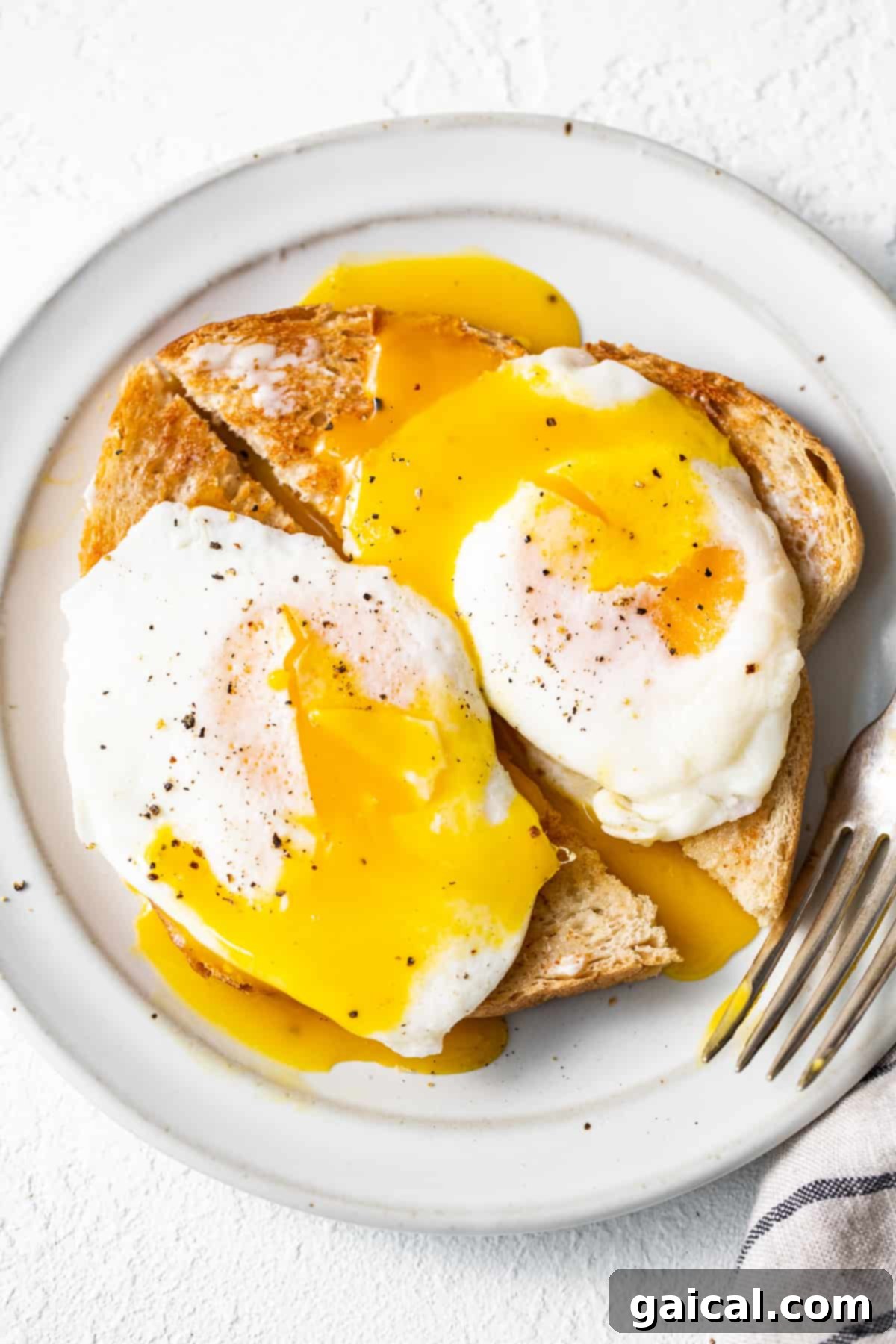
Creative Ways to Serve Over Easy Eggs
While a classic piece of toast or a side of crispy bacon or savory breakfast sausage is an unbeatable pairing, over easy eggs are incredibly versatile and can elevate a multitude of dishes. That irresistible runny yolk acts as a natural sauce, adding richness and depth to almost anything. Here are some of our favorite serving suggestions to inspire your next meal:
- Avocado Toast: Elevate your avocado toast with a perfectly cooked over easy egg. The creamy avocado and runny yolk are a match made in heaven.
- Breakfast Sandwich: Transform a simple breakfast sandwich into a gourmet experience. Place an over easy egg with some cheese and bacon on a toasted English muffin or bagel.
- Grain Bowls: Top any savory grain bowl (think quinoa, farro, or brown rice with roasted vegetables) with an over easy egg for added protein and a luxurious texture.
- Burgers: Add an over easy egg to your favorite burger. The yolk creates an incredible sauce that binds all the flavors together.
- Salads: A warm over easy egg makes an unexpected and delightful addition to a fresh green salad, especially one with heartier greens or roasted vegetables.
- French Toast Sticks & Waffles: Pair your sweet breakfast staples like French Toast Sticks or Protein Waffles with an over easy egg for a balanced sweet and savory breakfast.
- Pancakes: Yes, even banana oatmeal pancakes can be complemented by a savory egg for a well-rounded meal.
- Healthy Smoothies & Granola: While not for pairing directly, consider a wholesome healthy smoothie or homemade Apple Cinnamon Granola on the side for a complete breakfast spread.
- Soups & Ramen: A perfectly cooked over easy egg adds richness and protein to a bowl of ramen or a comforting vegetable soup.
- Leftover Rice or Pasta: Quickly turn leftover rice or pasta into a new meal by frying it up with some vegetables and topping it with an over easy egg.
Over Easy Eggs Recipe
Our over easy eggs recipe is a no-fail method to achieve a perfectly runny yolk and set whites every time. With just a few simple steps, you’ll master this breakfast favorite.
By: Emily Richter
Prep Time: 3 mins Cook Time: 3 mins Total Time: 6 mins Servings: 2
Print Recipe
Ingredients
- 4 large eggs
- 2 tablespoons unsalted butter
Instructions
- Heat a nonstick frying pan (8-inch or 10-inch works best) over medium-low heat. Add the unsalted butter to the pan.
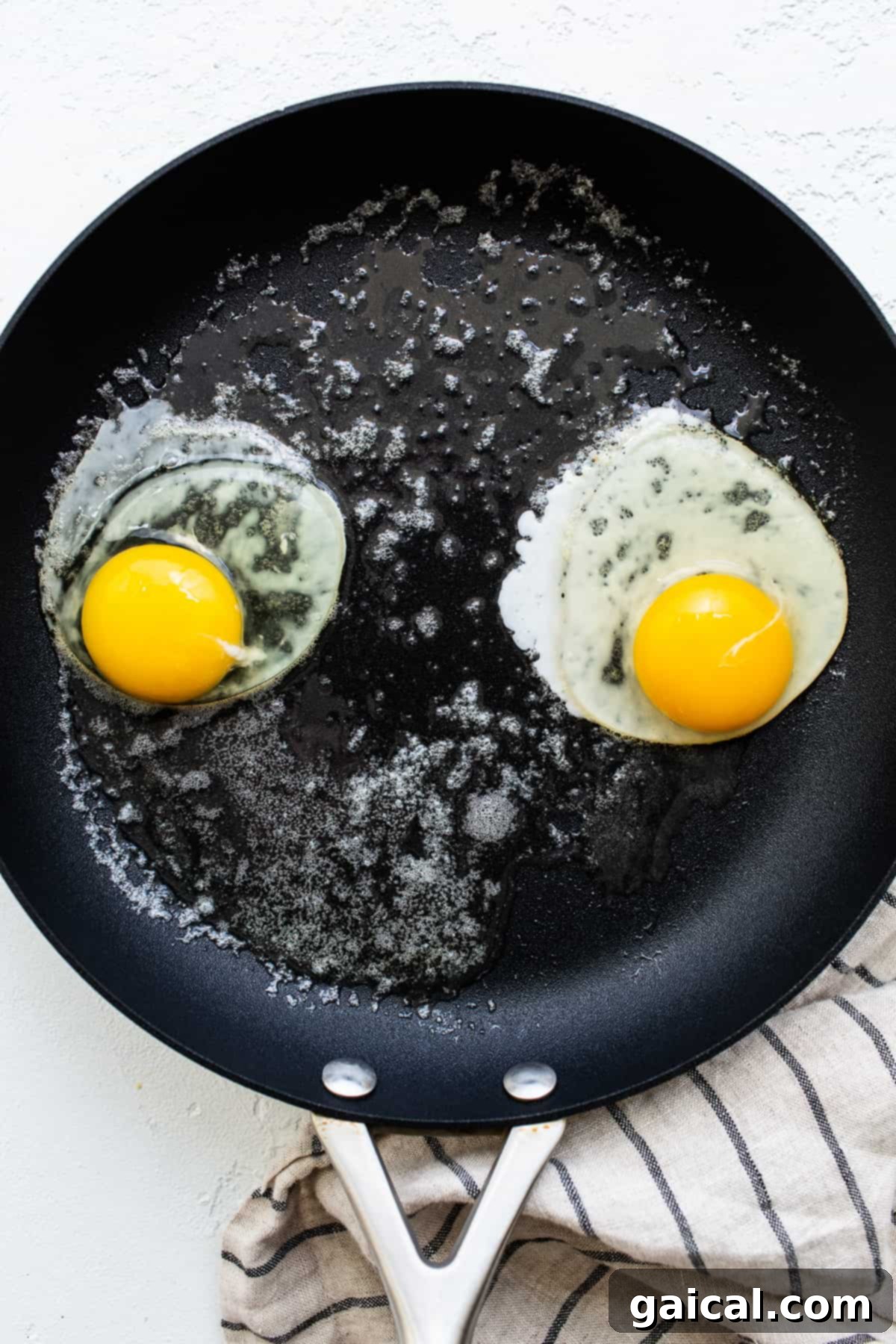
- Once the butter has fully melted and is gently shimmering (not smoking), carefully crack the eggs into the pan. Avoid overcrowding; cook no more than two eggs at a time to ensure even cooking and easy flipping.
- Cook the eggs over medium-low heat for approximately 2 minutes, or until the egg whites are mostly set and opaque, but still slightly jiggly around the yolk. The very top layer of the white should still look a bit wet.
- Using a thin, flexible nonstick spatula, carefully slide it under one egg and quickly but gently flip it over. Repeat for the second egg.
- Allow the flipped eggs to cook for an additional 20-30 seconds. This brief cooking time is just enough to ensure the remaining whites are fully set while preserving the liquid, runny consistency of the yolk. The yolk should still be soft and flowing when pierced.
- Remove the cooked over easy eggs from the pan immediately. Repeat the process with any remaining eggs.
- Serve your perfect over easy eggs hot, seasoned with a sprinkle of salt and freshly ground black pepper to taste. Enjoy!
Tips & Notes
- This recipe was tested with large eggs. If using medium or extra-large eggs, adjust cooking times slightly (less for medium, more for extra-large).
- Cooking times can vary based on your stovetop’s power and your pan’s heat retention. The key is to watch the whites: they should be set enough to flip without tearing, but the yolk should remain very liquid.
- For a richer flavor and to prevent sticking, ensure you use enough butter. Don’t be shy!
- Always use a flexible, nonstick spatula for easy flipping and to avoid damaging your pan or breaking the yolks.
- Consider bringing your eggs to room temperature before cooking for more even results.
Nutrition
Calories: 226 kcal, Carbohydrates: 1 g, Protein: 11 g, Fat: 20 g, Sugar: 0.3 g
Nutrition information is automatically calculated and should only be used as an approximation. Actual values may vary.
Love this recipe? Leave a comment below!
Don’t forget to tag your posts on social media with the hashtag #fitfoodiefinds – we’d love to see your creations!
More of our Favorite…
Delicious Recipes Featuring Eggs
- Perfect Poached Eggs for Any Meal
- Healthy Copycat Egg McMuffins
- Easy Instant Pot Egg Bites
- Savory Bacon Wrapped Egg Cups
- Wholesome Tuna Salad with Egg
- Ultimate Freezer Breakfast Sandwiches
- Explore ALL Egg Recipes