
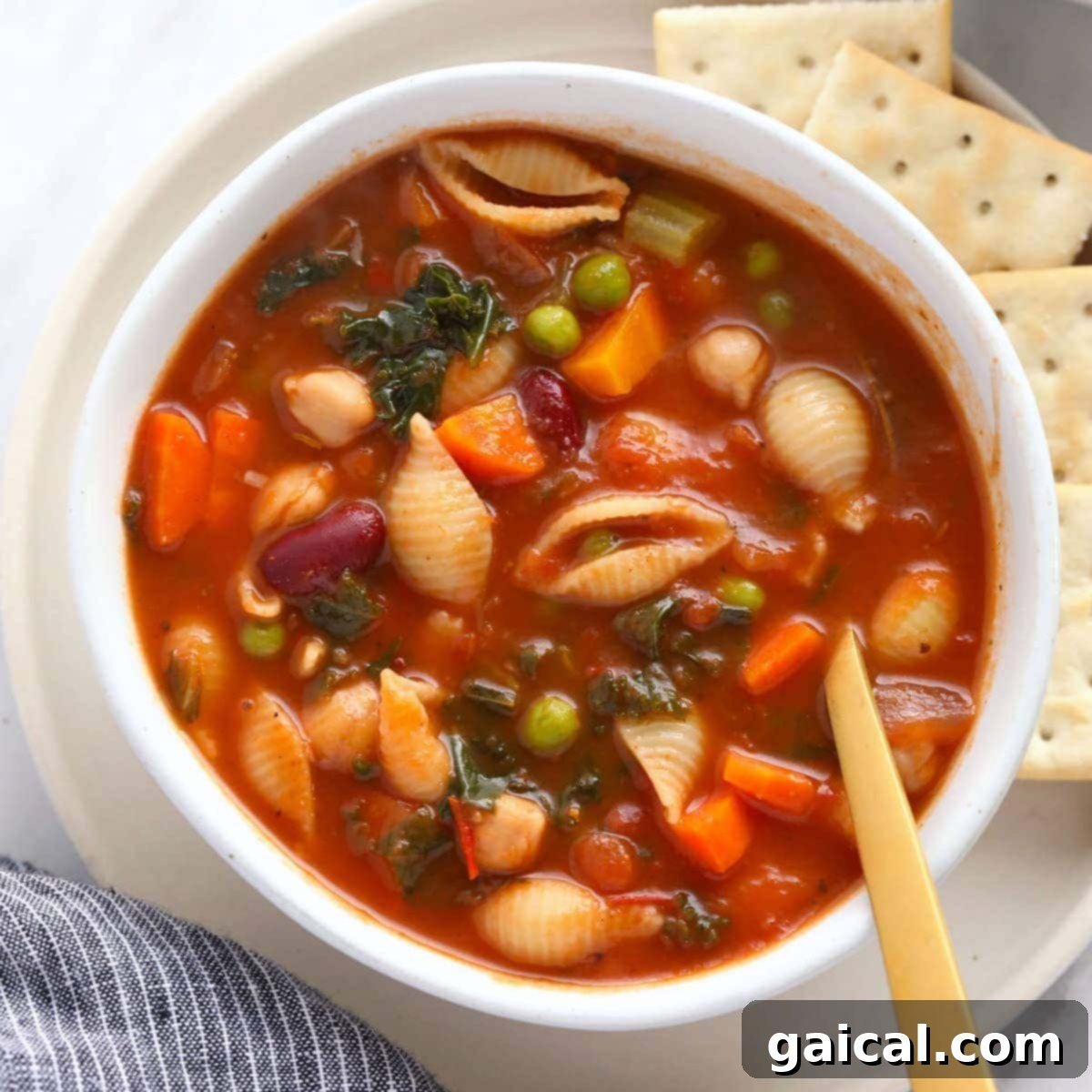
The Ultimate Classic Vegetable Minestrone Soup: A Hearty and Healthy Delight
There’s nothing quite as comforting and satisfying as a steaming bowl of classic vegetable-packed minestrone soup. This timeless Italian staple, brimming with fresh produce, savory beans, and tender pasta in a rich tomato broth, is the epitome of wholesome home cooking. Forget bland or watery versions; this recipe delivers all the robust flavors and nourishing goodness you expect from a truly authentic minestrone. Whether you’re seeking a cozy meal for a chilly evening or a vibrant, healthy lunch option, this vegetarian minestrone soup is guaranteed to become a family favorite. We confidently say this is the best minestrone recipe you’ll find on the internet, meticulously crafted to bring incredible taste to your table!
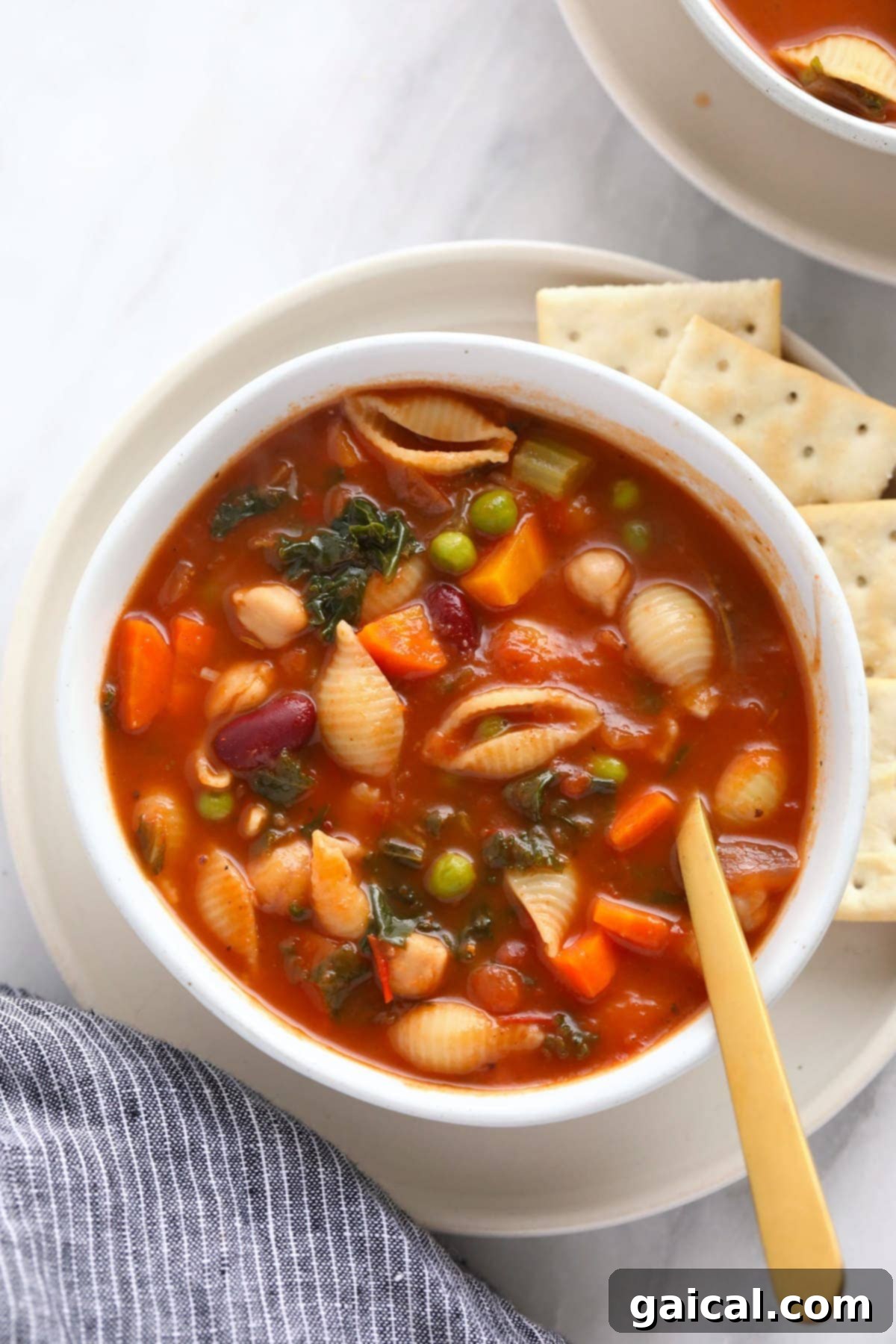
What Defines a Classic Minestrone Soup?
At its heart, classic minestrone soup is a celebration of seasonal vegetables, offering a versatile and endlessly adaptable meal. While variations abound across different Italian regions and family kitchens, a truly classic minestrone soup adheres to a few core principles that ensure its signature depth of flavor and comforting texture. It’s truly a nourishing dish, often described as “just what the doctor ordered” for its health benefits and restorative qualities. This particular recipe captures that traditional essence beautifully, featuring a rich, creamy tomato broth loaded with a harmonious blend of vegetables, hearty beans, and tender pasta.
Key Characteristics of Authentic Minestrone:
- Aromatic Vegetable Base (Soffritto): The foundation of any great minestrone starts with a “soffritto” – a classic Italian mixture of finely diced carrots, celery, and onions. These vegetables are gently sautéed in olive oil to release their sweet, earthy flavors, forming the aromatic backbone that sets the stage for the entire soup.
- Diverse Bean Selection: Minestrone typically features a variety of different beans, adding substantial plant-based protein, dietary fiber, and a wonderfully creamy texture. Common choices include cannellini beans, kidney beans, or garbanzo beans (chickpeas), contributing significantly to the soup’s heartiness and nutritional value.
- Hearty Pasta or Grain: To make the soup truly filling and satisfying, small pasta shapes or rice are usually added. For the best texture, this should be done just before serving. This prevents the pasta from becoming mushy and soaking up too much of the delicious broth, ensuring a perfect al dente bite in every spoonful. Small shapes like ditalini, shell noodles, or elbow macaroni are popular choices.
- Robust Tomato-Rich Broth: A flavorful and deeply colored tomato broth is quintessential. High-quality crushed tomatoes and a concentrated spoon of tomato paste contribute to a thick, deeply savory base that perfectly complements the myriad of fresh vegetables and wholesome beans.
- Fresh Herbs and Seasonings: A balanced blend of Italian seasonings, fragrant bay leaves, and fresh herbs like oregano or basil elevates the overall flavor profile. These elements infuse the soup with authentic Italian warmth and a delightful herbaceous aroma, making each spoonful a true delight.
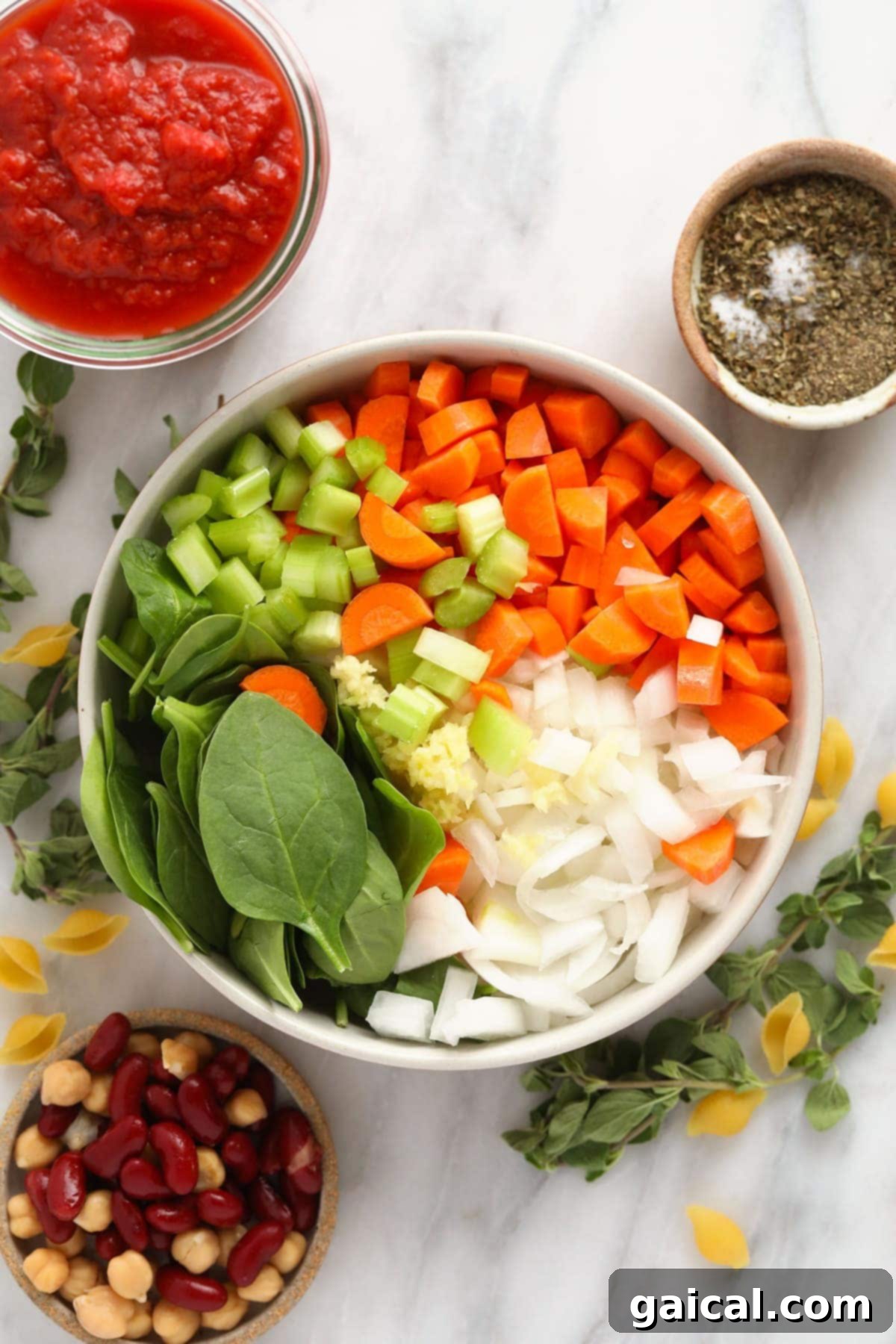
Essential Ingredients for Your Minestrone
Despite its rich flavor and abundance of healthy ingredients, this minestrone soup is remarkably straightforward to prepare. The key lies in selecting quality ingredients and building flavors in layers. Here’s a comprehensive list of what you’ll need to create this culinary masterpiece in your own kitchen:
- Extra virgin olive oil: The essential base for sautéing our aromatics and infusing initial flavor.
- White onion: Finely minced to gently release its sweet, foundational flavor into the broth.
- Garlic: Freshly minced for a pungent, aromatic kick that permeates the entire soup.
- Dry red wine: Crucial for deglazing the pot, lifting caramelized bits, and adding complex depth to the broth. The alcohol cooks off, leaving only rich flavor.
- Carrot: Diced, providing natural sweetness, vibrant color, and a tender bite.
- Celery: Diced, contributing its characteristic savory, slightly bitter crunch to the soffritto.
- Crushed tomatoes: The luscious base for our rich and tangy tomato broth.
- Tomato paste: A vital ingredient that concentrates tomato flavor significantly and helps thicken the broth to a perfect, hearty consistency. Do not skip this for maximum flavor!
- Vegetable broth: Opt for a good quality vegetable broth as it forms the bulk of the soup’s liquid base; its flavor will shine through.
- Apple cider vinegar: A secret weapon! Just a touch adds a bright, balanced acidity that cuts through richness and truly elevates all the other flavors. If unavailable, red wine vinegar, a dash of Worcestershire sauce (ensure vegetarian if needed), or even a few drops of hot sauce can be interesting alternatives for a subtle tang.
- Salt: Absolutely essential for seasoning at every stage to bring out the best in your ingredients and balance the flavors.
- Italian seasoning: A convenient blend of classic Italian herbs like oregano, basil, thyme, and rosemary. If you don’t have a pre-made blend, a combination of dried basil, dried oregano, and dried parsley works beautifully.
- Red pepper flakes: For a subtle warmth and a gentle hint of spice that complements the tomato base. Adjust the amount to suit your spice preference.
- Garlic powder: Adds another layer of mellow garlic flavor that infuses deeply into the broth during simmering.
- Bay leaves: Infuse a delicate, earthy, and slightly floral aroma into the simmering soup, enhancing its complexity.
- Fresh oregano: A few sprigs tied together in a bundle (which can be easily removed later) add a fresh, vibrant herbaceous note that contrasts beautifully with the cooked flavors.
- Garbanzo beans (chickpeas): One 15-oz. can, drained and rinsed, providing satisfying texture and a good source of plant-based protein and fiber.
- Kidney beans: One 15-oz. can, also drained and rinsed, adding rich color and further heartiness to the soup.
- Spinach: Four cups of fresh spinach that wilts down quickly, adding a boost of vibrant greens and nutrients. Feel free to use kale if you prefer; just chop it finely and add it a few minutes earlier as it takes longer to soften.
- Peas: One and a half cups of frozen peas, a quick and easy addition for sweetness and a pop of bright green color.
- Shell noodles: Eight ounces of small shell noodles are perfect for minestrone, but feel free to use any small pasta shape like ditalini, elbow macaroni, or small tubetti. Remember to cook them separately!
Elevate Your Minestrone with More Protein
While this vegetable minestrone is already packed with plant-based protein from the beans, you might want to boost its protein content even further. This is incredibly easy to do and offers delicious variations to suit your dietary preferences:
- **Extra Beans:** The simplest way to add more protein is to include another can or two of your favorite beans – cannellini, kidney, or garbanzo beans all work wonderfully. Ensure they are thoroughly drained and rinsed before adding them to the soup.
- **Ground Meat:** For a heartier, non-vegetarian version, consider incorporating lean ground turkey, ground beef, or ground chicken. The savory notes of the meat will complement the rich tomato broth beautifully, transforming the soup into an even more substantial meal.
To add ground meat to this soup: In step 3 of the instructions, after sautéing the onion, add your chosen ground meat to the pot. Brown the meat, breaking it up with a spoon, until it’s no longer pink and fully cooked through. Drain any excess fat if necessary, then continue following the remaining steps in the recipe as written.
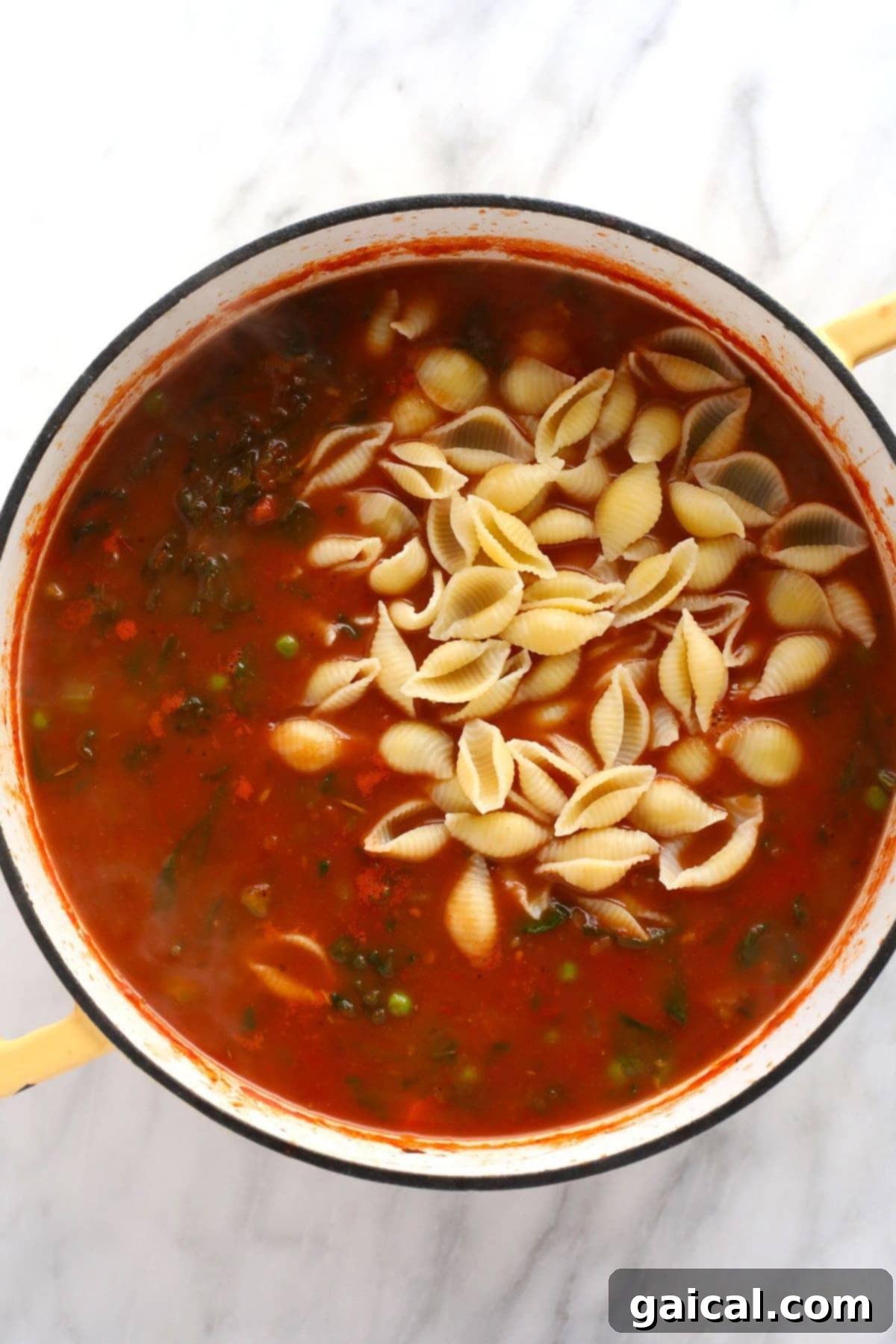
How to Craft Your Perfect Minestrone Soup: Step-by-Step Guide
The secret to an exceptionally flavorful minestrone soup lies in meticulously following each step and consciously building layers of flavor for a truly rich and delicious broth. Patience and attention to detail, especially when it comes to seasoning, will yield the most rewarding results. Remember, **do not skip the salt** – it’s crucial for enhancing all the wonderful tastes and bringing the ingredients to life!
- **Prepare the Noodles First:** Begin by cooking your chosen small shell noodles (or other preferred small pasta shape) according to the package directions until they are perfectly al dente. It’s vital to cook them *before* you start preparing the soup base, then drain them thoroughly and set them aside. This crucial step prevents the noodles from becoming overcooked and mushy, and more importantly, from absorbing too much of your precious broth when added to the finished soup. By doing this first, you won’t have to sit around waiting for them later!
- **Heat the Pot and Oil:** Place a large, heavy-bottomed Dutch oven or a sturdy soup pot over medium-high heat. Add the extra virgin olive oil to the pot and allow it to shimmer slightly, indicating it’s perfectly hot and ready for the aromatics.
- **Sauté the Onion (Soffritto Base):** Add the minced white onion to the hot oil. Sauté the onion for approximately 3-5 minutes, stirring occasionally, until it becomes soft, translucent, and slightly golden. This step is fundamental for building a sweet, aromatic flavor base for your soup. Don’t be shy about adding an extra pinch of salt in this step – it helps draw out moisture and concentrates the onion’s natural sugars and flavors.
- **Introduce the Garlic:** Once the onion is ready, stir in the minced garlic. Continue to sauté for another 30 seconds to 1 minute, or until the garlic becomes wonderfully fragrant. Be careful not to let the garlic burn, as burnt garlic can turn bitter. You might notice the onions and garlic starting to brown slightly and stick to the bottom of the pot; this is a good sign, as these are flavor-packed “fond” bits!
- **Deglaze with Red Wine:** This is a truly important step for developing deep flavor! Carefully pour the dry red wine into the pot. Immediately use a wooden spoon or spatula to vigorously scrape all those delicious brown bits (the “fond”) from the bottom of the pot. Deglazing infuses incredible depth and complexity into your broth, capturing all the caramelized flavors. Continue to simmer until the wine has mostly evaporated and reduced slightly, which typically takes about 2-3 minutes.
- **Add Mirepoix Vegetables:** After deglazing, stir in the diced carrots and celery. Sauté these vegetables for about 5 minutes, stirring frequently, allowing them to soften slightly and absorb the rich flavors already present in the pot.
- **Build the Broth (The Core):** Now, add the crushed tomatoes, concentrated tomato paste, vegetable broth, apple cider vinegar, salt, Italian seasoning, red pepper flakes, garlic powder, bay leaves, and the tied bundle of fresh oregano to the pot. Stir all the ingredients well to combine, ensuring the tomato paste is fully dissolved and incorporated into the liquid.
- **Simmer and Develop Flavors:** Bring the soup to a gentle boil over high heat. Once boiling, reduce the heat to low-medium. Allow the soup to simmer, uncovered, for 15-20 minutes. Stir periodically to prevent any ingredients from sticking to the bottom of the pot. This crucial simmering time is essential for all the individual flavors to meld, deepen, and for the broth to thicken slightly to a perfect, comforting consistency.
- **Incorporate Remaining Freshness:** After the initial simmer, add the fresh spinach (or finely chopped kale if you’re using it), frozen peas, the drained and rinsed garbanzo beans, and the drained and rinsed kidney beans to the pot. Stir gently until the spinach begins to wilt and the peas are heated through. Let the soup continue to simmer for an additional 5 minutes to fully warm these final ingredients without overcooking them and maintaining their vibrant color and texture.
- **The Grand Finale – Serve with Noodles:** The final, most important touch for perfect minestrone! Add the separately prepared, al dente noodles to individual serving bowls *right before* ladling in the hot soup. Do not add all the noodles directly to the main pot of soup unless you plan to eat the entire batch immediately, as they will soak up the broth and become mushy over time. Garnish with a sprinkle of fresh Parmesan cheese (if desired), a drizzle of good quality olive oil, or additional fresh herbs, and season with extra salt and pepper to taste.
Minestrone Soup 101: Your Essential Questions Answered
How do you enhance the flavor of minestrone soup?
If your minestrone soup feels like it’s missing something, often the answer is simpler than you think. The first step should always be to adjust the seasoning. Start by adding an 1/8 teaspoon of salt at a time, tasting carefully after each addition, until all the individual flavors pop and harmonize beautifully. Salt is a powerful flavor enhancer, not just a seasoning. If you’re looking to add flavor without additional salt, consider these effective options:
- **Acidity:** A little more apple cider vinegar (or red wine vinegar) can dramatically brighten the entire soup, cutting through richness and making flavors more vibrant and fresh.
- **Umami Boost:** A dash of vegetarian Worcestershire sauce, a spoonful of nutritional yeast, or even a tiny splash of soy sauce (use sparingly, as it adds salt) can introduce a deep, savory umami dimension.
- **Herbs & Spices:** Don’t underestimate the power of fresh herbs! A generous sprinkle of fresh basil or parsley at the very end, or a bit more Italian seasoning and garlic powder, can significantly boost the aroma and overall taste. A tiny pinch of sugar can also help balance out the acidity of tomatoes if they taste too sharp.
- **Heat:** For those who enjoy a little kick, a few more red pepper flakes can add a pleasant warmth and complexity to the broth without overpowering other flavors.
- **Parmesan Rinds:** If you have Parmesan rinds, adding one to the simmering broth (and removing before serving) can infuse a wonderful savory depth.
Is minestrone soup a healthy meal option?
Absolutely! Minestrone soup is an incredibly healthy and nutrient-dense meal, especially this vegetable-packed version. It’s a fantastic choice for supporting overall well-being. Here’s why it’s such a beneficial and guilt-free choice:
- **Rich in Protein:** Each generous serving provides a substantial 12 grams of protein, primarily from the combination of different beans. This makes it very satisfying, aids in muscle maintenance, and helps keep you feeling full longer.
- **Vegetable Powerhouse:** It’s loaded with a wide array of colorful vegetables, delivering essential vitamins (like Vitamin A, C, K), minerals (potassium, iron), and potent antioxidants crucial for boosting immunity and overall bodily functions.
- **High in Fiber:** The generous amount of vegetables and beans contributes to a significantly high fiber content. Fiber is vital for digestive health, helps promote satiety, regulates blood sugar levels, and can contribute to heart health.
- **Low in Calories, High in Nutrients:** Minestrone is a fantastic low-calorie soup that doesn’t compromise on nutrition. This makes it an excellent choice for those mindful of their caloric intake while still wanting a nutrient-rich and filling meal.
- **Hydrating:** As a soup, it naturally contributes to your daily fluid intake, helping to keep you well-hydrated, which is vital for all bodily functions and energy levels.
Can I customize minestrone soup with more vegetables?
Yes, absolutely! Minestrone is wonderfully forgiving and endlessly adaptable. It’s traditionally designed to make use of whatever seasonal vegetables you have on hand, making it a perfect fridge clean-out meal. Feel free to load it up with even more greens and colorful additions to boost its nutritional value and flavor profile. Here are some excellent options to consider incorporating:
- **Root Vegetables:** Diced red potatoes or sweet potatoes can add a comforting earthiness, additional complex carbohydrates, and a different texture. Add them when you add the carrots and celery to ensure they have ample time to cook through and become tender.
- **Bell Peppers:** Green, red, or yellow bell peppers, chopped into bite-sized pieces, add a sweet, slightly smoky, and vibrant note to the soup. Introduce them into the pot in step 6 with the carrots and celery.
- **Cruciferous Vegetables:** Small chopped broccoli florets or cauliflower florets are fantastic additions for extra crunch and nutrients. Add them along with the carrots and celery to allow enough time for them to become tender-crisp.
- **Summer Squash:** Diced zucchini or yellow squash add a lovely tender texture and mild flavor to the soup. To prevent them from becoming too soft and watery, add them during the last 10 minutes of simmering.
- **Green Beans:** Fresh or frozen green beans, trimmed and cut into bite-sized pieces, can be added with the peas and spinach for an extra pop of green and a delightful snap.
- **Leeks:** Sliced leeks can be added with the onions for a subtle, sweet, and oniony flavor.
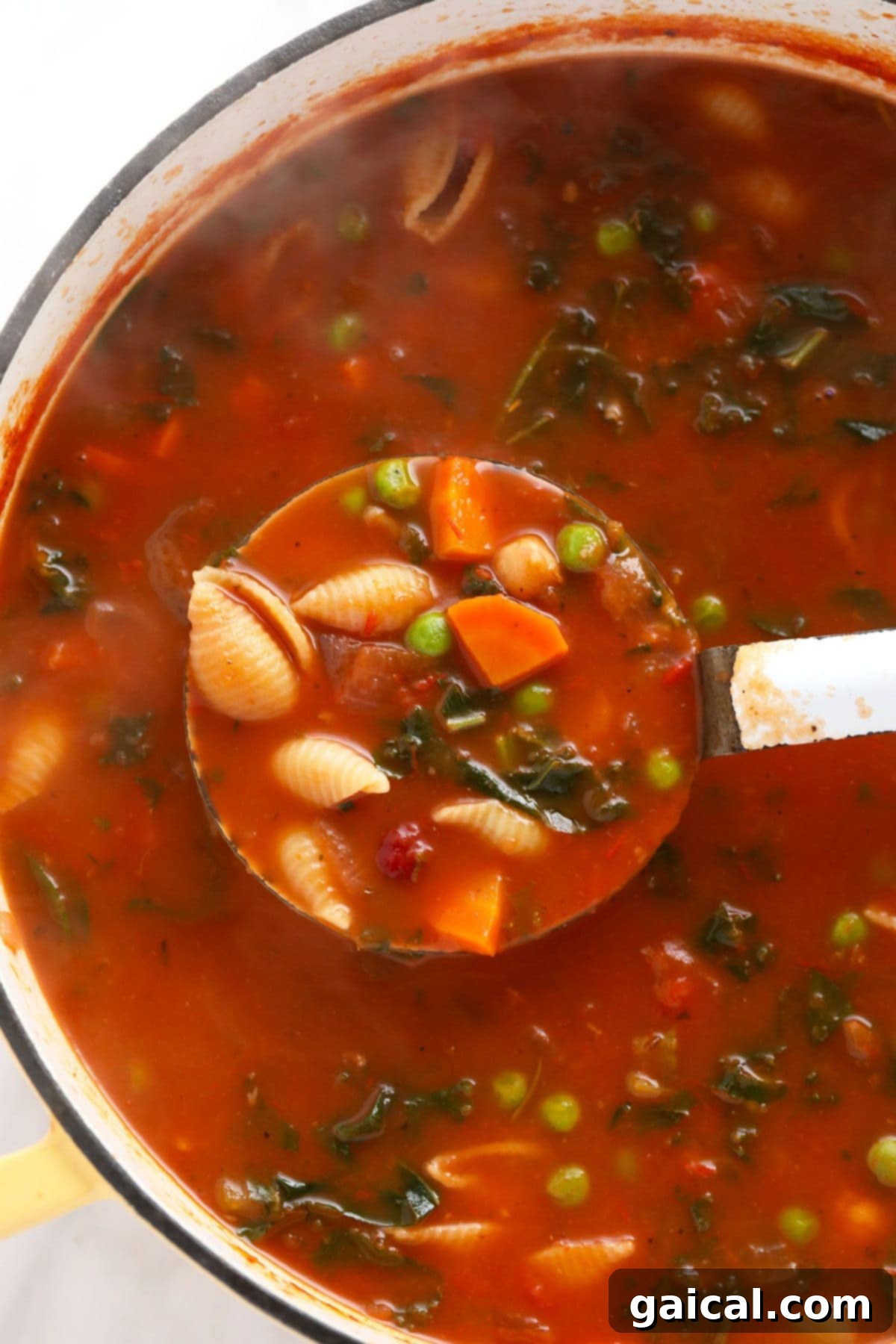
Storage Solutions for Your Delicious Minestrone
Proper storage is absolutely key to enjoying your minestrone soup for days to come, especially if you’re making a large batch for convenient meal prep. The most crucial tip for handling leftovers is to **store the cooked soup and the cooked noodles in two separate airtight containers.** This seemingly small detail makes a significant difference in maintaining the quality and texture of your soup!
If you combine the noodles with the soup for storage, the pasta will continue to absorb the liquid over time, turning mushy and soaking up all that delicious broth. This results in bloated, textureless noodles and a diminished, thick soup that has lost its appealing consistency. When you’re ready to enjoy your minestrone, simply warm the soup and noodles separately, then add the noodles to your bowl of hot soup just before serving. This ensures perfectly al dente noodles and a rich, flavorful broth every single time you reheat it.
Freezing Instructions for Long-Term Enjoyment
Yes, minestrone soup freezes beautifully, making it an excellent candidate for batch cooking and convenient future meals. To freeze, allow the minestrone soup (it’s crucial to freeze it *without* the noodles!) to cool completely to room temperature. Once cooled, transfer it into freezer-safe bags, sturdy freezer-safe containers, or even individual portions, leaving a little headspace at the top for expansion during freezing. It can be safely stored in the freezer for up to 3 months, ready whenever you crave a comforting and healthy bowl.
Pro Tips for Freezing and Reheating Soup
Freezing soup is generally straightforward, but a few expert tips can ensure the best quality upon reheating, maintaining its fresh taste and texture:
- **Cool Completely Before Freezing:** Always ensure your soup is thoroughly cooled to room temperature before placing it in the freezer. Freezing hot or warm soup can lower the overall temperature of your freezer, potentially affecting other frozen foods and creating excessive ice crystals.
- **Prevent Freezer Burn:** To effectively prevent freezer burn and undesirable ice crystal formation, press a piece of plastic wrap directly onto the surface of the soup before sealing with a lid. This creates a barrier against air.
- **Thawing for Reheating:** For optimal results and even heating, allow frozen soup to thaw completely in the refrigerator overnight before attempting to reheat it. This gentle thawing process also helps preserve the soup’s texture and flavor.
- **Reheating Method:** Transfer the thawed soup to a pot and heat it gently over medium-low heat, stirring occasionally to ensure even warming. You may notice that the soup has thickened slightly during the freezing and thawing process; adding 1-2 additional cups of vegetable broth or water can help restore it to its original, desired consistency. Always taste and adjust seasonings as needed after reheating. If desired, cook fresh noodles or reheat separately stored noodles to add just before serving.
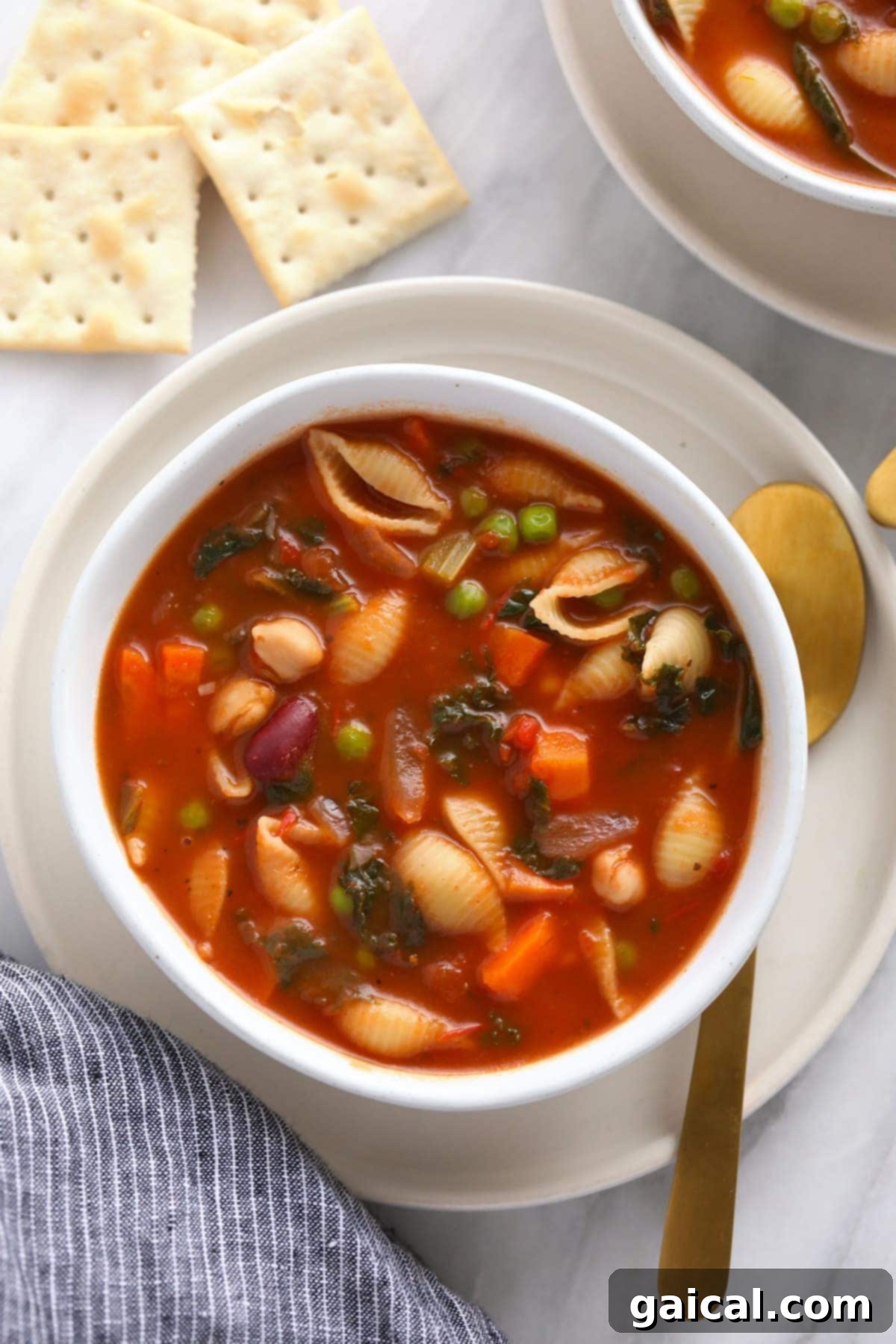
Craving more delicious and healthy meal ideas?
Explore Our Collection of Wholesome Soup Recipes!
- Best Chicken Noodle Soup
- Instant Pot Lentil Soup
- Collection of Instant Pot Soup Recipes
- Slow Cooker Chicken Noodle Soup
- Hearty Vegetable Soup Recipe
- Best Kale Soup
Vegetarian Minestrone Soup Recipe
A classic vegetable-packed minestrone soup featuring a thick tomato broth, 12 grams of protein per bowl, and all the delicious flavors of a traditional Italian comfort food.
By: Lee Funke
- Prep Time: 15 mins
- Cook Time: 30 mins
- Total Time: 45 mins
- Servings: 6
Ingredients
- 2 tablespoons extra virgin olive oil
- 1 medium white onion, minced
- 3 cloves garlic, minced
- 1/3 cup dry red wine
- 2 large carrots, diced
- 2 stalks celery, diced
- 1 (28-oz.) can crushed tomatoes
- 1 tablespoon tomato paste
- 8 cups vegetable broth
- 2 teaspoons apple cider vinegar
- 1 teaspoon salt (or to taste)
- 2 teaspoons Italian seasoning
- 1/2 teaspoon red pepper flakes
- 1/2 teaspoon garlic powder
- 2 bay leaves
- 5 sprigs of fresh oregano, tied in a bundle
- 1 (15-oz.) can garbanzo beans, drained and rinsed
- 1 (15-oz.) can kidney beans, drained and rinsed
- 4 cups spinach or kale
- 1.5 cups frozen peas
- 8-oz. small shell noodles, cooked al dente separately
Instructions
- Cook the 8-oz. small shell noodles (or preferred pasta) until al dente according to package directions. Drain and set aside.
- Heat a large pot or Dutch oven over medium-high heat. Add the extra virgin olive oil.
- Add the minced white onion to the pot and sauté for 2-3 minutes until translucent.
- Stir in the minced garlic and cook until fragrant, about 30 seconds to 1 minute.
- Deglaze the pot by pouring in the dry red wine. Scrape any browned bits from the bottom of the pot with a spatula; these add rich flavor. Simmer until the wine has mostly evaporated.
- Add the diced carrots and celery to the pot and sauté for an additional 2-3 minutes.
- Stir in the crushed tomatoes, tomato paste, vegetable broth, apple cider vinegar, salt, Italian seasoning, red pepper flakes, garlic powder, bay leaves, and fresh oregano bundle. Mix well to combine all ingredients.
- Bring the soup to a boil over high heat, then reduce the heat to low-medium. Let it simmer for 15-20 minutes, allowing the flavors to meld and deepen. Stir occasionally.
- Finally, add the spinach (or kale), frozen peas, drained garbanzo beans, and drained kidney beans to the pot. Stir and let the soup simmer for an additional 5 minutes, or until the spinach has wilted and peas are heated through.
- Serve the hot minestrone soup over the separately cooked shell noodles. Season with additional salt and pepper to taste, and garnish with fresh herbs if desired.
Tips & Notes
- For optimal meal prep and storing leftovers, always keep the cooked noodles and the soup in separate airtight containers to prevent the noodles from becoming soggy and absorbing excess broth.
- This recipe was last updated on January 13th, 2021, reflecting the best practices for a delicious vegetarian minestrone.
Nutrition (per serving, approximation)
- Calories: 283 kcal
- Carbohydrates: 47 g
- Protein: 12 g
- Fat: 7 g
- Fiber: 2 g
- Sugar: 8 g
*Nutrition information is automatically calculated and should only be used as an approximation.
We’d Love to Hear From You!
Did you try this incredible minestrone soup recipe? We love seeing your culinary creations! Don’t forget to share your experience and photos on social media using the hashtag #fitfoodiefinds. Your feedback and stories inspire us, so please feel free to leave a comment below with your thoughts and any delicious modifications you made!
This classic vegetable minestrone soup is more than just a meal; it’s a bowl of warmth, nutrition, and comforting flavor, perfect for sharing with family and friends. Enjoy the process of bringing this beloved Italian classic to your table, and savor every spoonful!
View Full Recipe Card!