
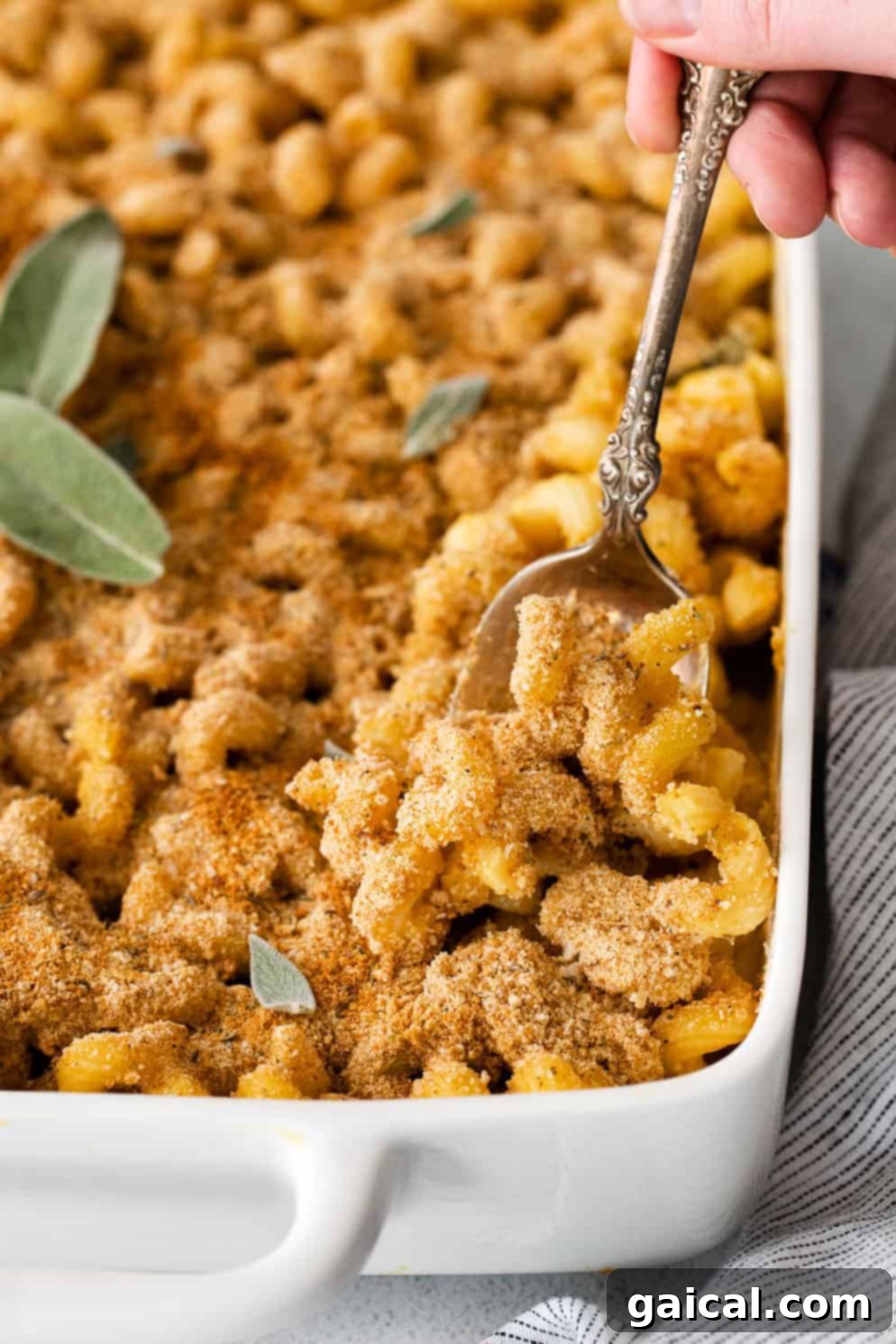
Indulge in the ultimate autumn comfort with this incredibly creamy butternut squash mac and cheese. This recipe elevates a classic favorite by incorporating a rich, velvety sauce made from roasted butternut squash, infused with savory garlic and onion. Baked to golden perfection with an irresistibly crunchy breadcrumb topping, it’s a dish that promises to warm your soul and delight your taste buds. Perfect for a cozy family dinner or a festive holiday gathering, this mac and cheese is a testament to the delicious possibilities of seasonal ingredients.
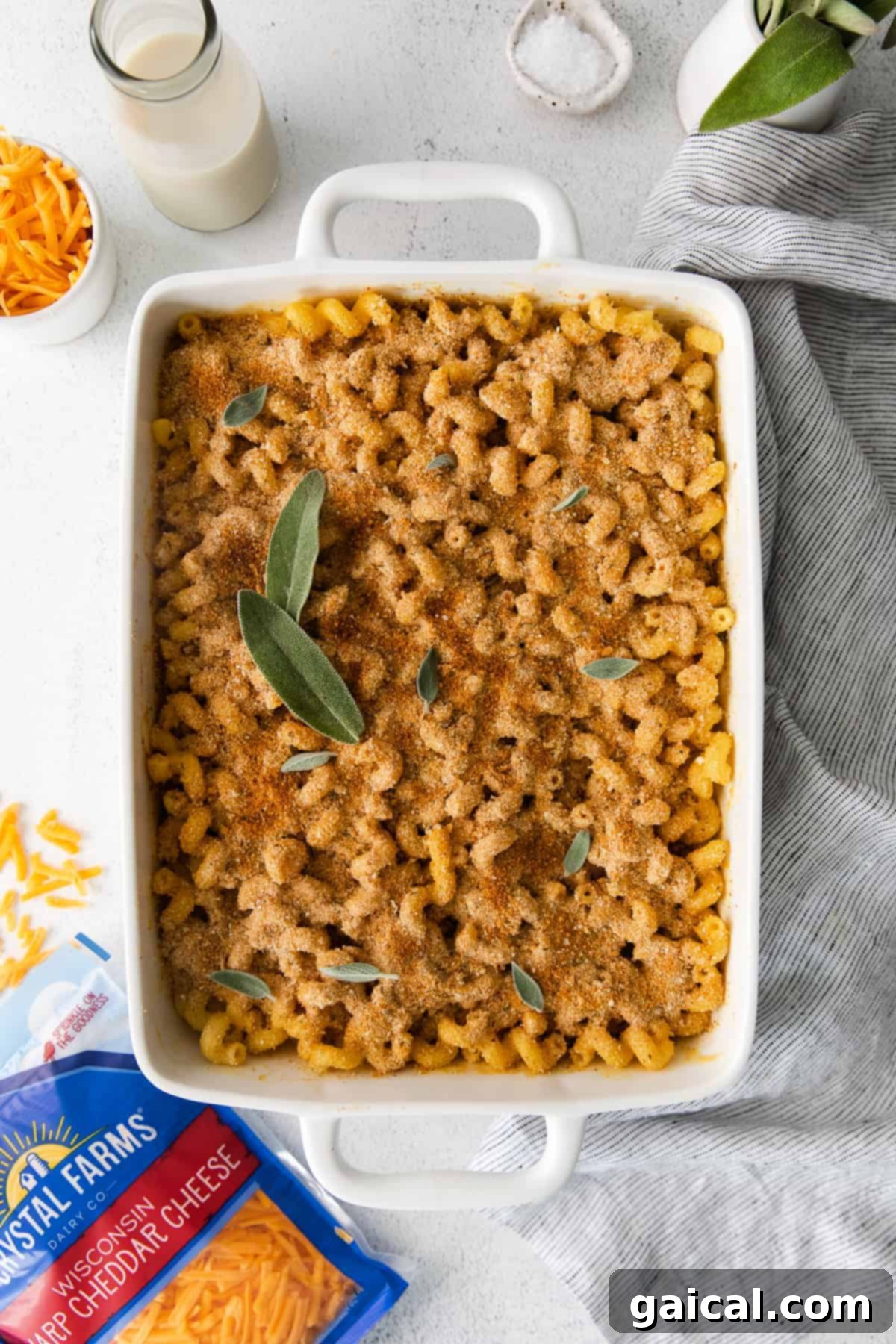
Here at Fit Foodie Finds, we’re passionate about wholesome, delicious food – and that certainly includes our love for cheese (as our sister site, Cheese Knees, can attest!). Combining our affection for rich, flavorful cheeses with the sweet and earthy notes of butternut squash was a natural evolution, leading to this irresistible butternut squash mac and cheese. We experimented with various preparations, and without a doubt, roasting the butternut squash delivered a depth of flavor that steaming simply couldn’t match. The caramelization achieved through roasting, coupled with the essential addition of garlic and onion, creates a bold, hearty foundation for a truly unforgettable cheese sauce.
The Secret to Our Luscious Butternut Squash Mac and Cheese Sauce
Crafting this exceptional butternut squash mac and cheese involves three key components, each contributing to a harmonious blend of textures and tastes. Our philosophy centers around using simple, fresh, and high-quality ingredients to bring out the best in every bite.
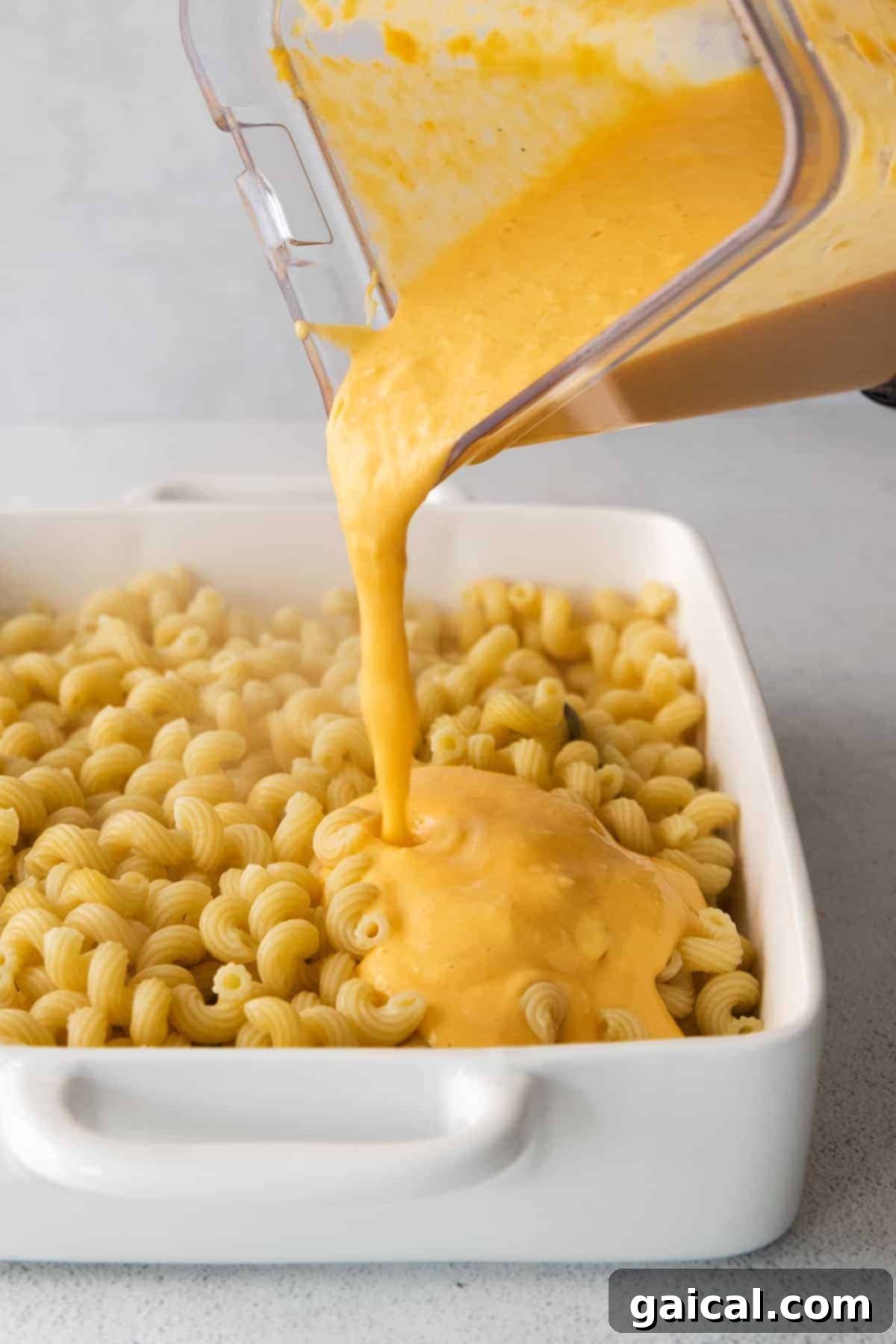
- The Velvety Butternut Squash Cheese Sauce: The heart of this dish lies in its incredibly smooth and flavorful sauce. It begins with roasting chunks of butternut squash alongside aromatic onion and garlic until tender and caramelized. This trio is then blended with creamy 2% milk and a touch of reserved pasta water for optimal consistency, before being combined with a generous mix of shredded cheeses. The roasting process intensifies the squash’s natural sweetness and adds a smoky depth that transforms ordinary mac and cheese into something truly extraordinary.
- Perfectly Infused Pasta: We believe the pasta itself should be a star, not just a vessel for the sauce. Our unique method involves cooking the pasta al dente in a fragrant blend of broth and water, seasoned with fresh sage and a hint of ground cloves. This infuses the noodles with subtle, aromatic flavors that perfectly complement the rich squash sauce, adding another layer of complexity to the dish. The choice of pasta shape is also crucial; something with ridges or curves works best to capture every drop of that glorious sauce.
- Crispy Breadcrumb Topping: No baked mac and cheese is complete without a golden, crunchy topping. Ours is a simple yet effective blend of plain breadcrumbs and a thoughtful selection of savory spices, including dried sage and thyme, which echo the flavors in the pasta and sauce. This topping provides a delightful textural contrast, adding a satisfying crispness that beautifully balances the creamy interior.
Easy Substitutions and Creative Variations
One of the joys of cooking is the freedom to customize, and this butternut squash mac and cheese recipe is incredibly versatile. Feel free to experiment with these suggestions to make it truly your own:
- Pasta Perfection: While cavatappi noodles are our go-to for their fun shape and excellent sauce-holding capabilities, many other pasta types work wonderfully. Consider rigatoni, fusilli, or penne, all of which have nooks and crannies perfect for trapping that creamy squash sauce. Even elbow macaroni, the classic mac and cheese choice, would be delicious.
- Cheese Choices: The cheese blend is crucial for flavor and melt. We highly recommend using at least half shredded cheddar for its sharp, familiar taste. For the remaining half, explore options like Gruyère for a nutty, earthy note, Colby Jack for extra creaminess, or a blend of Italian cheeses like mozzarella and provolone for a smooth, stringy texture. Don’t shy away from experimenting with a smoked gouda for an extra layer of flavor!
- Squash Alternatives: If butternut squash isn’t readily available or you simply want to try something different, sweet potato or pumpkin make excellent substitutes. Both offer a similar sweet and savory profile, yielding a beautifully vibrant and flavorful sauce. Ensure they are roasted just as you would the butternut squash for the best results.
- Boost Your Protein: To transform this delightful side dish into a more substantial main course, consider adding cooked protein. Shredded chicken, perhaps from our easiest shredded chicken recipe, is a fantastic addition. Cooked ground turkey or a vegetarian sausage crumble would also integrate seamlessly, adding heartiness and making it a complete meal. For a touch of decadence, crispy bacon bits mixed in or sprinkled on top would be sublime.
- Add More Greens: Stir in a handful of fresh spinach or kale during the final mixing step for an extra boost of nutrients and a pop of color.
- Spice it Up: For those who love a bit of heat, increase the cayenne pepper in the sauce or add a pinch of red pepper flakes to the breadcrumb topping.
More of our Favorite Creations
Explore More Mac and Cheese Recipes
If you’re a true mac and cheese aficionado, you’ll love these other variations from our kitchen:
- Classic Mac and Cheese: The timeless recipe that never disappoints.
- Instant Pot Protein Mac and Cheese: A quick, high-protein take for busy days.
- Avocado Mac and Cheese with Sun-Dried Tomatoes: A fresh, unique twist.
- Cauliflower Chicken Mac and Cheese Casserole: A hearty, veggie-packed option.
- Super Simple Vegan Mac and Cheese: A plant-based delight for everyone.
Storage Instructions
This butternut squash mac and cheese is just as delicious the next day! To store, transfer any leftovers into an airtight container and refrigerate for up to 3-5 days. It makes for a fantastic make-ahead meal or a convenient lunch option throughout the week.
Reheating Mac and Cheese for Optimal Creaminess
Reheating mac and cheese can sometimes be tricky, but with a few simple tips, you can restore its creamy texture beautifully. The key is to reintroduce a little moisture, as the noodles continue to absorb liquid even after initial cooking, and to reheat gently to prevent the cheese from separating and becoming oily.
Reheating in the Oven
For the best results, especially if you have a larger portion, oven reheating is ideal. Preheat your oven to 350°F (175°C). Transfer the mac and cheese to an oven-safe dish. Add a tablespoon or two of milk (or even a splash of broth) per serving, stirring gently to incorporate. Cover the dish tightly with foil to lock in moisture and prevent drying. Bake for 10-20 minutes, or until heated through and bubbling gently. The exact time will depend on the quantity being reheated. This method helps maintain the creamy consistency and prevents the topping from burning.
Reheating on the Stovetop
For smaller portions, the stovetop can be a quicker alternative. Place the mac and cheese in a saucepan over low to medium-low heat. Add a splash of milk or broth, about 1-2 tablespoons per cup of mac and cheese. Stir constantly and gently, allowing the cheese to melt and the sauce to loosen. Continue heating until warmed through, being careful not to let it stick to the bottom of the pan or boil vigorously.
Microwave Reheating
While not our top recommendation for texture, the microwave is a convenient option for single servings. Place mac and cheese in a microwave-safe bowl, add a tablespoon of milk, and cover loosely. Heat on 50% power for 1-2 minutes, stir, and continue heating in 30-second intervals until warmed through, stirring between each interval. This gentle approach helps prevent the cheese from becoming rubbery.
How to Serve Butternut Squash Mac and Cheese
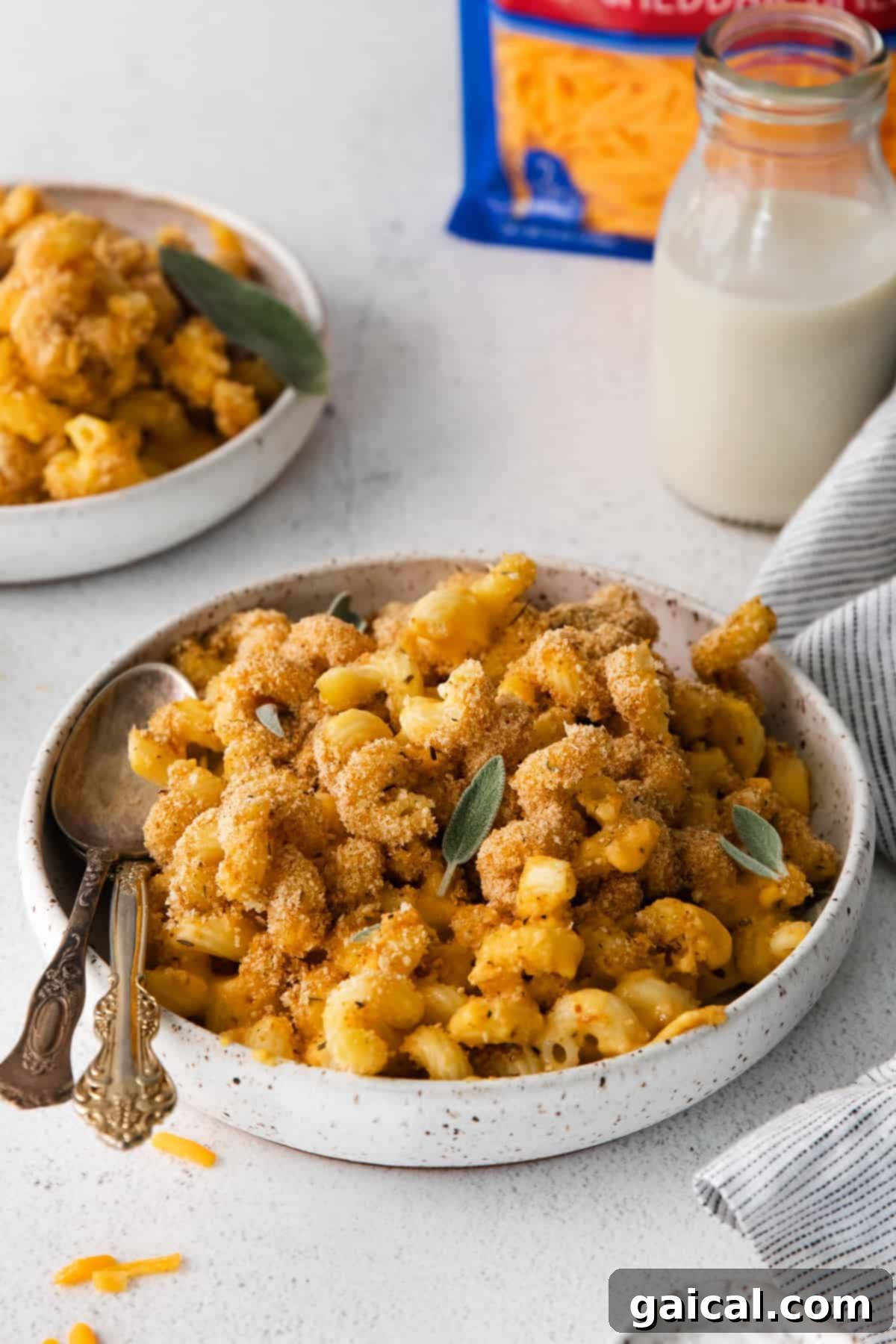
This versatile butternut squash mac and cheese shines as both a decadent side dish and a satisfying main course. Its rich flavors and vibrant color make it an ideal addition to any holiday table, particularly for Thanksgiving or other festive occasions. Consider it a sophisticated upgrade to traditional mac and cheese that will impress your guests.
When serving as a main meal, you might want to pair it with a crisp green salad tossed in a light vinaigrette to cut through the richness. If you’re looking to add a protein, our juicy pan-seared chicken breast or a perfectly cooked sous vide steak would be excellent companions, creating a balanced and complete meal. For a vegetarian option, a side of roasted Brussels sprouts or steamed green beans would complement the flavors beautifully.
Butternut Squash Mac and Cheese Recipe
Butternut Squash Mac and Cheese combines the beloved comfort of classic mac and cheese with the rich, sweet, and savory depth of roasted butternut squash, garlic, and a hint of warming spices. A truly autumnal delight!
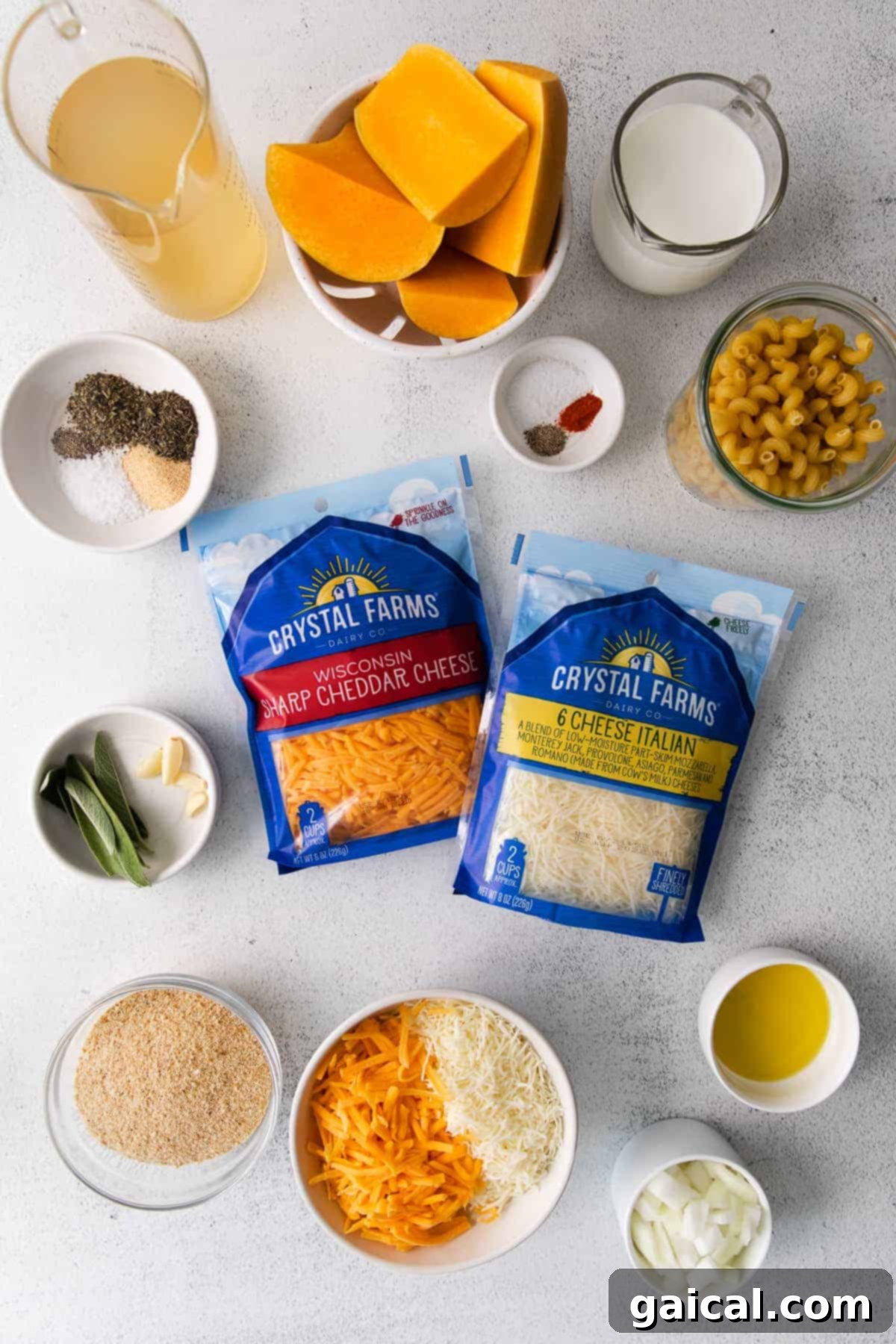
Ingredients
Butternut Squash Mac and Cheese Sauce
- ½ large butternut squash, seeded and chopped into fourths (yields ~3 cups butternut squash puree)
- ¾ teaspoon salt, separated
- ¼ teaspoon cayenne pepper
- ¼ teaspoon ground pepper
- 2 tablespoons olive oil, separated
- ½ large white onion, diced
- 4 cloves garlic, peeled
- 1 cup 2% milk
- 2 cups pasta water, as needed for sauce consistency
- 2 cups shredded cheddar cheese
- 2 cups shredded mozzarella cheese
Pasta
- 4 cups broth, any kind (vegetable or chicken)
- 4 cups water
- 6 fresh sage leaves
- 1 teaspoon salt
- ¼ teaspoon ground cloves
- 16- oz. cavatappi pasta (or other preferred pasta shape)
Bread Crumb Topping
- 1 cup plain bread crumbs
- 1 teaspoon salt
- ¼ teaspoon pepper
- 1 teaspoon dried sage leaves
- 1 teaspoon dried thyme
- 1 teaspoon garlic powder
Instructions
- Preheat your oven to 400ºF (200°C). Lightly spray a large baking sheet with non-stick cooking spray or line with parchment paper.
- In a small bowl, combine ½ teaspoon of salt, cayenne pepper, and ground pepper. Set this spice blend aside.
- Arrange the butternut squash pieces on one side of the prepared baking sheet. Drizzle with 1 tablespoon of olive oil and sprinkle with the reserved spice blend. Rub the oil and spices evenly over the squash.
- On the other side of the baking sheet, place the diced white onion and peeled garlic cloves. Drizzle with the remaining 1 tablespoon of olive oil and sprinkle with the remaining ¼ teaspoon of salt. Toss gently to coat.
- Place the baking sheet in the preheated oven and roast for 20 minutes. After 20 minutes, carefully remove the baking sheet, transfer the roasted garlic and onions to a small bowl to prevent them from burning, and flip the butternut squash pieces. Return the squash to the oven and roast for an additional 20-30 minutes, or until the butternut squash is deeply tender and easily pierced with a fork.
- While the butternut squash is roasting, prepare the pasta. In a large pot, combine the broth, water, fresh sage leaves, 1 teaspoon of salt, and ground cloves. Bring the mixture to a rolling boil. Add the cavatappi pasta to the boiling liquid and cook until it is just a little under al dente. The pasta will continue to cook slightly when baked in the oven, so aiming for slightly firm is key.
- Before draining, reserve 2 cups of the pasta cooking water. Discard the sage leaves from the pot. Drain the pasta thoroughly and rinse the noodles with cold water to stop the cooking process and prevent sticking. Set aside.
- Prepare the breadcrumb topping. Heat a small skillet over medium heat. Add all the bread crumb topping ingredients (plain bread crumbs, 1 teaspoon salt, ¼ teaspoon pepper, dried sage, dried thyme, garlic powder) to the skillet. Stir continuously, toasting the bread crumbs until they are golden brown and fragrant, which usually takes about 4-5 minutes. Remove from heat and set aside.
- Once the butternut squash is fork-tender, remove it from the oven. Allow it to cool slightly, then use a spoon to carefully scoop the tender flesh from its skin. The skin should peel off easily after roasting.
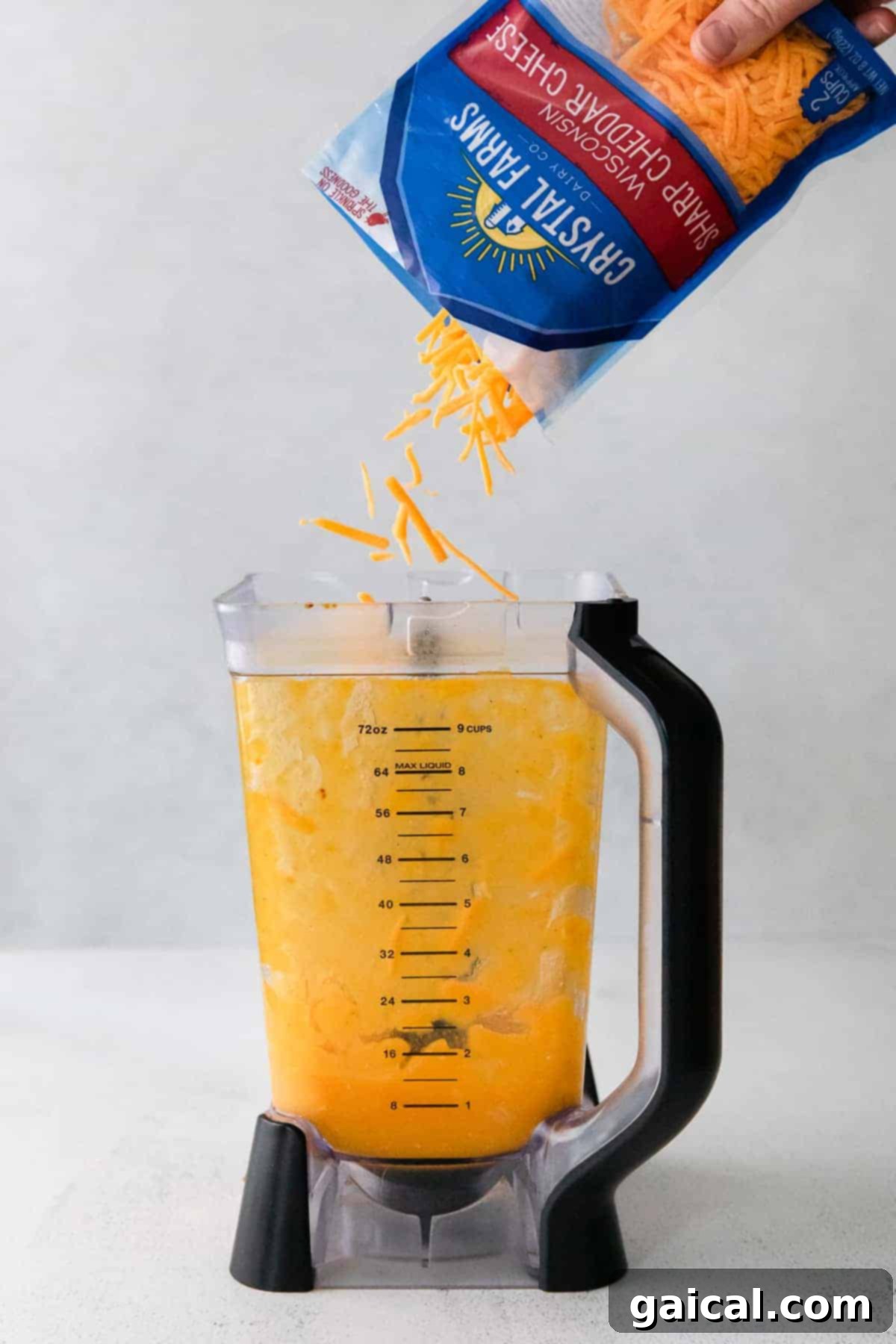
- Transfer the roasted butternut squash flesh, the reserved roasted onion, and the roasted garlic cloves into a high-speed blender. Add 1 cup of the reserved pasta water and blend until the mixture is completely smooth and creamy. Next, add the shredded cheddar cheese to the blender and blend again until it is fully melted and incorporated into the sauce. Then, add the shredded mozzarella cheese and blend until smooth and melted. Finally, pour in the 2% milk and blend until the sauce is thick, luxurious, and creamy. If the sauce appears too thick for your liking, you can add more reserved pasta water, one tablespoon at a time, until it reaches your desired consistency.
- Change your oven setting to broil. Lightly spray a 9×13-inch casserole dish with cooking spray.
- Add the cooked pasta noodles to the prepared casserole dish. Pour the rich butternut squash cheese sauce over the noodles and mix gently until every noodle is thoroughly coated. Evenly sprinkle the toasted breadcrumb topping over the pasta. You can use all of it for maximum crunch, or adjust the amount to your preference. Place the casserole dish into the oven, under the broiler.
- Broil the mac and cheese for 2-3 minutes, or until the breadcrumb topping achieves a beautiful golden-brown color and irresistible crispness. Keep a close eye on it to prevent burning, as broilers can vary in intensity.
- Carefully remove the casserole from the oven. Garnish with a sprinkle of freshly chopped sage leaves for an extra layer of flavor and a touch of elegance before serving warm.
Tips & Notes for Success
- Prevent Burning Garlic and Onions: It’s crucial to remove the roasted onions and garlic halfway through the squash’s cooking time. They tend to cook faster and can burn, which would impart a bitter taste to your sauce. Taking them out ensures they are perfectly tender and sweet.
- Adjusting Sauce Consistency: The amount of pasta water needed for the sauce can vary slightly. If your butternut squash cheese sauce appears too thick after blending, gradually add more of the reserved pasta water, one tablespoon at a time, until you achieve your desired creamy consistency.
- For Extra Flavor: Consider a pinch of nutmeg in the sauce for a classic pairing with squash and cheese.
- Batch Cooking: This recipe scales well. Double the ingredients and bake in a larger dish for a party or to freeze portions for later.
Watch It: How to Make Butternut Squash Mac and Cheese
For a visual guide to making this delicious recipe, watch our detailed video demonstration. It walks you through each step, from roasting the squash to creating the perfect creamy sauce and achieving that golden-brown topping.

(Video player removed as per instructions; a placeholder image and text are provided.)
Nutrition
Calories: 445 kcal
,
Carbohydrates: 55 g
,
Protein: 20 g
,
Fat: 18 g
,
Fiber: 5 g
,
Sugar: 8 g
Nutrition information is automatically calculated and should only be used as an approximation. Actual values may vary based on specific ingredients and preparation methods.
Loved this recipe? Share your thoughts below!
We’re always excited to see your culinary creations! Don’t forget to tag your posts on social media with the hashtag #fitfoodiefinds. We’d love to see your delicious butternut squash mac and cheese!