
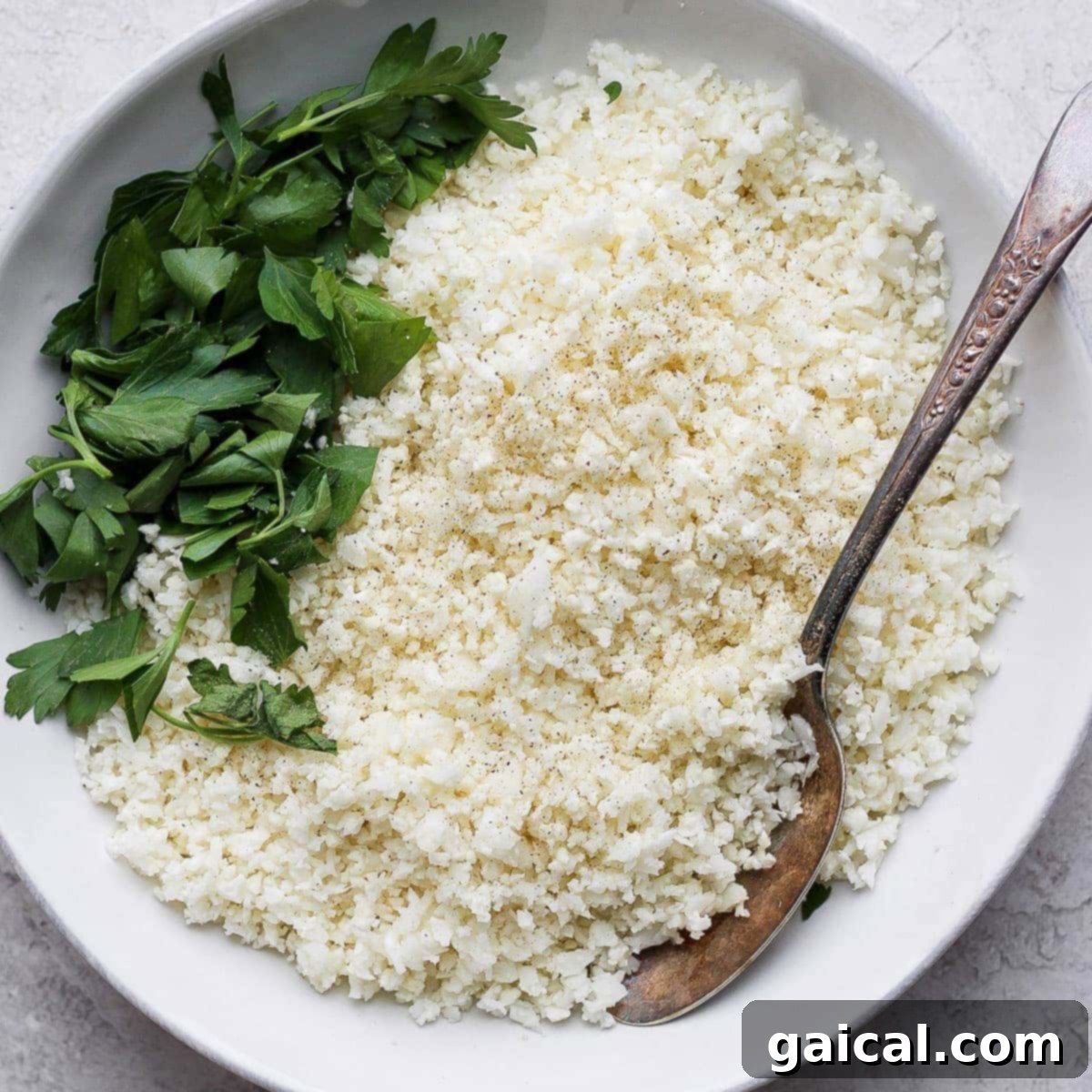
Embark on a culinary journey to transform a humble head of cauliflower into a versatile, low-carb marvel: cauliflower rice. This simple yet revolutionary ingredient has become a staple in healthy kitchens worldwide, offering a delicious and nutrient-rich alternative to traditional grains. Whether you’re following a specific dietary plan like keto, paleo, or gluten-free, or simply looking to add more vegetables to your meals, making cauliflower rice at home is an effortless process that requires just one primary ingredient and a few basic kitchen tools.
Beyond its dietary benefits, homemade cauliflower rice is incredibly fresh, economical, and free from any unwanted additives often found in store-bought versions. Get ready to elevate your meals with this incredibly adaptable foundation, perfectly complementing everything from vibrant stir-fries to hearty curries and fresh salads. Dive in to learn the secrets to perfect cauliflower rice, from preparation to creative serving suggestions.
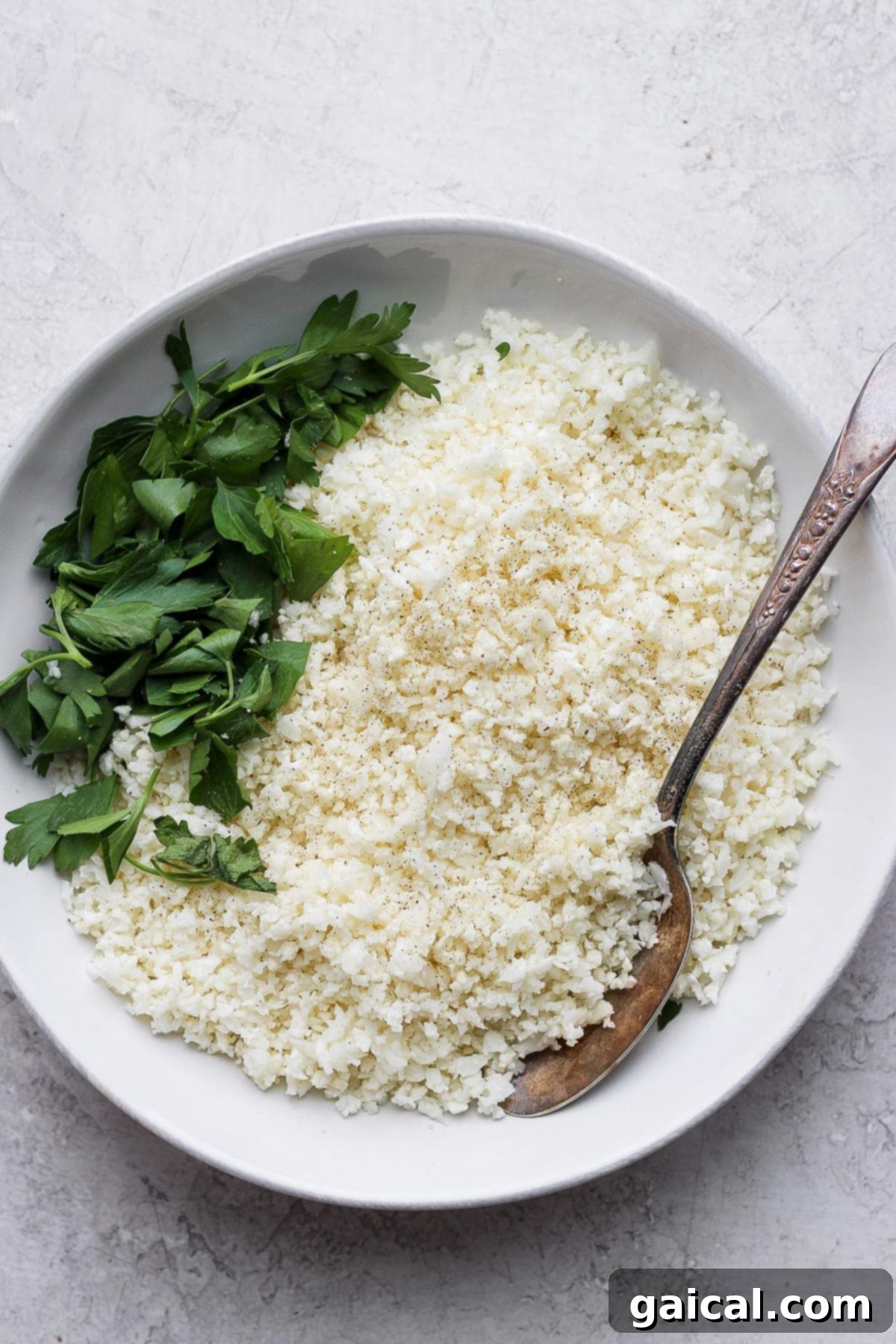
What is Cauliflower Rice? A Healthy Grain Alternative
Cauliflower rice, also affectionately known as cauliflower couscous, is simply raw cauliflower that has been finely processed to mimic the texture and appearance of traditional rice grains. Unlike grains, it’s not a carbohydrate but a cruciferous vegetable, making it an excellent choice for those seeking to reduce their carb intake or increase their vegetable consumption. Its neutral flavor profile is one of its greatest assets, allowing it to readily absorb the flavors of whatever dish it accompanies, making it incredibly versatile in a wide array of cuisines.
The beauty of cauliflower rice lies in its simplicity. It’s essentially raw cauliflower that’s been broken down into small, uniform pieces using kitchen equipment like a food processor or a high-speed blender. This transformation turns a dense vegetable into a light, fluffy grain-like component, ready to be used raw in salads or cooked into savory side dishes. It’s a testament to how whole, unprocessed foods can be adapted to fit modern dietary needs and preferences without sacrificing taste or satisfaction.
Why You Should Make Cauliflower Rice: Unpacking the Benefits
Choosing cauliflower rice over traditional grains offers a multitude of health and culinary advantages. It’s not just a trend; it’s a smart dietary swap with tangible benefits:
- Low-Carb and Keto-Friendly: For individuals on ketogenic, paleo, or other low-carb diets, cauliflower rice is an invaluable staple. It provides the bulk and texture of rice without the high carbohydrate content, making it easier to maintain dietary goals.
- Naturally Gluten-Free and Grain-Free: Many people suffer from gluten sensitivities or choose to avoid grains for various health reasons. Cauliflower rice is a naturally gluten-free and grain-free option, opening up a world of culinary possibilities for those with dietary restrictions.
- Rich in Nutrients: Cauliflower is a nutritional powerhouse. It’s packed with essential vitamins and minerals, including Vitamin C (a powerful antioxidant), Vitamin K (important for bone health and blood clotting), folate, and potassium. It also contains unique plant compounds that have been linked to anti-inflammatory benefits.
- High in Fiber: Dietary fiber is crucial for digestive health, helping to regulate blood sugar levels and promote a feeling of fullness. Cauliflower rice is an excellent source of fiber, contributing to overall gut health and satiety.
- Versatile and Flavor-Absorbing: Its mild taste makes it a culinary chameleon, capable of taking on the flavors of spices, herbs, and sauces. From Asian-inspired stir-fries to Mediterranean bowls and Mexican-style feasts, cauliflower rice adapts beautifully to any cuisine, making meal planning exciting and diverse.
- Low in Calories and Fat: For those managing weight, cauliflower rice offers a significantly lower calorie count compared to an equal serving of white or brown rice, with virtually no fat. This allows for larger portion sizes without excess calories, aiding in weight management.
Mastering Homemade Cauliflower Rice: A Step-by-Step Guide
Making cauliflower rice at home is remarkably simple, requiring just a few steps to transform a whole head of cauliflower into fluffy, grain-like pieces. Follow this guide for perfect results every time.
Step 1: Prepare the Cauliflower
The journey to perfect cauliflower rice begins with proper preparation. Start with a fresh, firm head of cauliflower. Any size will work, but remember that a larger head will yield more rice, which is great for meal prepping. Begin by thoroughly washing the cauliflower under cool running water.
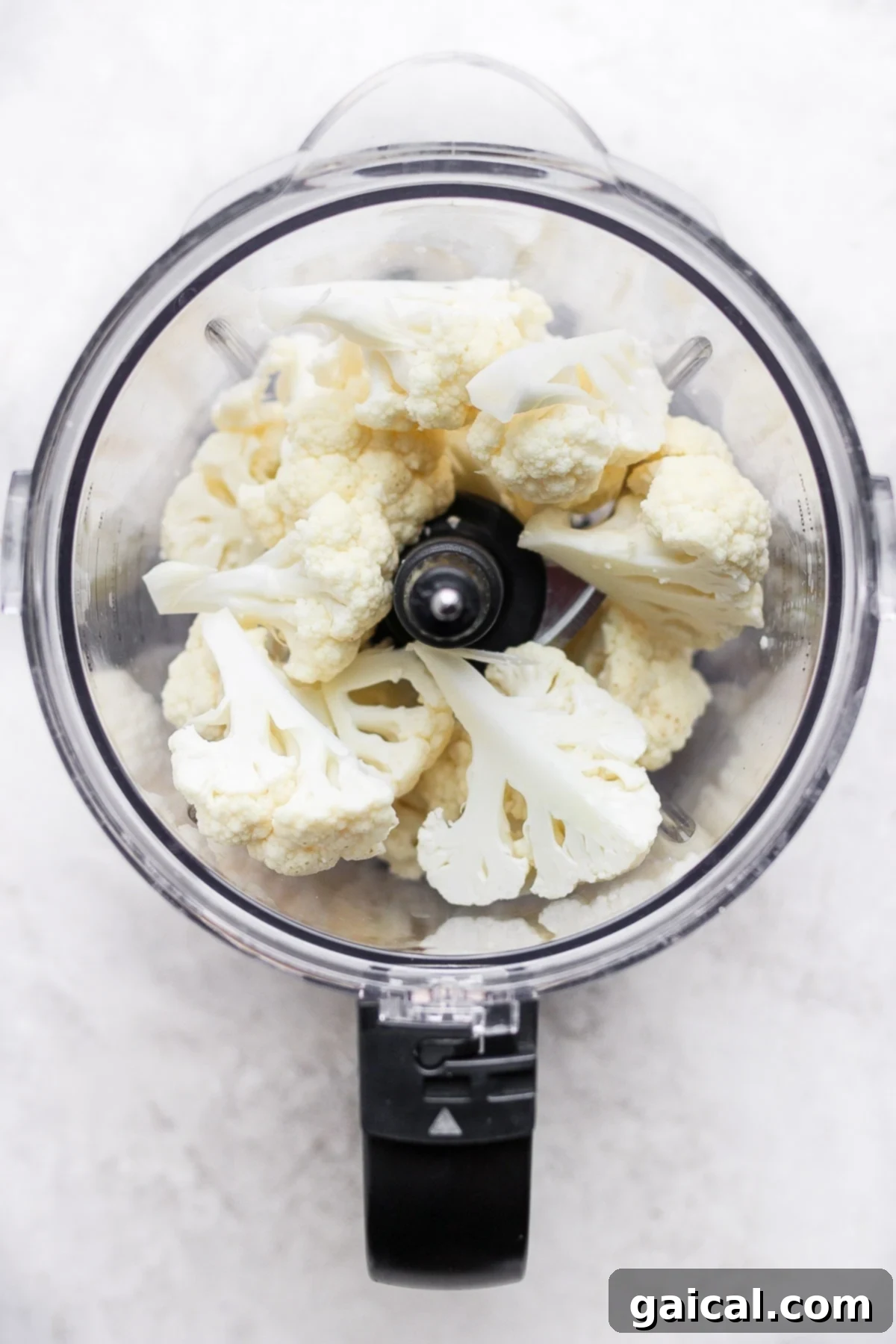
Next, carefully remove all the green leaves surrounding the head. While the florets are the primary focus, don’t discard the sturdy trunk or core! It’s perfectly edible and can also be processed into cauliflower rice. Chop the entire cauliflower, including the core, into medium to large florets. The goal is to create pieces small enough to fit comfortably into your food processor without overcrowding it, ensuring even processing.
Step 2: Process Cauliflower in a Food Processor
Once your cauliflower is chopped, it’s time to turn it into “rice.” Place the cauliflower pieces into your food processor. It’s crucial not to overfill the processor; if you have a large head of cauliflower, process it in batches to ensure uniform results and prevent strain on your machine. A good rule of thumb is to fill the processor no more than two-thirds full.
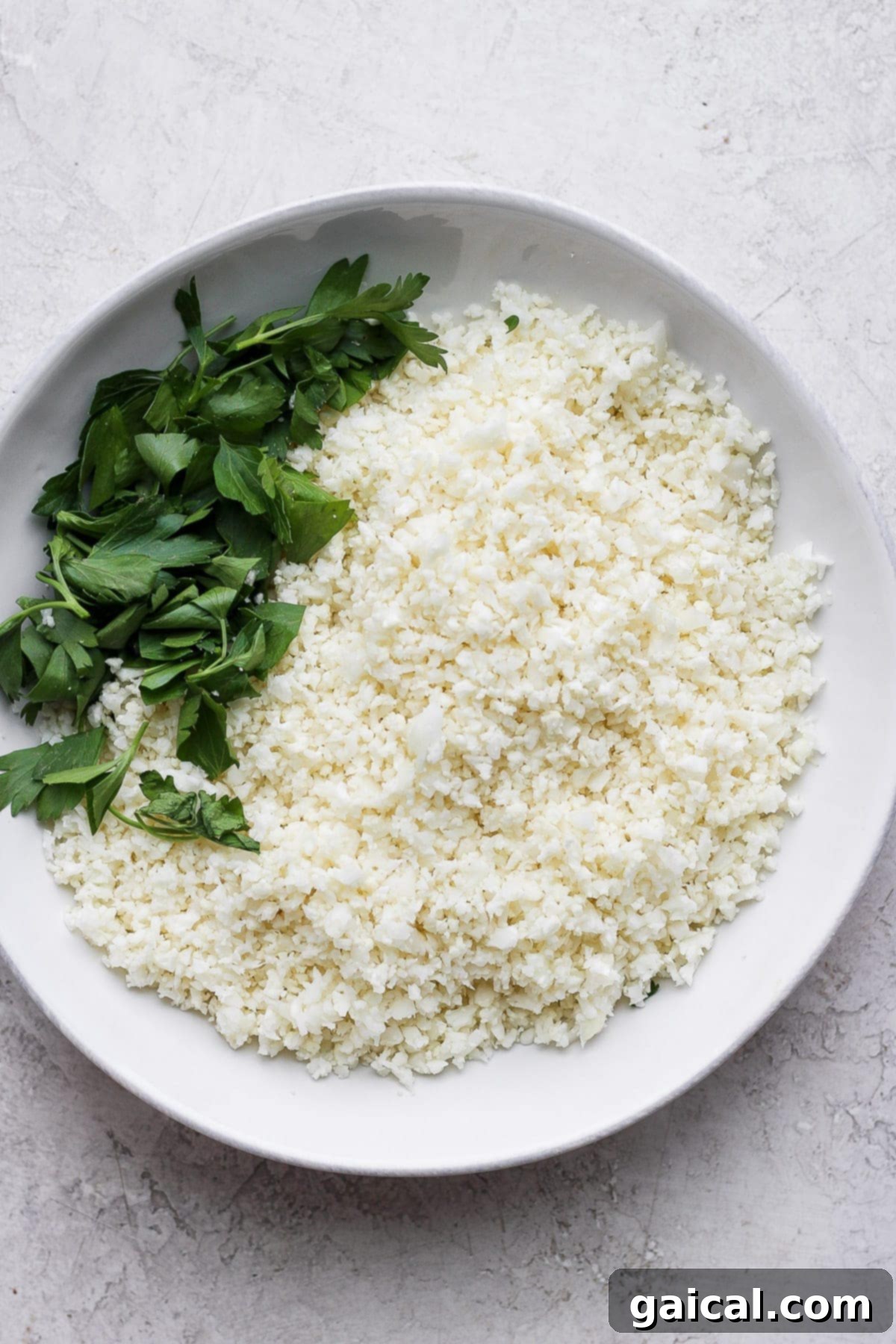
Secure the lid and pulse the cauliflower on high speed. The key word here is “pulse,” not continuously blend. Pulsing allows you to control the consistency, breaking down the cauliflower into small, rice-sized pieces. Continue pulsing until the cauliflower resembles grains of rice. Be vigilant and stop immediately once the desired texture is achieved. Over-processing will quickly turn your cauliflower into a mushy paste, which is not what we want!
Step 3: Remove Excess Moisture from the Cauliflower Rice
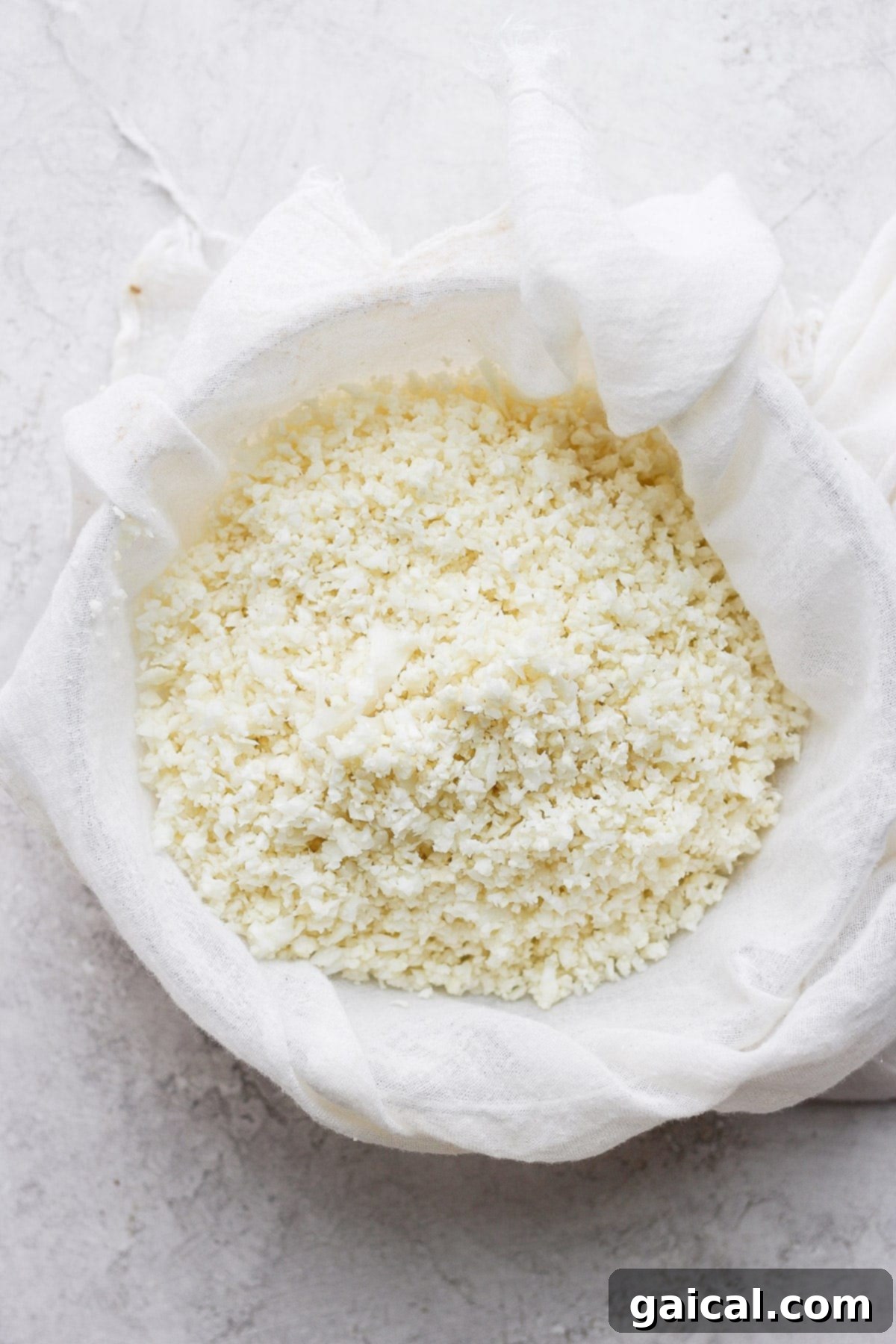
This is arguably the most critical step for achieving fluffy, non-soggy cauliflower rice. Cauliflower naturally contains a high amount of water, and failing to remove it can result in a watery, mushy texture when cooked. To draw out this excess moisture, you’ll need a large, clean tea towel or a sheet of cheesecloth.
Line a spacious bowl with the tea towel or cheesecloth. Transfer all your freshly processed cauliflower rice onto the cloth. Evenly sprinkle a generous pinch of salt over the cauliflower rice. The salt plays a vital role in drawing out moisture through osmosis. Gently mix the salt through the rice, then let it sit undisturbed for at least 15 minutes. During this time, you’ll notice visible moisture collecting on the surface.
After 15 minutes, gather the corners of the tea towel, twisting the top tightly to form a ball. Now, over the bowl, firmly squeeze the cauliflower rice, allowing the accumulated moisture to drip out into the bowl below. You’ll be surprised by how much liquid is expelled! Continue squeezing until no more water drips out. This step ensures your cauliflower rice will cook up perfectly, with a pleasant, firm texture, rather than turning into mush. Your cauliflower rice is now ready to use or store!
Cooking Cauliflower Rice: Best Methods for Delicious Results
Once your cauliflower rice is prepared and de-moisturized, it’s ready for cooking. The goal is always a tender-crisp texture, not mushy. Here are the most popular and effective cooking methods:
- Sautéing (Stovetop): This is the most common method and yields the best flavor and texture. Heat a tablespoon of olive oil or coconut oil in a large skillet over medium heat. Add the cauliflower rice and sauté for 5-7 minutes, stirring occasionally, until it’s tender-crisp. Season with salt, pepper, and your choice of herbs or spices. Avoid overcrowding the pan, as this will steam rather than sauté the rice; cook in batches if necessary.
- Steaming: For a quick and hands-off approach, you can steam cauliflower rice. Place it in a steamer basket over boiling water, cover, and steam for 5-8 minutes, or until tender. This method keeps it very light but might result in a slightly softer texture.
- Microwaving: The fastest method. Place cauliflower rice in a microwave-safe bowl with a splash of water (about 1-2 tablespoons per cup of rice). Cover and microwave on high for 3-5 minutes, stirring halfway, until tender. Drain any excess liquid.
- Roasting: For a slightly nutty flavor and firmer texture, spread cauliflower rice in a single layer on a baking sheet. Drizzle with a little olive oil, season, and roast at 400°F (200°C) for 10-15 minutes, stirring halfway, until lightly browned and tender.
No matter the method, remember that cauliflower rice cooks much faster than traditional rice. Keep a close eye on it to prevent overcooking and maintain its ideal texture.
Creative Ways to Use Cauliflower Rice
The versatility of cauliflower rice is truly unmatched. Its neutral flavor profile and appealing texture make it an ideal substitute for grains in almost any dish. Here are countless ways to incorporate it into your daily meals:
- As a Side Dish: Simply sautéed and seasoned, cauliflower rice makes a fantastic low-carb side for virtually any main course, from grilled chicken to baked fish.
- In Buddha Bowls and Power Bowls: Use it as the base for colorful and nutrient-packed bowls, topping with roasted vegetables, lean protein, healthy fats, and a delicious sauce.
- Stir-Fries: Replace traditional rice in your favorite stir-fry recipes for a lighter, veggie-packed meal. It absorbs the savory sauces beautifully.
- Burrito Bowls: Create vibrant Mexican-inspired bowls with cauliflower rice, black beans, corn, salsa, avocado, and your choice of protein.
- “Fried Rice”: Transform your cauliflower rice into a healthier version of fried rice by stir-frying it with eggs, vegetables, soy sauce (or tamari), and sesame oil.
- Soups and Stews: Add raw or lightly cooked cauliflower rice to thicken soups or stews, or simply serve it as a hearty addition.
- Stuffing: Use it as a grain-free stuffing for bell peppers, zucchini boats, or even poultry.
- Salad Base: Enjoy it raw! Mix uncooked cauliflower rice into salads for added texture and nutrients, absorbing dressings and other ingredients.
The possibilities are endless; simply think of any dish where you’d typically use rice or couscous, and give cauliflower rice a try!
Important Considerations: When Not to Use Cauliflower Rice
While cauliflower rice is incredibly versatile, it’s essential to understand its limitations. It’s not a direct, one-for-one substitute for traditional grains in every scenario. Due to its high water content (even after squeezing) and different cellular structure, cauliflower rice behaves differently during cooking.
Do NOT substitute cauliflower rice in dishes where traditional rice must be cooked in large amounts of water, or where it’s expected to absorb significant liquid and provide structural integrity. This includes recipes like casseroles where rice is cooked directly in a sauce, one-pot dishes that rely on rice to absorb broth, or classic risottos. In these situations, cauliflower rice will likely become overly watery and mushy, failing to achieve the desired texture or consistency of the dish. Stick to using it in recipes where rice is either a side dish or cooked separately and then combined, or where its quick-cooking nature is an advantage.
Storage and Longevity of Cauliflower Rice
Proper storage is key to enjoying your homemade cauliflower rice for an extended period. The shelf life differs for raw versus cooked cauliflower rice.
Cooked Cauliflower Rice
Cooked cauliflower rice, once completely cooled, should be stored in an airtight container in the refrigerator. It will typically last for 2-3 days from the time it was cooked. Ensure it cools down quickly before refrigerating to maintain freshness and safety.
Raw Cauliflower Rice
Raw cauliflower rice, prepared and with moisture removed, can last longer. Store it in an airtight container in the refrigerator for up to 7 days. For optimal longevity, we recommend placing the cauliflower rice in the refrigerator *after* it has been processed and had its moisture removed with salt and squeezing. This crucial step prevents spoilage and maintains its texture for a longer period.
Convenience Factor: When to Opt for Store-Bought Cauliflower Rice
Life gets busy, and sometimes there simply isn’t enough time to prepare everything from scratch. If you find yourself short on time or prefer the convenience, most grocery stores now widely offer pre-made cauliflower rice. You can usually find it in two forms:
- Raw, Fresh Cauliflower Rice: Typically located in the produce section, pre-riced cauliflower is ready to use directly from the package. While slightly more expensive than a whole head of cauliflower, it saves you the preparation and processing time.
- Frozen Cauliflower Rice: Found in the frozen vegetable aisle, this option is incredibly convenient. It’s often already blanched and simply needs to be heated through. Frozen cauliflower rice is excellent for quick meals and can be stored for months. Just be aware that its texture might be slightly softer once cooked due to the freezing and thawing process.
While homemade offers the freshest taste and best texture, store-bought options are a fantastic fallback for busy days or when fresh cauliflower isn’t readily available.
Optimal Storage Practices for Cauliflower Rice
Whether raw or cooked, proper storage ensures your cauliflower rice remains fresh and delicious. Always store your cauliflower rice in an airtight container to prevent it from absorbing other odors in the refrigerator and to keep it from drying out. Ensure any cooked cauliflower rice has cooled completely to room temperature before placing it in the fridge; sealing warm food can create condensation, promoting bacterial growth and a soggy texture.
Can You Freeze Cauliflower Rice? Absolutely!
Freezing cauliflower rice is an excellent way to prepare large batches and have it on hand for quick meals, reducing food waste and saving time during the week. Here’s how to freeze it effectively:
- After you have processed the cauliflower into rice and, most importantly, removed the excess moisture using a tea towel, spread the raw cauliflower rice in a single layer on a baking sheet lined with parchment paper. This step prevents the rice from clumping together when frozen.
- Place the baking sheet in the freezer for about 30-60 minutes, or until the cauliflower rice is firm but not fully frozen solid. This is called “flash freezing.”
- Once flash-frozen, transfer the cauliflower rice to a freezer-safe ziplock bag, removing as much air as possible, or an airtight container. Label with the date.
- Freeze for up to 3 months. When ready to use, you can cook it directly from frozen, though it might release a little more moisture. No need to thaw beforehand for most cooking methods.
More of our Favorite Recipes to Serve Cauliflower Rice With
Delicious Pairings for Your Cauliflower Rice
Cauliflower rice is a fantastic complement to a wide range of flavorful dishes. Its ability to absorb flavors makes it a perfect canvas for hearty and aromatic meals. Here are some ideas for main courses that pair wonderfully with your freshly made cauliflower rice:
- Fiesta Salmon Cauliflower Rice Bowl: A vibrant and healthy bowl featuring seasoned salmon, fresh veggies, and a zesty dressing over a bed of cauliflower rice.
- Meal Prep Cilantro Lime Chicken with Cauliflower Rice: Perfect for your weekly meal prep, this flavorful chicken pairs beautifully with light and tangy cauliflower rice.
- Make Ahead Freezer Burritos (Cauliflower Rice Version): Adapt your favorite burrito filling by using cauliflower rice for a low-carb twist, ideal for a quick freezer meal.
- Chicken and Broccoli Stir Fry: A classic, quick, and healthy meal. Serve it over cauliflower rice for a lighter, nutrient-dense option that soaks up all the delicious sauce.
- Easy Crockpot Sesame Chicken: Let your slow cooker do the work for this savory and slightly sweet chicken dish, served perfectly alongside simple cauliflower rice.
- Vegetarian Tostada Recipe (with Cauliflower Rice): While traditionally on a tortilla, cauliflower rice can be a fantastic base for a deconstructed tostada, piled high with fresh toppings.
Easy Homemade Cauliflower Rice
Do yourself a favor and make cauliflower rice at home. There is only one ingredient you need, cauliflower! Make a few batches of cauliflower rice and there are countless recipes to make.
By: Linley Hanson
Ingredients
- 1 large head cauliflower, cut into florets
Instructions
- First, line a medium-sized bowl with a tea towel or cheesecloth. Set aside.
- Chop the cauliflower up into small pieces and place them in a high powered food processor. Be careful not to overfill the food processor. You may need to make the cauliflower in two batches.
- Pulse the cauliflower in the food processor on high until cauliflower turns into small rice-sized pieces. Pour the cauliflower rice into the bowl lined with a towel. Repeat this step until all cauliflower pieces have been turned into rice.
- Add a pinch of salt to the cauliflower rice and stir. Let the cauliflower rice sit for at least 15 minutes.
- Finally, twist the top of the tea towel to strain the excess water from the cauliflower rice.
Watch It
A video demonstrating how to make cauliflower rice would typically be embedded here. Please refer to external video platforms for a visual guide on the steps outlined above.
Nutrition
Serving: 1/3, Calories: 49 kcal, Carbohydrates: 10 g, Protein: 4 g, Fat: 0 g, Fiber: 4 g, Sugar: 4 g
Nutrition information is automatically calculated, so should only be used as an approximation.
love this? leave a comment below!
Don’t forget to tag your posts on social media with the hashtag #fitfoodiefinds, we’d love to see what you’re up to!
Photography by: The Wooden Skillet