
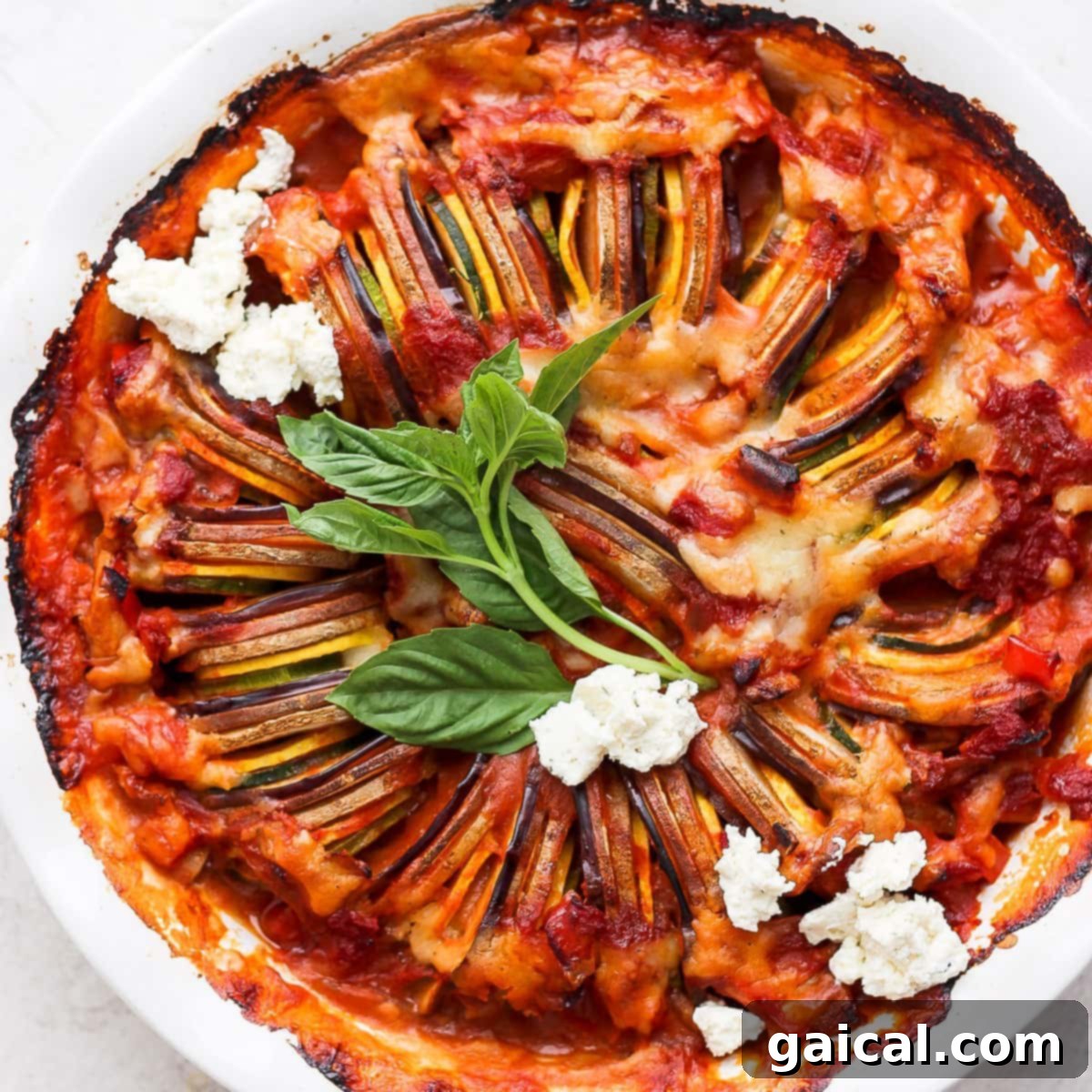
Embark on a culinary journey to Provence with our incredible homemade ratatouille recipe. This vibrant and savory dish is not only a feast for the eyes but also a delightful experience for your taste buds. Forget any preconceptions about ratatouille being complicated; we’ve simplified the process to bring you a truly accessible and rewarding cooking adventure. Combining thinly sliced zucchini, potatoes, and eggplant with two exquisite sauces – a rich tomato base and a creamy béchamel – this recipe transforms humble vegetables into an elegant, show-stopping casserole that’s perfect for weeknight dinners or special gatherings. Get ready to impress yourself and your guests with this equally delicious and beautiful dish!
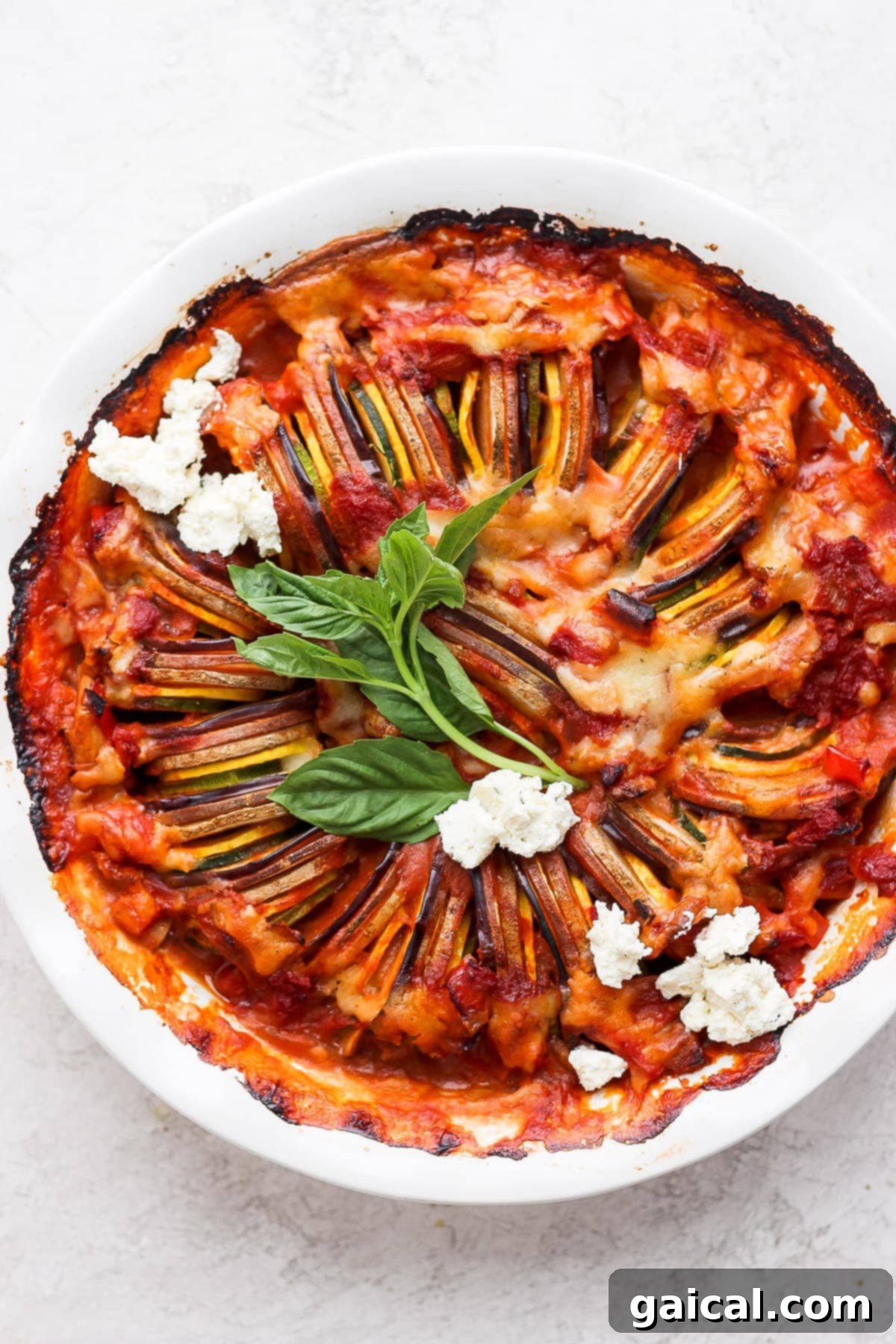
What is Ratatouille: The Classic French Dish (and the Movie!)
Often, when people hear “ratatouille,” their minds might jump to the heartwarming animated film about a culinary rodent. While the movie certainly brought this dish into mainstream pop culture, ratatouille is, first and foremost, a quintessential French Provençal stewed vegetable dish. Originating from Nice, France, it’s traditionally a simple, rustic preparation of summer vegetables simmered together in a rich tomato base.
The beauty of classic ratatouille lies in its celebration of fresh, seasonal produce. Historically, it was a peasant dish, allowing cooks to utilize the bountiful harvest of late summer. Key ingredients typically include eggplant, zucchini (or other summer squash), bell peppers, onions, and tomatoes, all gently cooked to perfection. Over time, various interpretations have emerged. Some cooks prefer a more rustic, chunky stew, while others, like in our recipe, opt for a more refined, layered casserole style, where vegetables are thinly sliced and artfully arranged before baking. Both methods aim to create a harmonious blend of flavors, showcasing the natural sweetness and earthiness of the vegetables.
Our easy ratatouille recipe takes inspiration from the traditional dish, adding our own Fit Foodie Finds (FFF) variations to enhance texture and flavor, resulting in a dish that’s both comforting and gourmet.
A Symphony of Vegetables: The Heart of Our Ratatouille
While traditional ratatouille often focuses heavily on eggplant and summer squash, we believe in embracing a wider array of vegetables to add depth, variety, and a more satisfying texture to each bite. Our recipe thoughtfully incorporates additional root vegetables, transforming it into a heartier, more substantial meal. This blend ensures that every forkful offers a delightful contrast of flavors and textures.
- Yellow Squash: Known for its mild flavor and tender texture, yellow squash adds a touch of sweetness and vibrant color.
- Zucchini: A staple in ratatouille, zucchini provides a gentle, earthy flavor and absorbs the surrounding sauces beautifully.
- Eggplant: The cornerstone of ratatouille, eggplant offers a meaty texture and a slightly bitter, robust flavor that mellows wonderfully when cooked.
- Sweet Potato: Our unique addition! Sweet potatoes bring a natural sweetness and a beautiful orange hue, along with a denser, comforting texture that stands up well to baking. They also boost the nutritional profile.
- Idaho Potato: Another FFF twist, Idaho potatoes (or russet potatoes) contribute a classic, starchy creaminess and earthy flavor, making the dish more filling and reminiscent of a gratin.
- Onion: Essential for building the aromatic foundation of the red sauce, providing savory depth.
Vegetable Tips & Substitutions
Flexibility is key in the kitchen! If you find yourself short on any of the listed vegetables, don’t fret. You can easily adapt this recipe to suit your pantry:
- Double Up: Feel free to increase the quantity of a vegetable you have plenty of. For instance, use two zucchinis if you’re out of yellow squash.
- Replace: Bell peppers (red, yellow, or orange) make excellent additions or substitutions for squash, adding another layer of flavor and color. Mushrooms or cherry tomatoes can also be incorporated.
- Omit: If a particular vegetable isn’t your favorite, or simply unavailable, you can omit it entirely without compromising the overall deliciousness of the dish. The core combination of eggplant, squash, and potatoes with the sauces will still yield fantastic results.
When selecting your produce, aim for firm, blemish-free vegetables for the best flavor and texture. Organic options are always a good choice if available, as they often offer a richer taste.
How to Master This Homemade Ratatouille
Creating this stunning ratatouille is a straightforward process, broken down into a few manageable steps. While it looks impressive, the effort required is surprisingly minimal, making it an ideal recipe for both novice and experienced cooks. Before we dive into the details, let’s consider the essential tools that will help you achieve perfect results.
Essential Kitchen Tools:
- Mandolin Slicer (Recommended): For uniform, thin slices of vegetables, which are crucial for even cooking and a beautiful presentation.
- Sharp Chef’s Knife: An alternative to a mandolin, requiring a steady hand.
- Large Pot or Dutch Oven: For simmering the robust red sauce.
- Medium Saucepan: For preparing the creamy béchamel sauce.
- Whisk: Essential for a smooth béchamel.
- 10-12 Inch Round Casserole Dish or Pie Tin: For the aesthetic spiral arrangement. An 8×8 or 9×13 inch square/rectangular baking dish also works well for a row arrangement.
- Cutting Board: A sturdy surface for slicing.
- Measuring Cups & Spoons: For accurate ingredient proportions.
Step ONE: Precision Slicing of Vegetables
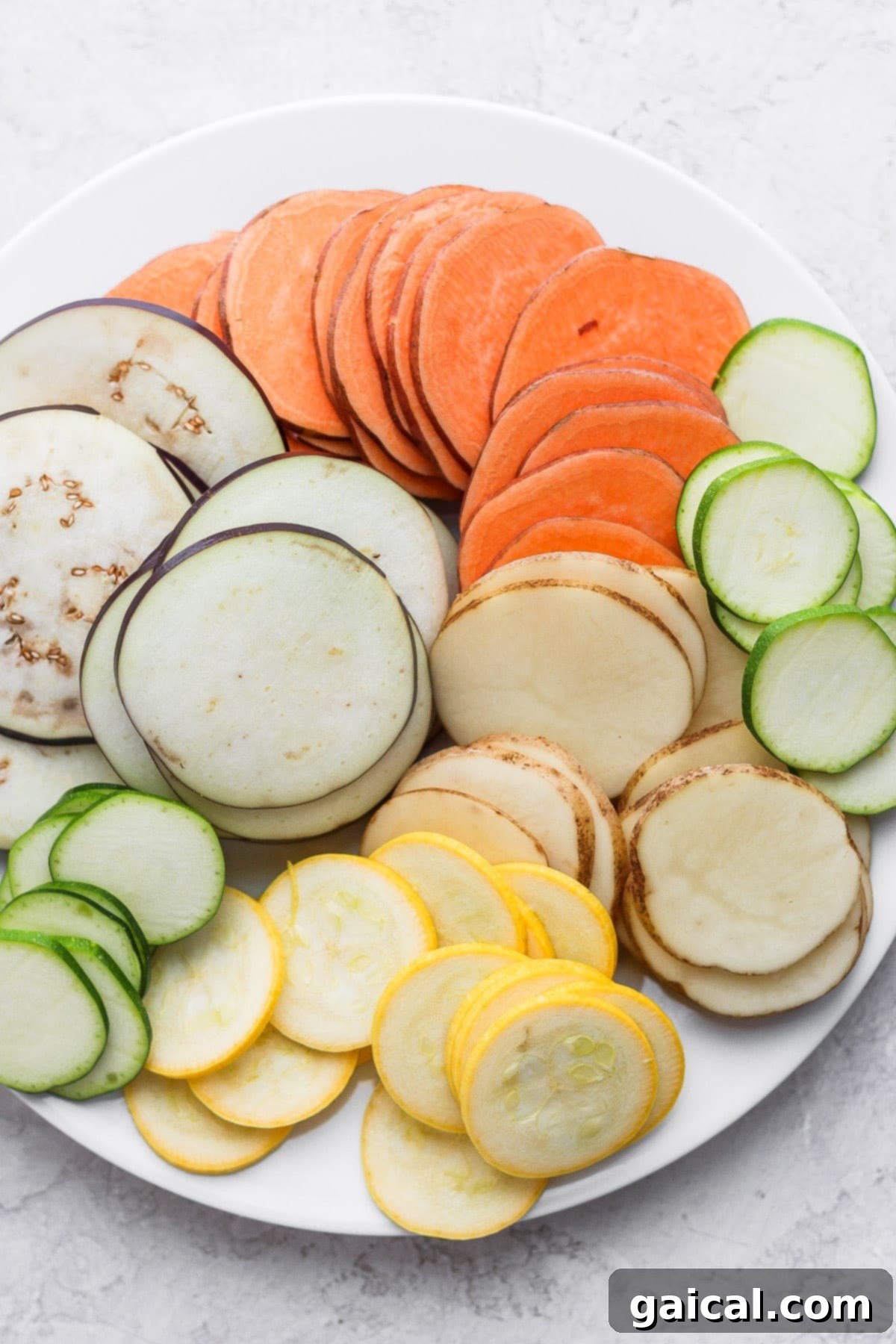
The visual appeal of a layered ratatouille largely depends on the uniformity of your vegetable slices. Consistent thickness ensures that all vegetables cook evenly and look aesthetically pleasing in their spiral arrangement. Aim for slices that are approximately ⅛ inch thick.
- Using a Mandolin: A mandolin slicer is your best friend for achieving perfectly uniform slices with minimal effort. There are various types, from professional models to simple handheld versions. When using a mandolin, always prioritize safety. Read the instructions carefully, use the safety guard, and slice slowly and deliberately. Mandolin blades are incredibly sharp and can cause serious injury if not handled with caution.
- Using a Sharp Knife: If you don’t have a mandolin, a very sharp chef’s knife and a steady hand will do the trick. Take your time and focus on making each slice as consistent as possible. This step might require a bit more patience but is entirely achievable.
Once all your eggplant, zucchini, yellow squash, sweet potato, and Idaho potato are uniformly sliced, set them aside. They’ll be ready for assembly after the sauces are prepared.
To Peel or Not to Peel Eggplant for Ratatouille?
This is a common question, and the answer depends on your preparation method. For this specific layered ratatouille recipe, where eggplant is sliced into thin rounds, you do not need to peel the eggplant. The skin provides structure, helps the slices hold their shape during baking, and contributes to the overall rustic appearance and nutritional value. The thin skin will soften beautifully as it bakes.
However, if you were preparing a chunky, stew-like ratatouille where the eggplant might cook for longer or be part of a softer mixture, peeling could be recommended to avoid any potential bitterness or toughness from the skin, particularly for larger, older eggplants.
Step TWO: Crafting the Flavor Foundation – Two Delicious Sauces
What sets our ratatouille apart and elevates its flavor profile is the ingenious use of two distinct sauces: a vibrant red tomato sauce and a luxurious béchamel. These sauces are not to be skipped; they are the heart and soul of this dish, providing moisture, richness, and an incredible depth of flavor that complements the roasted vegetables beautifully.
The Robust Red Sauce:
We recommend starting with the red sauce first, as it benefits from a good simmer to allow the flavors to meld and deepen. This sauce is a delectable combination of sautéed onions, garlic, and bell peppers, deglazed with red wine for an extra layer of complexity. Diced and crushed tomatoes form the base, seasoned with sea salt, a hint of maple syrup to balance acidity, and a touch of cayenne pepper for a subtle warmth. The result is a savory, aromatic sauce that will infuse every vegetable slice with its Mediterranean essence. Simmering it gently for about 15 minutes ensures all the ingredients contribute to a rich, cohesive flavor.
The Creamy Béchamel Sauce:
Don’t let the fancy French name intimidate you! Béchamel is a classic mother sauce, and in this recipe, it’s a simple yet incredibly effective addition. This white sauce is essentially a roux (a mixture of butter and flour) slowly whisked with milk until thick and creamy. It provides a luscious, smooth counterpoint to the acidity of the tomato sauce, adding a delicate richness and binding the layers of vegetables together. A touch of salt and ground pepper is all it needs to become a truly comforting component of the ratatouille. The béchamel creates an irresistibly creamy texture that makes this casserole truly unforgettable.
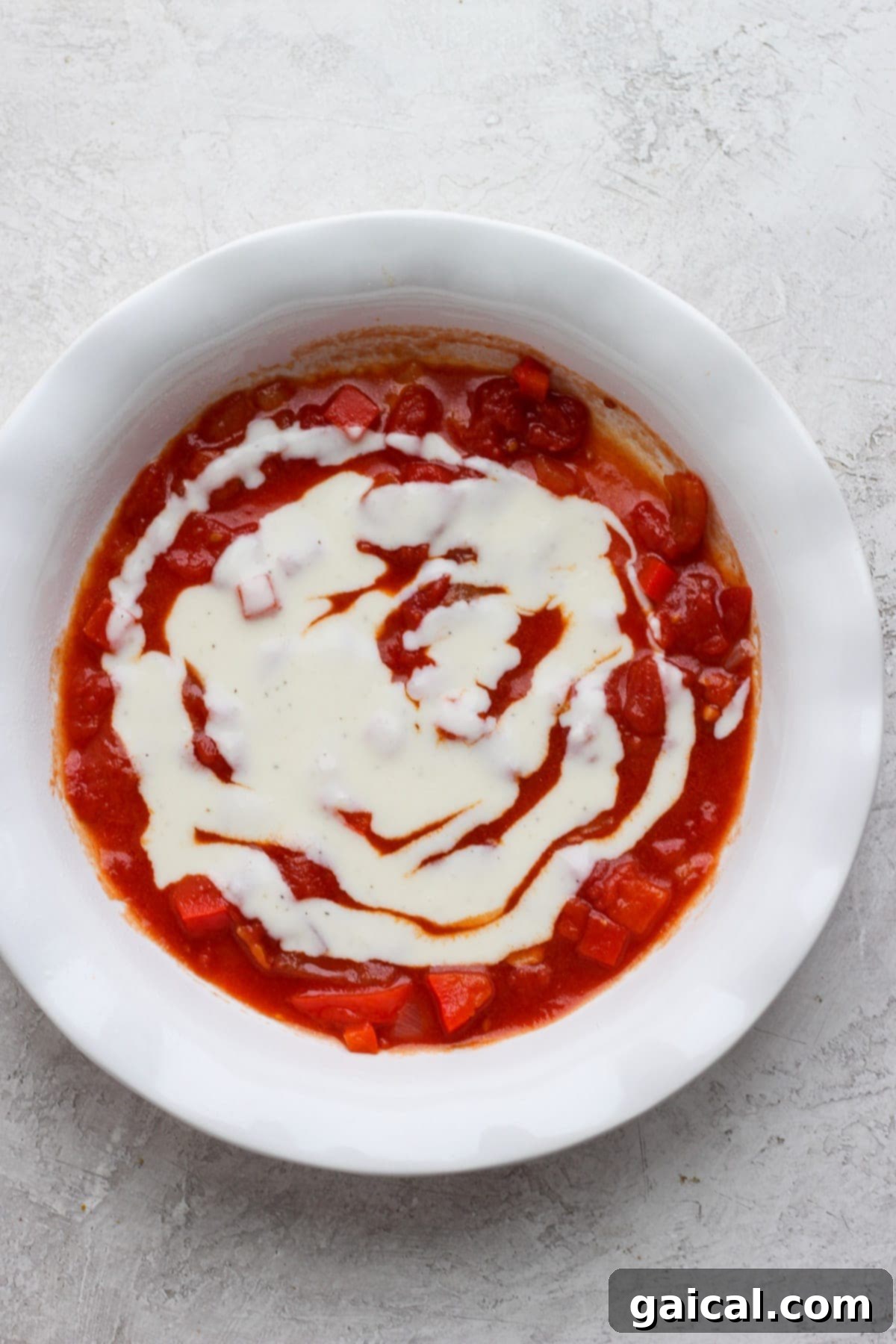
Step THREE: The Art of Layering and Baking to Perfection
This final stage is where your ratatouille truly comes to life, transforming into a culinary masterpiece. The layering process is not just for aesthetics; it also ensures every vegetable slice is infused with the delicious sauces.
Choosing Your Baking Dish:
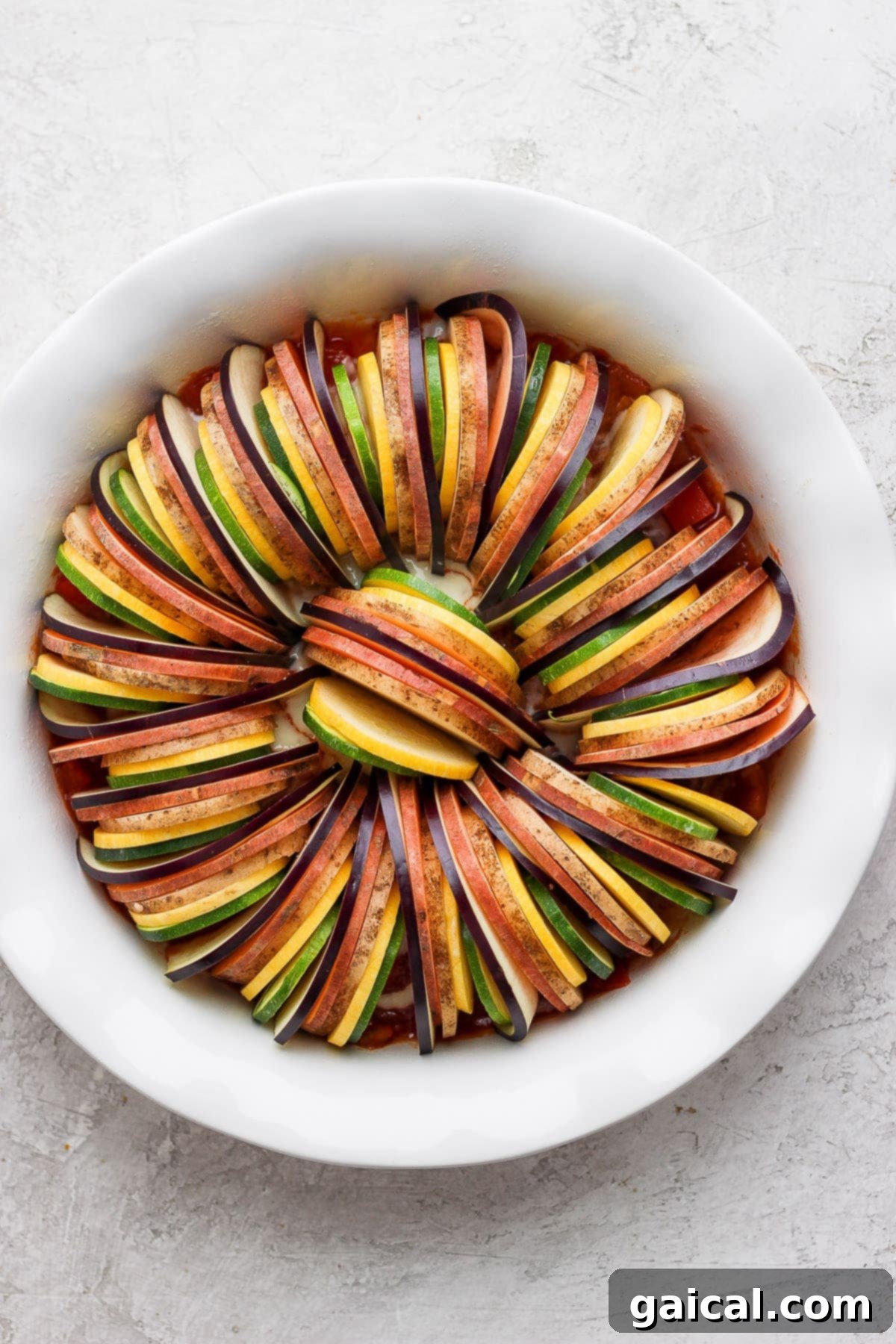
We love using a round casserole dish (10-12 inches) for this recipe because it makes it incredibly easy to create that iconic, beautiful spiral arrangement of vegetables, reminiscent of the movie. However, if you don’t have a round dish, a standard 8×8 or 9×13-inch square or rectangular baking pan will work perfectly. In a square pan, you can simply arrange your vegetable rounds in neat rows.
Assembling the Layers:
- Foundation First: Begin by lightly greasing your chosen baking dish. This prevents sticking and aids in easy serving. Next, spread a generous layer (about ½ cup) of your rich red tomato sauce evenly across the bottom of the dish. Follow this with a ¼ cup layer of the creamy béchamel sauce, spreading it over the red sauce. This dual sauce base is crucial; it prevents the vegetables from sticking and ensures they cook immersed in flavor from the start.
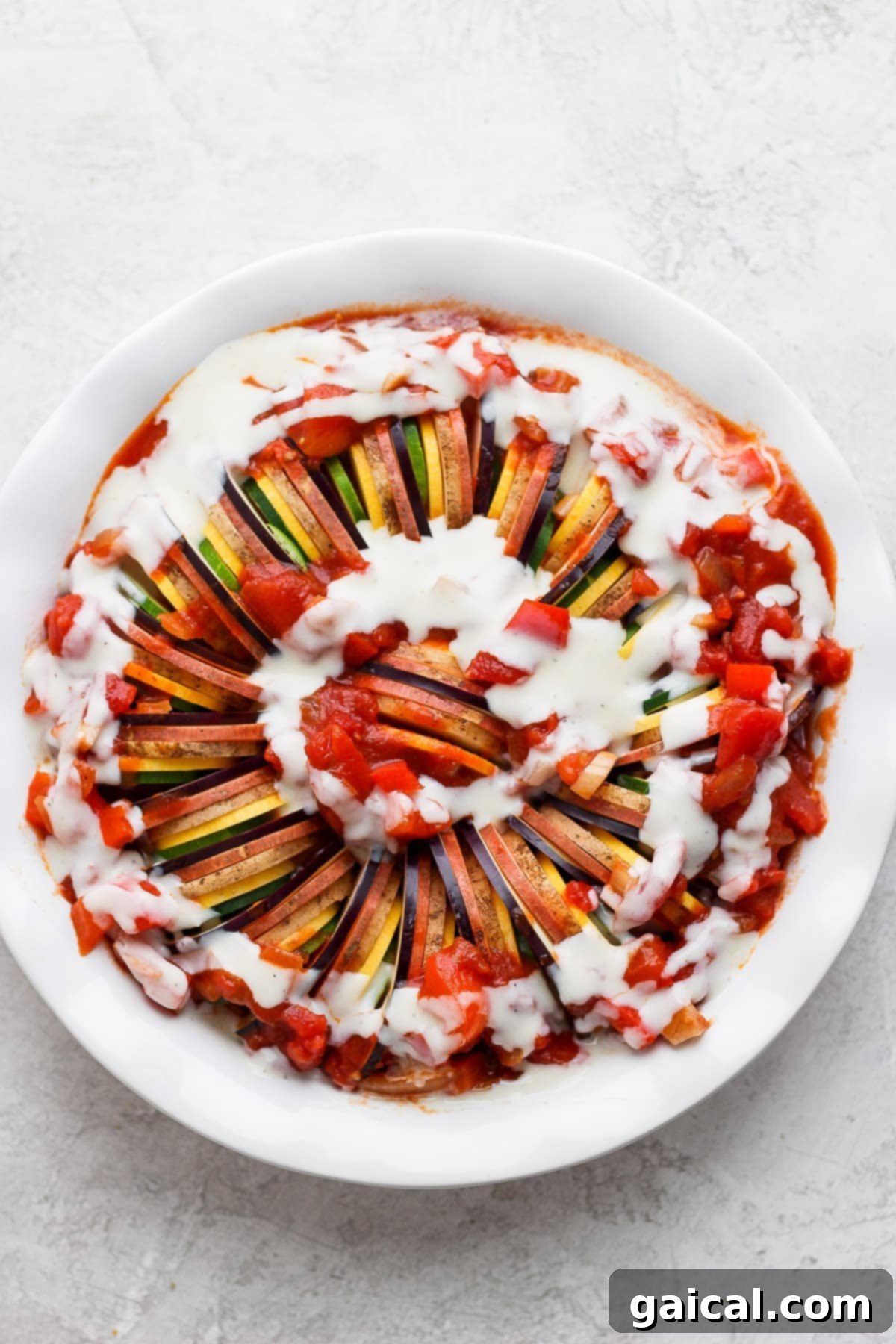
- The Vegetable Spiral: Now for the artistic part! Take your thinly sliced vegetables – eggplant, zucchini, yellow squash, sweet potato, and Idaho potato – and start arranging them on their sides, alternating the types of vegetables. Begin from the outer edge of your round dish and work your way inward, creating a beautiful spiral pattern. If using a square dish, arrange them in alternating rows. The goal is to pack them relatively snugly but without crushing them, ensuring each slice is visible and standing upright.
- Sauce Shower: Once all the vegetables are artfully arranged, pour the remaining red sauce and béchamel sauce evenly over the top. Ensure the sauces seep down between the vegetable slices, completely coating them and preparing them for a delicious bake.
Baking Instructions:
Preheat your oven to 375°F (190°C). Carefully place the assembled ratatouille into the preheated oven and bake for 60-75 minutes. The baking time may vary slightly depending on your oven and the exact thickness of your vegetable slices. You’ll know it’s done when the vegetables are tender, the sauces are bubbly, and the top has a slight golden-brown crust. The aroma filling your kitchen will be an unmistakable sign of its readiness!
Don’t Forget This: The Perfect Finish!
The final touches can elevate your ratatouille from delicious to absolutely sublime. Once your baked ratatouille emerges from the oven, still bubbling and fragrant, it’s time for a simple yet impactful topping that adds a layer of creamy indulgence and fresh herbaceousness.
We highly recommend crumbling a delicious soft cheese over the hot ratatouille. Our favorites are creamy goat cheese or savory Boursin cheese. The warmth of the dish will slightly soften the cheese, allowing its tangy or herbaceous notes to melt wonderfully into the vegetables and sauces, creating a delightful contrast. A quarter cup of either cheese, crumbled or dolloped over the top, is usually sufficient for six servings, offering just the right amount of richness without overpowering the dish.
To complete the masterpiece, sprinkle a generous handful of freshly chopped basil. The vibrant green of the basil and its fresh, peppery aroma provide a beautiful visual contrast and a burst of fresh flavor that brightens the entire dish. This simple garnish truly ties all the flavors together and makes for a stunning presentation.
Serving Suggestions & Perfect Pairings
This versatile ratatouille can shine in many roles at your dining table. While it’s hearty enough to be a complete vegetarian main course, it also makes an exquisite side dish.
- As a Main Course: Serve a generous portion with a crusty baguette to sop up all the delicious sauces. A simple green salad with a light vinaigrette would complete the meal beautifully.
- With Grains or Pasta: It pairs wonderfully with fluffy quinoa, couscous, or a bed of your favorite pasta (like penne or orecchiette). The sauces will coat the grains or pasta for a truly satisfying dish.
- Alongside Protein: For non-vegetarians, ratatouille makes an excellent accompaniment to grilled chicken, pan-seared fish (like cod or salmon), or roasted lamb.
- Brunch Favorite: Surprisingly, ratatouille can also be a fantastic addition to a brunch spread, perhaps served with poached eggs or alongside a frittata.
Storage and Reheating Tips
One of the many joys of ratatouille is that it often tastes even better the next day, as the flavors have more time to meld and deepen. This makes it an excellent meal prep option!
- Storage: Allow the ratatouille to cool completely before transferring it to an airtight container. Store it in the refrigerator for up to 3-4 days.
- Freezing: Ratatouille freezes remarkably well. Once cooled, portion it into freezer-safe containers or bags and freeze for up to 3 months. Thaw overnight in the refrigerator before reheating.
- Reheating: For best results, reheat individual portions in the microwave until warmed through. For larger quantities, cover the dish with foil and reheat in an oven preheated to 350°F (175°C) for 20-30 minutes, or until hot and bubbly. You may want to add a splash of vegetable broth or water if it seems too dry.
Variations to Try
Once you’ve mastered the basic recipe, feel free to experiment with these delicious variations:
- Herb Power: In addition to basil, try adding fresh thyme, oregano, or rosemary to the red sauce for different aromatic profiles. A sprinkle of fresh parsley at the end is also lovely.
- Spicy Kick: Increase the cayenne pepper in the red sauce or add a pinch of red pepper flakes for those who enjoy a spicier dish.
- Mediterranean Flair: Stir in some Kalamata olives or capers into the red sauce for a briny, salty punch.
- Cheesy Goodness: Experiment with other cheeses! A sprinkle of grated Parmesan or Gruyère cheese during the last 15 minutes of baking will create a delicious golden crust.
- Different Vegetables: Consider adding thinly sliced bell peppers (especially red or yellow for sweetness), artichoke hearts, or even finely chopped carrots to the vegetable medley.
More of our Favorite…
Healthy & Delicious Vegetarian Recipes
If you loved this healthy and satisfying ratatouille, be sure to explore more of our favorite vegetarian dishes:
- Flavorful Vegetarian Tostadas
- Creamy Cauliflower Mac and Cheese
- Refreshing Mediterranean Quinoa Salad
5 from 4 votes
Homemade Ratatouille
Make this vibrant ratatouille recipe for dinner this week! It’s enjoyable to prepare and simpler than you might think. We combine fresh zucchini, potatoes, eggplant, and two delectable sauces to create this beautifully layered and incredibly tasty vegetarian dish!
Print Recipe
Ingredients
Vegetables
- 1 large eggplant
- 1 large zucchini
- 1 large yellow squash
- 1 large Idaho potato
- 1 large sweet potato
- 2 tablespoons olive oil
- 1/2 white onion, diced
- 5 cloves garlic, minced
- 1/4 cup red wine
- 1 large red pepper, diced
- 1/4 teaspoon sea salt
- 24- oz can diced tomatoes
- 15- oz can tomato sauce
- 1/2 tablespoon maple syrup
- 1/8 teaspoon cayenne pepper
Béchamel Sauce
- 3 tablespoons salted butter
- 1/4 cup all-purpose flour
- 1/2 cup 2% milk
- 1/4 teaspoon salt
- 1/4 teaspoon ground pepper
Toppings
- 1/4 cup Boursin or goat cheese
- 1/4 cup chopped fresh basil
Instructions
- Prepare the vegetables: Using a mandolin, carefully slice the eggplant, zucchini, squash, and potatoes into ⅛ inch thick rounds. Ensure all vegetables are sliced to a similar size for even cooking. Set aside.
- Prepare the red sauce: Heat a large pot over medium/high heat. Add olive oil. Once fragrant, add the diced onion and sauté for 2-3 minutes, or until translucent. Add minced garlic and sauté for an additional 2 minutes.
- Deglaze the pot by pouring in the red wine, scraping any browned bits of onion or garlic from the bottom of the pan. Then, add the remaining red sauce ingredients (diced tomatoes, tomato sauce, red pepper, sea salt, maple syrup, cayenne pepper) into the pot.
- Bring the tomato sauce to a boil. Once boiling, reduce the heat to low, cover the pot, and let the red sauce simmer for 15 minutes. Remove from heat.
- Prepare the béchamel sauce: In a separate medium pan, heat over medium/high heat. Add butter to the pan. Once melted, add the all-purpose flour and whisk constantly to form a roux. When the butter and flour mixture turns into a crumble or paste, reduce heat to low/medium. Slowly add the 2% milk, whisking consistently until the mixture thickens to a smooth sauce. Remove from heat and stir in salt and ground pepper. Set aside.
- Preheat your oven to 375ºF (190°C).
- Assemble the ratatouille: First, lightly grease a 10-12 inch round casserole dish or pie tin. Spread ½ cup of the red tomato sauce onto the bottom of the dish. Then, add ¼ cup of the béchamel sauce and spread it evenly over the red sauce.
- Arrange the sliced vegetables on top of the sauce mixture. Place the vegetables on their sides, alternating types (eggplant, zucchini, squash, Idaho potato, sweet potato) in a spiral arrangement, working from the outer edge inward, until no more vegetables remain.
- Pour the remaining red sauce and béchamel sauces evenly over the arranged vegetables, ensuring they seep between the slices.
- Place the ratatouille in the preheated oven and bake for 60-75 minutes, or until the vegetables are tender and the sauce is bubbly.
- Remove from the oven and immediately top with crumbled Boursin or goat cheese and freshly chopped basil before serving. Enjoy!
Nutrition Information (Approximate per serving)
Carbohydrates: 35 g
Protein: 7 g
Fat: 13 g
Fiber: 8 g
Sugar: 10 g
Nutrition information is automatically calculated and should only be used as an approximation. Actual values may vary based on specific ingredients and preparation methods.
Love This Recipe? Leave a Comment Below!
We absolutely adore hearing from you! If you tried this homemade ratatouille recipe, please share your thoughts and experiences in the comments section below. Your feedback helps us grow and inspires other home cooks.
Don’t forget to tag your beautiful creations on social media with the hashtag #fitfoodiefinds. We’d love to see your stunning layered ratatouille and celebrate your culinary success!